Fine ArtVintageFootageSubscriptionBoardsFree ResearchPricing
  • Fine Art
  • Vintage
  • Footage
  • Subscription
  • Boards
  • Free Research
  • Pricing

Space

Explore the vastness of space with SuperStock's comprehensive collection of stock images and clips. Our gallery offers a unique opportunity to discover the wonders of the solar system, from planets and galaxies to asteroids and comets. With our expansive selection, you can find the perfect image or clip to bring your project to ...Read more
1333 items in this collection samplerSee More Space and Astronomy
RM
4353-289
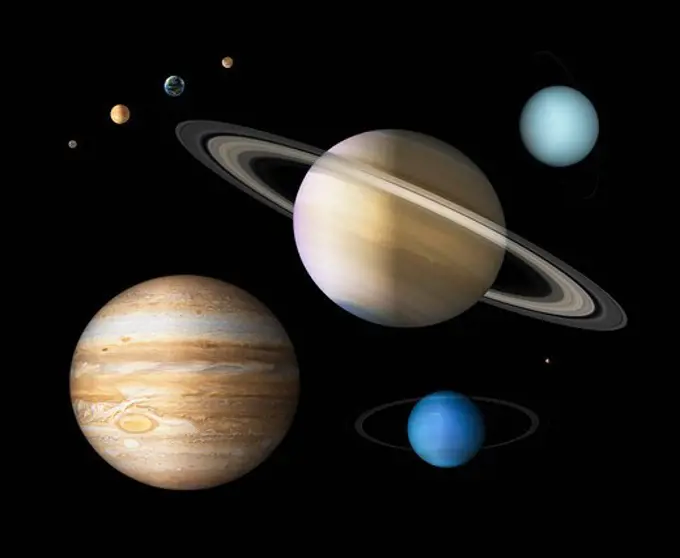
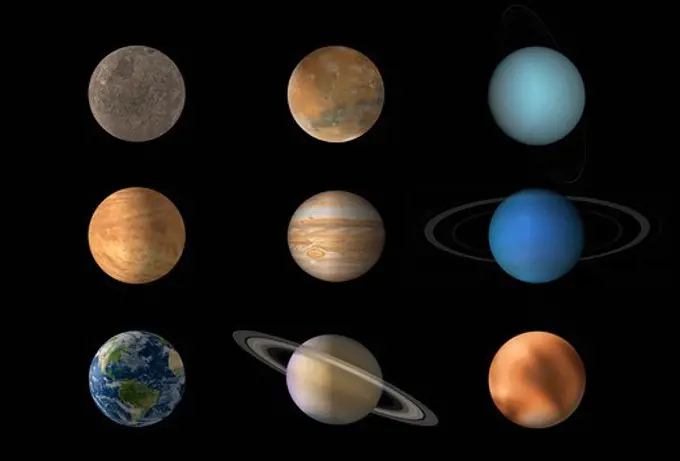
Digital Illustration of the Nine Planets of Our Solar System
RM
4353-302
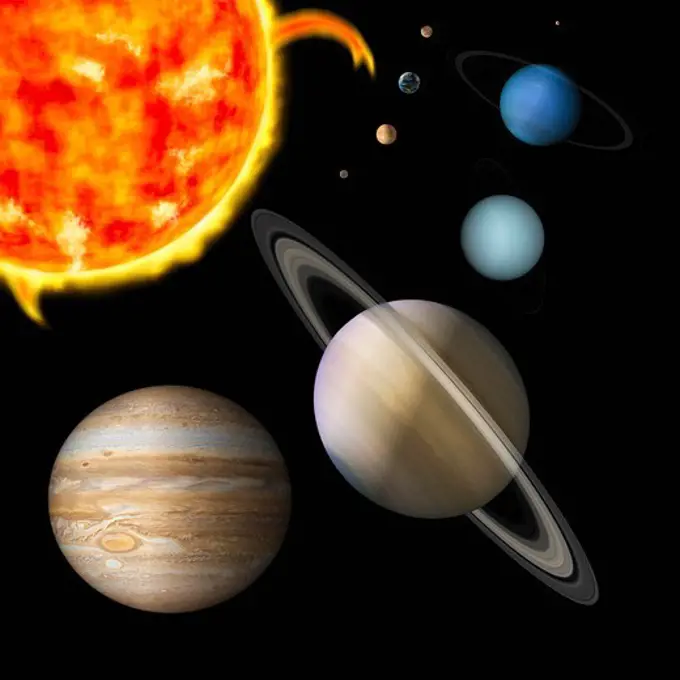
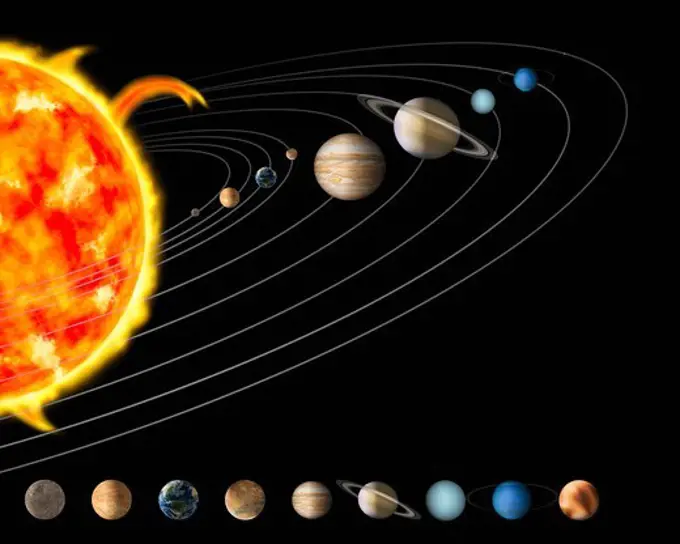
Digital Illustration of the Sun and Nine Planets of Our Solar System
RM
4353-297
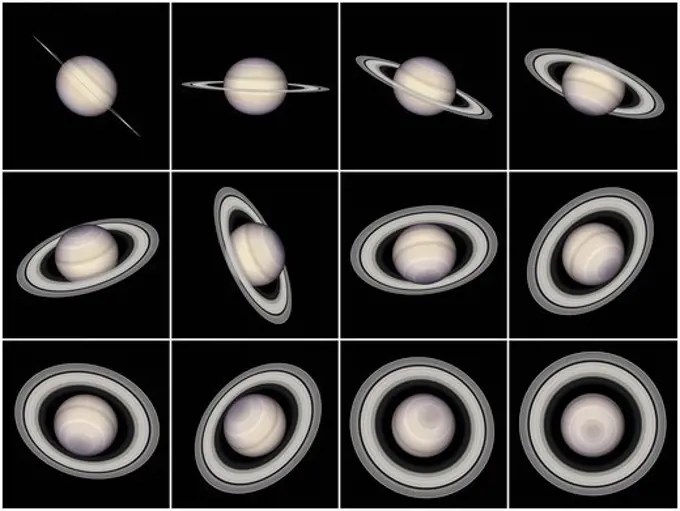
Digital Illustration of Saturn's Appearance From Different Angles
RM
4353-282
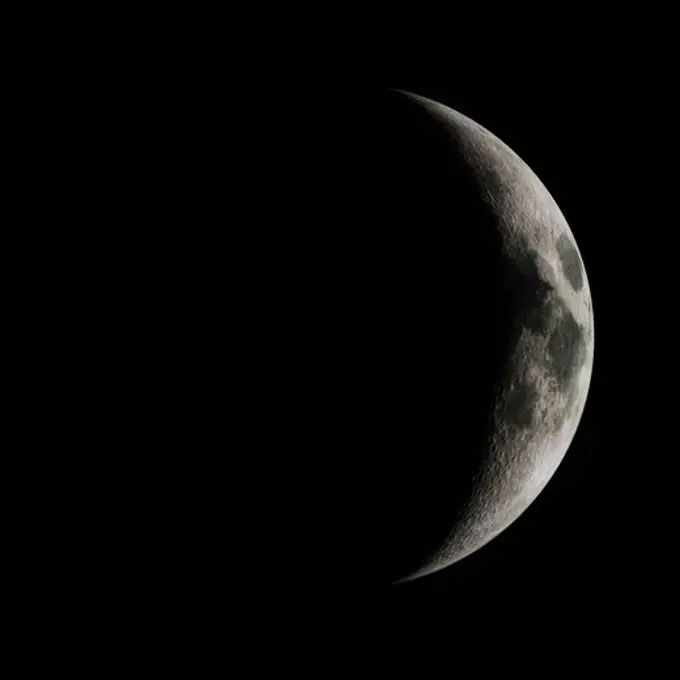
Digital Illustration of a Waxing Crescent Moon
RM
4353-277
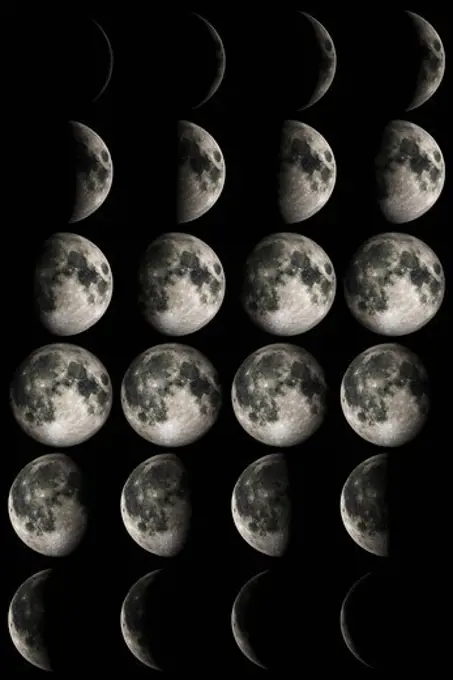
Digital Illustration of the Phases of the Moon
RM
4353-299
Digital Illustration of the Sun and Nine Planets of Our Solar System
RM
4353-267
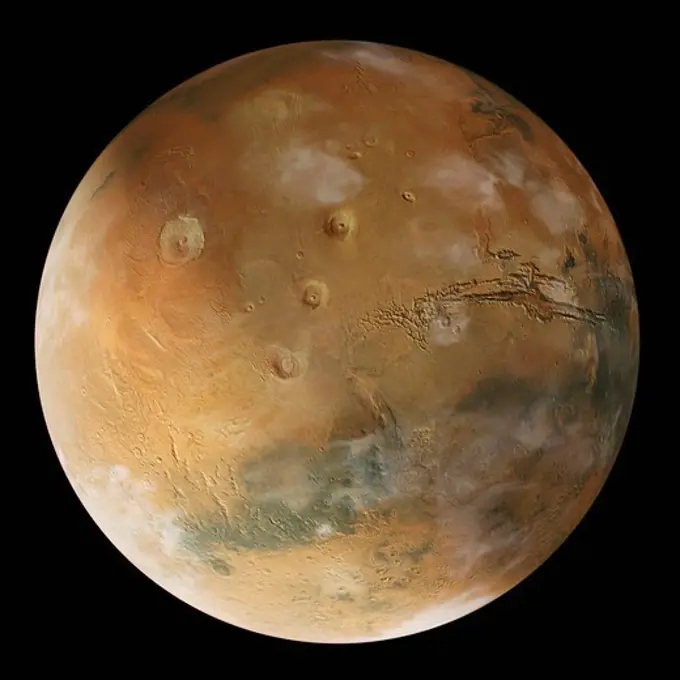
Digital Illustration of the Planet Mars
RM
4353-272
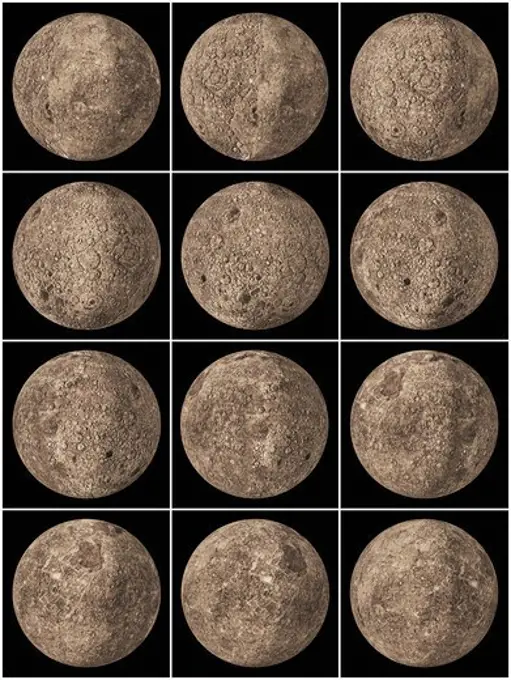
Digital Illustration of Mercury's Rotation
RM
4353-292
Digital Illustration of the Nine Planets of Our Solar System
RM
4389-2440
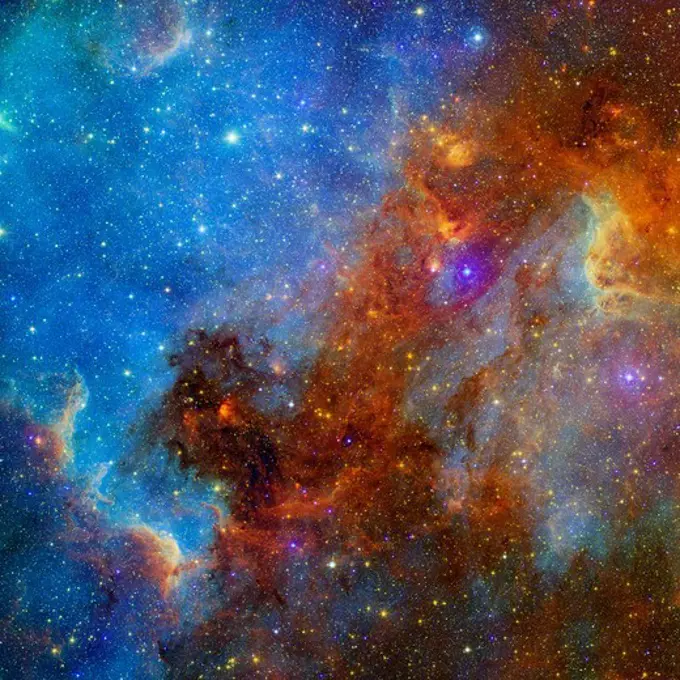
North America Nebula
RM
4389-2008
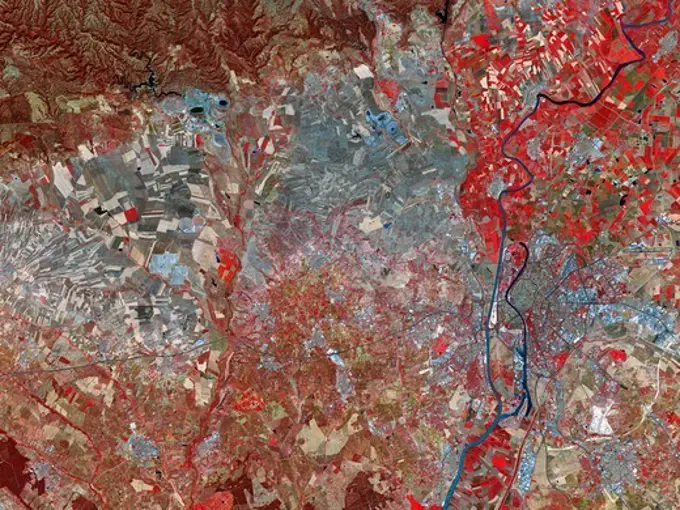
Orbital View of Seville, Space
RM
4389-1954
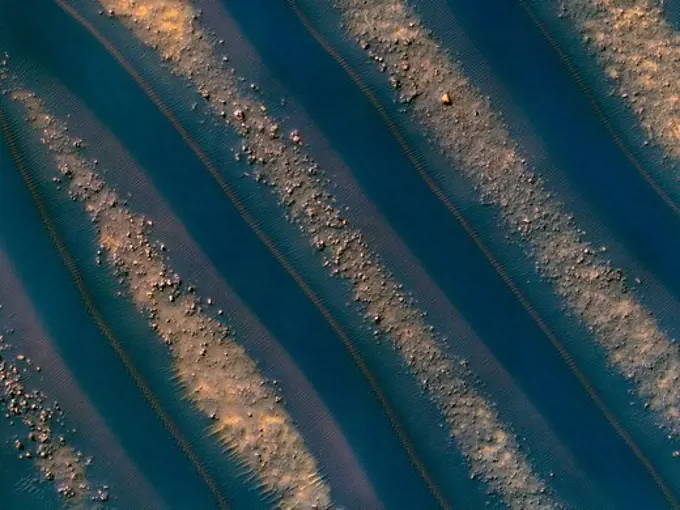
Sand Dunes of Mars
RM
4389-1977
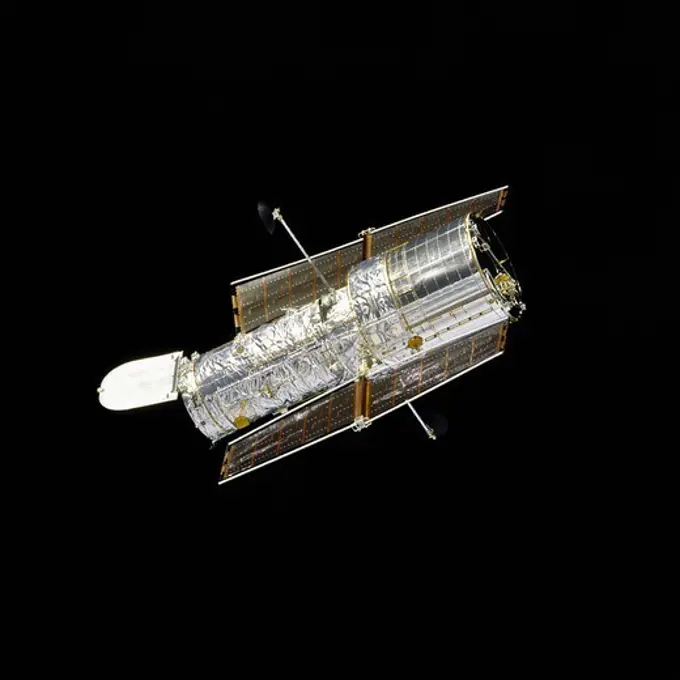
Hubble Space Telescope After Repair
RM
4389-1949
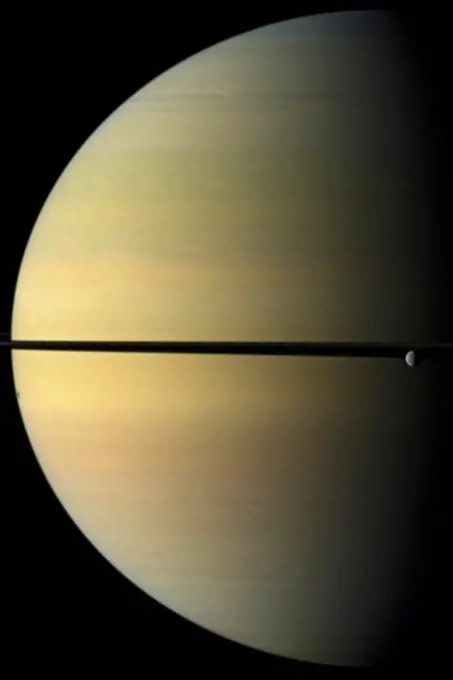
Saturn and Rhea
RM
4389-1867
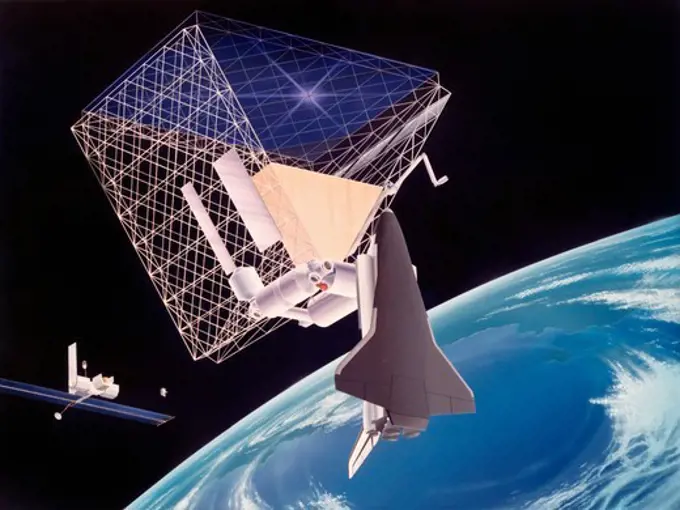
Concept for Space Station Roof
RM
4389-1921
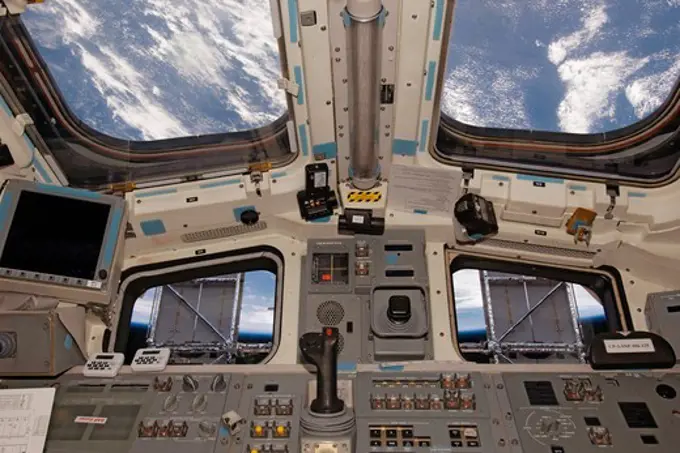
View From Space Shuttle Atlantis
RM
4389-1925
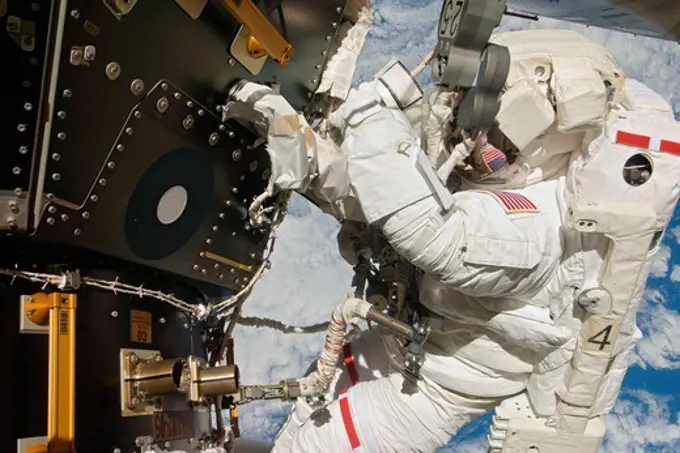
Working on Space Station
RM
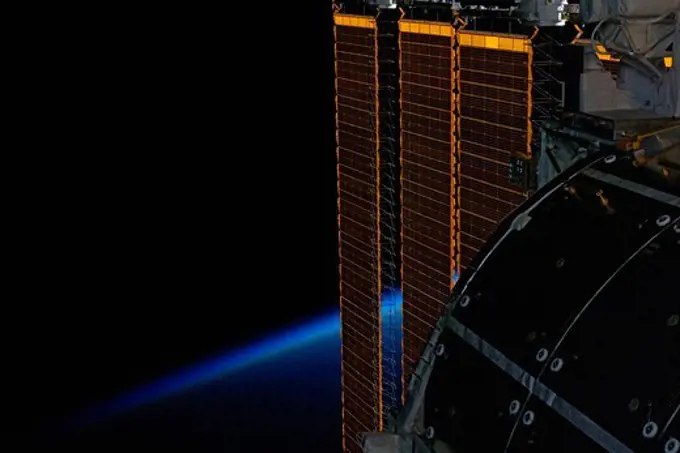
4389-1928
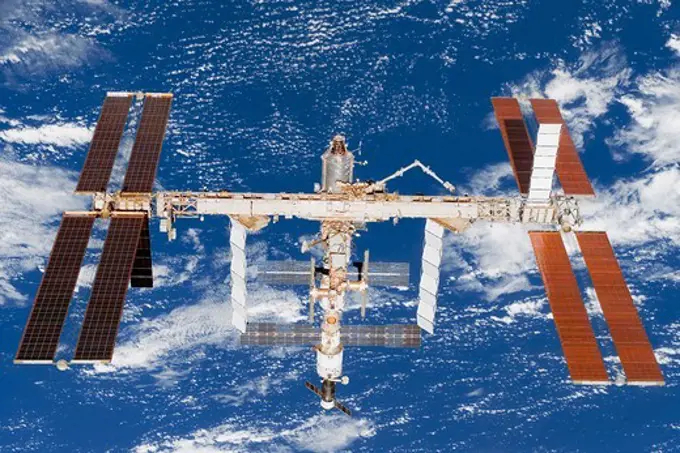
International Space Station's Solar Panels
RM
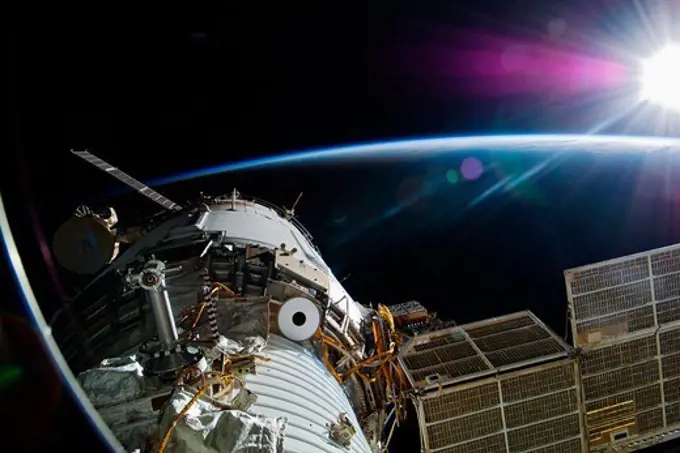
4389-1945
Sunrise Over International Space Station
RM
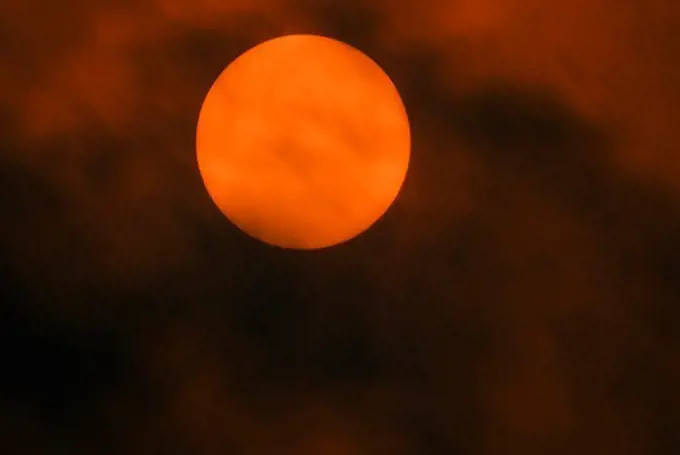
4351-216
Sun and Clouds
RM
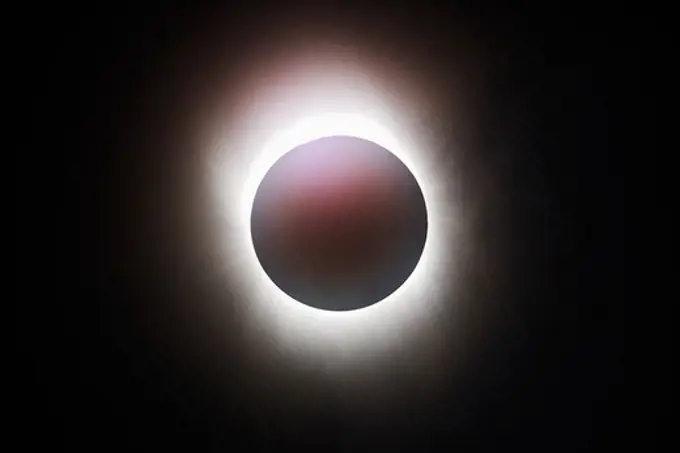
4351-205
End of Total Solar Eclipse
RM
4389-489
International Space Station
RM
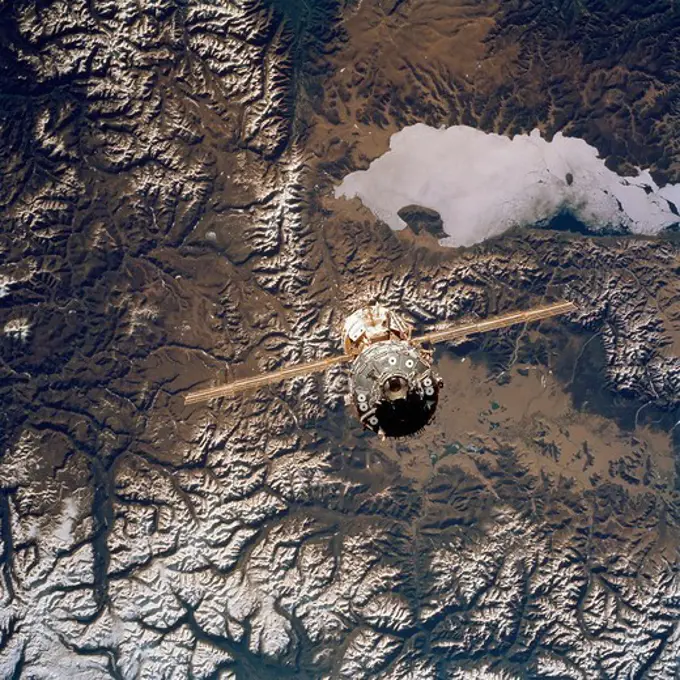
4389-486
International Space Station Over Mongolia
RM
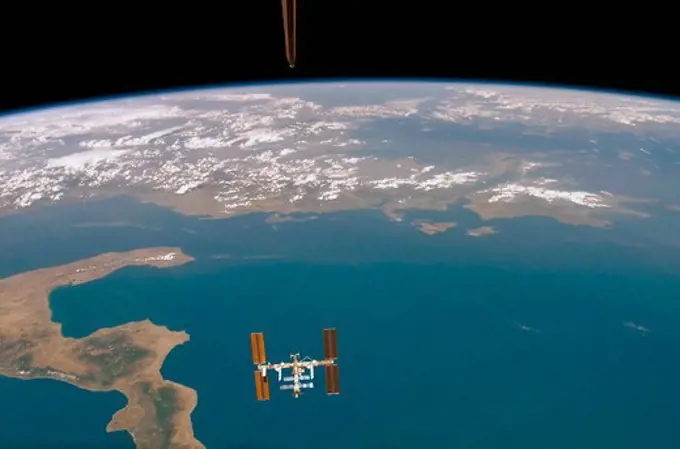
4389-491
International Space Station Over Mediterranean
RM
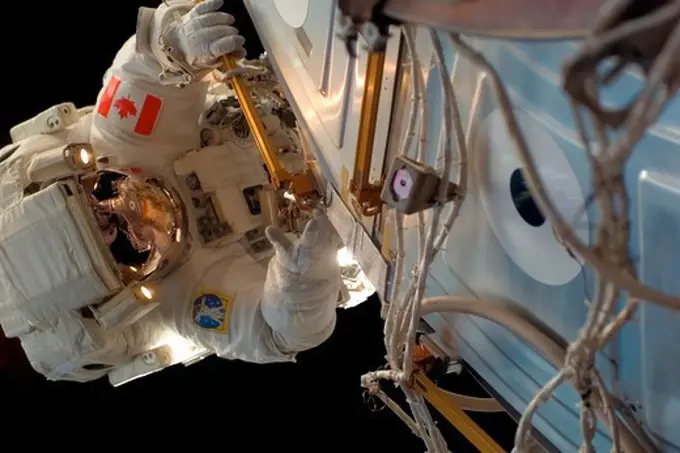
4389-488
Dave Williams on Space Walk
RM
4389-492
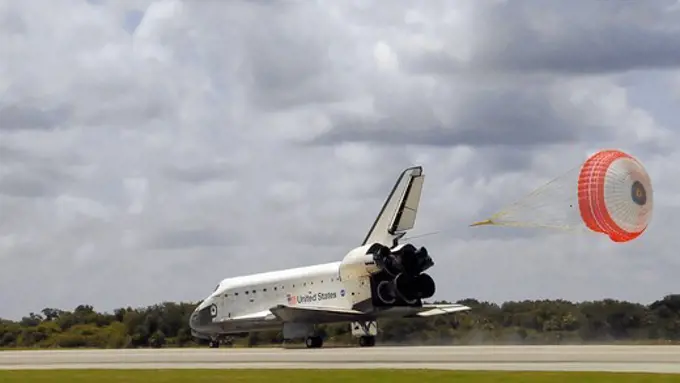
Endeavour Touches Down at Kennedy Space Center
RM
4389-493
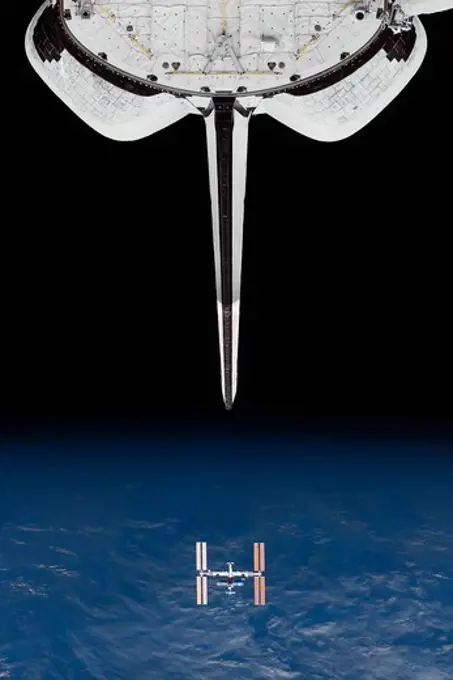
Space Shuttle and International Space Station
RM
4389-490
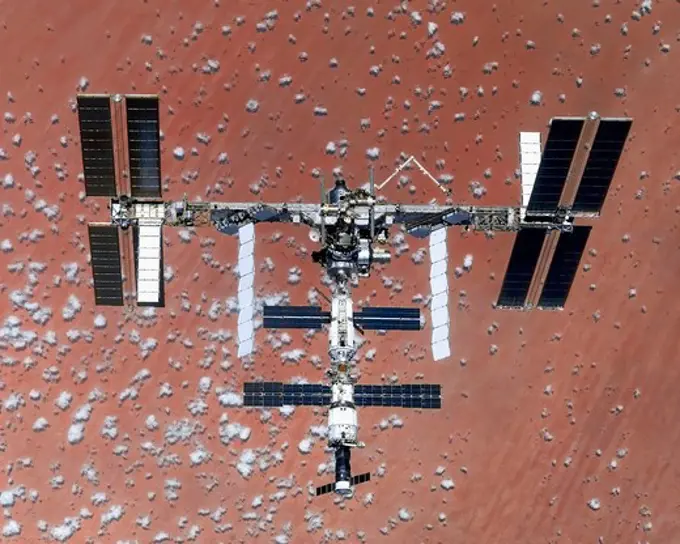
International Space Station
RM
4389-135
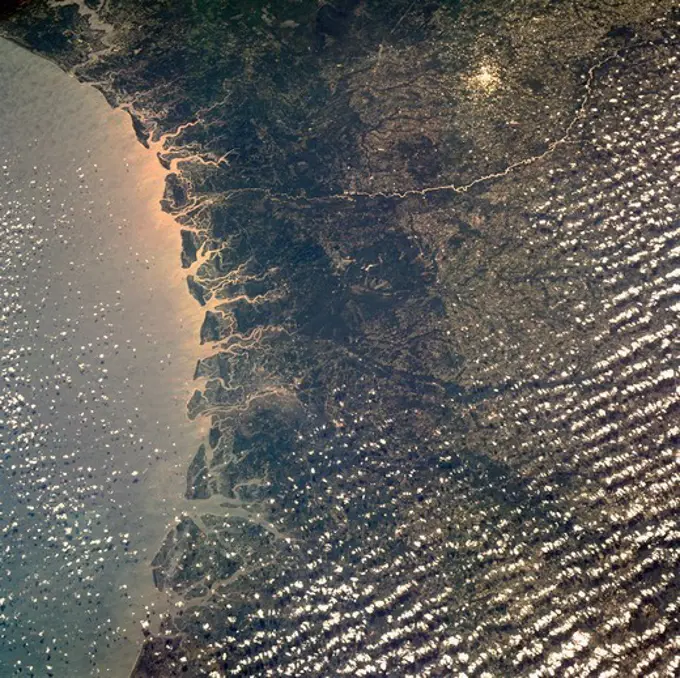
The Georgia Coast from Space
RM
4332-122
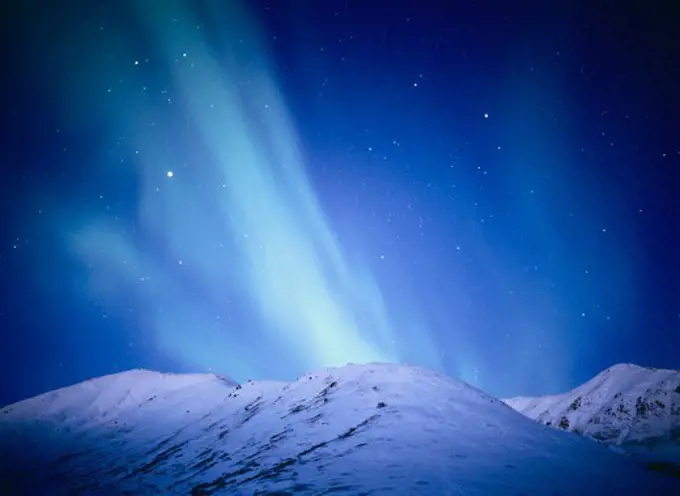
Seen near Hatcher Pass, Alaska, these Northern Lights were caused by a geomagnetic storm on morning of November 24, 2001.
RF
4239R-4850
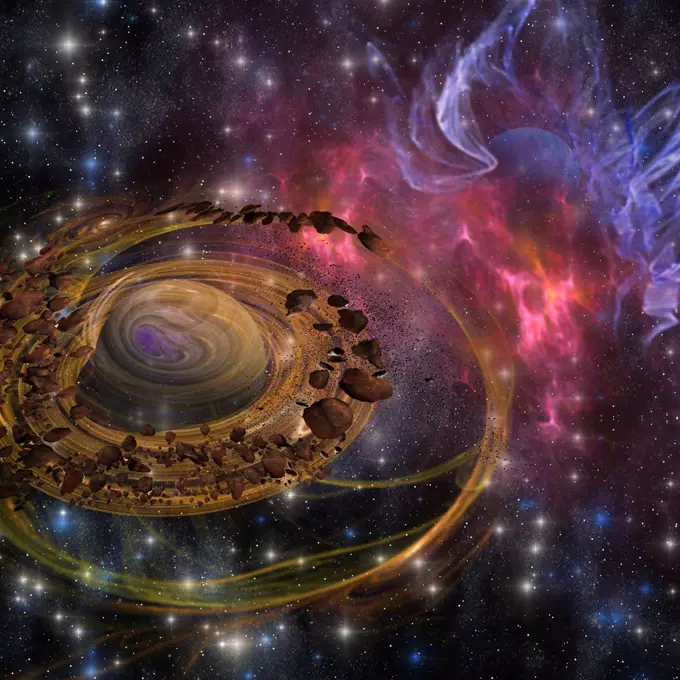
Rocks as big as mountains swirl around and form a planet in the cosmos.
RM
4389-2303
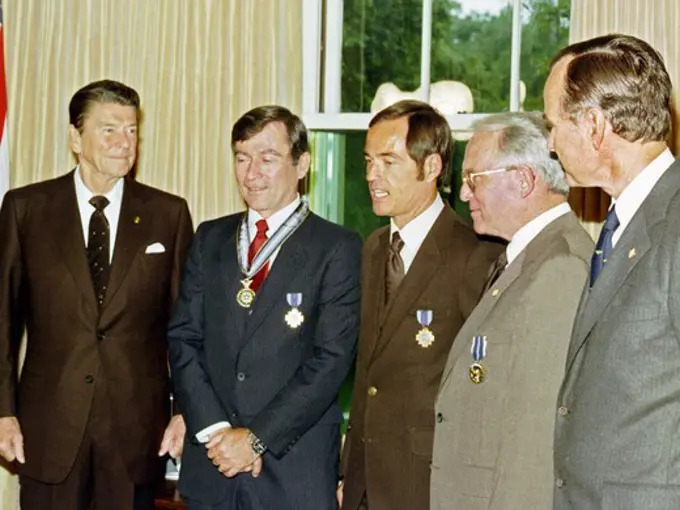
President Reagan Presents Medals to Astronauts
RM
4389-2288
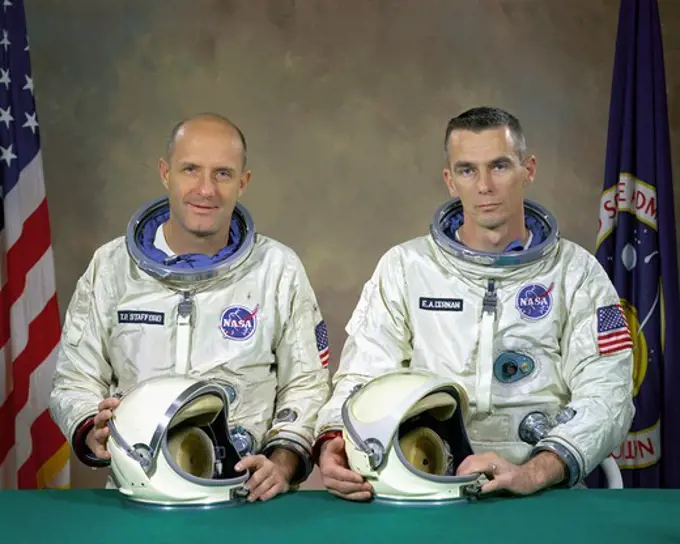
Crew of Gemini 9
RM
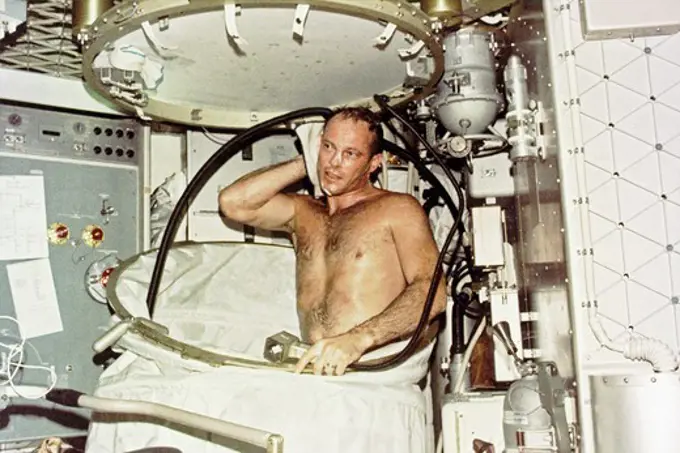
4389-2305
Showering on Skylab
RM
4389-1854
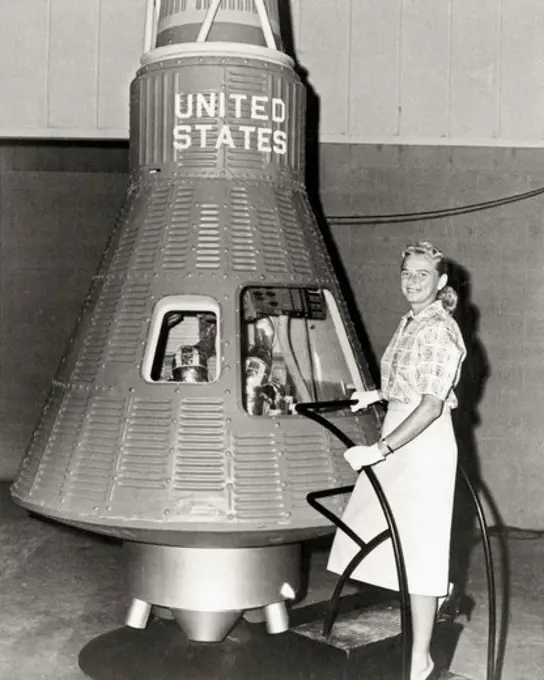
Jerrie Cobb Poses Beside Mercury Capsule
RM
4389-1870
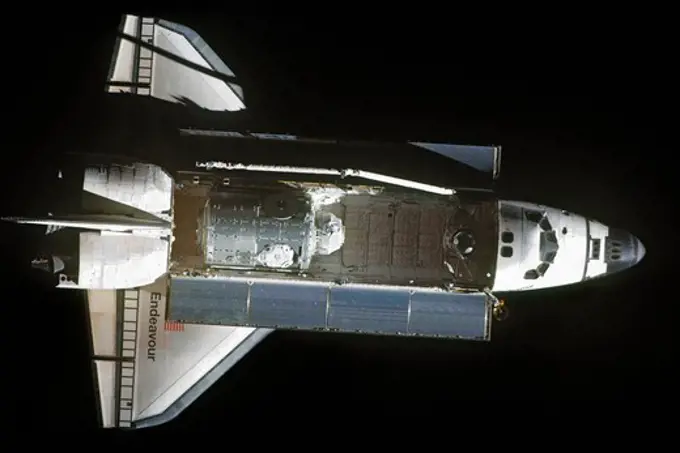
Space Shuttle Endeavour Delivering Module
RM
4389-1881
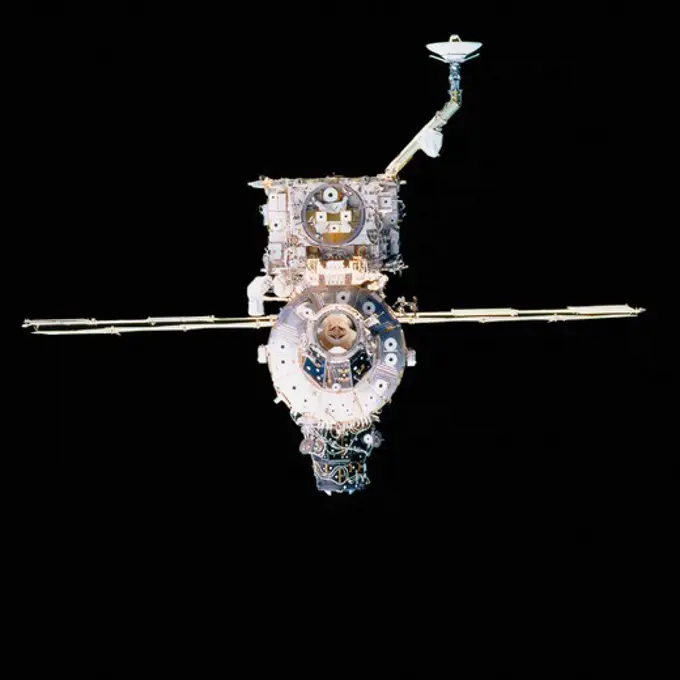
International Space Station
RM
4389-1848
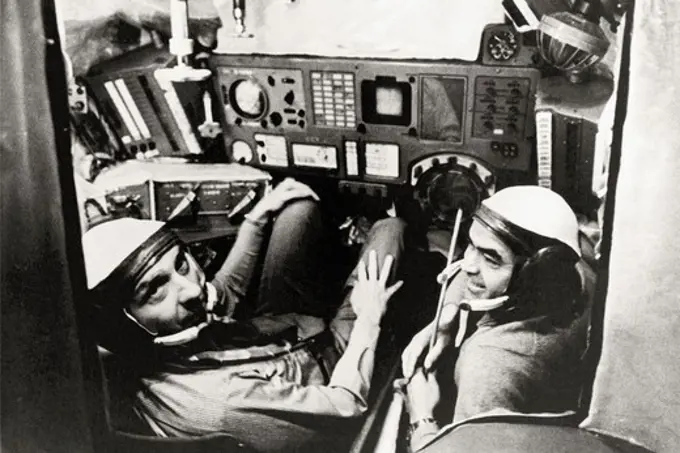
Thomas Stafford Trains in Soviet Simulator for Apollo-Soyuz
RM
4389-1855
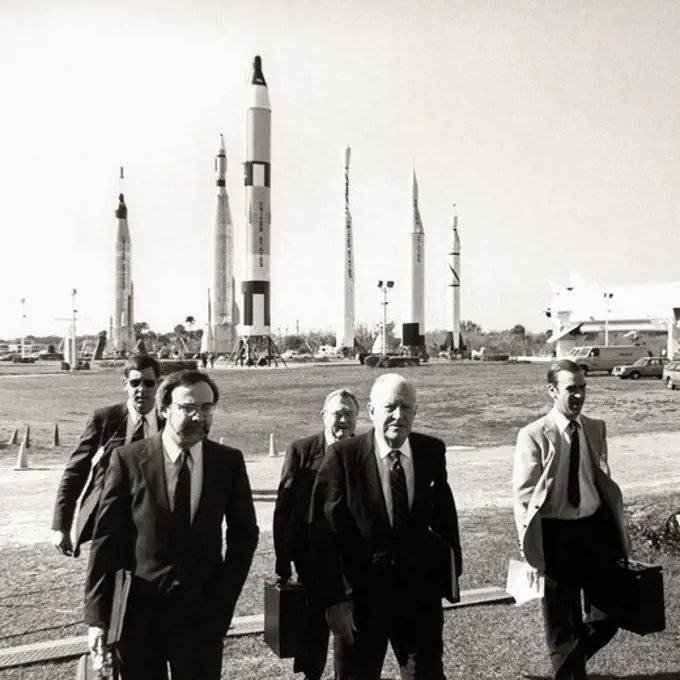
Members of the Rogers Commission arrive at Kennedy Space Center
RM
4389-1829
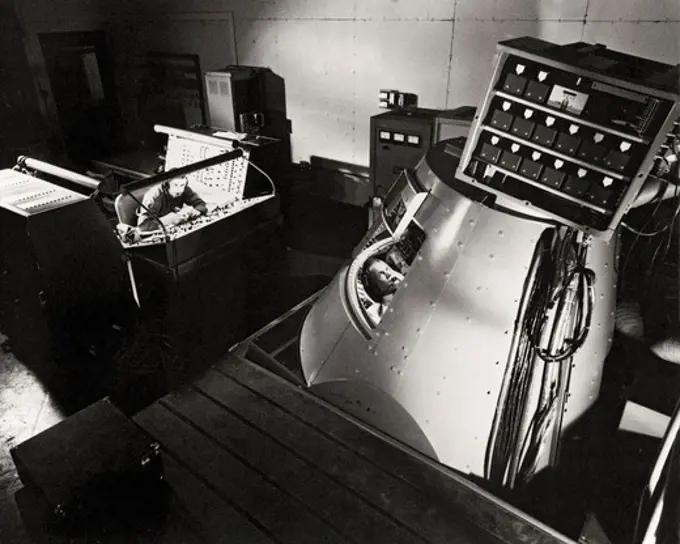
John Glenn in the Mercury Procedures Trainer
RM
4389-1839
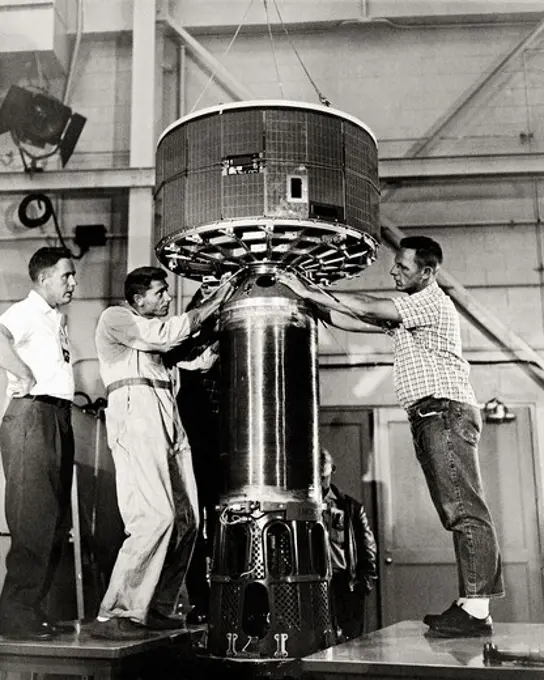
TIROS, America's First Meteorological Satellite
RM
4389-1815
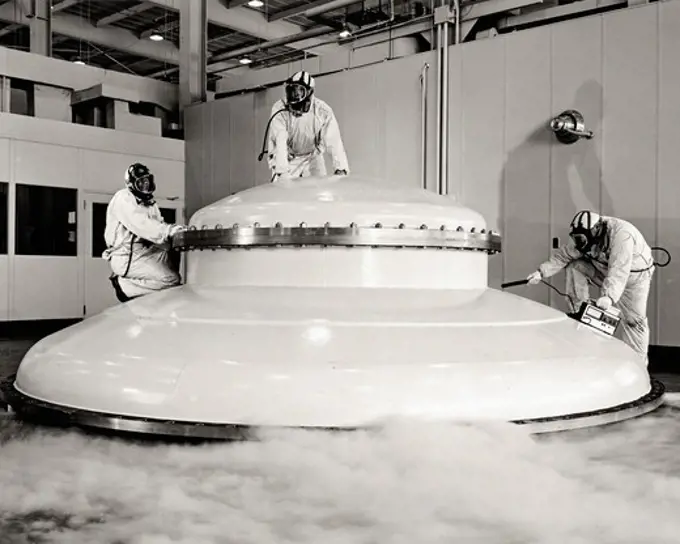
Vacuum Tank Top
RM
4389-1814
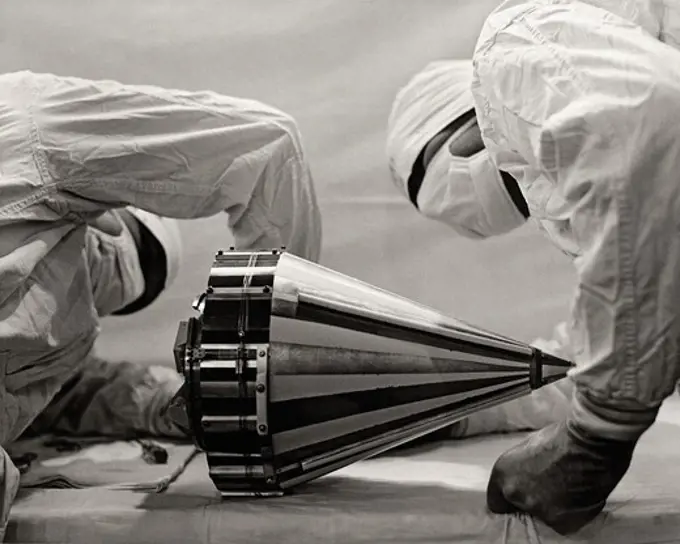
Pioneer III Probe
RM
4315-112
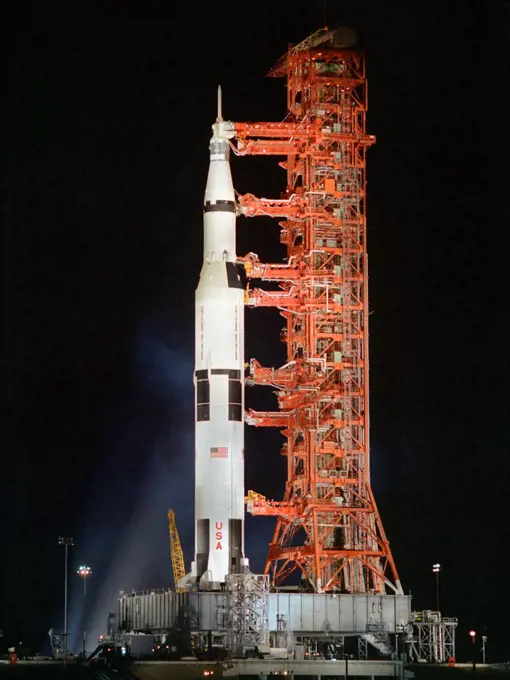
Saturn V Carrying the Apollo 17 at Night
RM
4389-2218
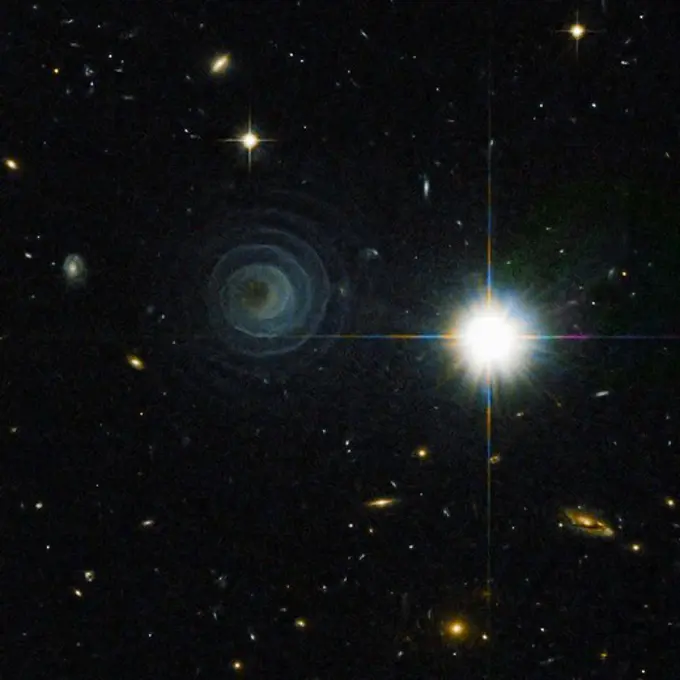
Mysterious Spiral Structure in Space
RM
4389-2164
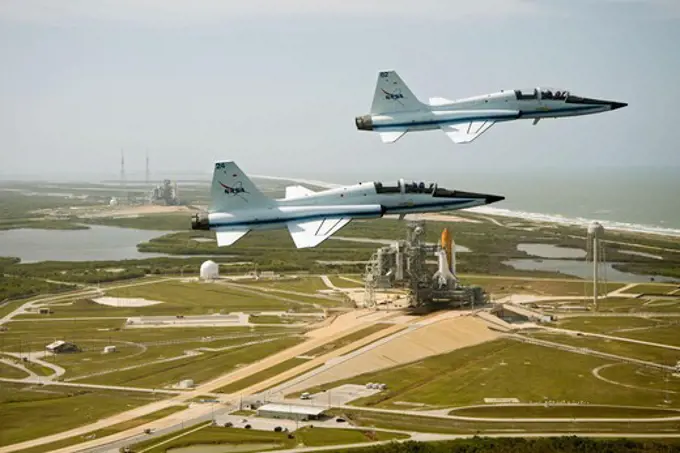
Flying Over Kennedy Space Center
RM
4389-2138
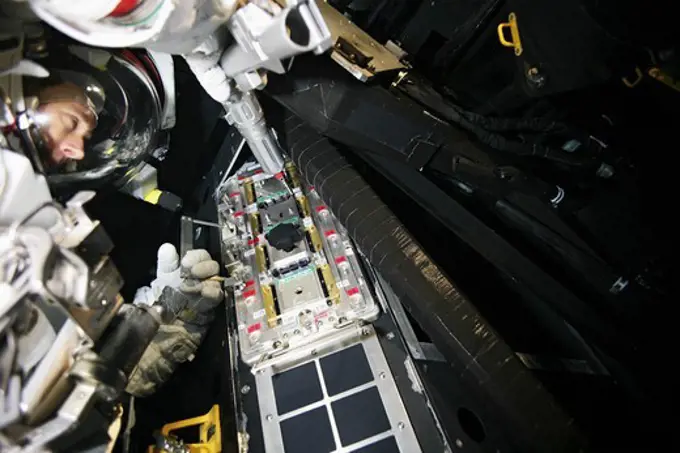
Practicing Repair Maneuver
RM
4308-142
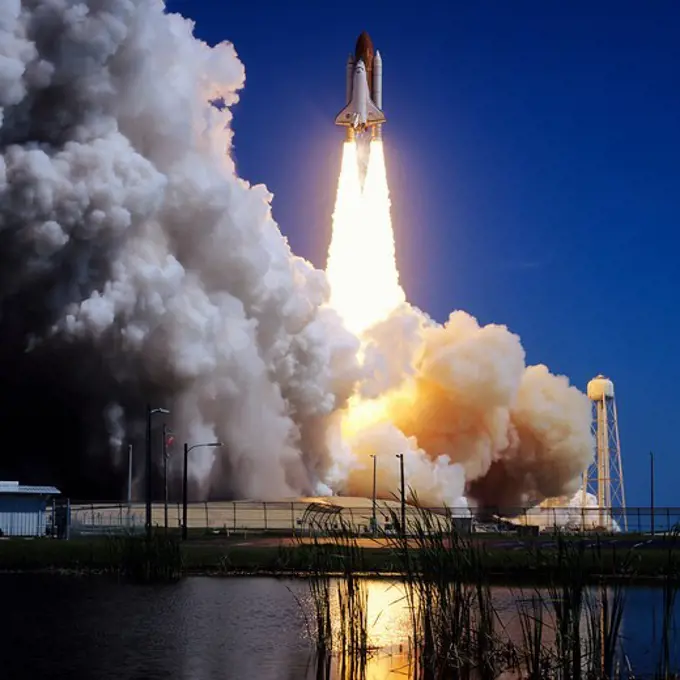
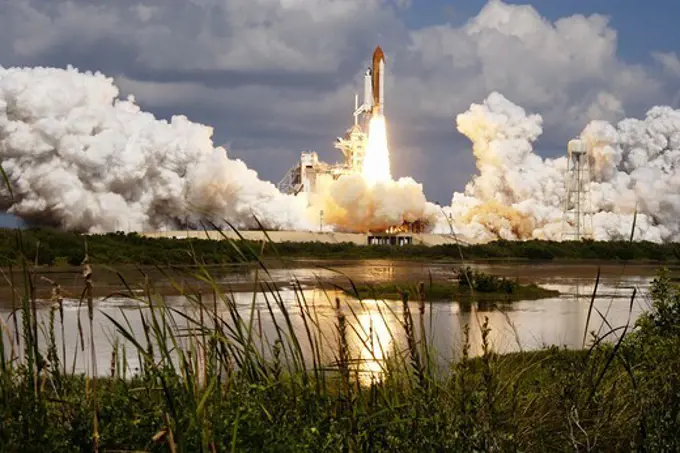
Liftoff of Space Shuttle Discovery
RM
4308-138
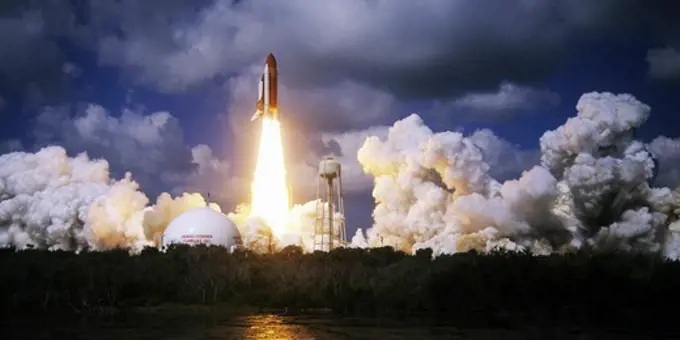
Liftoff of Space Shuttle Discovery
RM
4308-141
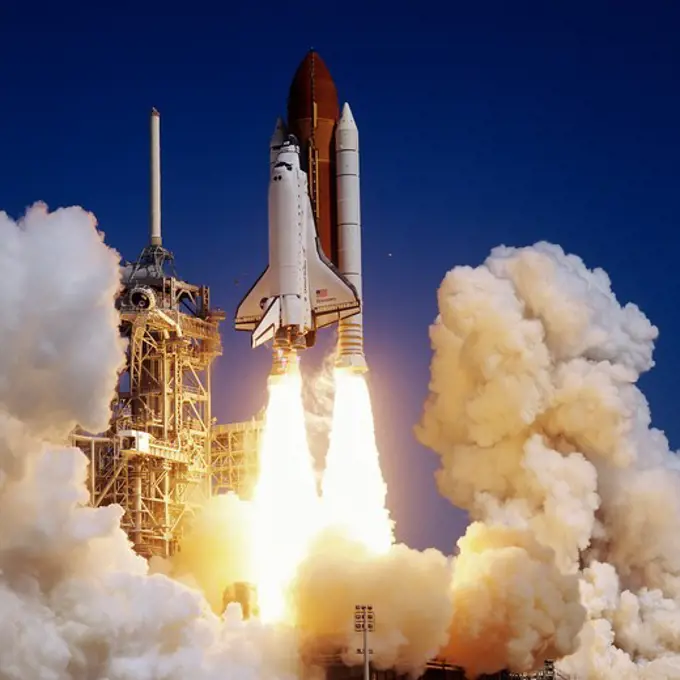
Liftoff of Space Shuttle Discovery
RM
4308-143
Liftoff of Space Shuttle Discovery
RM
4368-120
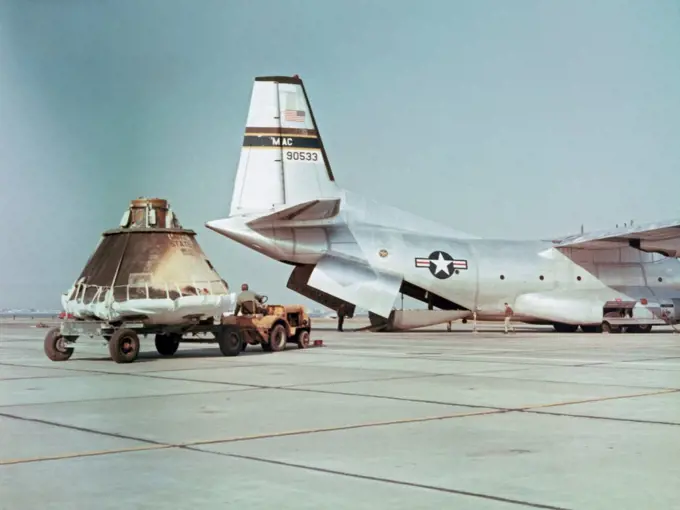
A Military Airlift Command C-130 aircraft prepares to load the flown AS201 command module for transport to the Manned Spacecraft Center, Houston, Texas for further review and tests after its February 1966 suborbital test flight.
RM
4368-127
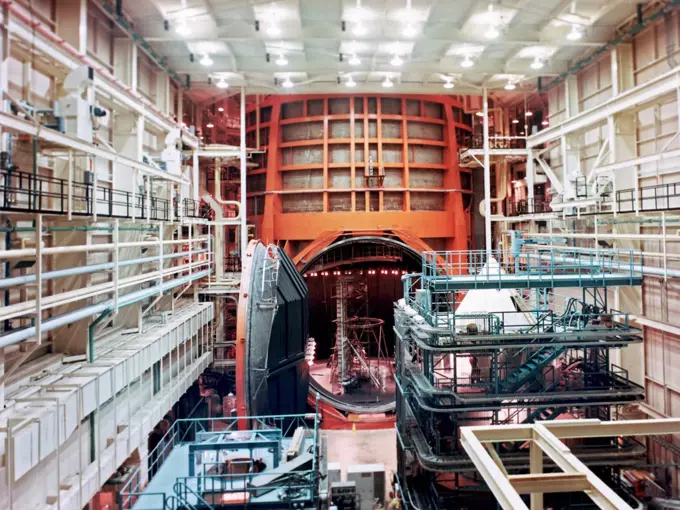
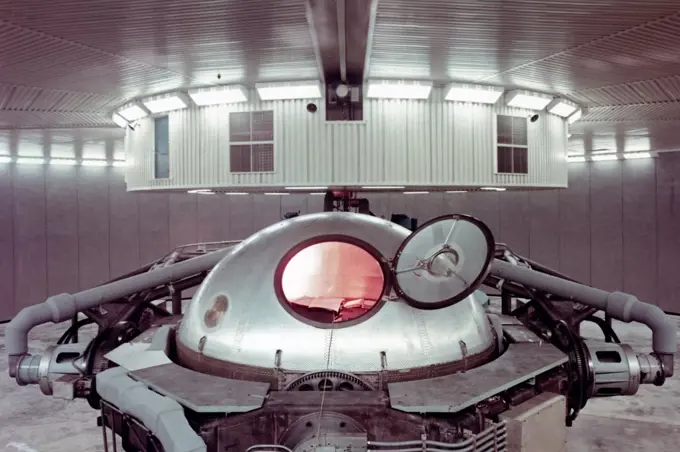
The large vacuum chamber in the Space Environment Simulation Laboratory (SESL), Chamber A, is a large stainless steel vessel, 65' in diameter by 120' high.  The door is 55' in diameter.  Inside clear dimensions are 55' diameter by a height of 90'.  The chamber is used to simulate a lunar environment. Temperate can be controlled to simulate lunar surface temperatures from -315 to +260 degrees Fahrenheit.  A scale model of the Apollo capsule awaits testing.
RM
4368-151
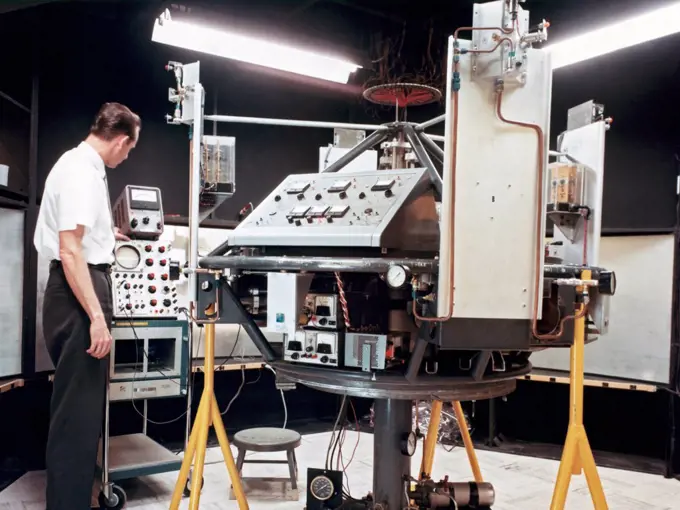
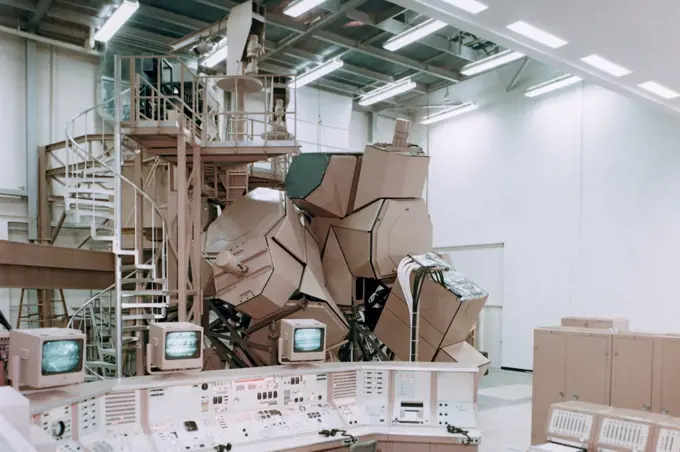
This simulator, five feet in diameter, had three degrees of rotational freedom, and simulated the motion of space vehicle attitude control systems. The simulator's control torque-to-inertia ratios, or angular accelerations, are adjustable.
RM
4368-161
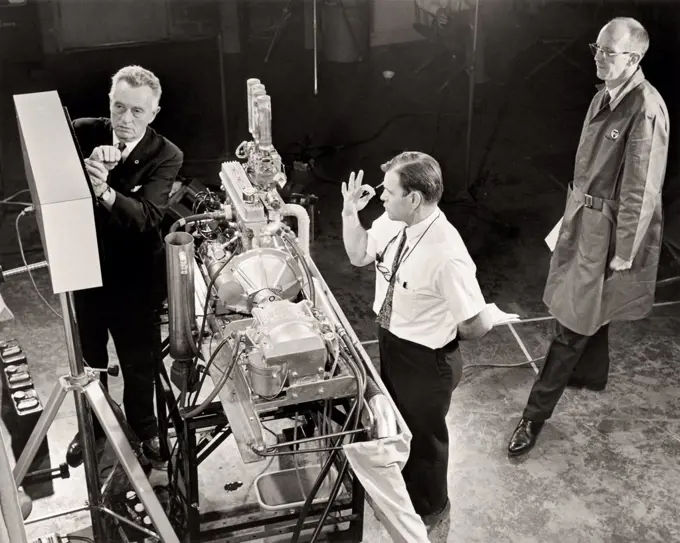
Ethyl Corporation, a fuel-additive corporation, was the first to use tetraethylene (TEL) as an anti knock additive in gasoline.  Here a mock up of an engine demonstrates the difference in Premium, Standard and Regular gasoline performance at an early press conference in the early 1960s.
RM
4368-103
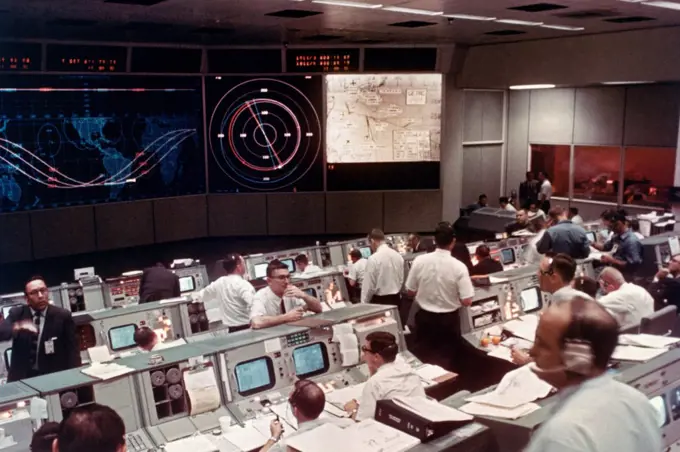
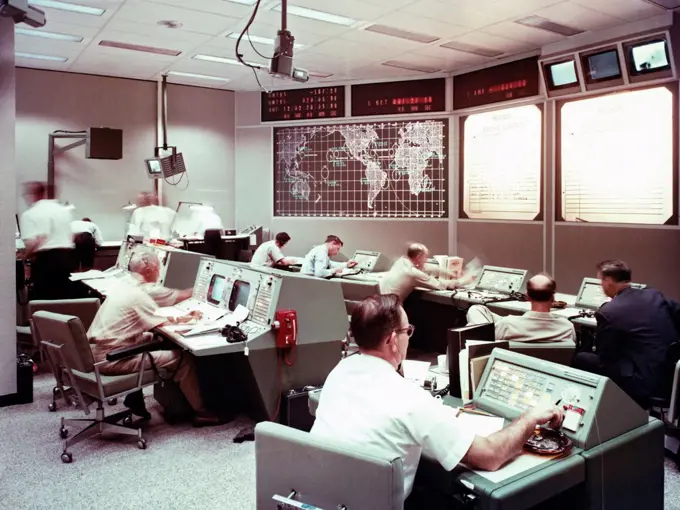
A view of the Mission Operations Control Room (MOCR) at NASA/JSC, circa 1966, during a Gemini mission, possibly Gemini 3.
RM
4368-108
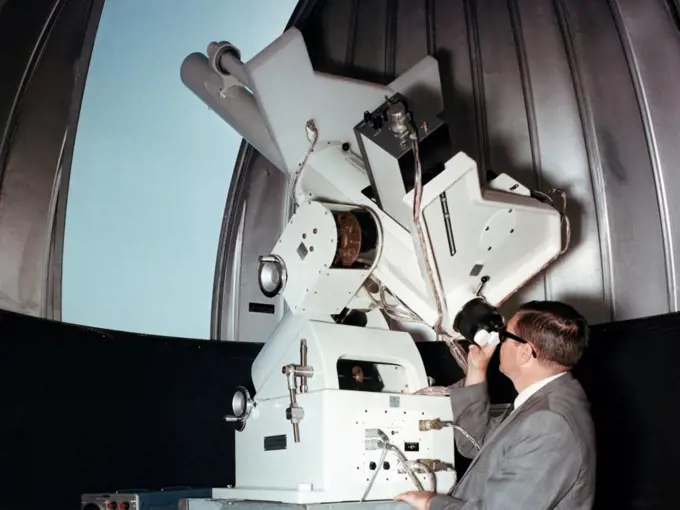
The solar optical telescope, housed at NASA/JSC Building 270, is a 6' refractor type with an effective aperture of 5'.  It is equipped with an hydrogen alpha filter,, a solar spectrograph, optical and TV cameras and associated equipment.
RM
4368-112
The Apollo Mission Simulator  was a fixed base training device capable of simulating the characteristics of space vehicle systems, performance and flight dynamics.
RM
4368-170
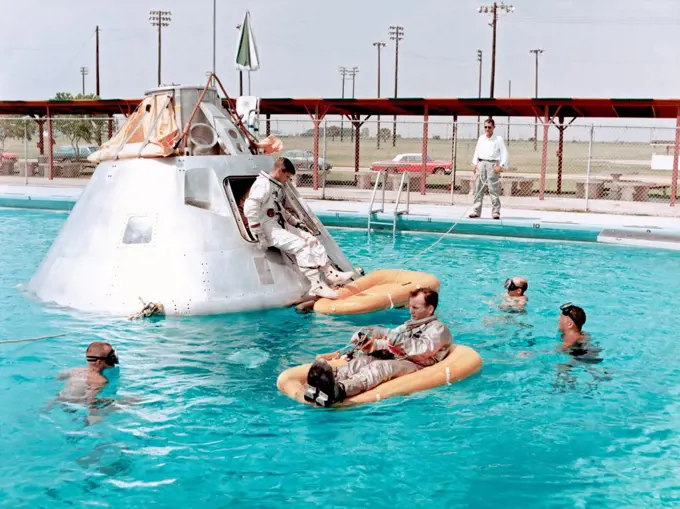
Prime crew for the first manned Apollo mission practice water egress procedures with full scale boilerplate model of their spacecraft. Astronaut Edward H. White II rides life raft in the foreground. Astronaut Roger B. Chaffee sits in hatch of the boilerplate model of the spacecraft. Astronaut Virgil I. Grissom, third member of the crew, waits inside the spacecraft.
RM
4368-104
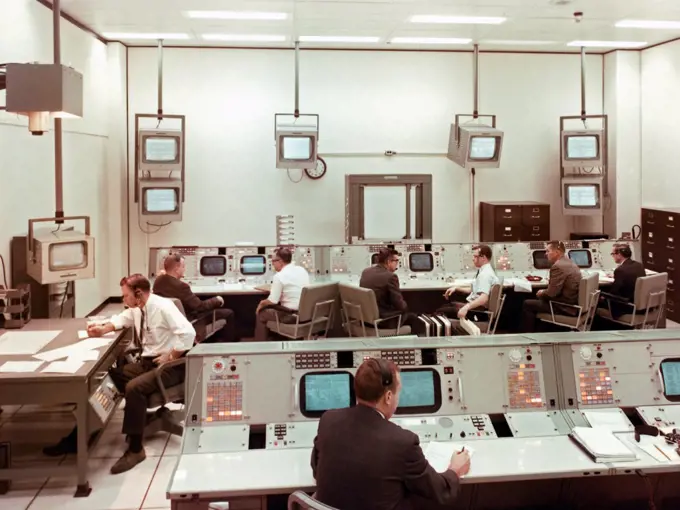
A view taken inside the staff support room (SSR), a support room for the MOCR (Mission Operations Control Room) used for scheduling, monitoring and directing network activities and readiness checks.  Responsibilities also include verifying remote site prepass equipment and directing network handover operations.
RM
4368-124
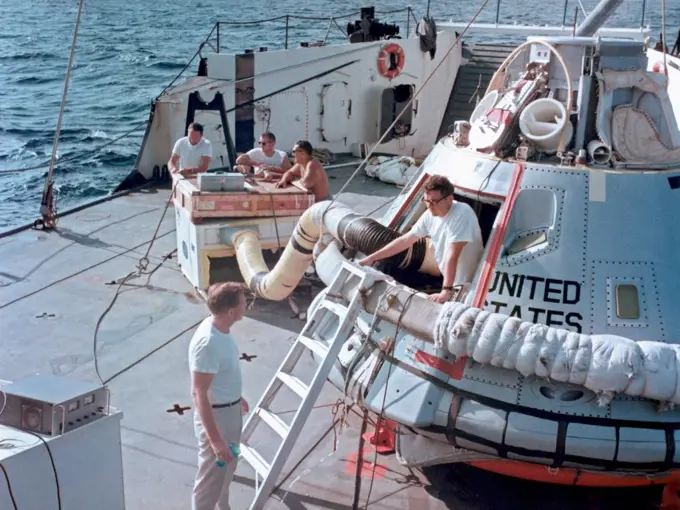
The recovered Command Module from the first Apollo unmanned test flight, AS201, sits on the deck of the USS Boxer.  The stack consisted of the Block 1 Command Service Module (CSM) and two Saturn rocket stages, and was designed to test the launch vehicle and CSM separation and rocket firing.
RM
4368-131
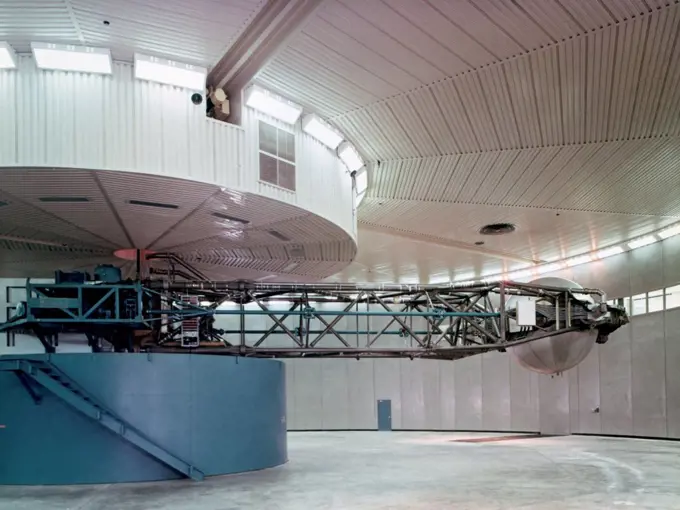
View of the now-defunct centrifuge at the Manned Spacecraft Center (MSC), now the Johnson Space Center (JSC) formerly located in the Flight Acceleration Facility, bldg 29. The 50-ft. arm can swing the three man gondola to create g-forces astronauts will experience during controlled flight and during reentry. The centrifuge was designed primarily for training Apollo astronauts.
RM
4368-145
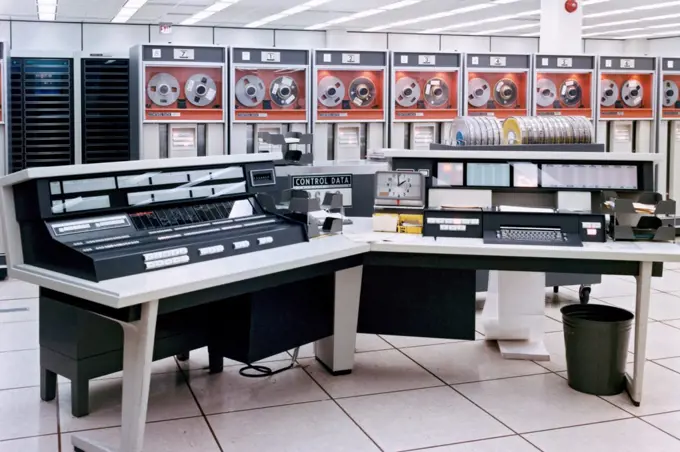
This is the main computing console for the Data Reduction Complex and is the heart of the NASA-MSC postflight data processing and reduction for America's manned space flight activities.  Information telemetried back from orbiting spacecraft is processed here in order that scientists and engineers can perform a complete post-flight analysis of the mission.
RM
4368-154
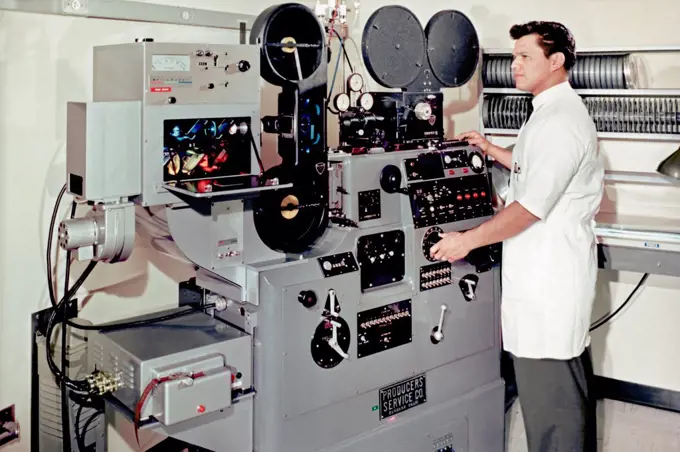
An optical printer, circa 1964. Photo optical printers were used to create effects on film, from dissolves and zooms to aspect ratio changes. This printer also has a color head (left) allowing for color correction.
RM
4368-143
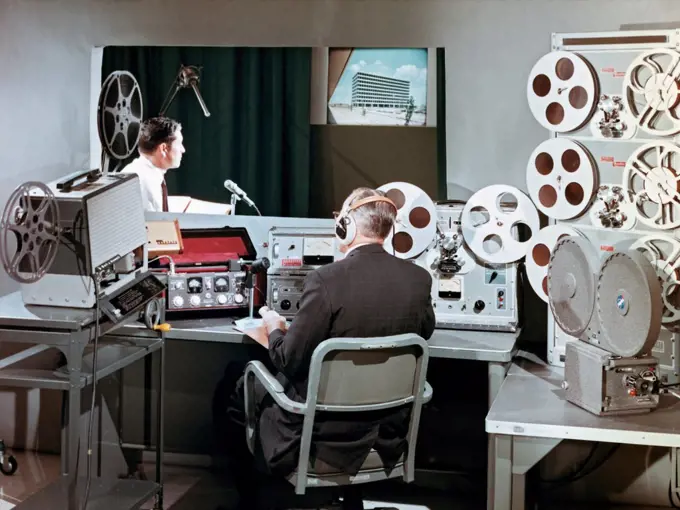
State of the art voice and recording studios for film work, scoring, dubbing and interlock playback, circa 1964.
RM
4368-163
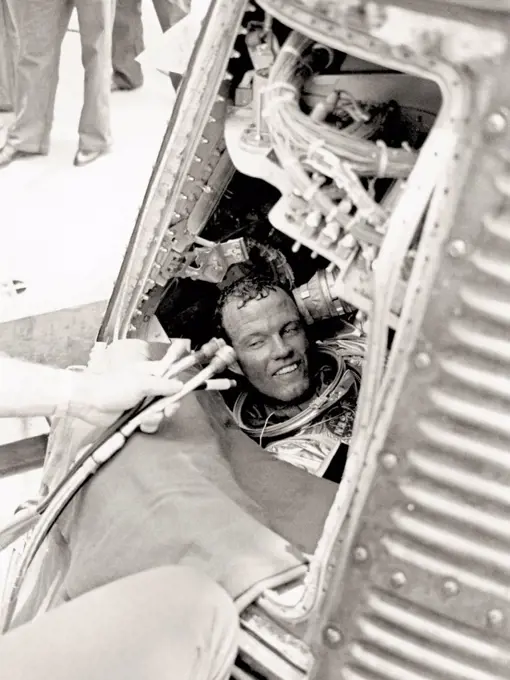
Gordon Cooper was launched into space on May 15, 1963 aboard the Mercury-Atlas 9 (Faith 7) spacecraft, the last Mercury mission. He orbited the Earth 22 times and logged more time in space than all five previous Mercury astronauts combined  34 hours, 19 minutes and 49 seconds, traveling 546,167 miles (878,971 km) at 17,547 mph (28,239 km/h), pulling a maximum of 7.6 g (74.48 m/s). Towards the end of the Faith 7 flight there were mission-threatening technical problems. During the 19th orbit the
RM
4368-101
A view of the now-defunct centrifuge at the Manned Spacecraft Center (MSC), now the Johnson Space Center (JSC) formerly located in the Flight Acceleration Facility, bldg 29. The 50-foot arm can swing the three man gondola to create g-forces astronauts would experience during controlled flight and during reentry. The centrifuge was designed primarily for training Apollo astronauts.
RM
4368-128
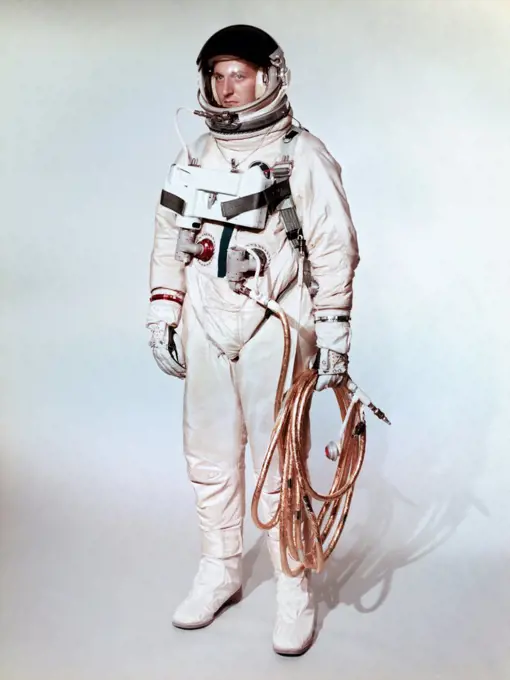
Extravehicular space suite worn by a Gemini 4 astronaut is shown on a test subject.  Gold coated umbilical connects the astronaut to the Gemini spacecraft.
RM
4368-102
A view taken inside the recovery control room formerly at MSC (Manned Spacecraft Center) during a training session.  Screens show the tracking stations and recovery operations for one of the Gemini missions.
RM
4368-115
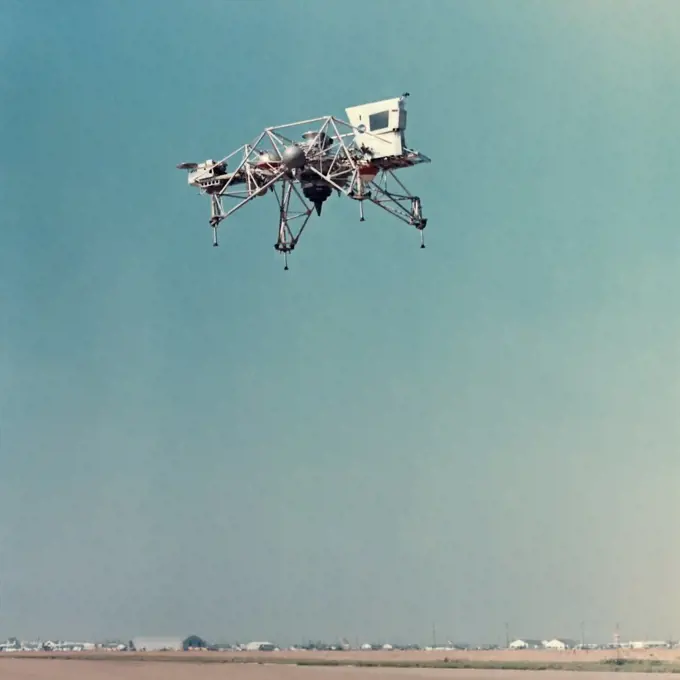
The Lunar Landing Training Vehicle (LLTV) was developed for NASA by Bell Aerosystems, Inc. The LLTV was used by NASA Apollo Program astronauts to develop piloting skills. The LLTV provided Apollo program commanders the opportunity to experience the flight characteristics associated with the 1/6th gravity conditions on the moon. The first LLTV vehicle was assembled at Ellington Air force Base in Houston, Texas in 1967.  This is most likely the first LLTV.
RM
4368-138
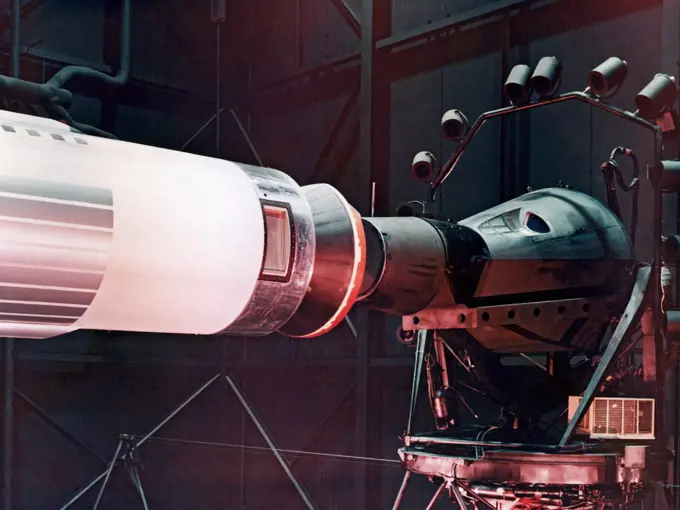
A major objective of Project Gemini was to demonstrate the solution of the rendezvous and docking problems as associated with Earth orbiting vehicles. This simulator is a moving base simulator and is applicable to that port of the mission from a range of 100 feet separation of the two vehicles to physical contact, docking, rigidizing, unlatching and maneuvering away.
RM
4368-157
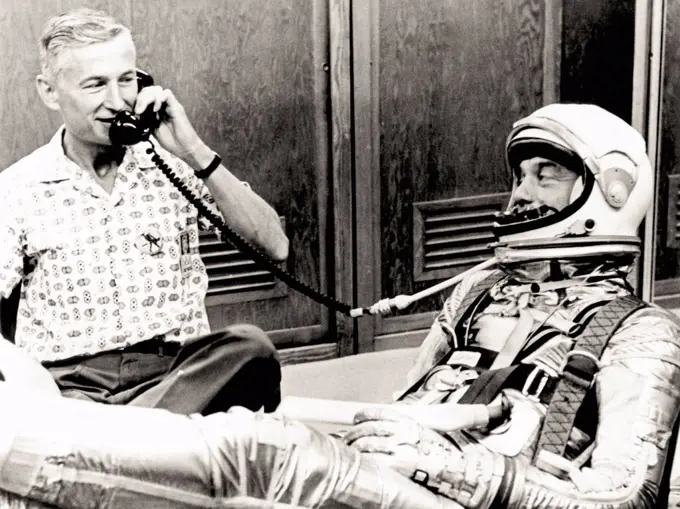
Astronaut Alan Shepard in his pressure suit, for the Mercury-Redstone 3 (MR-3) flight, the first American manned space flight. On May 5, 1961, Shepard piloted the Freedom 7 mission and became the second person, and the first American, to travel into space.
RM
4368-176
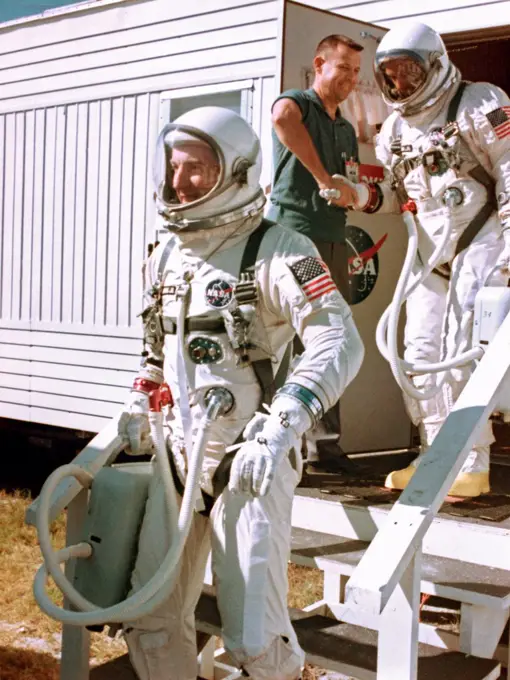
Gemini 12 prime crew, Astronauts James A. Lovell Jr. (leading), command pilot, and Edwin E. Aldrin Jr., pilot, leave the suiting trailer at Launch Complex 16 during prelaunch countdown.
RM
4329-131
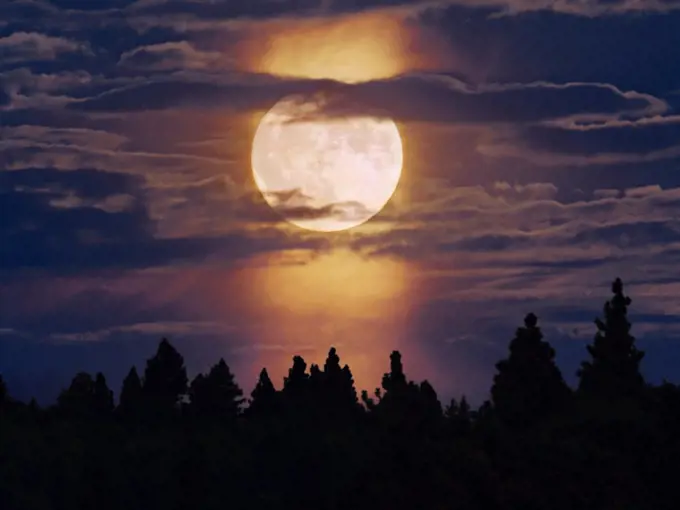
Ice crystals glow a bright yellow from the rising full moon as a winter storm moves from the Pacific Ocean into the foothills surrounding Foresthill, California. Digitally composited.
RM
4329-159
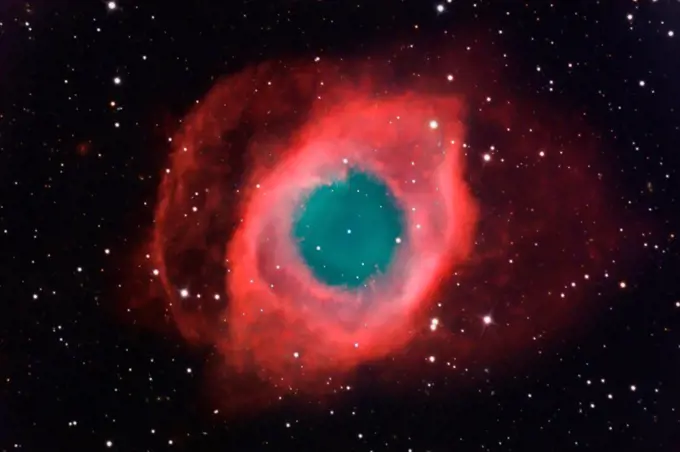
The closest planetary nebula to Earth at about 450 light years, the Helix can be seen as a soft glow from dark skies even in binoculars. It is also one of the largest planetary nebulas.
RM
4329-127
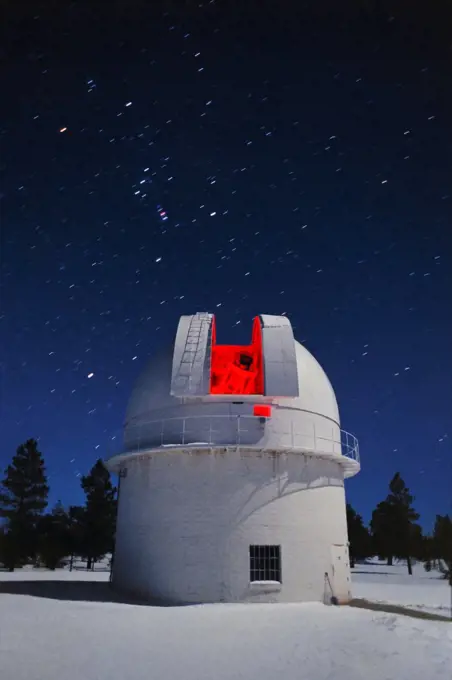
The 42" telescope glows softly red in this time exposure of the dome illuminated by a partial moon. Just above the dome the constellation Orion is rising into the winter sky. The 42" telescope is one of several that Lowell Observatory uses on Anderson Mesa, located just south of Flagstaff, Arizona.
RM
4389-471
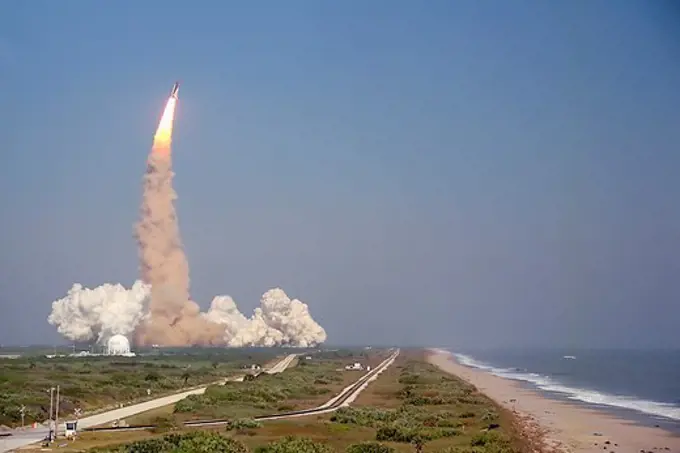
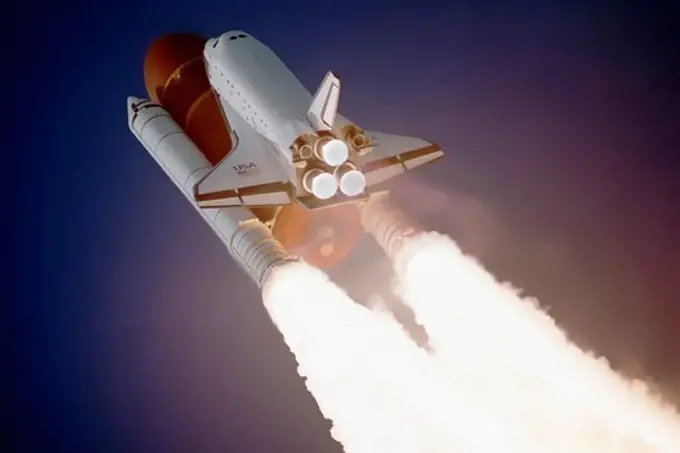
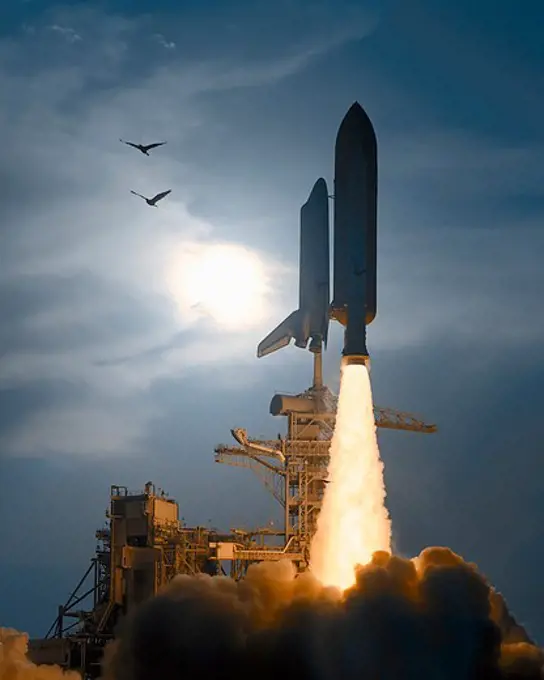
Launch of Space Shuttle Discovery
RM
4389-463
Space Shuttle Atlantis Launches
RM
4389-467
Launch of Space Shuttle Discovery
RM
4311-155
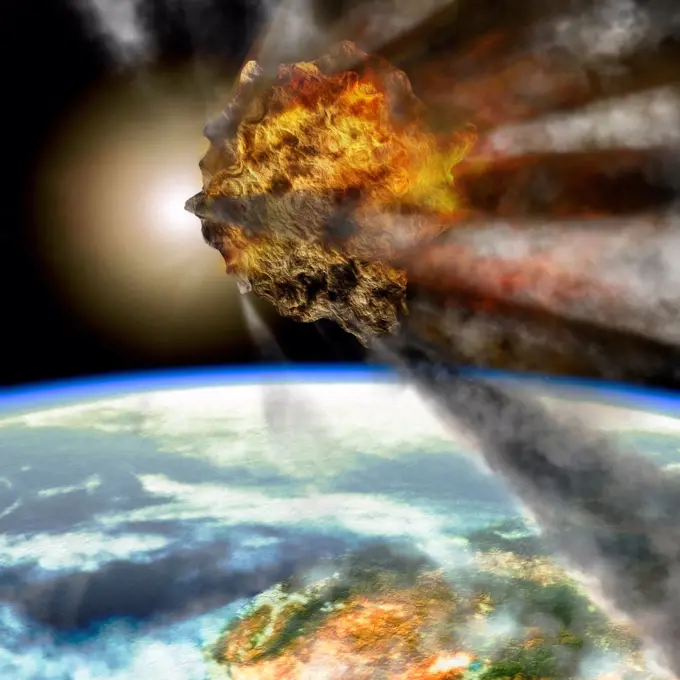
A Meteor Enters the Earth's Atmosphere
RM
4311-156
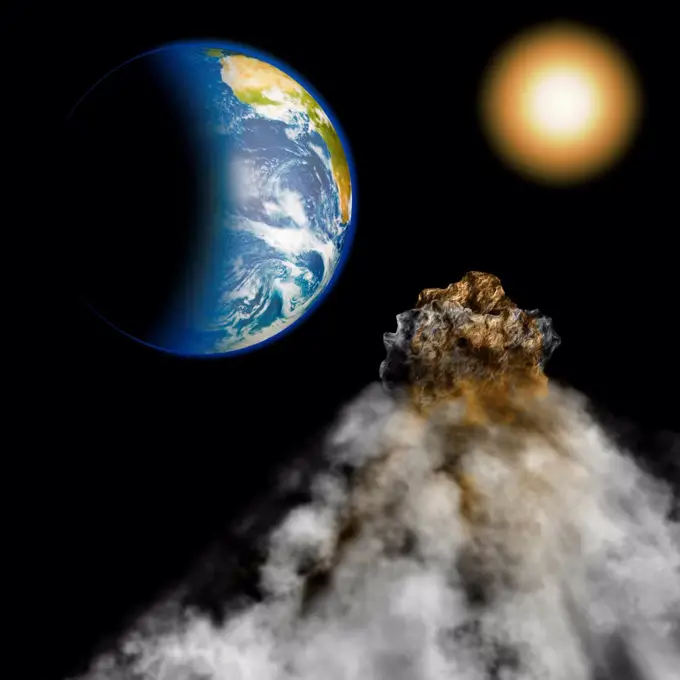
An Asteroid on an Intercept Course for Earth
RM
4311-148
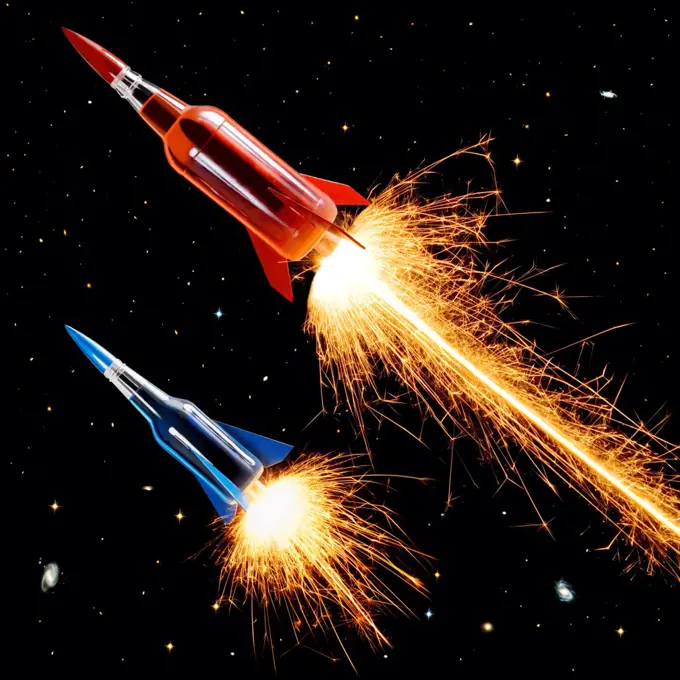
A Pair of Bottle Rockets Zoom Through Space
RM
4314-104
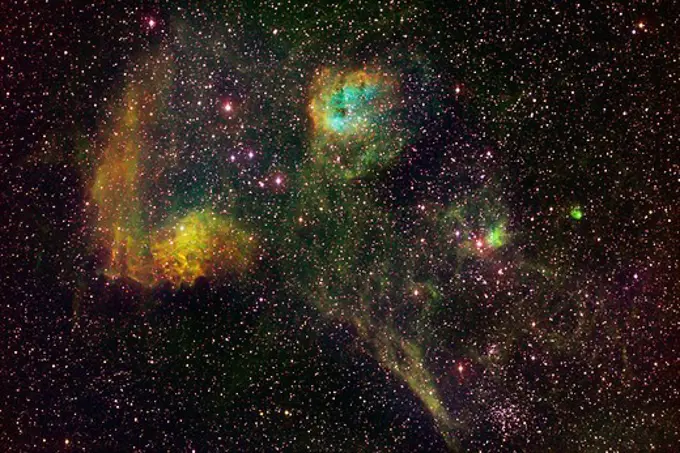
Nebulae of Auriga
RM
4314-101
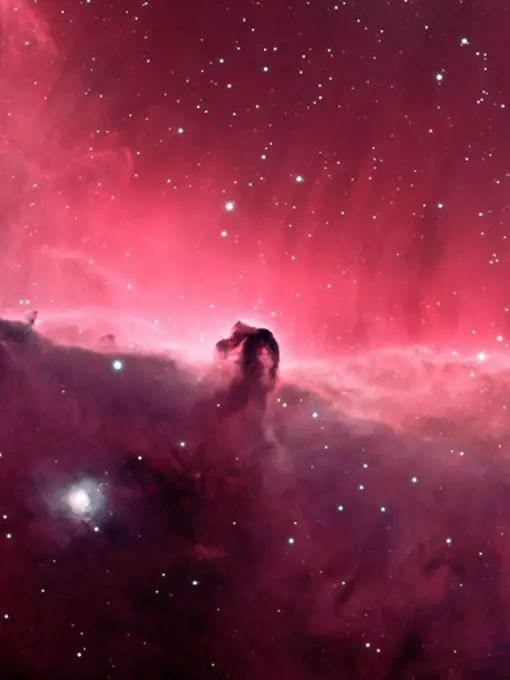
Horsehead Nebula
RM
4314-103
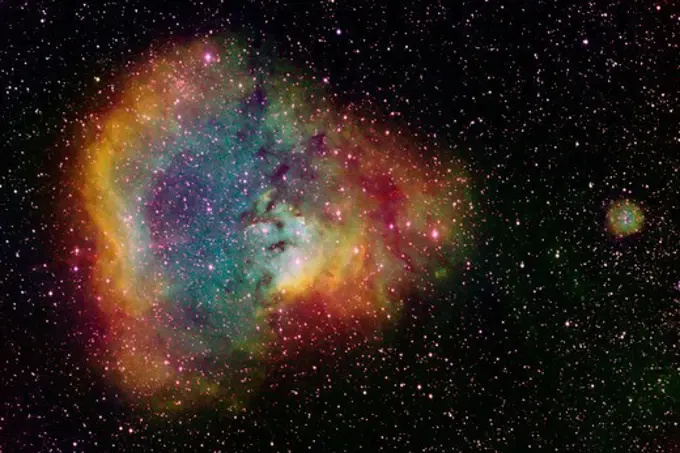
NGC 7822 and Cederblad 214
RM
4314-113
IC 405
RM
4314-106
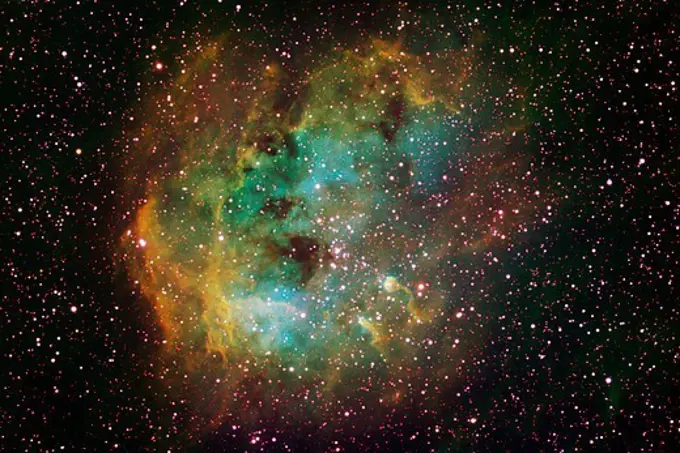
IC 1795
RM
4314-119
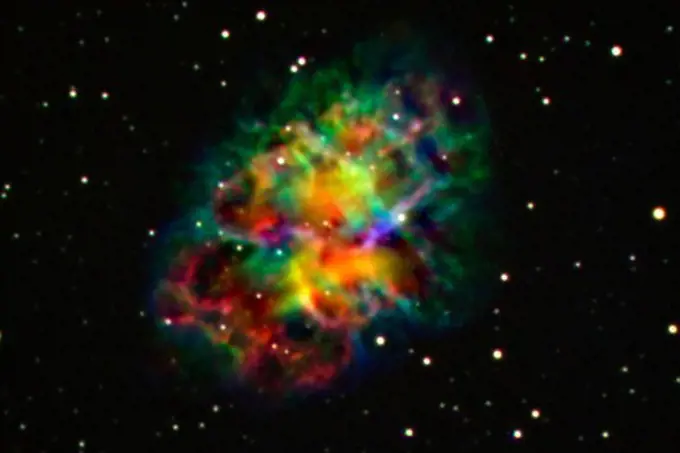
Crab Nebula
RM
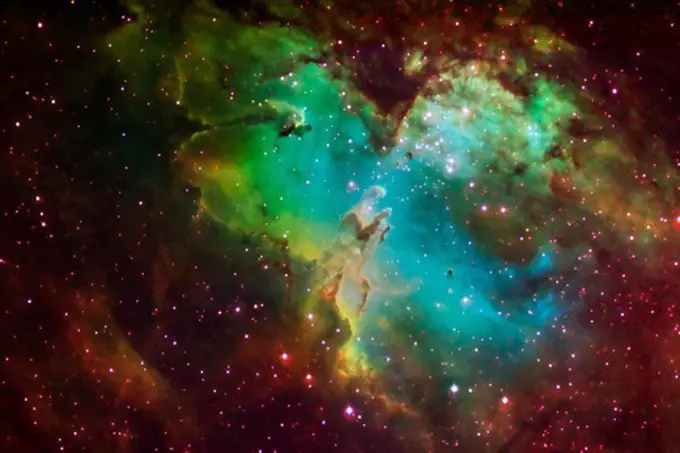
4314-111
Eagle Nebula
RM
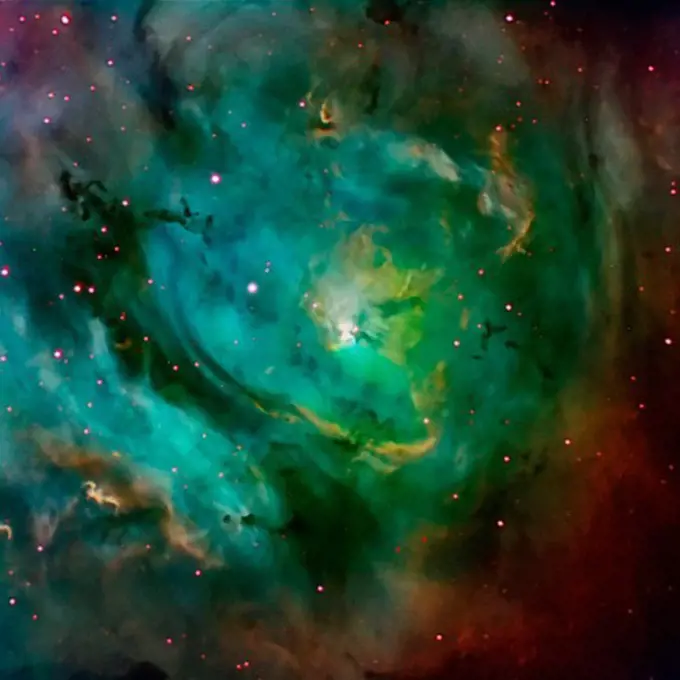
4314-115
Detail of Lagoon Nebula
RM
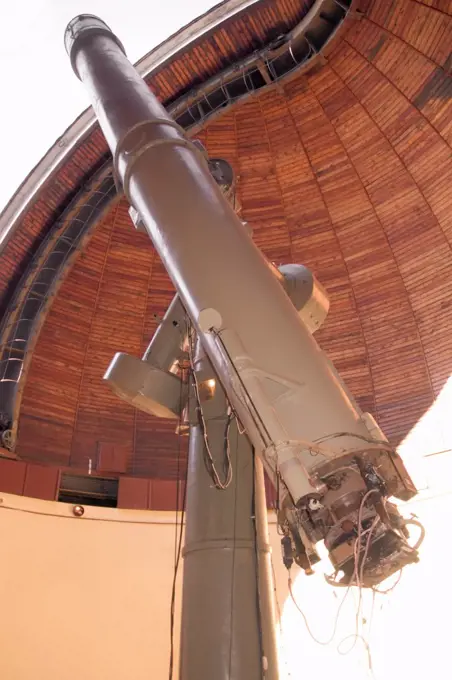
4351-177
Refractor at Pulkovo Observatory
RM
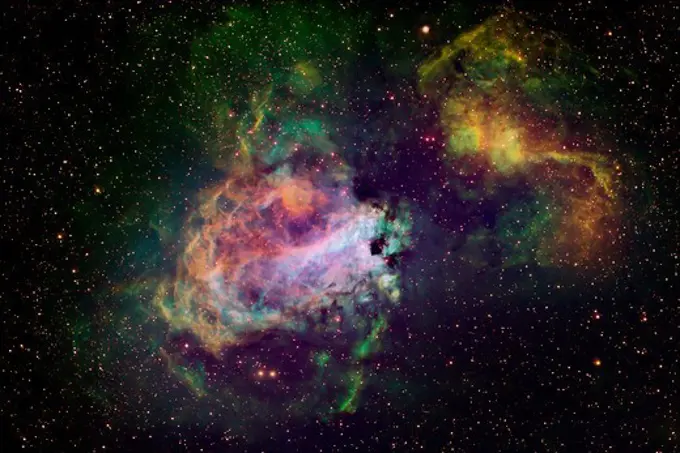
4314-116
Omega Nebula
RM
4389-1581
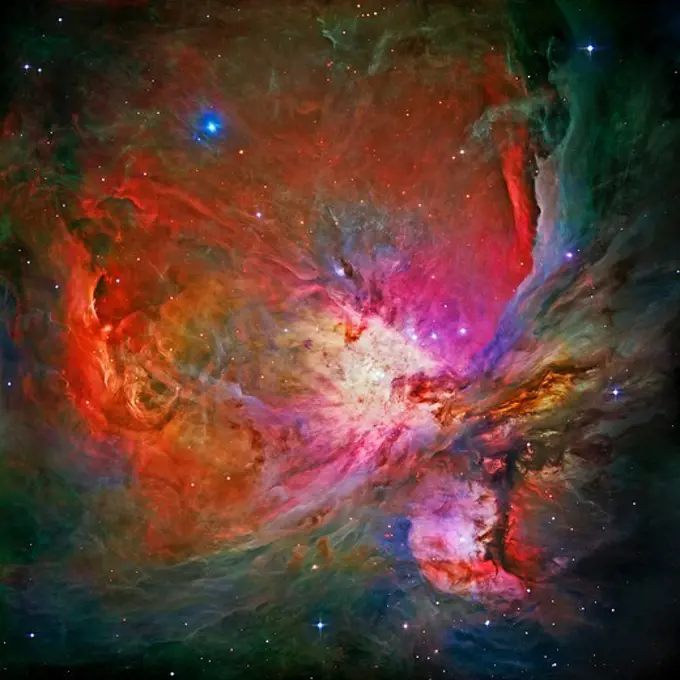
Hubble's Sharpest View of the Orion Nebula
RM
4389-1578
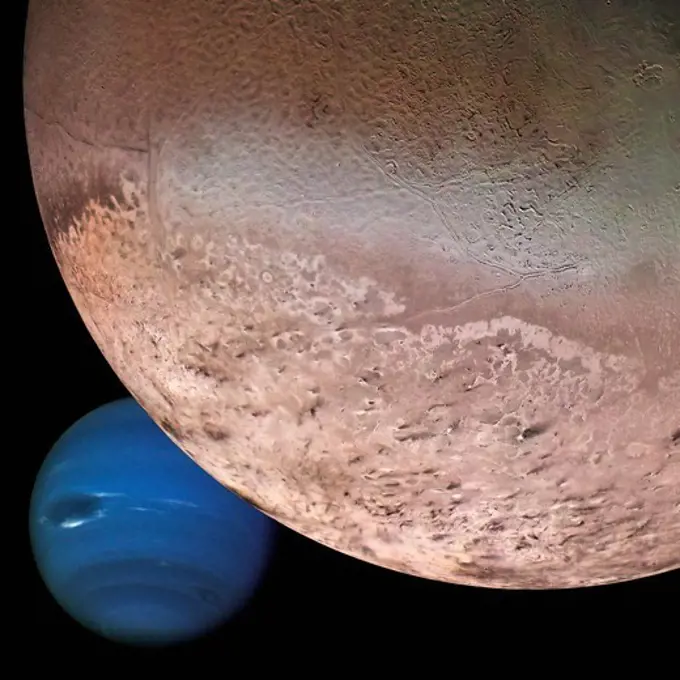
Neptune and Triton (Digital Composite from Voyager 2)
RM
4389-1579
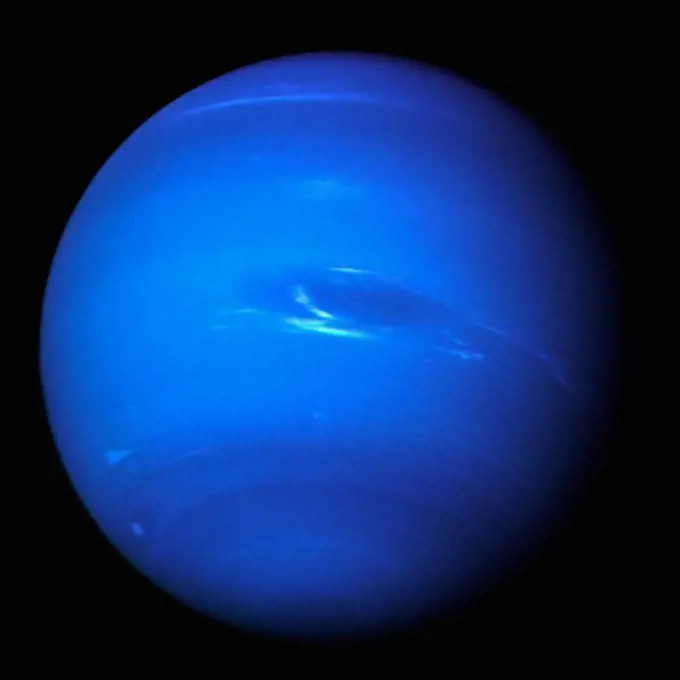
Neptune Glows a Brilliant Blue in the Night Sky Seen by Voyager 2
RM
4389-1585
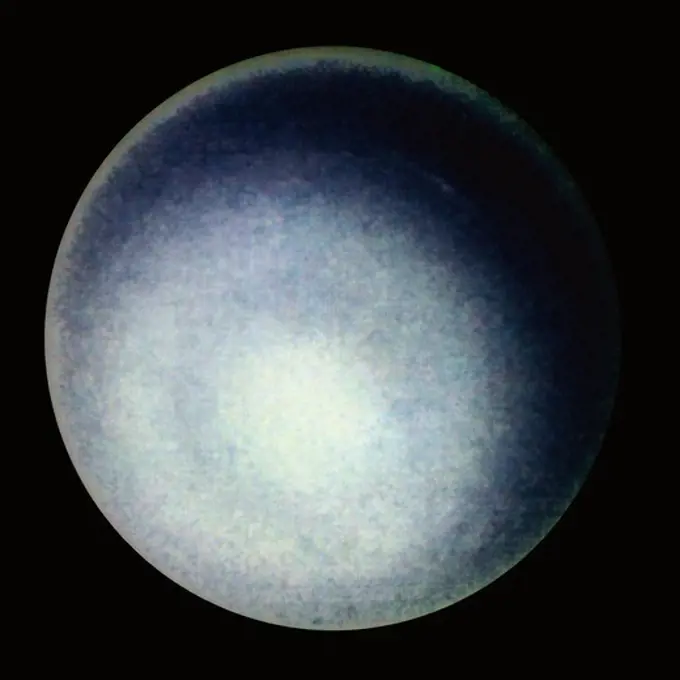
The Upper Atmosphere of Uranus Seen by Voyager 2
RM
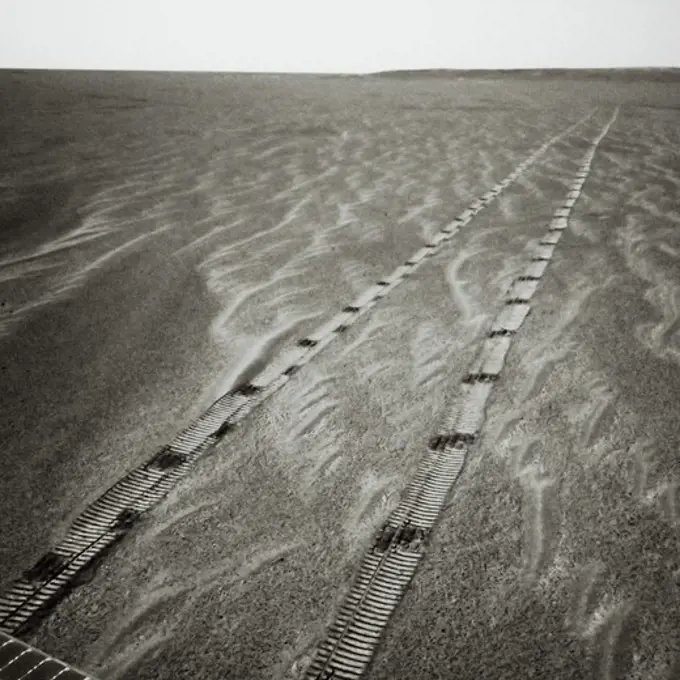
4389-1541
Looking Back Across Meridiani Planum Seen by Rover Opportunity
RM
4389-1556
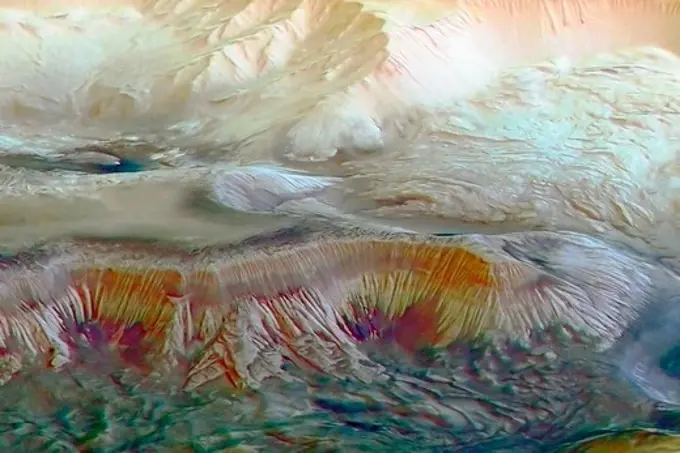
Three-Dimensional View of Hebes Chasma Seen by Mars Express
RM
4389-1514
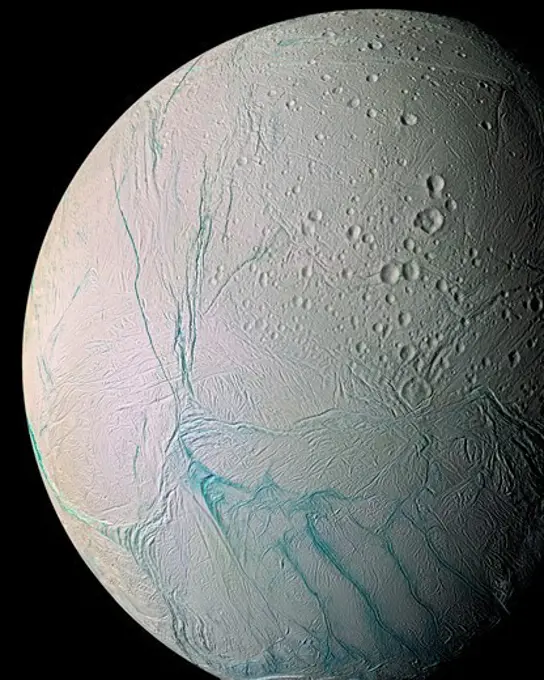
Enceladus the Storyteller As Seen By Cassini
RM
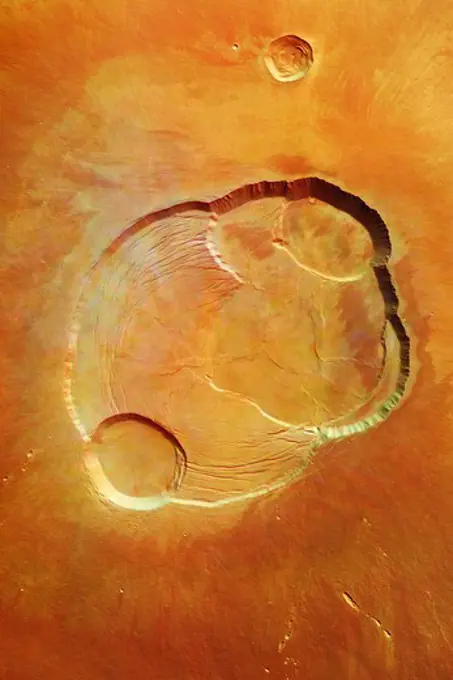
4389-1555
Olympus Mons Seen by Mars Express
PREVIOUS
of 14
NEXT
2401 S. Ervay, Suite 206
Dallas, Texas 75215
United States
Get Started
My BoardsFree ResearchMy Cart
For Creators
How To License Your ContentSuperStock For StudentsFrame of MindContributor PortalNew Image Picks From Our Editors
Resources
LicensingTerms & ConditionsAbout UsAPI AccessPricingPrivacy
Contact
+1 866 236 0087help@superstock.com Contact form
©2026 SuperStock. All Rights Reserved. -A
This site is protected by reCAPTCHA and Google Privacy Policy and Terms of Service apply.