Space

Explore the vastness of space with SuperStock's comprehensive collection of stock images and clips. Our gallery offers a unique opportunity to discover the wonders of the solar system, from planets and galaxies to asteroids and comets. With our expansive selection, you can find the perfect image or clip to bring your project to ...Read more
RF
4239R-20483100
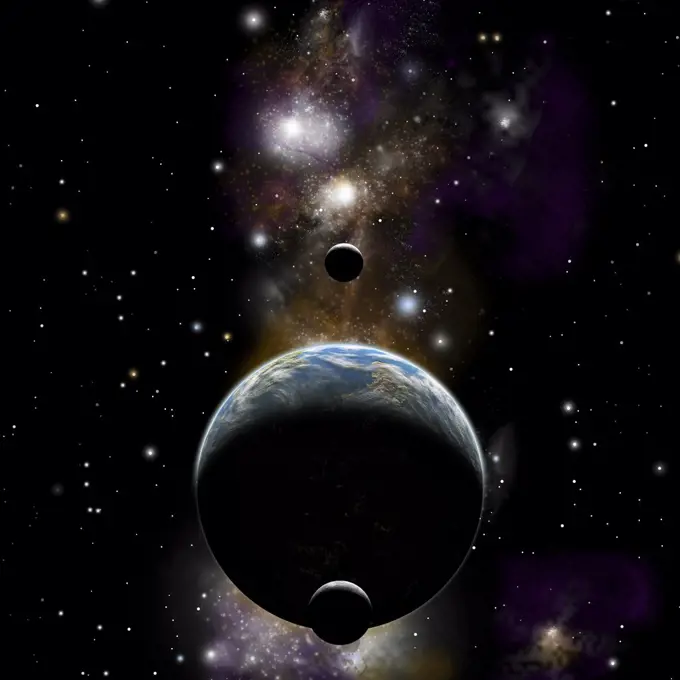
An artist's depiction of an Earth type world with two moons against a background of nebula and stars.
RF
4239R-20483131
An artist's depiction of an Earth-like planet in deep space facing an imminent collision with a comet.
RF
4239R-20483111
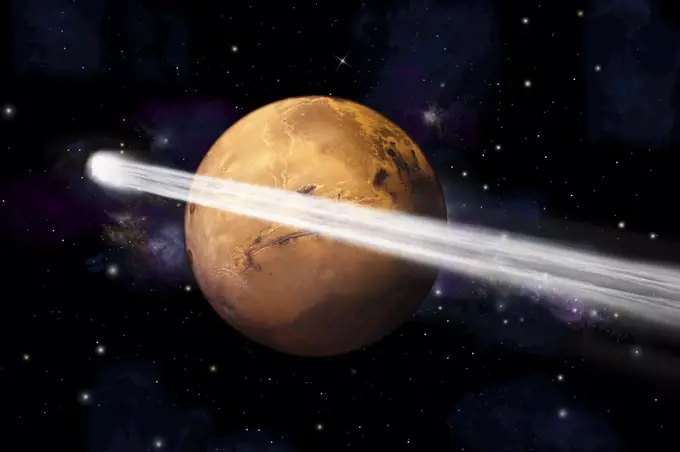
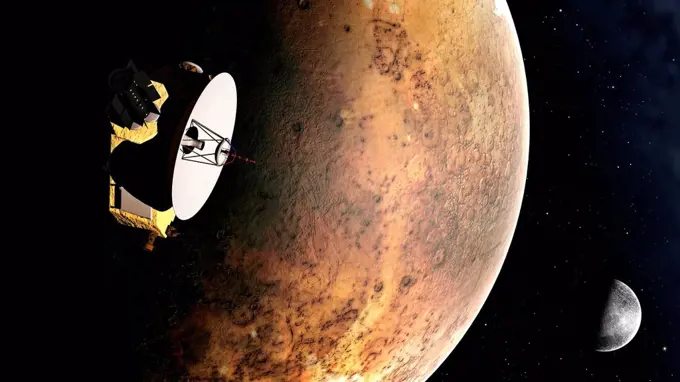
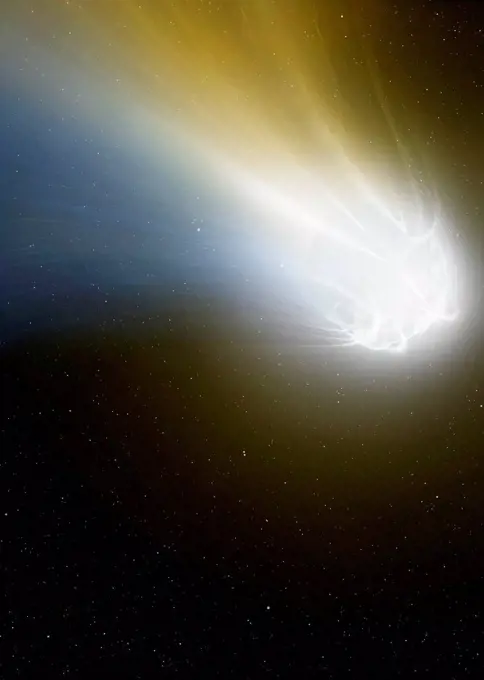
An artist's depiction of the comet C/2013 A1, also known as Siding Spring after the Australian Observatory that discovered the comet. It is shown making a close pass by Mars which is scheduled to happen in October of 2014. Mars image courtesy of NASA.
RF
4239R-20483148
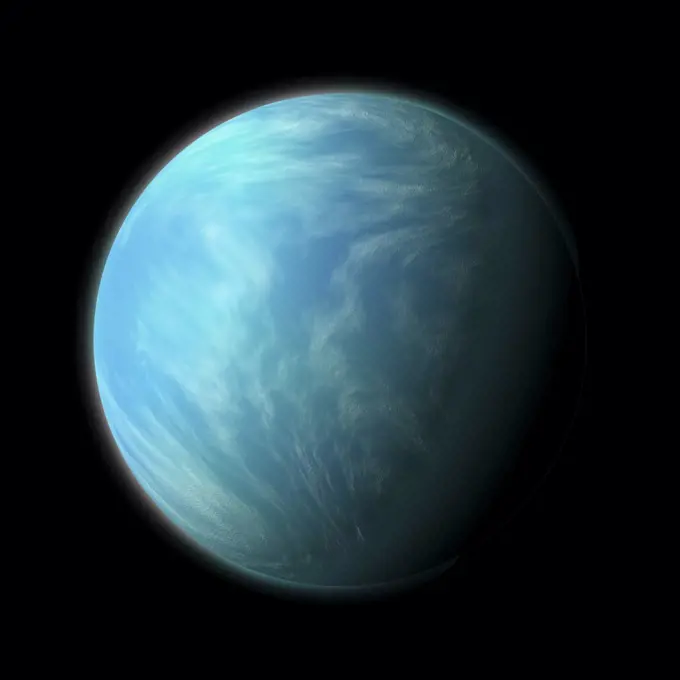
Artist's depiction of Kepler 22b, a planet within the habitable zone of a type G star about 600 light years from Earth in the constellation Cygnus.
RF
4239R-20483133
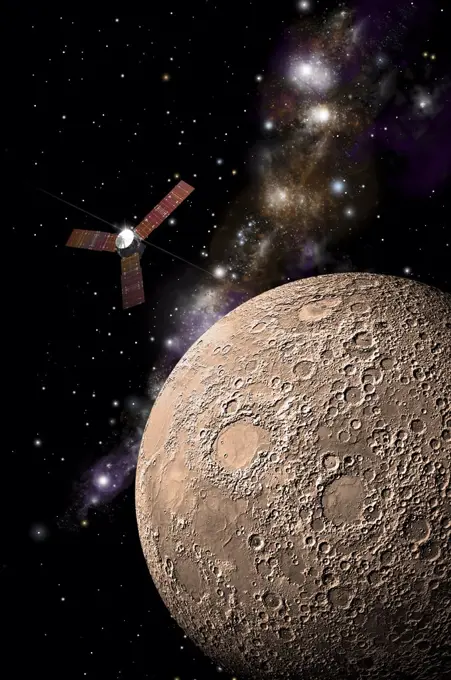
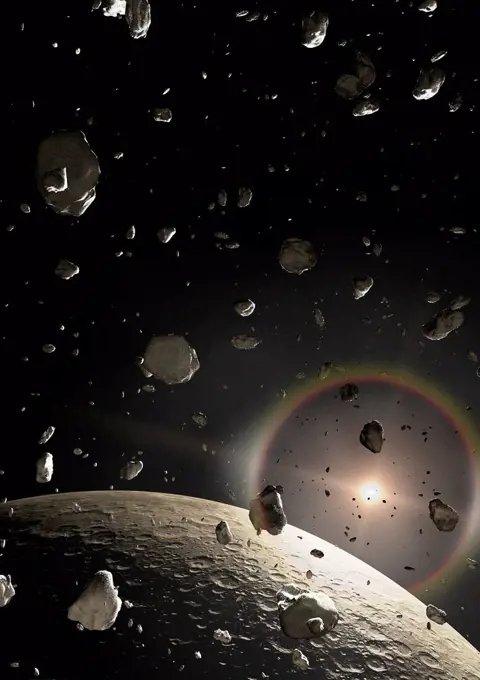
An artist's depiction of a probe investigating a heavily cratered moon in deep space.
RF
4128R-13022893
Artwork of an active galactic nucleus. Many, perhaps most large galaxies, are thought to harbour supermassive black holes in their central regions. Th...
RM
1035-20589379
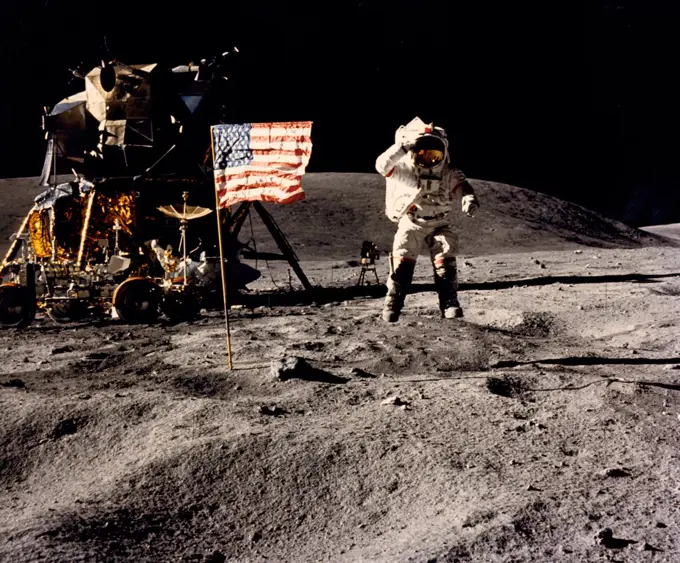
Moon:  April 21, 1972 Astronaut John Young,  commander of the Apollo 16 lunar landing mission, leaps from the lunar surface as he salutes the U.S. flag at the Descartes landing site during the mission's first extravehicular activity. The Lunar Module and the Lunar Roving Vehicle are at the left.
RM
1035-20589372
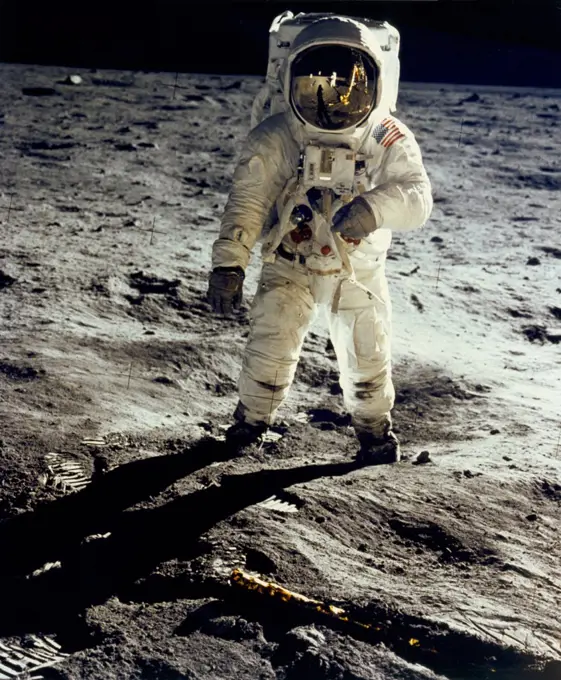
Moon:  July 20, 1969 Astronaut Edwin "Buzz" Aldrin, pilot of the lunar module, walks on the moon during the Apollo 11 lunar landing. A leg of the Lunar Module "Eagle" can be seen in the foreground, and the module is reflected in Aldrin's faceplate. Commander Neil Armstrong took the photograph.
RM
1035-20589382
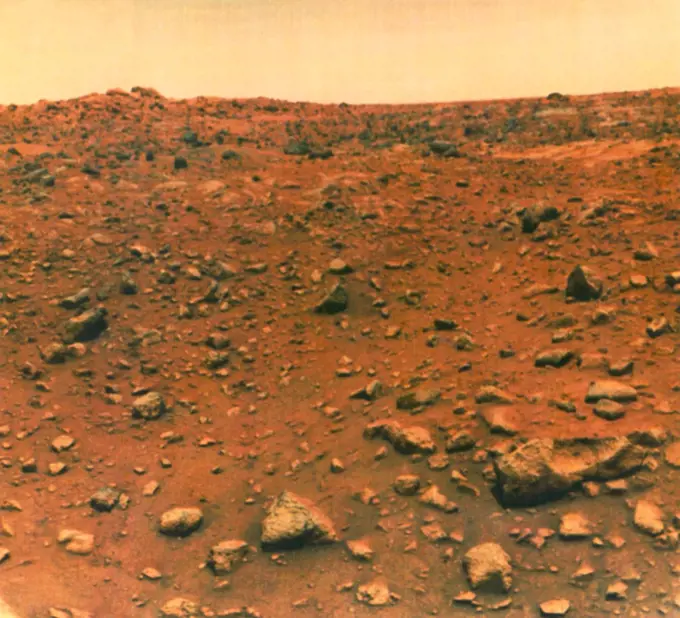
Mars:  July 21, 1976 The Martian landscape as photographed by the Viking 1 Lander Module the day after it landed on the surface of Mars.
RF
4128R-12699914
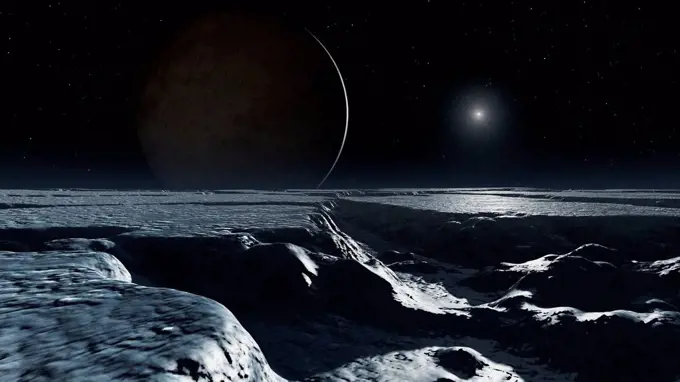
An artist's impression of the dwarf planet Pluto as it might appear from the surface of its biggest natural satellite, Charon. The New Horizons probe ...
RF
4128R-12699934
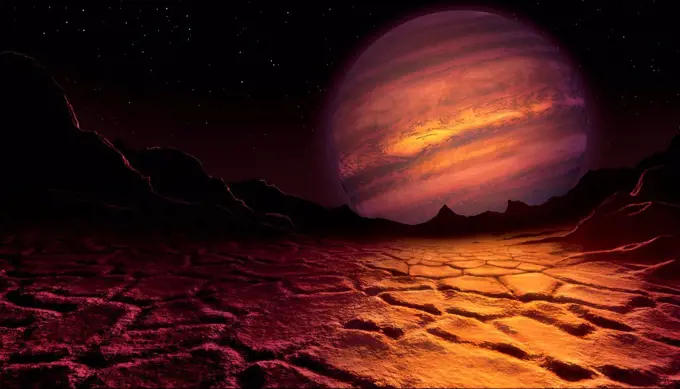
Artwork of a brown dwarf seen from a nearby planet. A brown dwarf is an object which began to accumulate material like a star but which never collecte...
RF
4128R-12699920
Kepler 438 is a red dwarf in Lyra, 470 light-years from Earth. Around this star, astronomers have detected a planet, probably rocky, within the habita...
RF
4128R-12699524
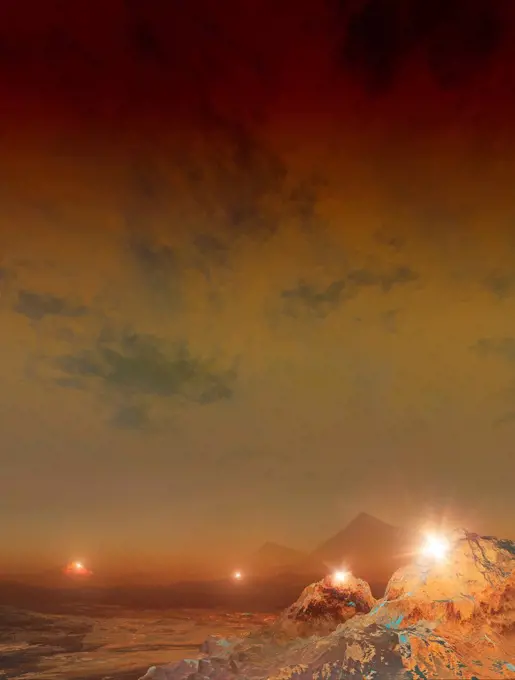
Planet surface with other planets in the distance, computer illustration.
RF
4128R-12699489
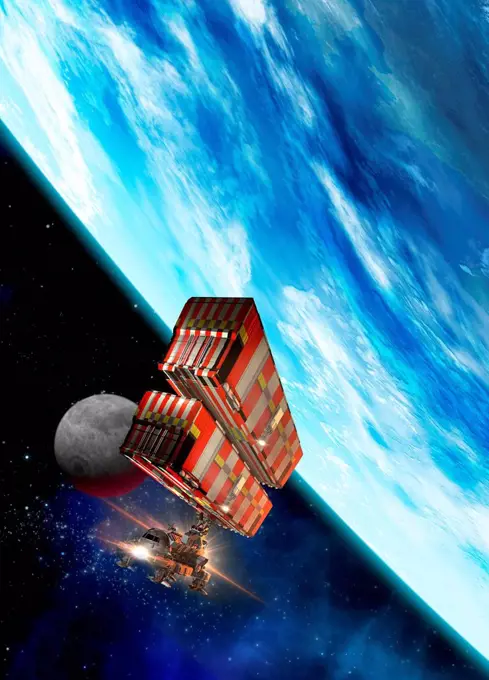
Space craft in outer space, computer illustration.
RF
4128R-12698897
Deflecting a near-Earth asteroid. Computer illustration of a nuclear bomb being detonated in space in order to alter the path of an asteroid to preven...
RF
4239R-20480171
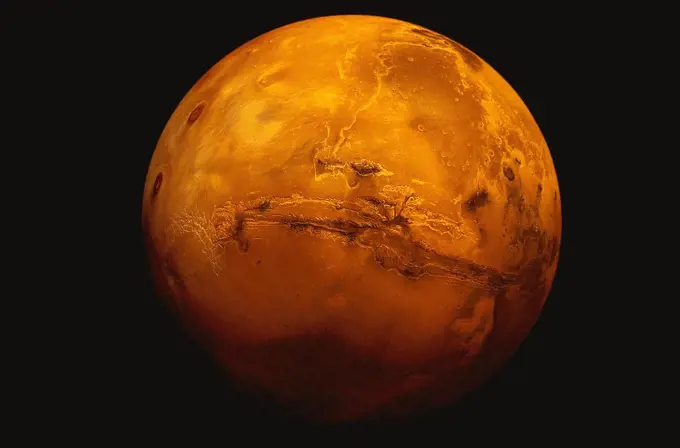
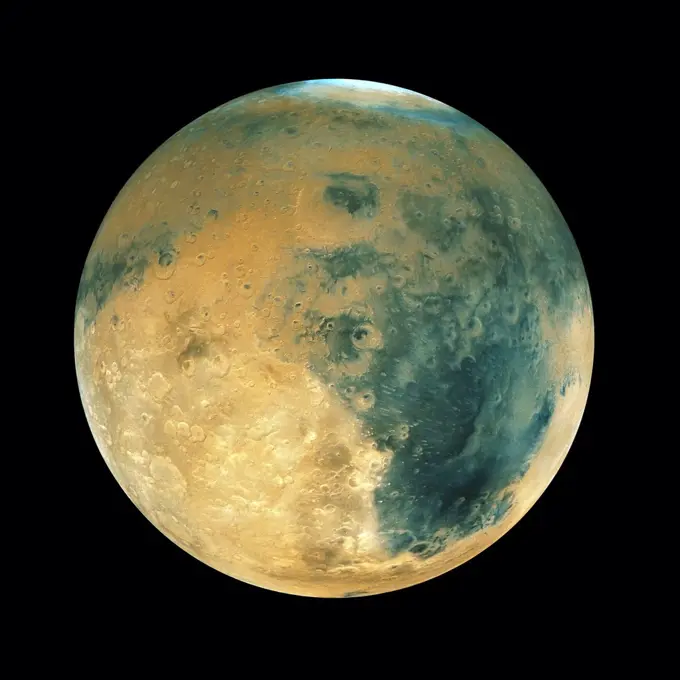
Mars
RF
4239R-20480143
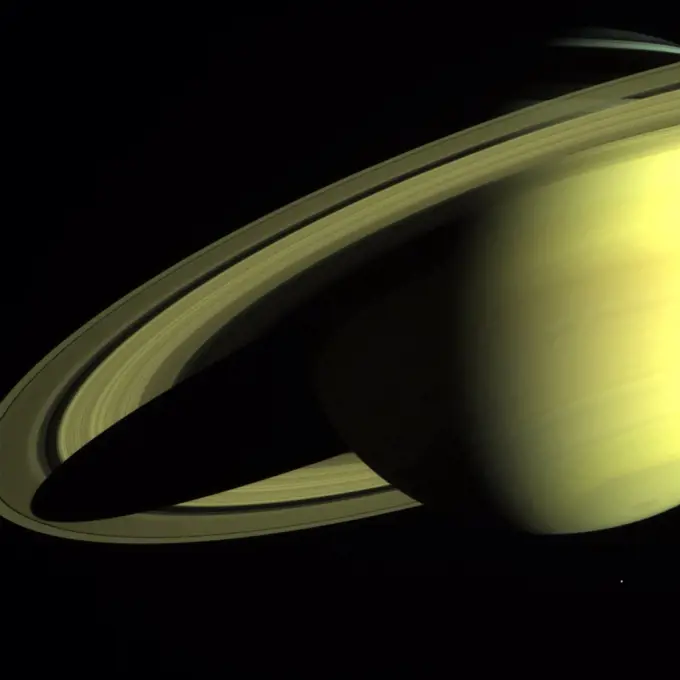
Saturn
RF
4239R-20480142
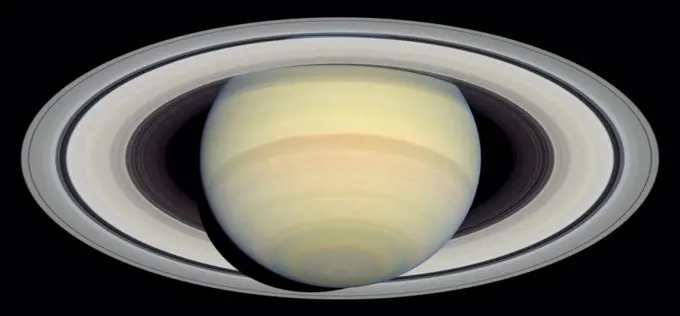
March 22, 2004 - This view of Saturn is so sharp that many individual ringlets can be seen in Saturn's ring plane.
RF
4239R-20480245
Mars
RF
4239R-20480273
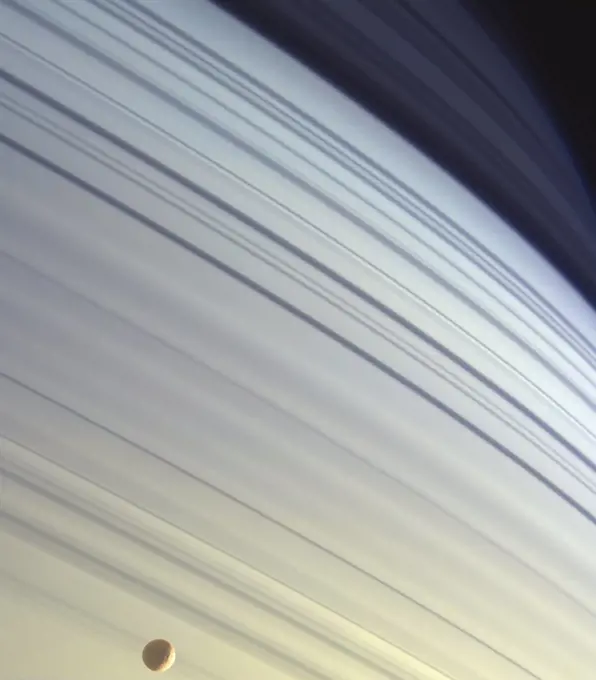
Mimas drifts along in its orbit against the azure backdrop of Saturn's northern latitudes in this true color view. The long, dark lines on the atmosphere are shadows cast by the planet's rings.  Saturn's northern hemisphere is presently relatively cloud-free, and rays of sunlight take a long path through the atmosphere. This results in sunlight being scattered at shorter (bluer) wavelengths, thus giving the northernmost latitudes their bluish appearance at visible wavelengths.  At the bottom, cr
RF
4239R-20480271
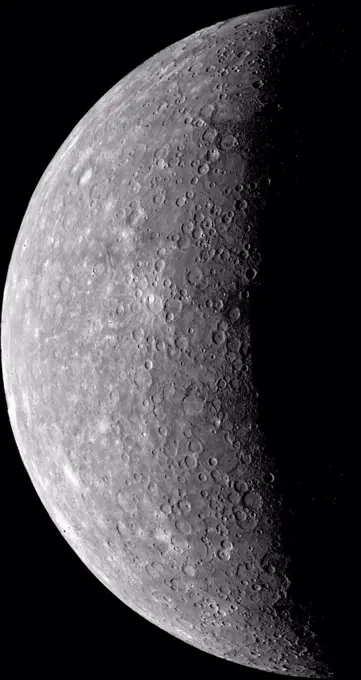
Planet Mercury
RF
4239R-20480264
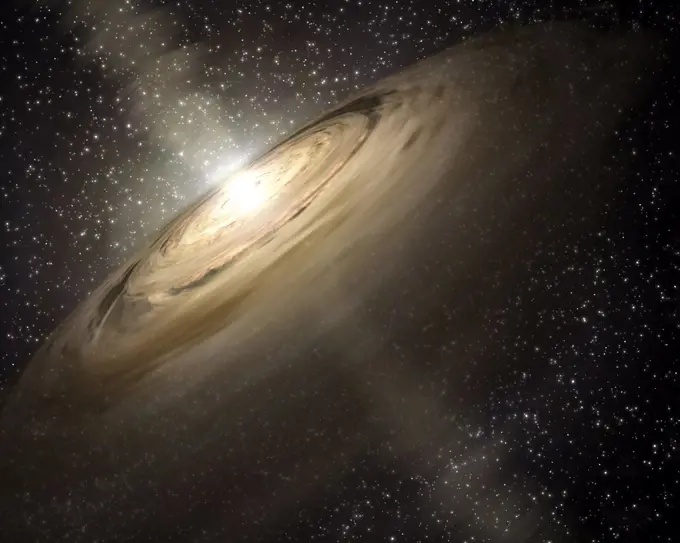
This artist's concept illustrates a solar system that is a much younger version of our own. Dusty disks, like the one shown here circling the star, are thought to be the breeding grounds of planets, including rocky ones like Earth. Astronomers using the Spitzer Space Telescope spotted some of the raw ingredients for DNA and protein in one such disk belonging to a star called IRS 46. The ingredients, gaseous precursors to DNA and protein called acetylene and hydrogen cyanide, were detected in the
RF
4239R-20480184
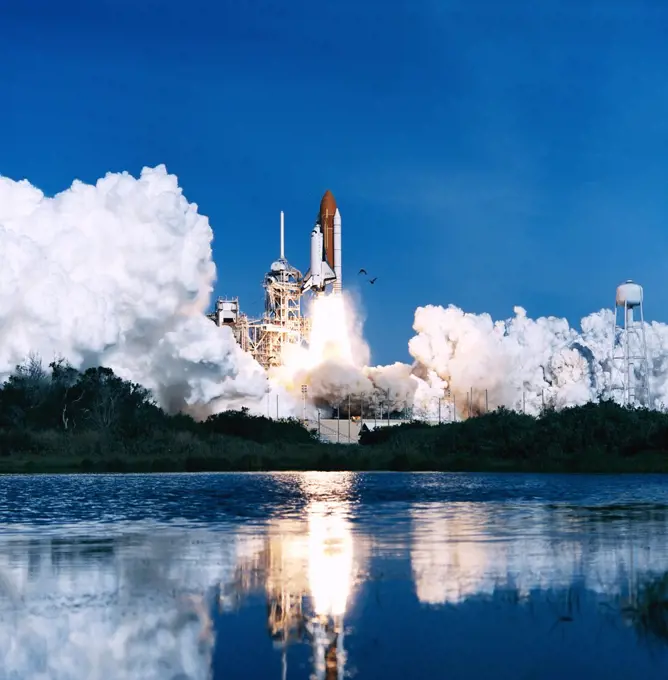
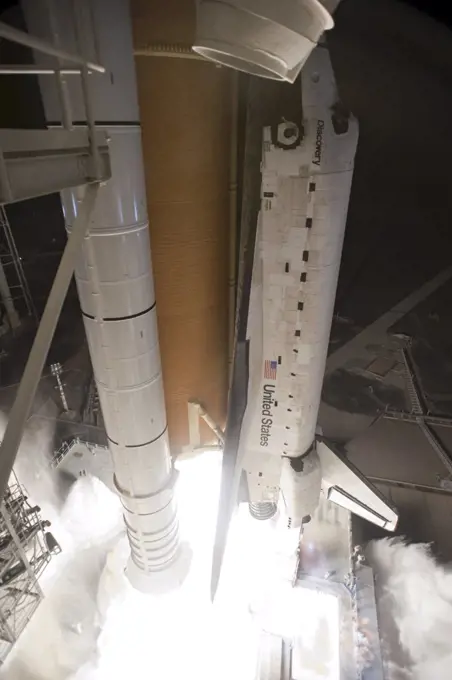
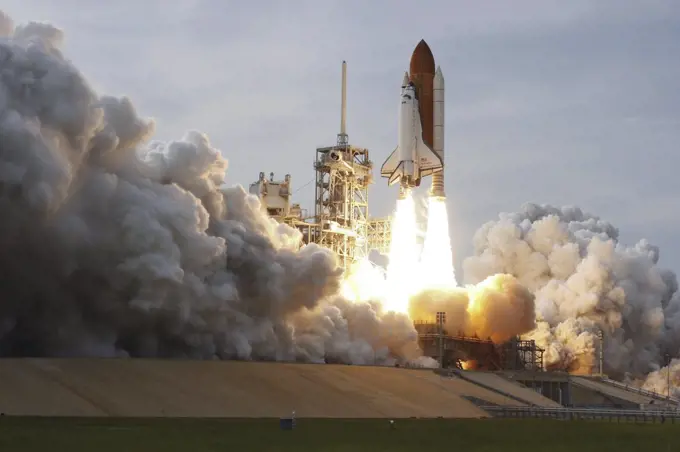
Space Shuttle Launch
RF
4239R-20480375
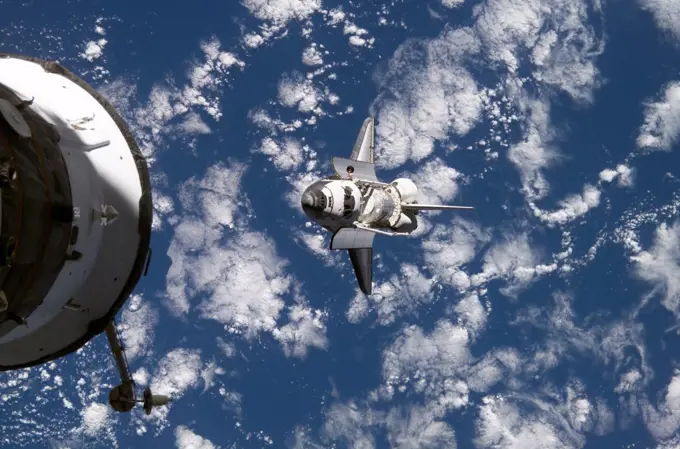
October 25, 2007 - Backdropped by a blue and white Earth, Space Shuttle Discovery approaches the International Space Station during STS-120 rendezvous and docking operations. Docking occurred at 7:40 a.m. (CDT) on October 25, 2007. The Harmony node is visible in Discovery's cargo bay. A Russian spacecraft, docked to the station, is visible at left.
RF
4239R-20480354
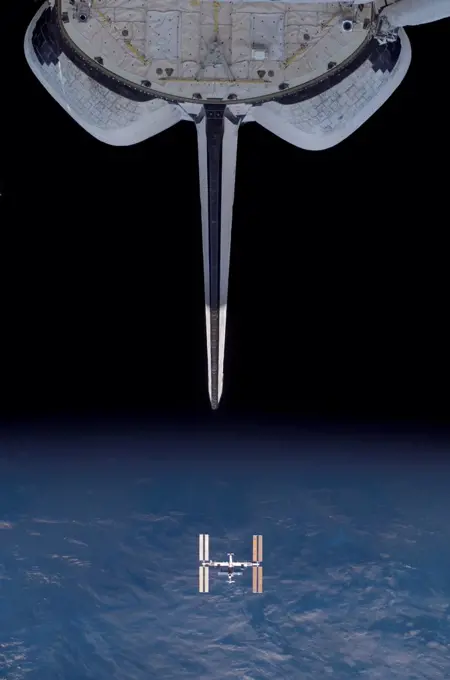
August 19, 2007 - Backdropped by Earth's horizon and the blackness of space, the International Space Station appears to be very small as the Space Shuttle Endeavour departs from the station. Endeavour's vertical stabilizer and orbital maneuvering system (OMS) pods are seen in this image photographed by an STS-118 crewmember onboard the shuttle. Earlier the STS-118 and Expedition 15 crews concluded nearly nine days of cooperative work onboard the shuttle and station. Undocking of the two spacecra
RF
4239R-20480328
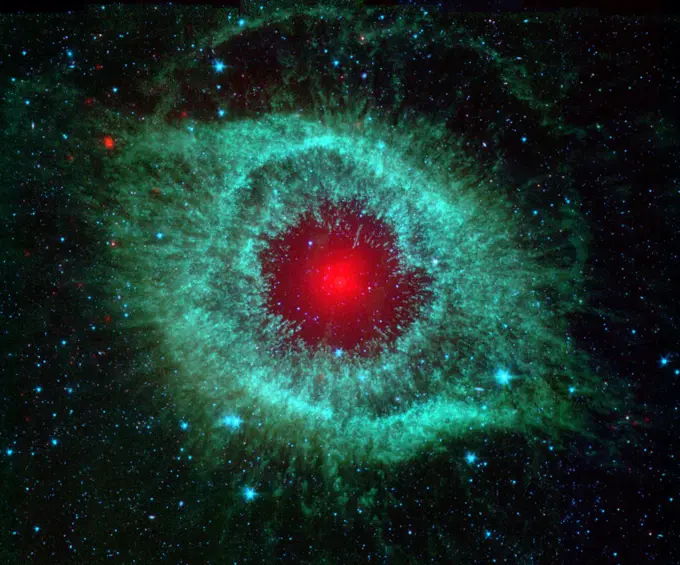
Helix nebula
RF
4239R-20480301
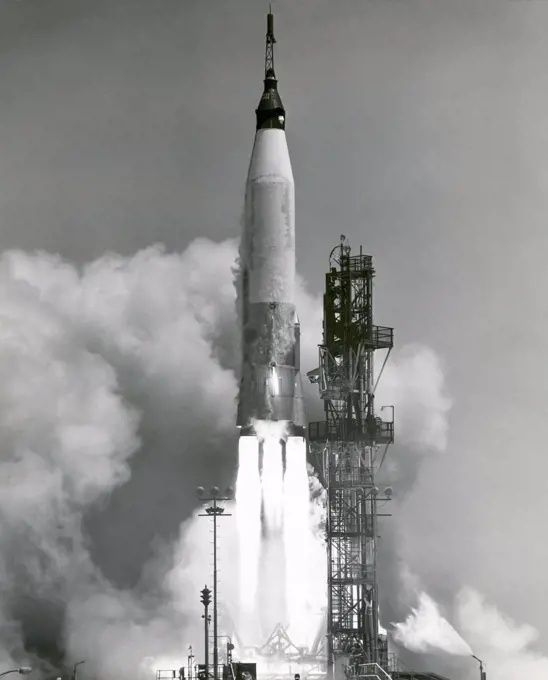
An Atlas vehicle is shown as it is raised into its launch gantry. This Atlas attempted to launch a Mercury spacecraft (without any astronauts aboard) into orbital flight. The launch vehicle developed 360,000 pounds of thrust and burned RP-1, a kerosene-like fuel, and liquid oxygen. It was about 60 feet in length and 10 feet in diameter at the tank section. This was the first attempt to put a Mercury spacecraft into Earth orbit. Unfortunately, this Atlas exploded at launch. Atlas was designed to
RF
4239R-20480296
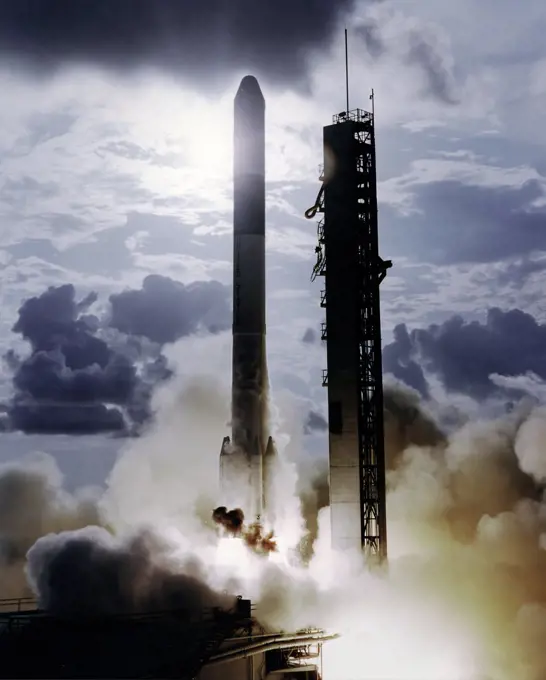
NASA successfully launched more than 200 Earth-orbiting satellites, including Goddard's eighth Orbiting Solar Observatory aboard this Delta rocket on June 21, 1975, at Cape Canaveral, Florida. The satellite, the final in a series of spacecraft specifically designed to look at the Sun in high-energy wavelength bands that scientists cannot see on Earth, gathered data on energy transfer in the Sun's hot, gaseous atmosphere and its 11-year sunspot cycle.
RF
4239R-20480365
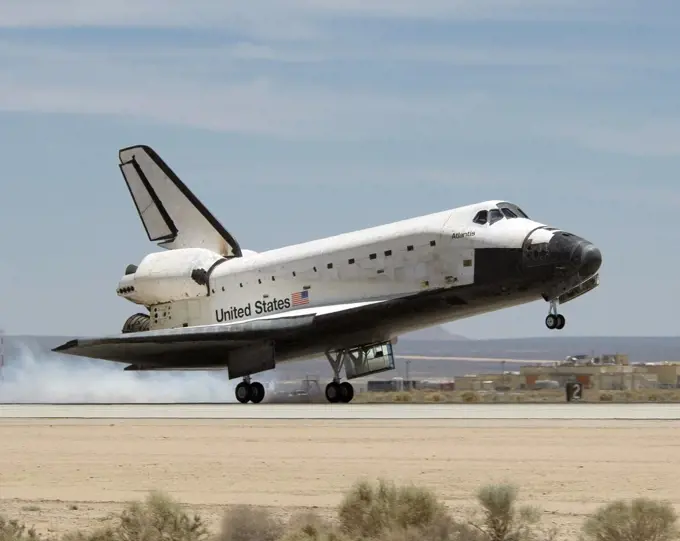
June 22, 2007 - Space Shuttle Atlantis' main landing gear touches down on runway 22 at the Dryden Flight Research Center at Edwards Air Force Base in California concluding a successful assembly mission to the International Space Station.
RF
4239R-20480382
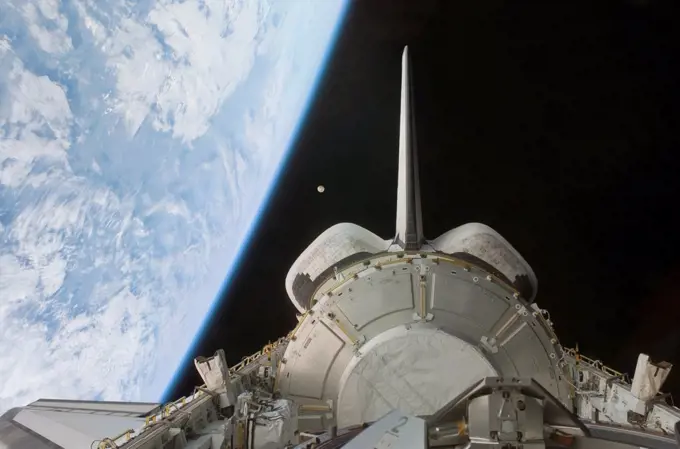
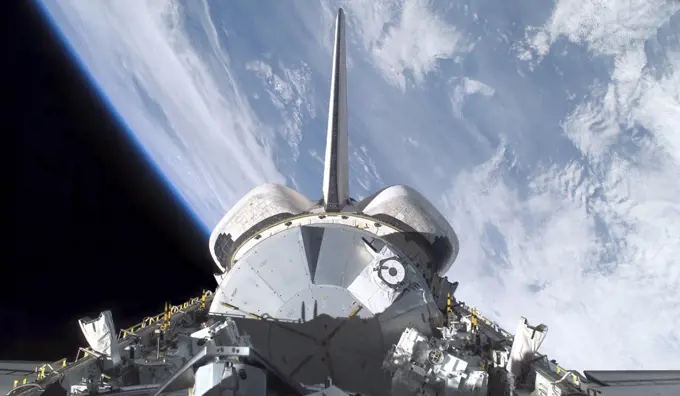
October 24, 2007 - Backdropped by the blackness of space and Earth's horizon, the Harmony node in Space Shuttle Discovery's payload bay, vertical stabilizer and orbital maneuvering system (OMS) pods are featured in this image photographed by a STS-120 crewmember during flight day two activities. Earth's moon is visible at center.
RF
4239R-20480438
March 13, 2008 - Backdropped by Earth's horizon and the blackness of space, the logistics module for the Japanese Kibo laboratory in Space Shuttle Endeavour's payload bay, vertical stabilizer and orbital maneuvering system (OMS) pods are featured in this image photographed by a STS-123 crewmember.
RF
4239R-20480439
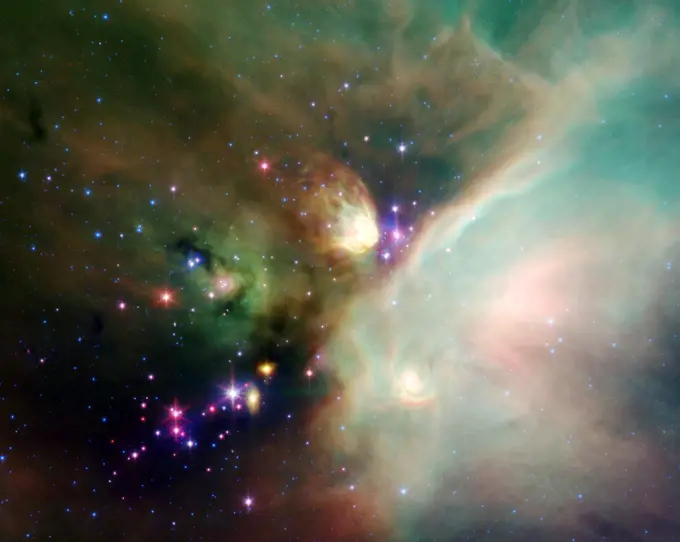
Newborn stars peek out from beneath their natal blanket of dust in this dynamic image of the Rho Ophiuchi dark cloud. Called Rho Oph by astronomers, it's one of the closest star-forming regions to our own solar system. Located near the constellations Scorpius and Ophiuchus, the nebula is about 407 light years away from Earth.
RF
4239R-20480440
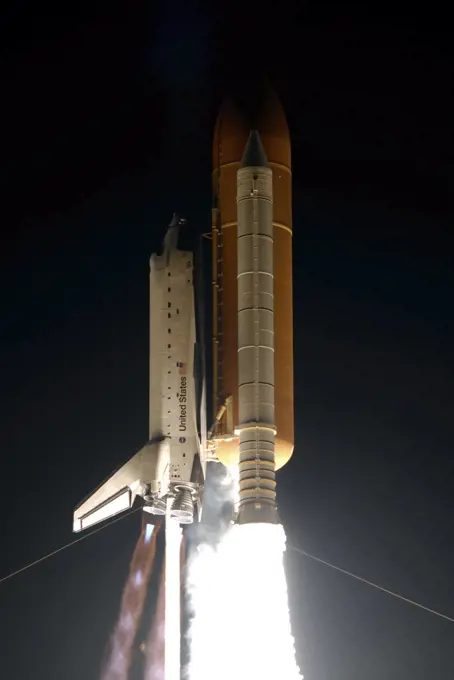
March 11, 2008 - Against a black sky, the Space Shuttle Endeavour and its seven-member STS-123 crew head toward Earth-orbit and a scheduled link-up with the International Space Station. Liftoff was on time at 2:28 a.m. (EDT).
RF
4239R-20480388
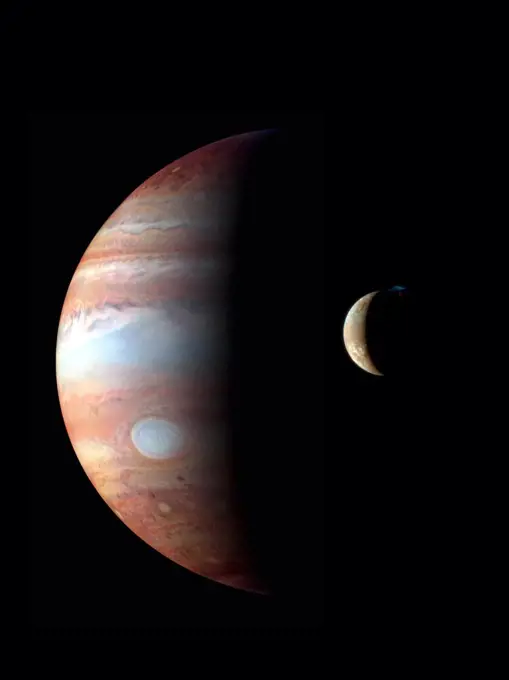
This montage of images of Jupiter and its volcanic moon Io, was taken by the New Horizons spacecraft's flyby in early 2007. The Jupiter image is an infrared color composite taken by the spacecraft's near-infrared imaging spectrometer on February 28, 2007. The infrared wavelengths used highlight variations in the altitude of the Jovian cloud tops, with blue denoting high-altitude clouds and hazes, and red indicating deeper clouds. The prominent bluish-white oval is the Great Red Spot.  The Io ima
RF
4239R-20480407
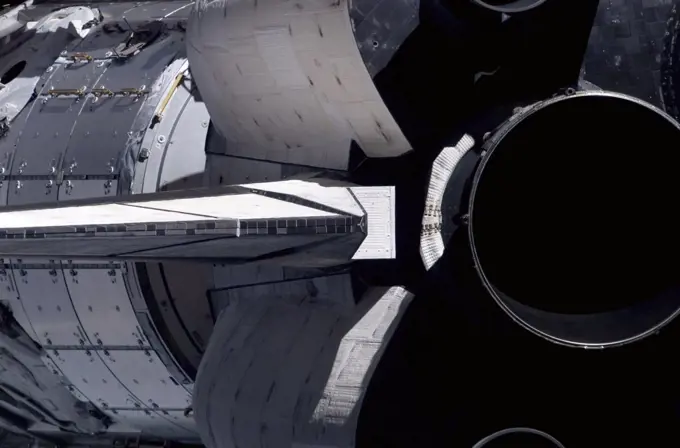
October 25, 2007 - A close-up view of Space Shuttle Discovery's tail section is featured in this image photographed by an Expedition 16 crewmember during a backflip maneuver performed by the approaching visitors (STS-120) to the International Space Station. The image provides partial views of the shuttle's main engines, orbital maneuvering system (OMS) pods, vertical stabilizer and the Harmony node in the payload bay.
RF
4239R-20480408
This artist's concept shows the view from Cassini during the star occultation that detected Mittens, the small object to the right of the star. As Cassini watched the star pass behind Saturn's F ring (foreground), the star blinked out when Mittens blocked it, indicating it may be a solid moonlet.
RF
4239R-20480468
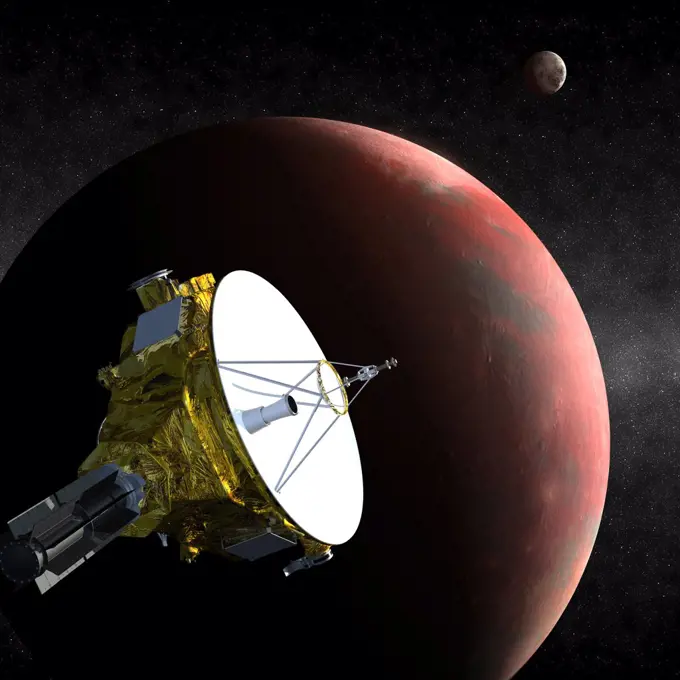
Artist's concept of the New Horizons spacecraft as it approaches Pluto and its largest moon, Charon, in July 2015. The craft's miniature cameras, radio science experiment, ultraviolet and infrared spectrometers and space plasma experiments will characterize the global geology and geomorphology of Pluto and Charon, map their surface compositions and temperatures, and examine Pluto's atmosphere in detail. The spacecraft's most prominent design feature is a nearly 7-foot (2.1-meter) dish antenna, t
RF
4239R-20480391
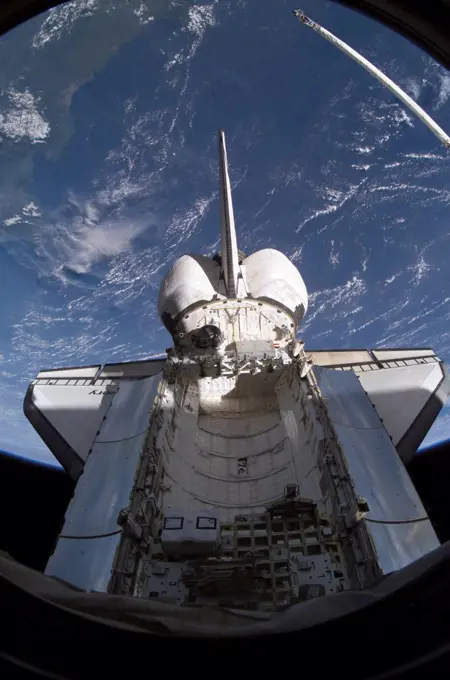
July 29, 2005 - A fish-eye lens on a digital still camera was used to record this image of the Space Shuttle Discovery from the International Space Station, to which it is docked for several days of joint activities.
RF
4239R-20480489
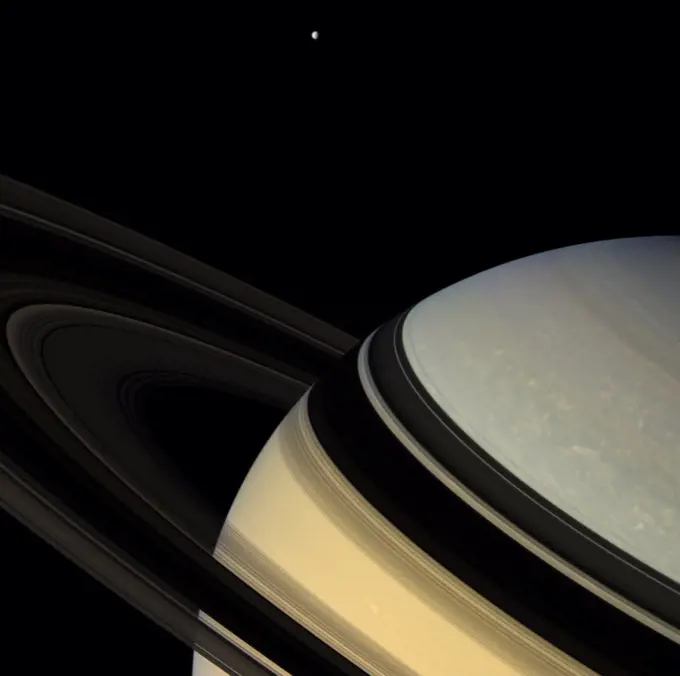
February 4, 2007 - Magnificent blue and gold Saturn floats obliquely as one of its gravity-bound companions, Dione, hangs in the distance. The darkened rings seem to nearly touch their shadowy reverse images on the planet below.  This view looks toward the unlit side of the rings from about 9 degrees above the ring plane. The rings glow feebly in the scattered light that filters through them.
RF
4239R-20480546
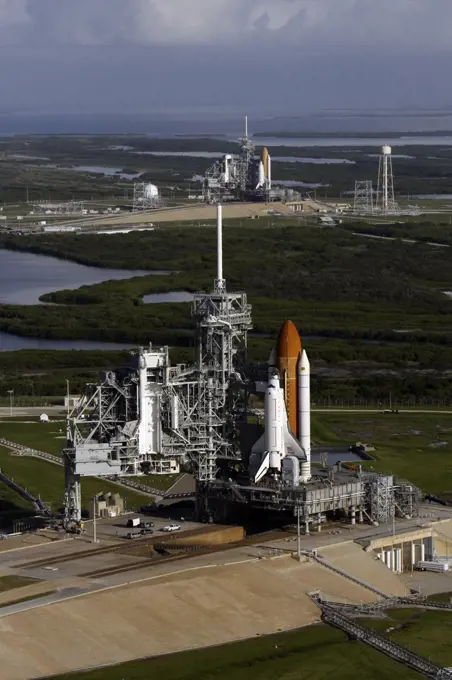
Cape Canaveral, Florida, September 20, 2008 - With a rainbow serving as a backdrop in the sky, space shuttle Atlantis (foreground) sits on Launch Pad A and Endeavour on Launch Pad B at the Kennedy Space Center in Florida. At the left of each shuttle are the open rotating service structures with the payload changeout rooms revealed. The rotating service structures provide protection for weather and access to the shuttle.
RF
4239R-20480520
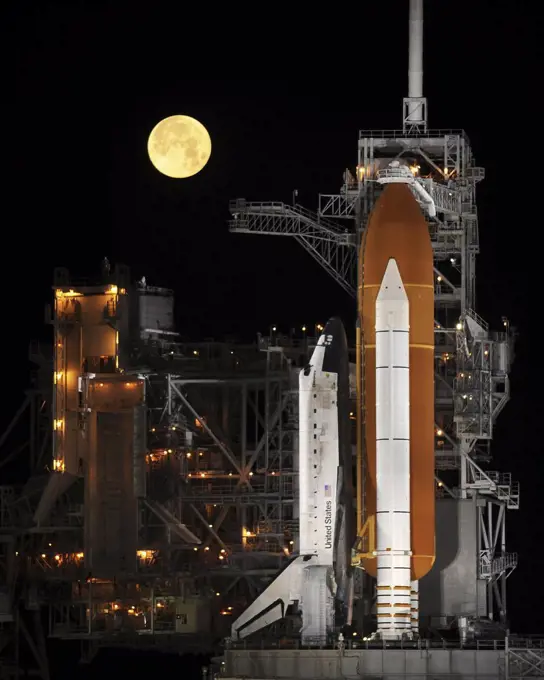
March 11, 2009 - A nearly full Moon sets as the Space Shuttle Discovery sits atop Launch pad 39A at the Kennedy Space Center in Cape Canaveral, Florida.
RF
4239R-20480543
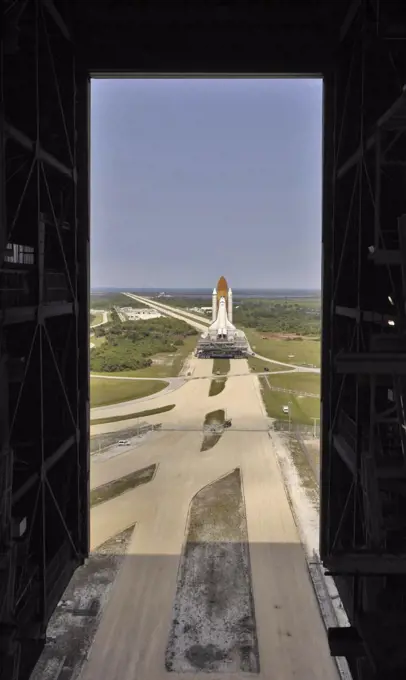
Kennedy Space Center, Florida, May 26, 2005 - Space Shuttle Discovery, resting on the Mobile Launcher Platform, returns to the Vehicle Assembly Building (VAB) along the crawlerway, which seems to stretch to the Atlantic Ocean on the horizon.
RF
4239R-20480554
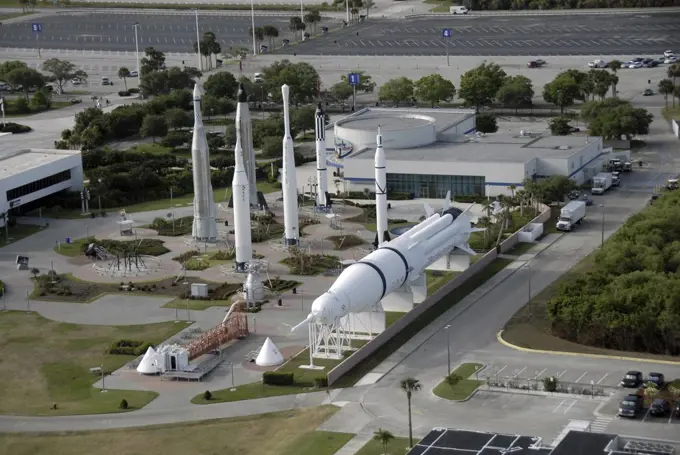
Cape Canaveral, Florida, May 15, 2009 - This aerial view of the Kennedy Space Center Visitor Complex shows the rockets on display in an area known as the Rocket Garden.
RF
4239R-20480540
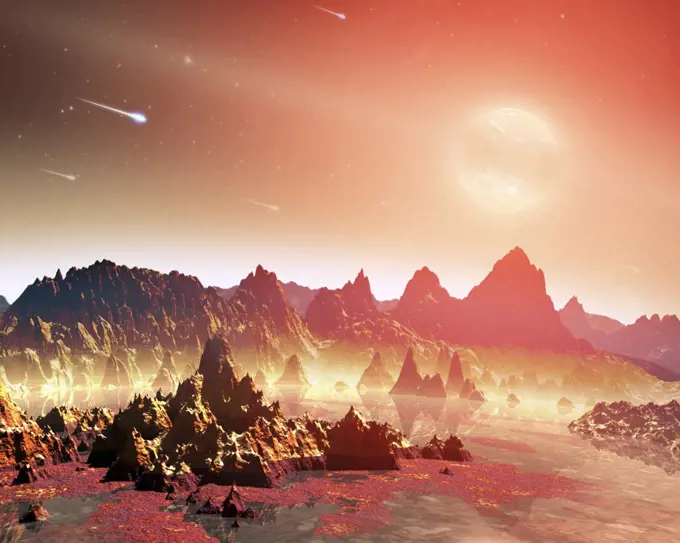
This artist's conception shows a young, hypothetical planet around a cool star. A soupy mix of potentially life-forming chemicals can be seen pooling around the base of the jagged rocks. Observations from the Spitzer Space Telescope hint that planets around cool stars, the so-called M-dwarfs and brown dwarfs that are widespread throughout our galaxy, might possess a different mix of life-forming, or prebiotic, chemicals than our young Earth. Life on our planet is thought to have arisen out of a
RF
4239R-20480549
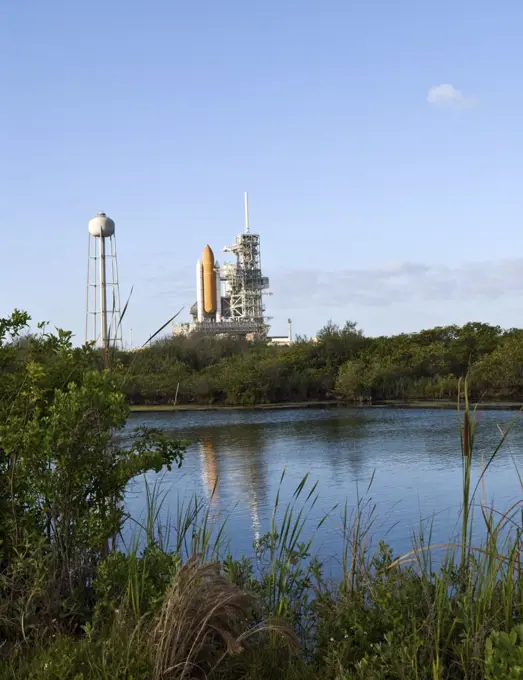
Cape Canaveral, Florida, April 18, 2009 - Space shuttle Atlantis on Launch Pad 39A is viewed across the lagoon at the Kennedy Space Center in Florida. Atlantis is targeted to launch May 12 on the STS-125 mission to upgrade the Hubble Space Telescope.
RF
4239R-20480564
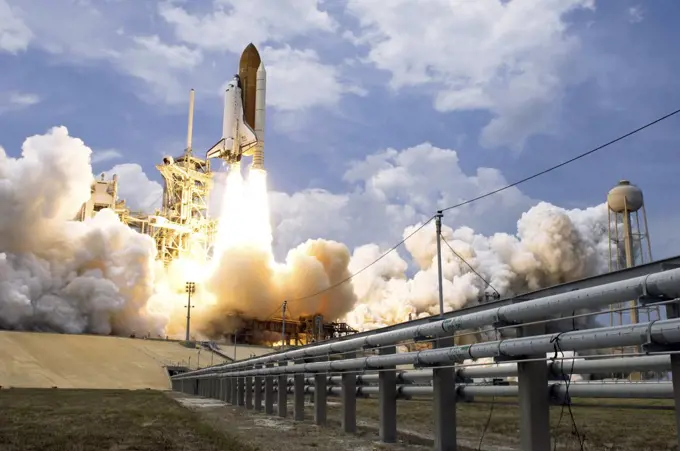
Cape Canaveral, Florida, May 11, 2009 - Space Shuttle Atlantis lifts off from launch pad 39A at the Kennedy Space Center in to Earth orbit and rendezvous with the Hubble Space Telescope. The payload includes Wide Field Camera 3, fine guidance sensor and the Cosmic Origins Spectrograph.
RF
4239R-20480528
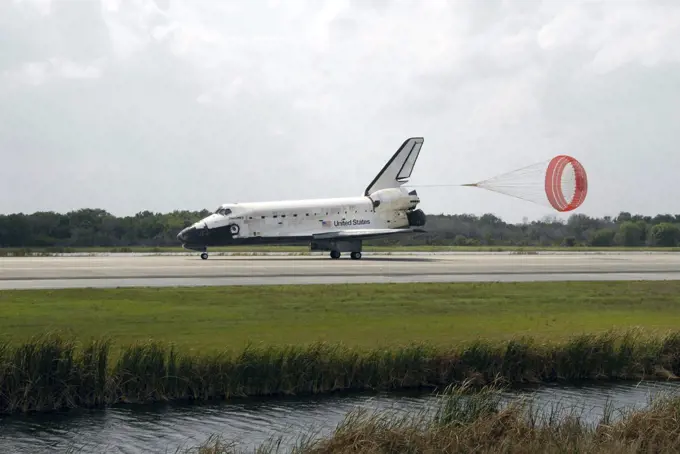
March 28, 2009 - Space Shuttle Discovery's drag chute is deployed as the spacecraft rolls toward wheels stop on Runway 15 of the Shuttle Landing Facility at the Kennedy Space Center, concluding the 13-day, 5.3-million mile journey of the STS-119 mission to the International Space Station.
RF
4239R-20480640
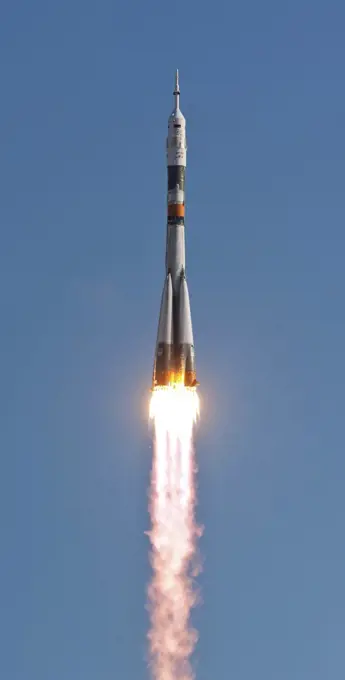
April 2, 2010 - The Soyuz TMA-18 rocket launches from the Baikonur Cosmodrome in Kazakhstan.
RF
4239R-20480596
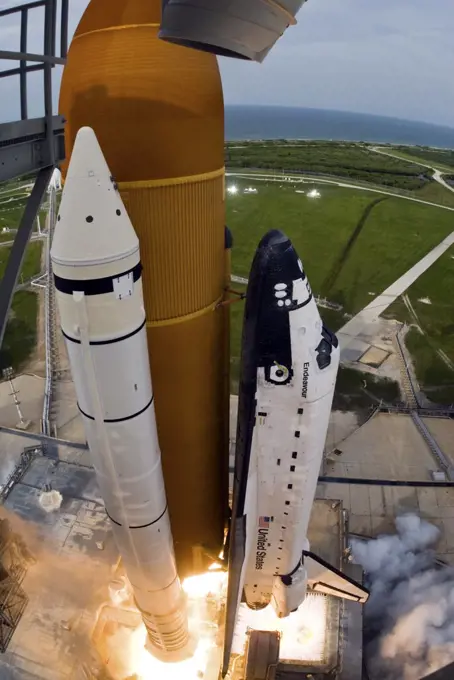
July 15, 2009 - Captured by a remote camera equipped with a special fish-eye lens, Space Shuttle Endeavour and the STS-127 crew head toward Earth orbit and rendezvous with the International Space Station. Liftoff was on time at 6:03 p.m. (EDT) on July 15, 2009 from launch pad 39A at the Kennedy Space Center.
RF
4239R-20480620
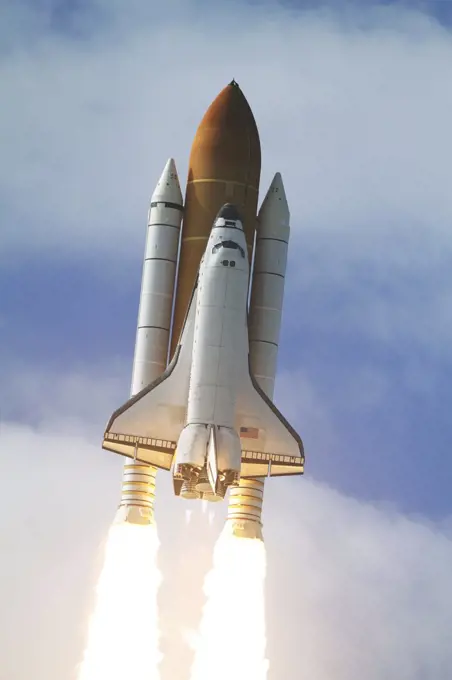
November 16, 2009 - With nearly 7 million pounds of thrust generated by twin solid rocket boosters and three main engines, space shuttle Atlantis zooms into the blue skies over Launch Pad 39A at the Kennedy Space Center in Florida. The crew will deliver two ExPRESS Logistics Carriers to the International Space Station, the largest of the shuttle's cargo carriers, containing 15 spare pieces of equipment including two gyroscopes, two nitrogen tank assemblies, two pump modules, an ammonia tank asse
RF
4239R-20480584
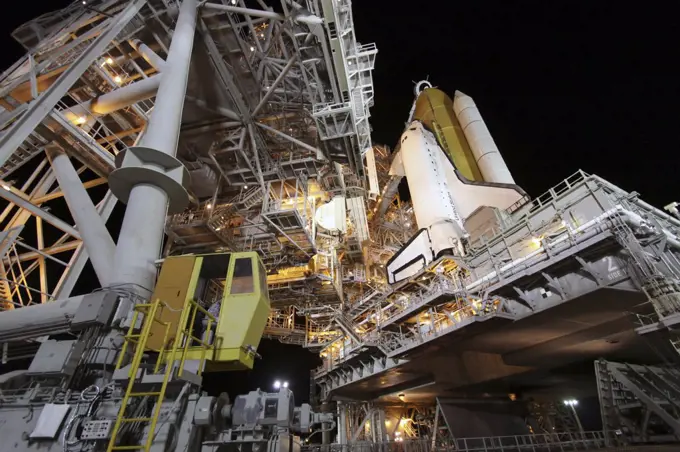
August 24, 2009 - On Launch Pad 39A at the Kennedy Space Center in Florida, technicians in the rotating service structure's control booth begin to roll the structure from space shuttle Discovery. The service structure provides weather protection and access to the space shuttle at the launch pad.
RF
4239R-20480645
Cape Canaveral, Florida, April 5, 2010 - Space shuttle Discovery lifts off from launch pad 39A at Kennedy Space Center in Florida, on the STS-131 mission. The crew will deliver the multi-purpose logistics module Leonardo, filled with supplies, a new crew sleeping quarters and science racks that will be transferred to the International Space Station's laboratories. The crew also will switch out a gyroscope on the stations truss, install a spare ammonia storage tank and retrieve a Japanese experi
RF
4239R-20480597
July 15, 2009 - Space Shuttle Endeavour lifts off from launch pad 39A at the Kennedy Space Center in Cape Canaveral, Florida.
RF
4239R-20480759
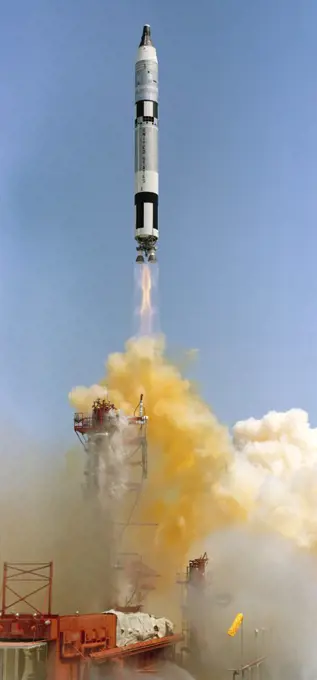
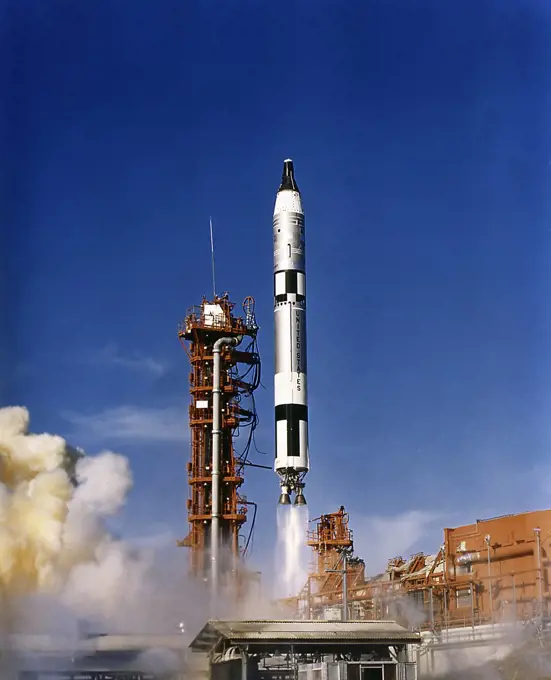
June 3, 1965 - The Gemini-Titan 4 spaceflight launches from Cape Canaveral, Florida.
RF
4239R-20480765
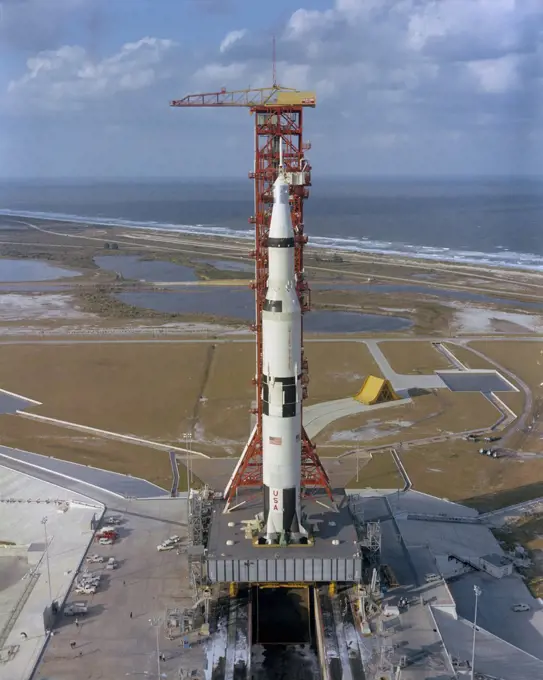
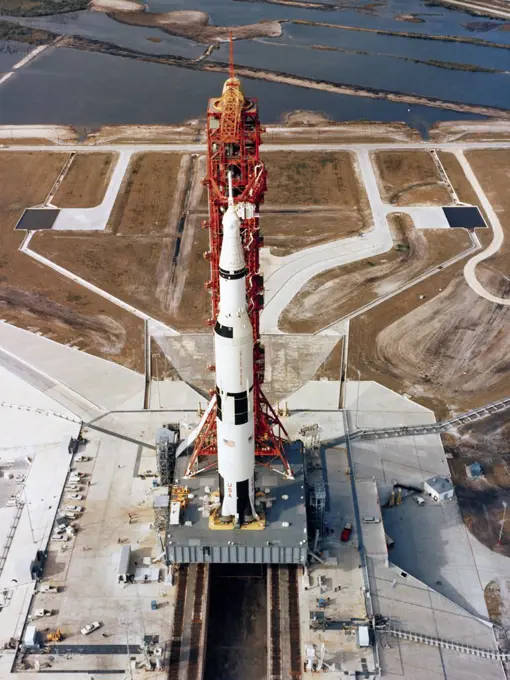
November 8, 1967 - High-angle view of Launch Complex 39, Kennedy Space Center, Cape Canaveral, Florida, showing the Apollo 4 (Spacecraft 017/Saturn 501) unmanned, Earth-orbital space mission being readied for launch.
RF
4239R-20480744
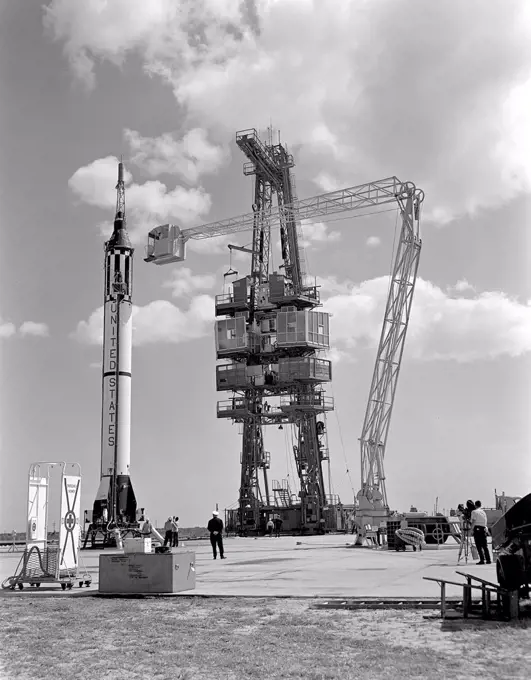
April 21, 1961 - Mercury-Redstone 3 prelaunch activities on the Mercury 5 launch pad.
RF
4239R-20480779
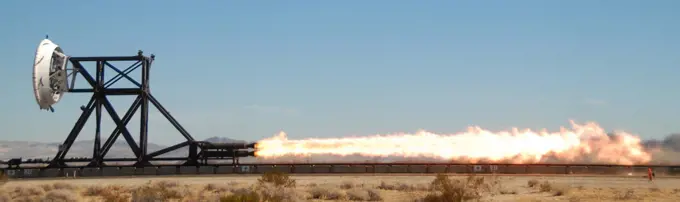
NASA recently performed a trial run on a rocket sled test fixture, powered by rockets, to replicate the forces a supersonic spacecraft would experience prior to landing. The sled tests will allow the Low-Density Supersonic Decelerator Project, or LDSD, to test inflatable and parachute decelerators to slow spacecraft prior to landing and allow NASA to increase landed payload masses, improve landing accuracy and increase the altitude of safe landing-sites. These new devices represent the first ste
RF
4239R-20480737
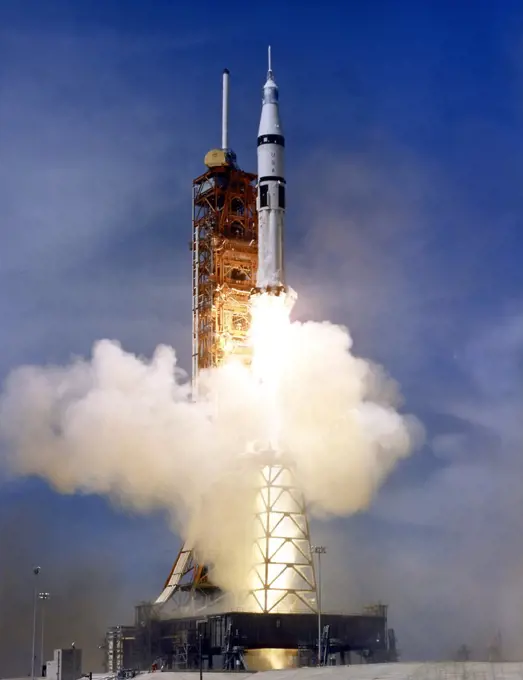
July 15, 1975 - Liftoff of the Saturn IB launch vehicle (SA-210), for the Apollo/Soyuz Test Project (ASTP) mission, from Launch Complex 39B, Kennedy Space Center, Florida. The Apollo-Soyuz Test Project (ASTP) was the first international docking of the U.S. Apollo spacecraft and the U.S.S.R. Soyuz spacecraft in space. The objective of the ASTP mission was to provide the basis for a standardized international system for docking of manned spacecraft.
RF
4239R-20480771
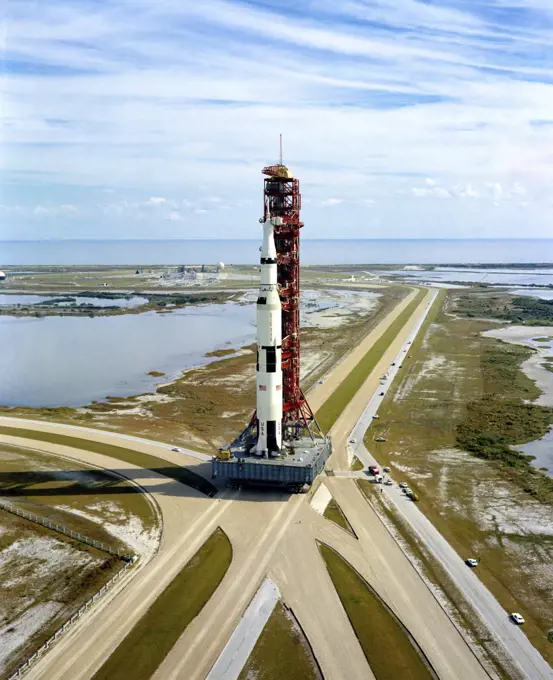
Cape Canaveral, Florida, November 9, 1970 - A high-angle view at Launch Complex 39, Kennedy Space Center, showing the Apollo 14 (Spacecraft 110/Lunar Module 8/Saturn 509) space vehicle on the way from the Vehicle Assembly Building to its launch pad. The Saturn V stack and its mobile launch tower sit atop a huge crawler-transporter.
RF
4239R-20480770
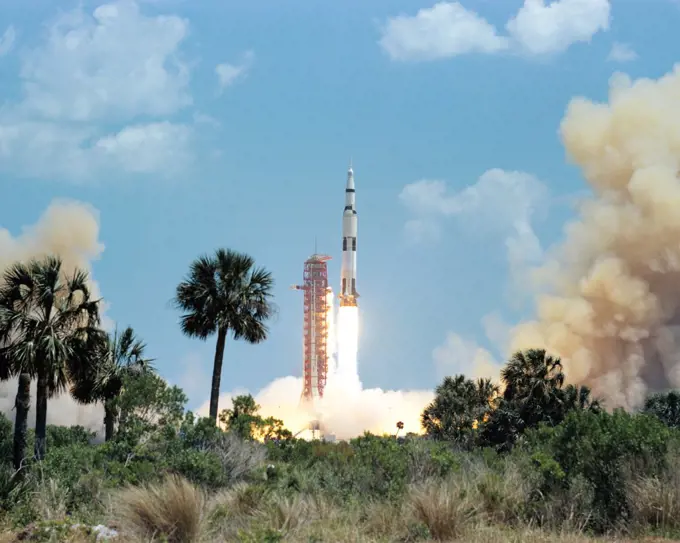
April 16, 1972 - The huge, 363-feet tall Apollo 16 (Spacecraft 113/Lunar Module 11/Saturn 510) space vehicle is launched from Kennedy Space Center, Cape Canaveral, Florida, on a lunar landing mission.
RF
4239R-20480767
May 13, 1969 - Aerial, high-angle view of the Apollo 10 (Spacecraft 106/Lunar Module 4/Saturn 505) space vehicle at Launch Complex 39, Kennedy Space Center, Cape Canaveral, Florida
RF
4239R-20480748
February 21, 1961 - In this Project Mercury test, a spacecraft booster by a modified Atlas was launched from Cape Canaveral, Florida. The Mercury capsule reached a peak altitude of 107 statute miles and landed 1.425 miles down range. Atlas was designed to launch payloads into low Earth orbit, geosynchronous transfer orbit or geosynchronous orbit.
RF
4239R-20480706
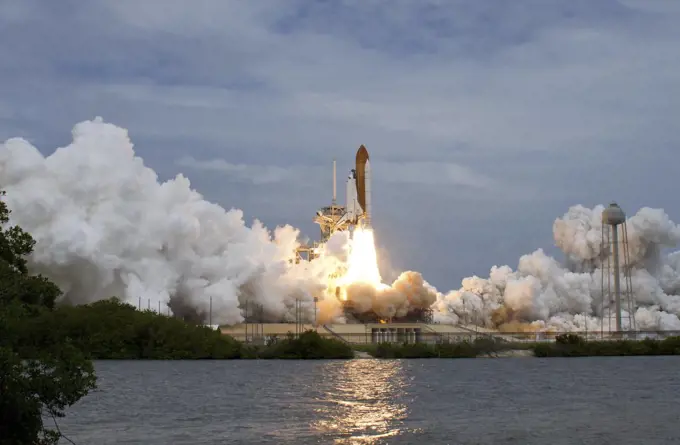
July 8, 2011 - Space shuttle Atlantis is seen as it launches from pad 39A at the Kennedy Space Center in Cape Canaveral, Florida. The launch of Atlantis, STS-135, is the final flight of the shuttle program, a 12-day mission to the International Space Station.
RF
4239R-20480742
November 11, 1966 - Gemini 12 astronauts lift off aboard a Titan launch vehicle from the Kennedy Space Center, an hour and a half after their Agena target vehicle was orbited by an Atlas rocket. Launched atop an Atlas booster, the Agena target vehicle (ATV) was a spacecraft used by NASA to develop and practice orbital space rendezvous and docking techniques in preparation for the Apollo program lunar missions. The objective was for Agena and Gemini to rendezvous in space and practice docking pro
RF
4239R-20480739
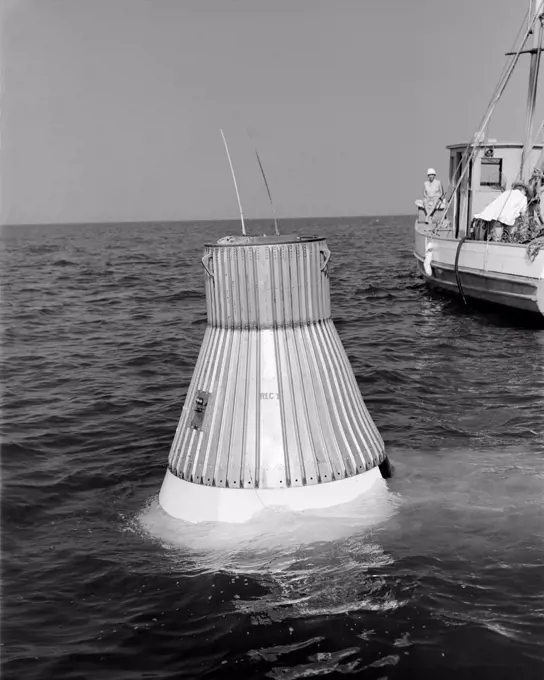
June 8, 1959 - A model of the Mercury capsule undergoes floatation tests at NASA's Langley Research Center.
RF
4239R-20480751
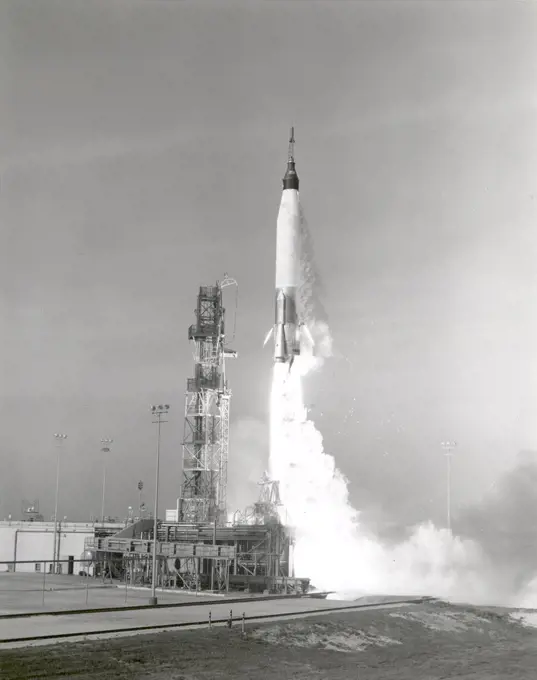
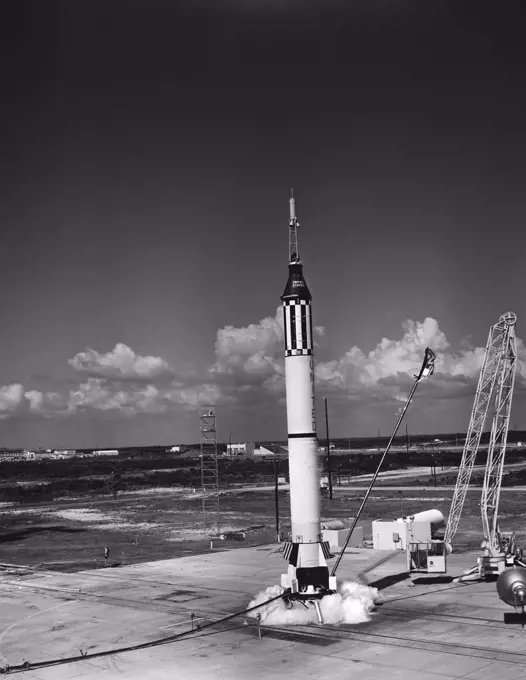
May 5, 1961 - Launching of the Mercury-Redstone 3 rocket from Cape Canaveral, Florida.
RF
4239R-20480749
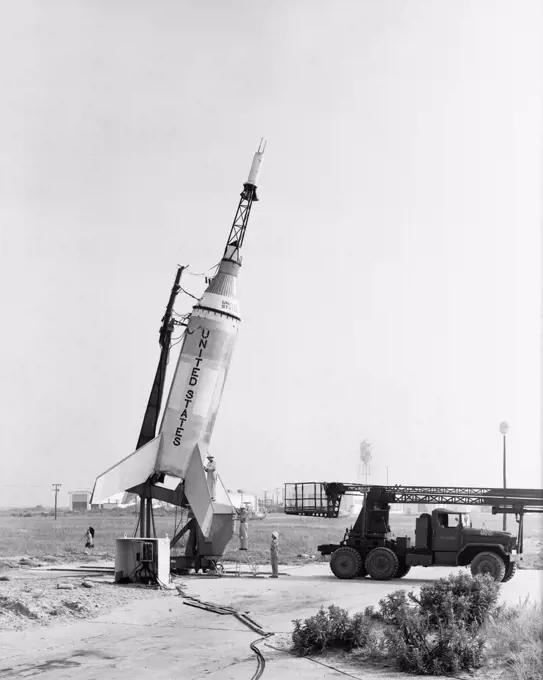
August 21, 1959 - Little Joe on launcher at Wallops Island. Little Joe was a test of the escape and recovery systems on the Mercury spacecraft.
RM
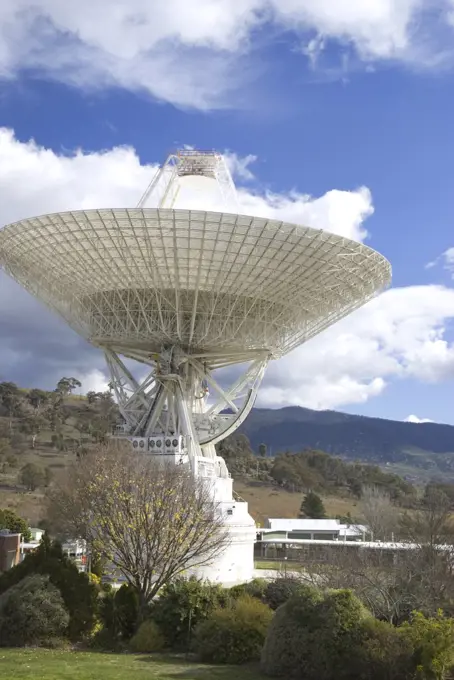
1899-20317758
Deep Space Communications Complex Tidbinbilla, Canberra, Australian Capital Territory, Australia
RM
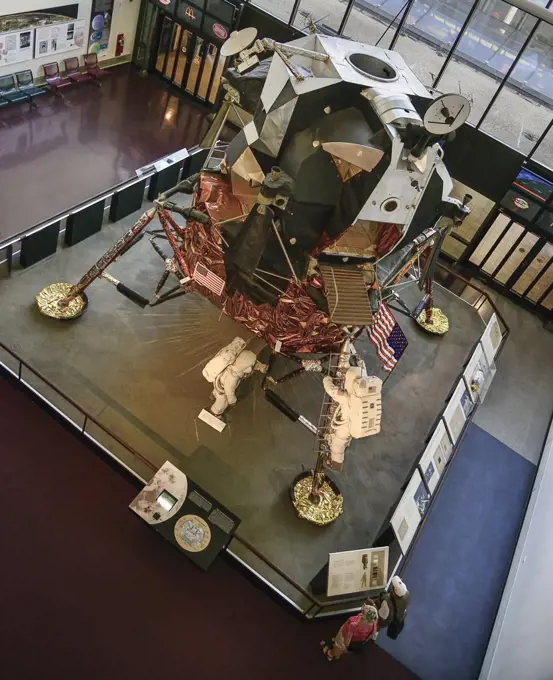
1850-20463233
USA, Washington DC, National Mall, National Air and Space Museum, Lunar module with astronaut figures on ground.
RM
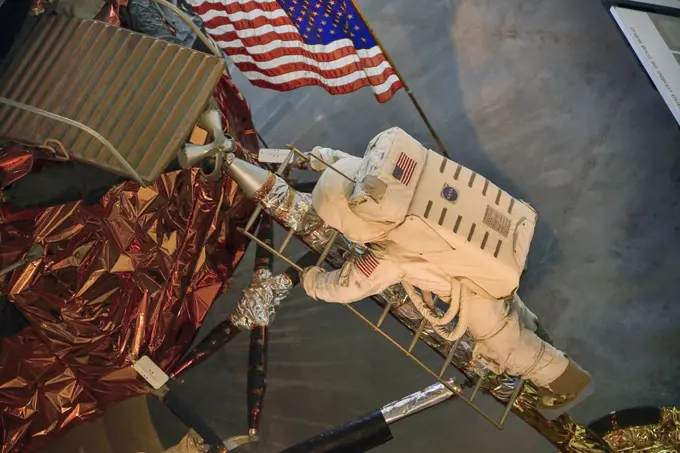
1850-20463234
USA, Washington DC, National Mall, National Air and Space Museum, Lunar module with astronaut figure climbing the steps.
RF
4128R-12577862
Mining in space, computer illustration.
RF
4128R-12577829
Spacecraft and planet, computer illustration.
RF
4128R-12577827
Spacecraft and planet, computer illustration.
RF
4128R-12577851
Space station and asteroid, computer illustration.
RF
4128R-12577602
Space station interior, computer illustration.
RF
4128R-12576196
New Horizons spacecraft at Pluto, artwork. New Horizons launched from Earth on 19 January 2006 and will arrive at Pluto in July 2015. It will spend 15...
RF
4128R-12576161
Artwork depicting a large Kuiper Belt object (KBO). The Kuiper Belt is a region surrounding the Sun, from 30 to 50 astronomical units, containing vast...
RF
1815R-12517558
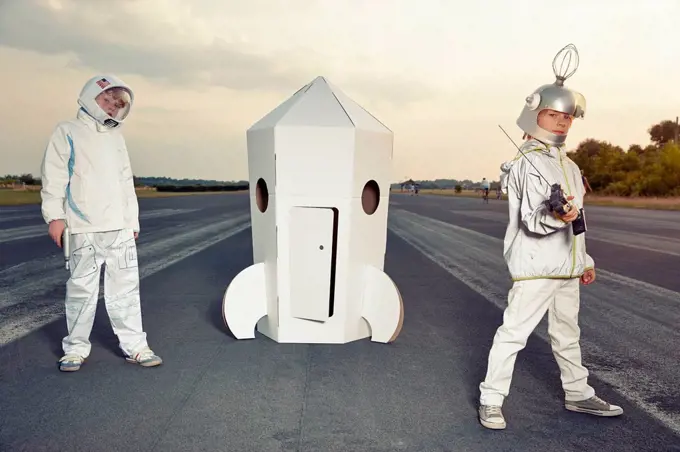
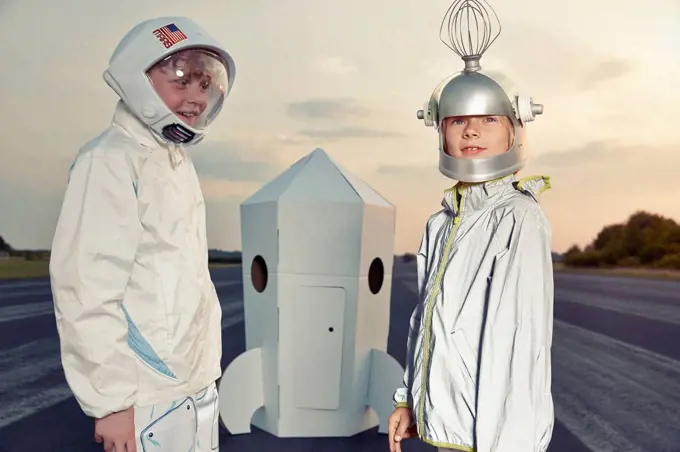
Two boys dressed up as spacemen standing at cardboard rocket
RF
1815R-12517560
Two boys dressed up as spacemen standing at cardboard rocket
RM
1580-20365167
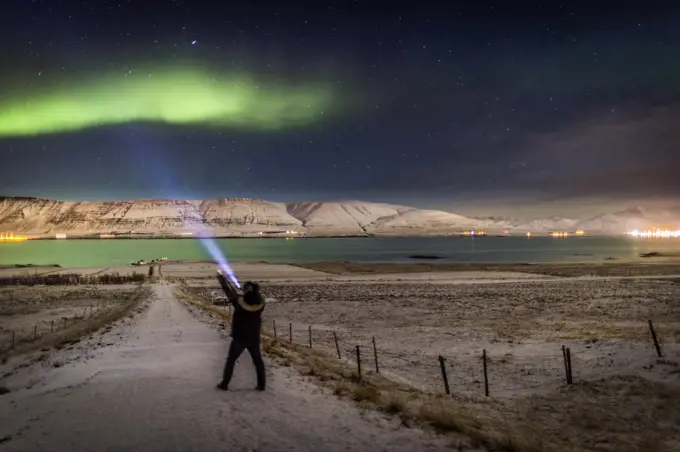
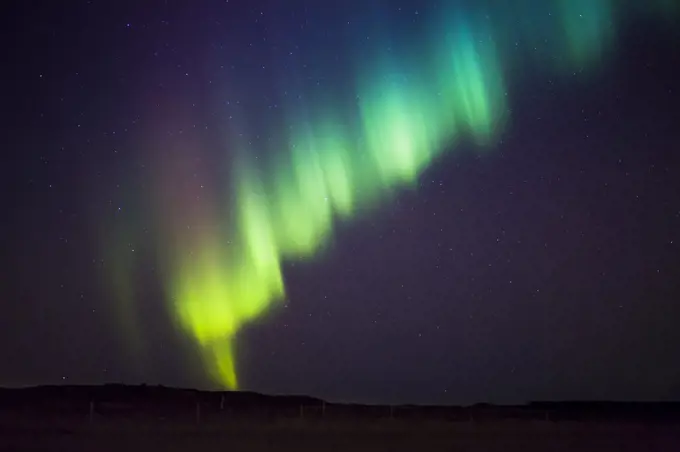
Aurora Borealis or Northern lights, Hvalfjordur, Iceland
RM
1580-20365220
Aurora Borealis or Northern Lights by the town of Gardur, Reykjanes Peninsula, Iceland
RM
1580-20014836
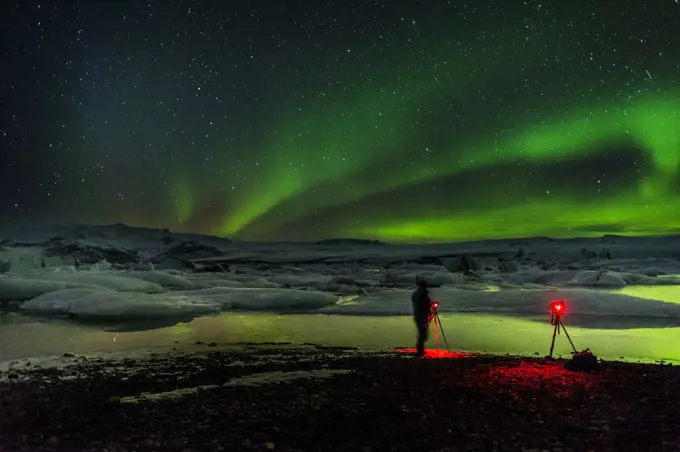
Photographing the Aurora Borealis or Northern lights,  Jokulsarlon, Breidamerkurjokull, Vatnajokull Ice Cap, Iceland
RF
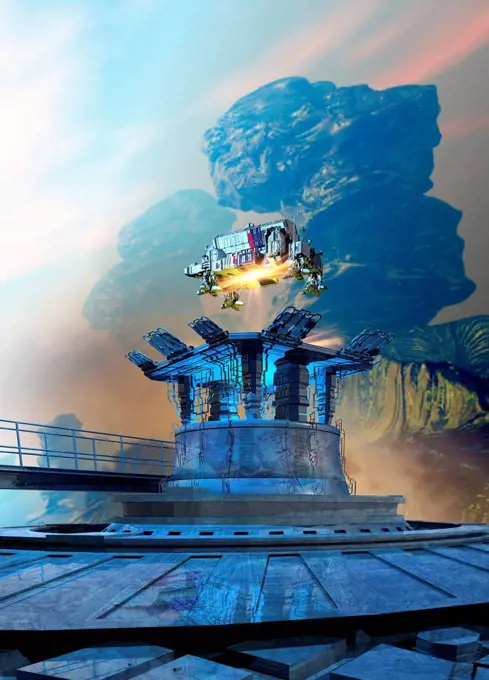
4128R-11542974
Astronaut on a futuristic building, computer illustration.
RF
4128R-11479800
Artwork of exoplanet 55 Cancri e. 55 Cancri is a binary star system located 41 light-years away, made up of a sun-like (G-type) star and a much smalle...
RF
4128R-11479804
Artwork of the icy core (nucleus) of a comet. Comets are mostly frozen ices (water, methane and ammonia) and dust, and they are often referred to as '...
RF
4128R-11479325
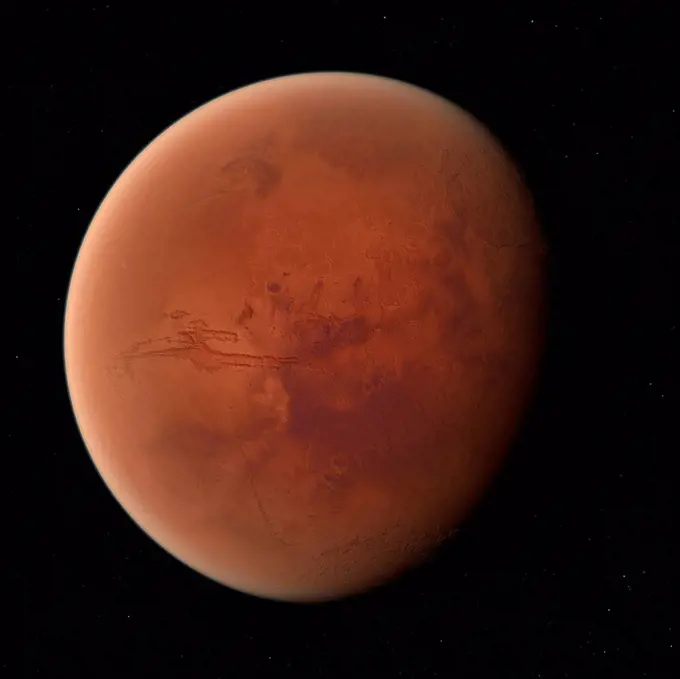
Space exploration, computer artwork.
RF
4128R-11474971
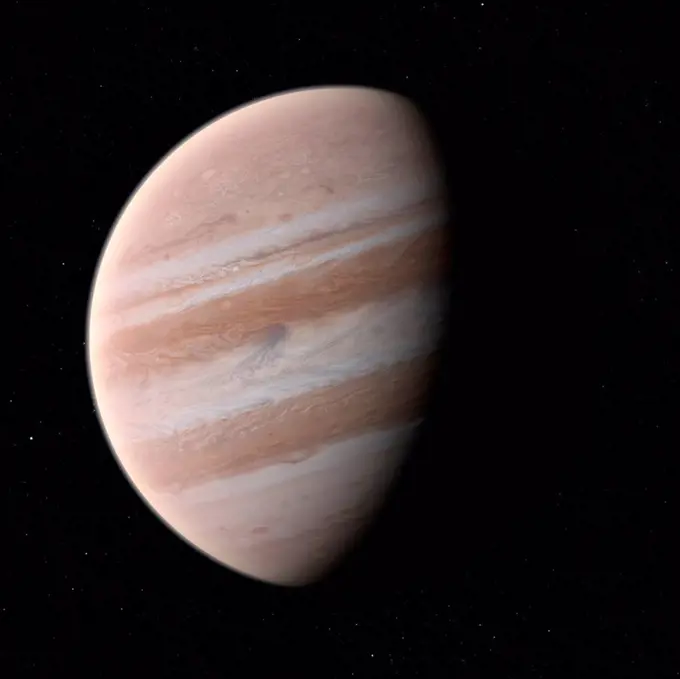
Astronaut on the surface of mars, computer artwork.
RF
4128R-11474973
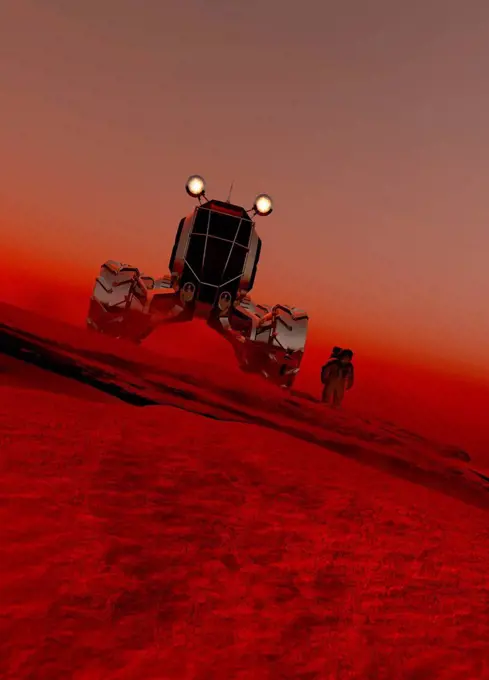
Astronaut and vehicle on the surface of mars, computer artwork.
RF
4128R-11322411
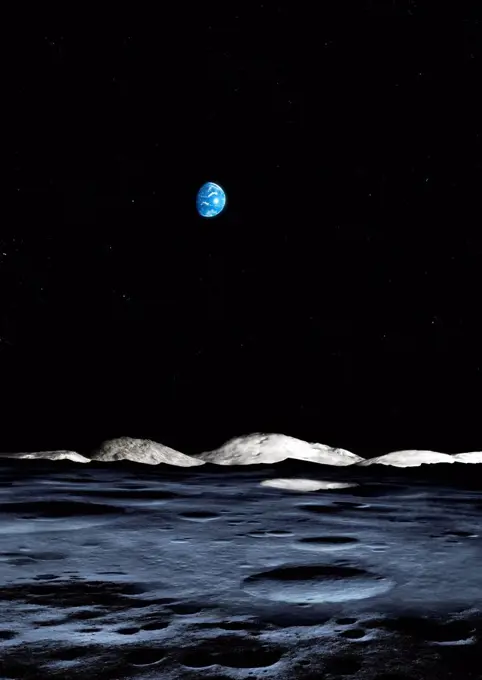
At the extreme poles of the Moon, the Sun appears so low down on the horizon that some craters have floors which are in perpetual shadow, as in this i...
RF
4128R-11322383
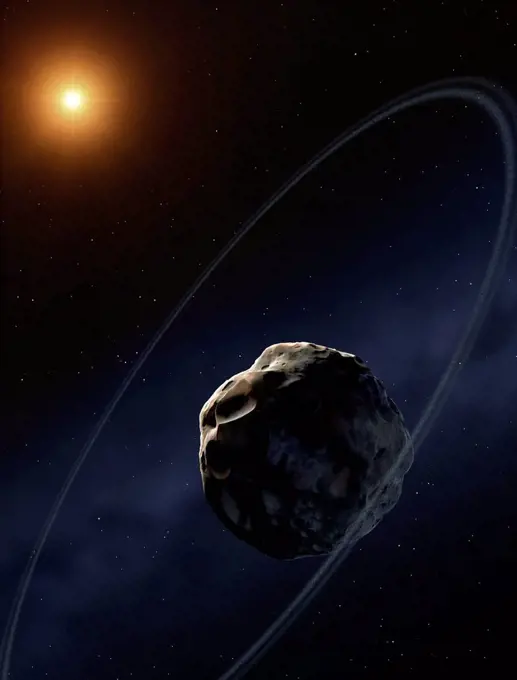
Chariklo, discovered in 1997, is an asteroid of the Centaur variety, exhibiting characteristics of both asteroids and comets. It's orbit takes it from...
RF
4128R-11312763
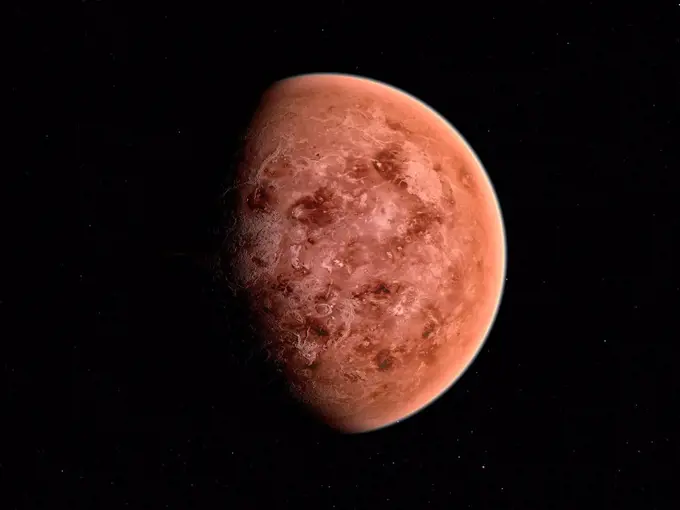
Venus, computer artwork.
RF
4128R-11312730
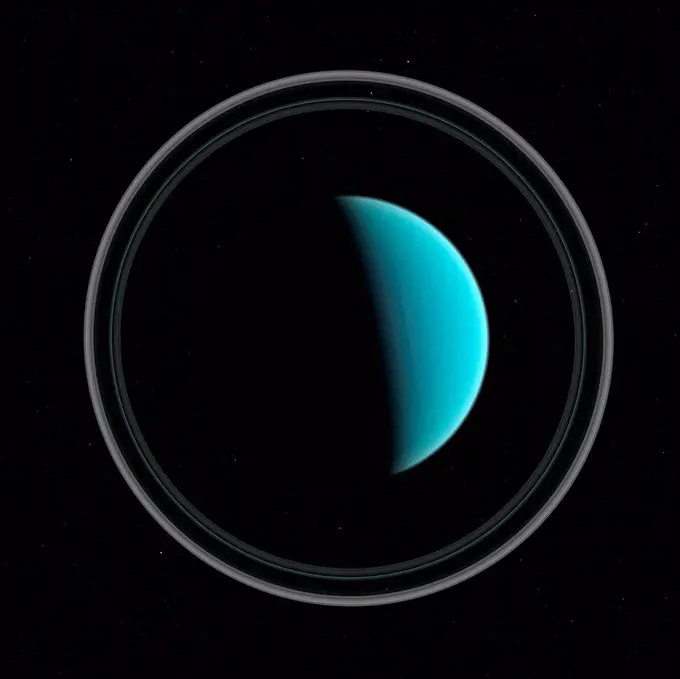
Uranus, computer artwork.
RF
4128R-11312765
Venus, computer artwork.
RF
4128R-11312718
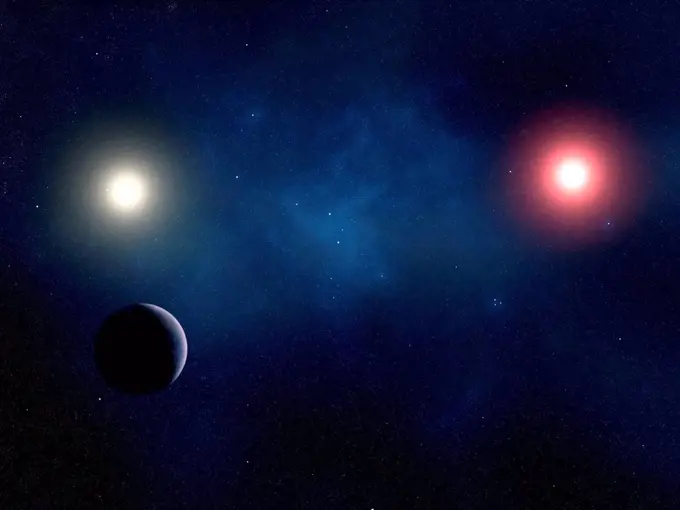
Twin star system, computer artwork.
RF
4128R-11291644
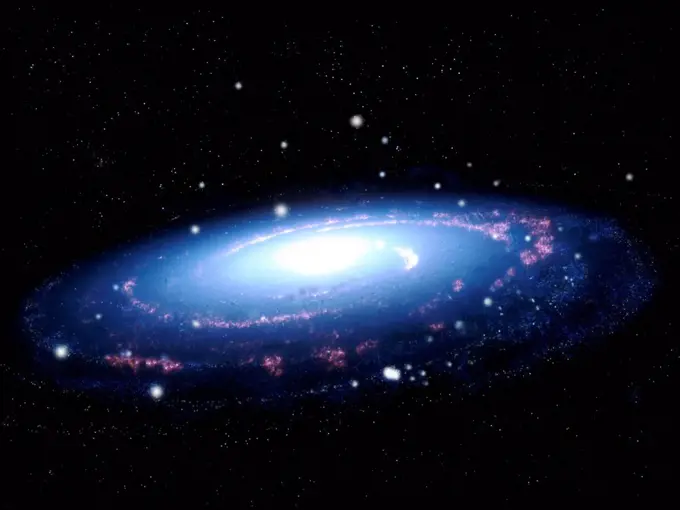
Artwork of galaxy in space.
RF
4128R-11289031
Moon, computer artwork.
RF
4128R-11288844
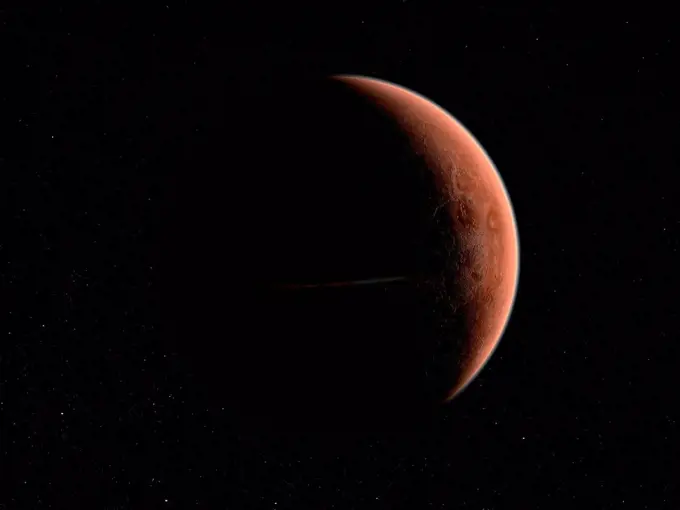
Mars, computer artwork.
RF
4128R-11288832
Mars, computer artwork.
RF
4128R-11288319
Jupiter, computer artwork.
RF
4128R-11286744
Curiosity Mars rover, computer artwork.