Fine ArtVintageFootageSubscriptionBoardsFree ResearchPricing
  • Fine Art
  • Vintage
  • Footage
  • Subscription
  • Boards
  • Free Research
  • Pricing

Biblical Events Depicted

Artworks illustrating key moments in the New Testament, focusing on Jesus' ministry and interactions with disciples and followers in historical settings.

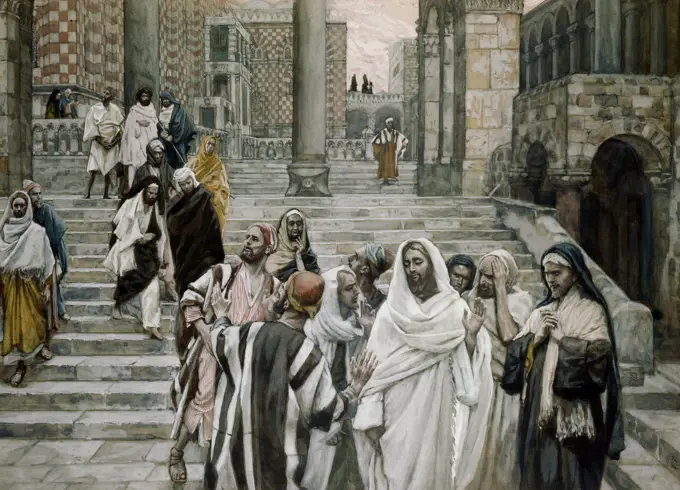
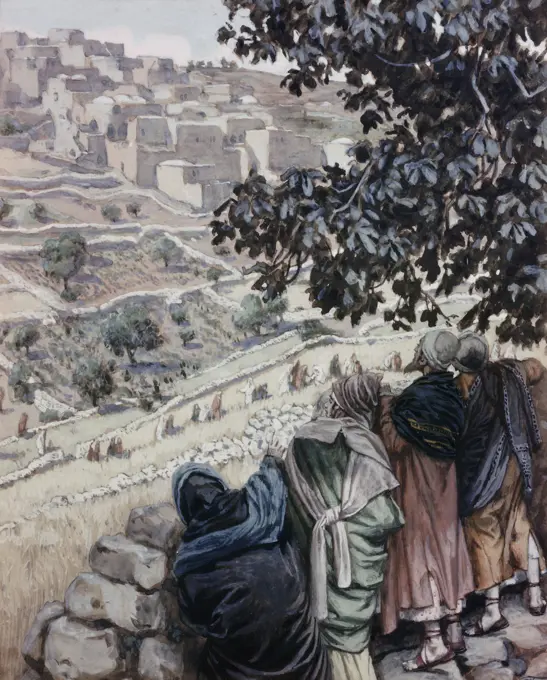
Disciples Admire the Buildings of the Temple James Tissot (1836-1902 French)
142 assets in this story
999-322
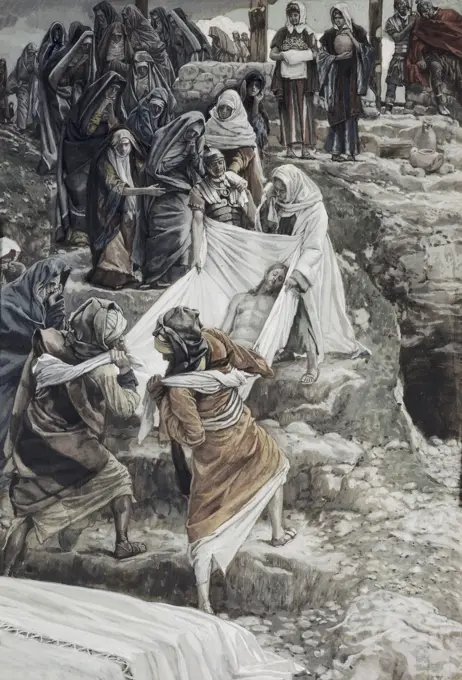
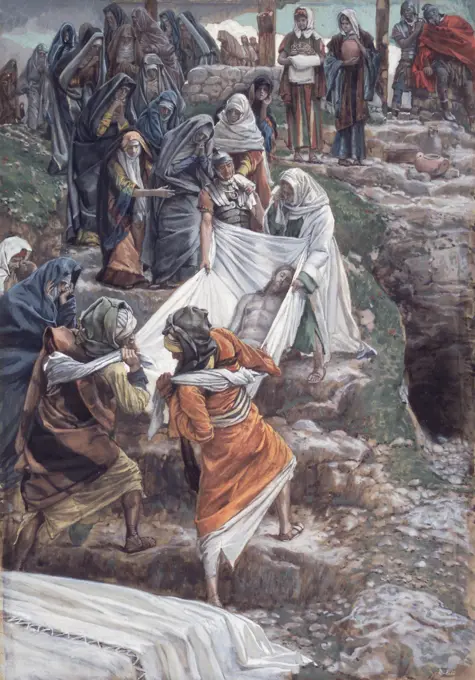
Body of Jesus Carried to the Stone of Anointing James Tissot (1836-1902/French)
999-197
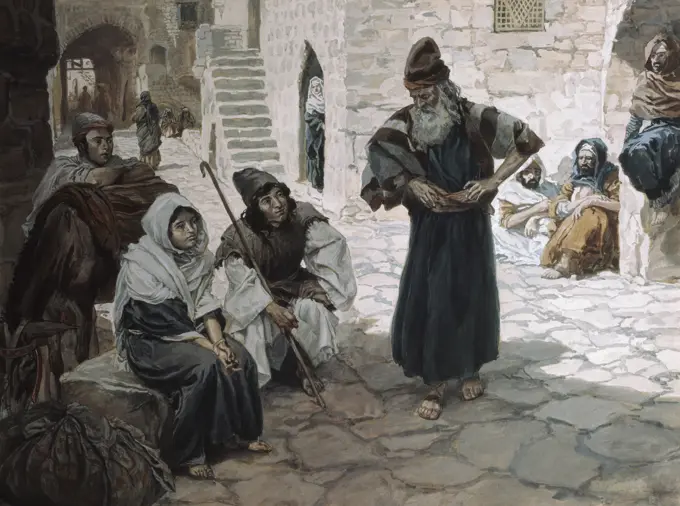
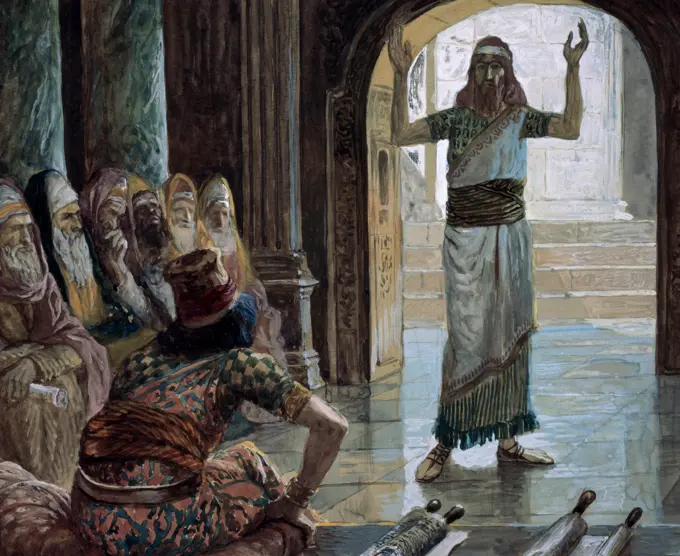
The Old Man Invites the Levite James Tissot (1836-1902 French) Jewish Museum, New York City
999-9212
Disciples Admire the Buildings of the Temple James Tissot (1836-1902 French)
6145-59120690
Christ and Jawnogrzecnica (iconogr.), Bible scenes, multi -stone scenes
4443-21900864
Wm. Hole's paintings, O.T., Old Testament 1925, Middle East, Israel and/or Palestine
6145-51827784
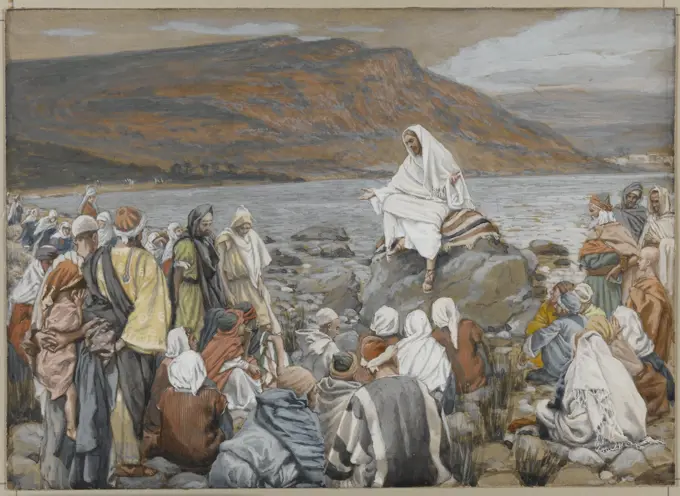
Jesus Sits by the Seashore and Preaches (Jésus s'assied au bord de la mer et prêche) James Tissot (French, 1836-1902). Jesus Sits by the Seashore and Preaches (Jésus s'assied au bord de la mer et prêche), 1886-1896. Opaque watercolor over graphite on gray wove paper, Sheet: 10 3/16 x 7 9/16 in. (25.9 x 19.2 cm).  For this scene, Tissot directly integrated one of the motifs from his extensive sketching campaigns in Palestine into a finished composition for the Gospel narrative. Here, a large boulder the artist had drawn by the Sea of Tiberias becomes the rock on which Jesus sits as he preaches to his followers. Such direct correlations between the sketched motif and the Gospel narrative evoke Tissots claim for what he termed hyperaesthesia—a combination of direct observation of his surroundings and mystical revelation. In the introduction to his Bible, he claimed: “It is in the Holy Land itself … that the mind is best attuned alike to receive and grasp the significance of every impress
4409-39065
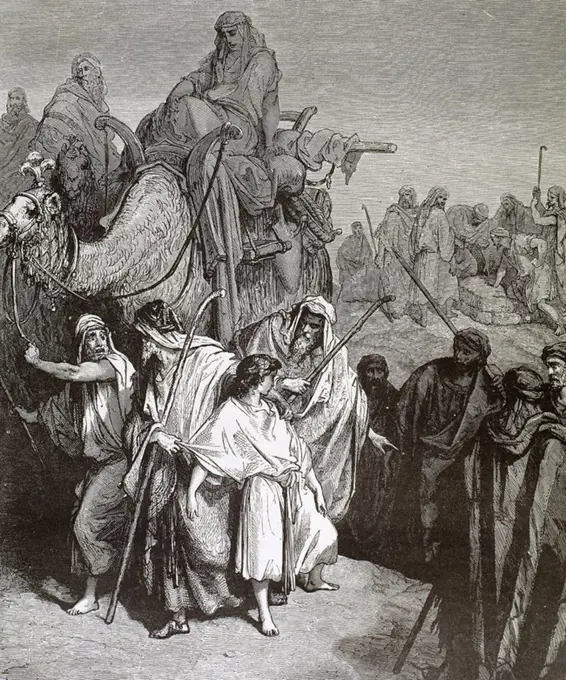
Joseph (son of Jacob and Rachel) is sold into slavery in Egypt by his brothers. Engraving by Gustave Dore_. 19th century.
6145-51831752
The Body of Jesus Carried to the Anointing Stone (Le corps de Jésus porté à la pierre de l'onction) James Tissot (French, 1836-1902). The Body of Jesus Carried to the Anointing Stone (Le corps de Jésus porté à la pierre de l'onction), 1886-1894. Opaque watercolor over graphite on gray wove paper, Image: 14 11/16 x 10 1/4 in. (37.3 x 26 cm).   European Art 1886-1894
1848-72880106
Scene from the biblical story, The Burial of Jesus Christ, authentic reproduction of a school mural, historical, around 1900
900-7118
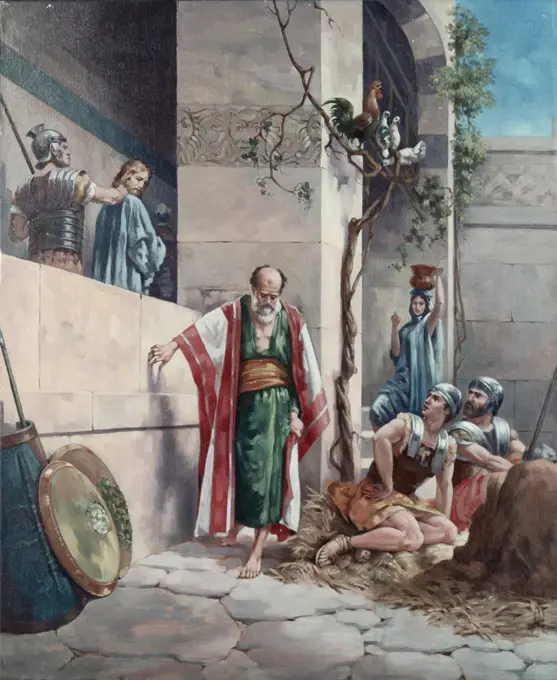
Peter Denies Christ 19th C. Artist Unknown
999-346
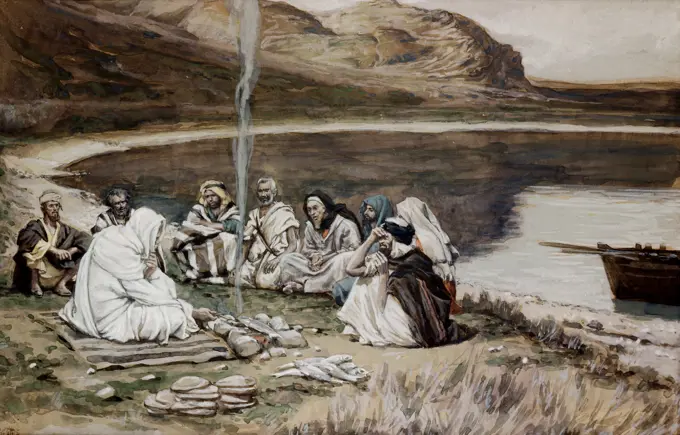
Christ Eating with his Disciples James Tissot (1836-1902 French)
999-218
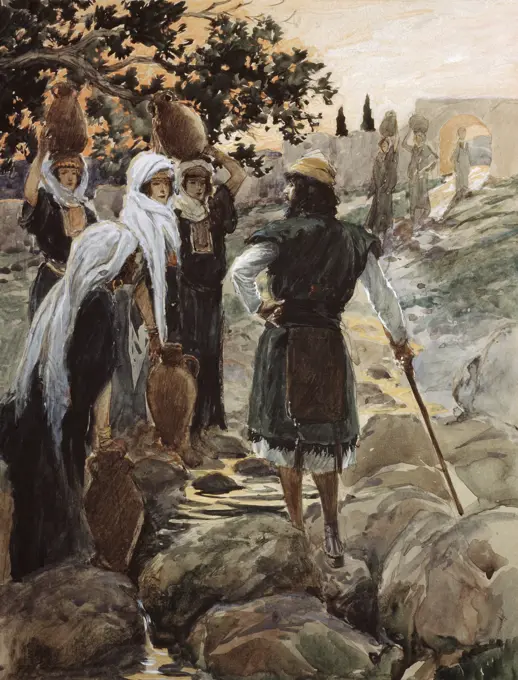
Saul Questions the Young Maidens James Tissot  (1836-1902 French) Jewish Museum, New York
6145-51824297
The Man with the Withered Hand (L'homme à la main desséchée) James Tissot (French, 1836-1902). The Man with the Withered Hand (L'homme à la main desséchée), 1886-1896. Opaque watercolor over graphite on gray wove paper, Image: 8 5/8 x 6 5/16 in. (21.9 x 16 cm).  When Jesus heals a man with a withered hand on the Sabbath, he flouts rules against work and further upsets the devout. Although Jewish law permitted the saving of lives on the holy day, Jesus defies the rigid rules of the Sabbath by extending his help to a man afflicted but not threatened with death. European Art 1886-1896
4409-63012398
The return of the prodigal son. (Luke 15:18, 19). Engraving. Bible Illustration by Gustave Dore. 19th century.
4430-3822
fine arts, religious art, persons, Jesus Christ, way of crucifixion, painting by James Tissot (1836 - 1902),
6145-29848370
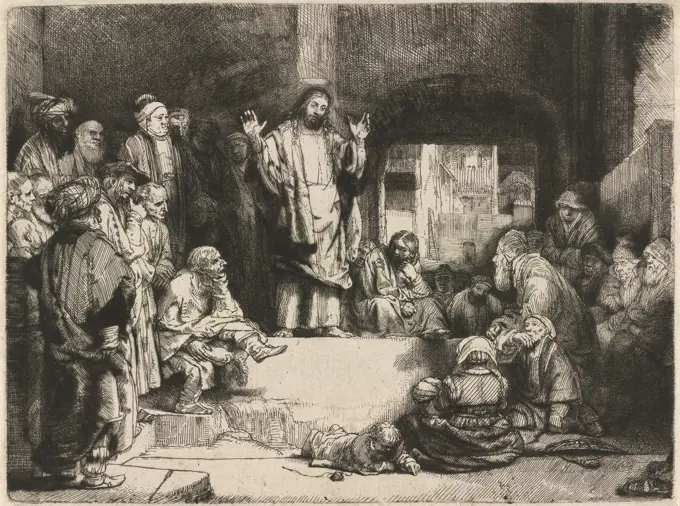
Rembrandt van Rijn, Christ Preaching (La petite Tombe), c 1652 Christ Preaching (La petite Tombe)
999-71
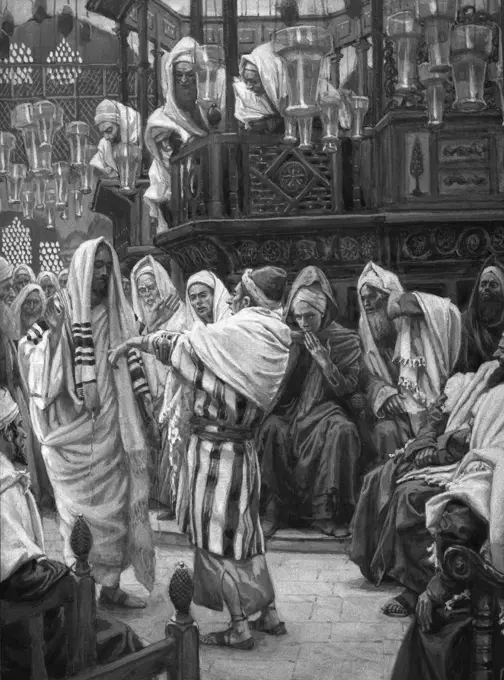
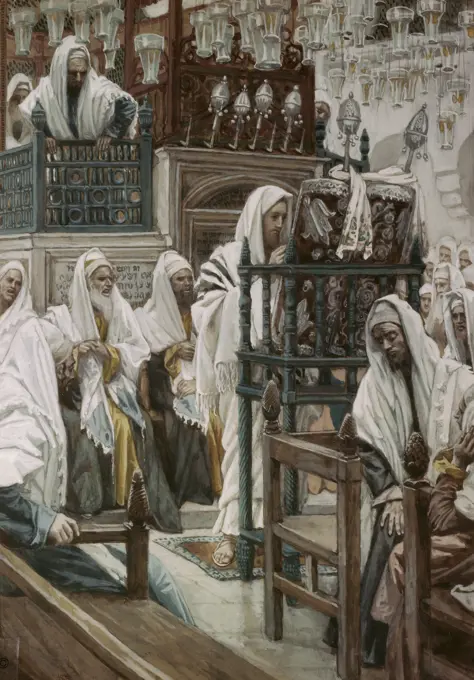
Jesus in the Synagogue James Tissot (1836-1902 French)
4443-21900899
Wm. Hole's paintings, O.T., Old Testament 1925, Middle East, Israel and/or Palestine
6145-51831052
Jesus Speaks Near the Treasury (Jésus parle près du trésor) James Tissot (French, 1836-1902). Jesus Speaks Near the Treasury (Jésus parle près du trésor), 1886-1896. Opaque watercolor over graphite on gray wove paper, Image: 6 5/8 x 9 5/16 in. (16.8 x 23.7 cm).   European Art 1886-1896
6145-51824308
The Man with the Withered Hand (L'homme à la main desséchée) James Tissot (French, 1836-1902). The Man with the Withered Hand (L'homme à la main desséchée), 1886-1896. Opaque watercolor over graphite on gray wove paper, Image: 8 5/8 x 6 5/16 in. (21.9 x 16 cm).  When Jesus heals a man with a withered hand on the Sabbath, he flouts rules against work and further upsets the devout. Although Jewish law permitted the saving of lives on the holy day, Jesus defies the rigid rules of the Sabbath by extending his help to a man afflicted but not threatened with death. European Art 1886-1896
999-407
The Disciples Pluck Corn on the Sabbath James Tissot (1836-1902/French)
4435-2246
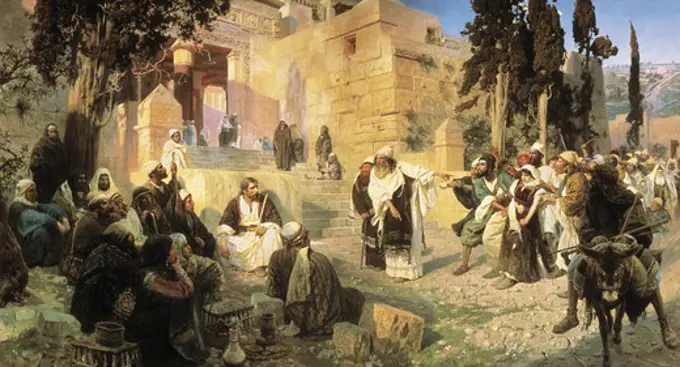
POLENOV, Vassili Dmitrievich (1844-1927). Christ and the Woman Taken in Adultery. 1888. Illustration of the Book of Saint John 8, 1-9. Pre-Raphaelite art. Oil on canvas. RUSSIA. SAINT PETERSBURG. Saint Petersburg. State Russian Museum.
999-9997
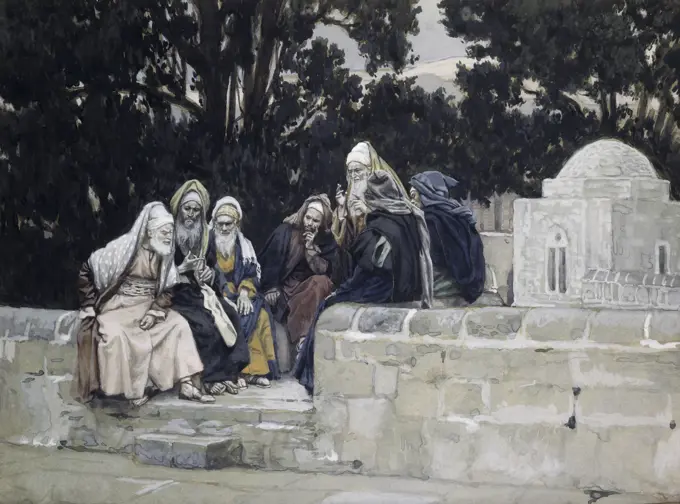
Pharisees & Herodians Take Counsel Against Jesus James Tissot (1836-1902 French)
4430-3817
fine arts, religious art, persons, Jesus Christ, way of crucifixion, ""The evil counsel of Caiaphas"", painting by James Tissot (1836 - 1902),
999-55
The Calling of Andrew and John  James Tissot (1836-1902 French)
1899-19137099
France/Maghreb: 'In The Madrassa', Ludwig Deutsch (1855 - 1935), oil on canvas, 1900
1848-72875999
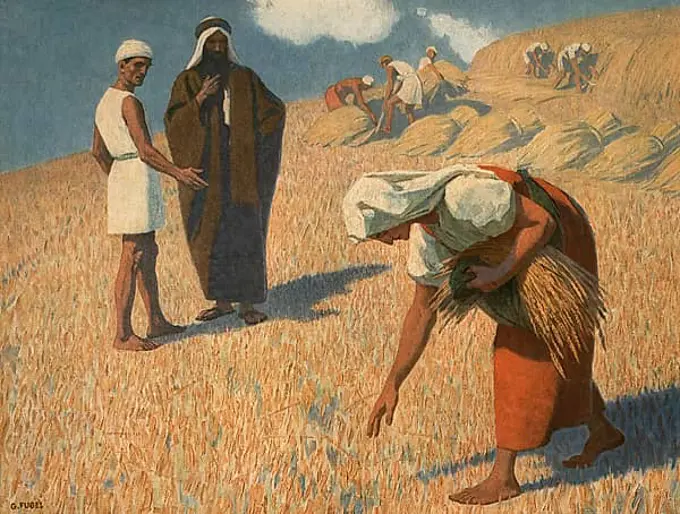
Scene from the biblical story, story of Ruth and Boaz, is about the Moabite widow Ruth, who remains loyal to her mother-in-law Naomi, moves to Bethlehem and regains prosperity and security there through her goodness and Boaz's mercy by marrying Boaz, authentic reproduction of a school mural, historical, around 1900
6145-51831918
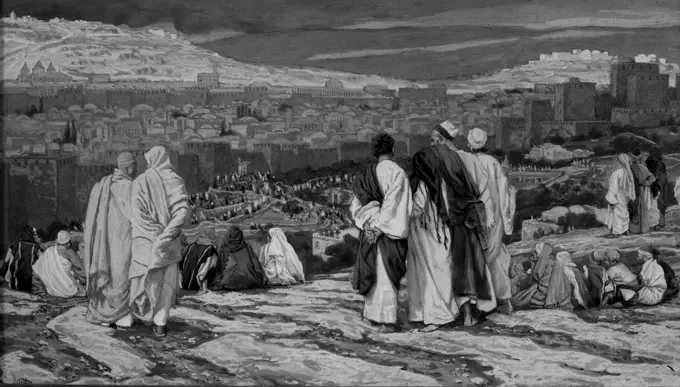
The Disciples Having Left Their Hiding Place Watch from Afar in Agony (Les disciples ayant quitté leur retraite assistent de loin au supplice) James Tissot (French, 1836-1902). The Disciples Having Left Their Hiding Place Watch from Afar in Agony (Les disciples ayant quitté leur retraite assistent de loin au supplice), 1886-1894. Opaque watercolor over graphite on gray wove paper, Image: 5 1/16 x 8 3/4 in. (12.9 x 22.2 cm).   European Art 1886-1894
4409-12196
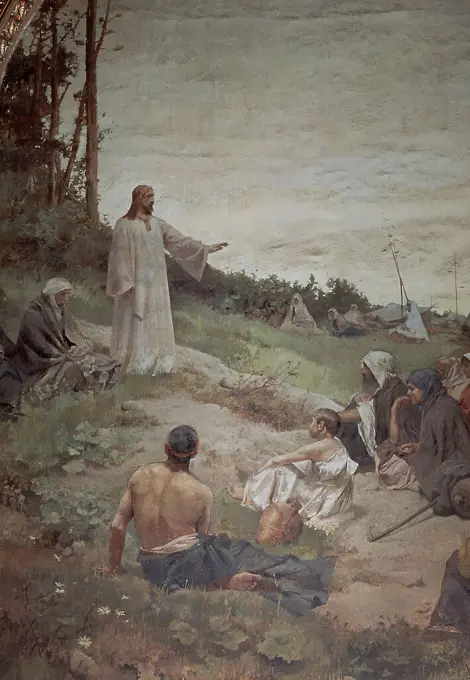
SERMON DE LA MONTAÑA - CAPILLA LATERAL CON FRESCOS DE LA PASION - SIGLO XIX - REALISMO ESPAÑOL. Author: JOSE MORENO CARBONERO (1860-1942). Location: IGLESIA DE SAN FRANCISCO EL GRANDE. MADRID. SPAIN. JESUS.
999-98
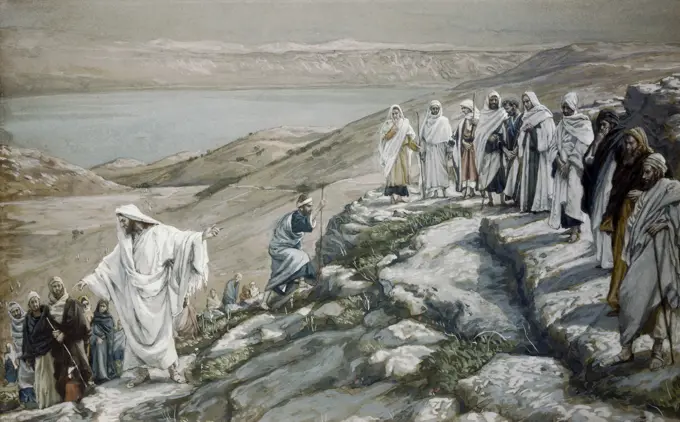
The Choosing of the Twelve Apostles James Tissot  (1836-1902 French)
4220-20410893
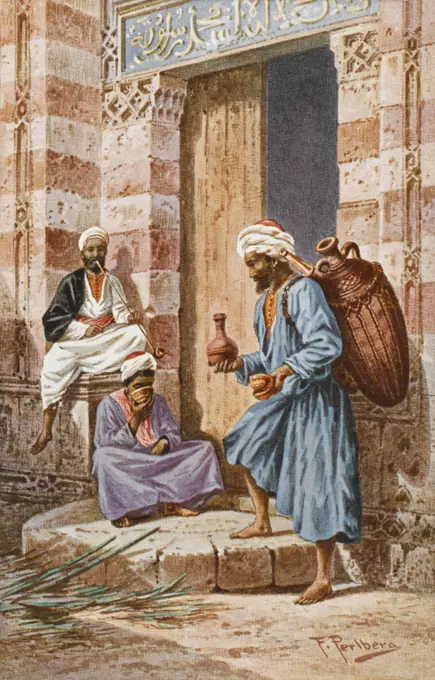
A water seller providing a drink to a seated lad outside a Mosque - Libya.     Date: circa 1910s
6145-51830962
Jesus and the Little Child (Jésus et le petit enfant) James Tissot (French, 1836-1902). Jesus and the Little Child (Jésus et le petit enfant), 1886-1896. Opaque watercolor over graphite on gray wove paper, Image: 5 3/4 x 9 3/8 in. (14.6 x 23.8 cm).   European Art 1886-1896
6176-66081109
Tour and wall of Jericho, Palestine. Israel, Middle East, Orient. Syria by Charles Louis Lortet (1836-1909) Le Tour du Monde 1882
1899-61458370
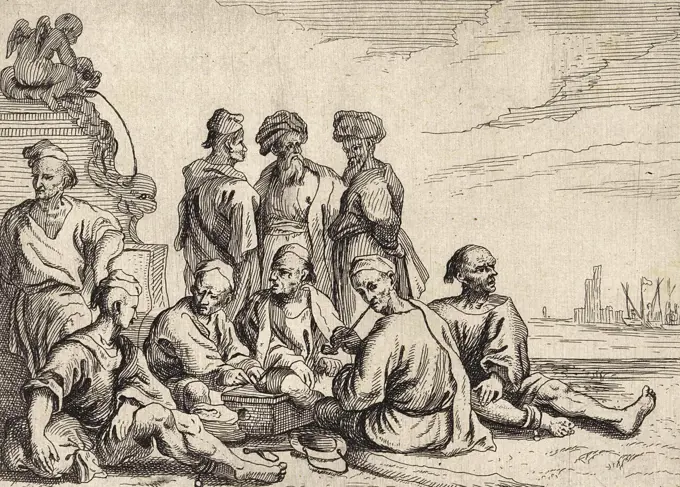
Trick-Track players in an Egyptian coffee house, two men play, other Arabs watch. A servant prepares tea at the counter, around 1885, historical, digitally restored reproduction of an original from the 19th century.
995-103281
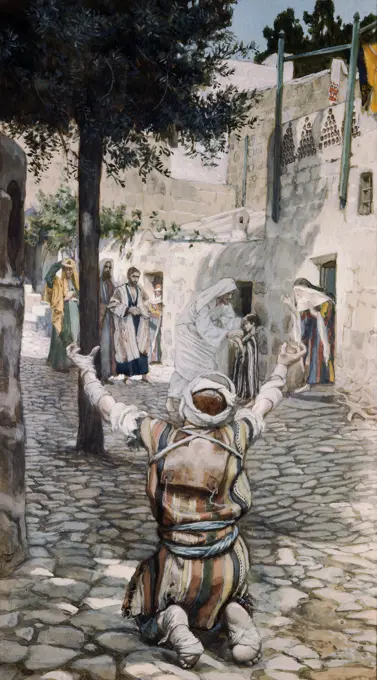
Christ Cleanses The Leper, Bruno Bramanti, (1897-1957 Italian)
6145-51824175
The Piscina Probatica or Pool of Bethesda (La piscine probatique ou de Bethesda) James Tissot (French, 1836-1902). The Piscina Probatica or Pool of Bethesda (La piscine probatique ou de Bethesda), 1886-1894. Opaque watercolor over graphite on gray wove paper, Image: 9 1/4 x 5 7/8 in. (23.5 x 14.9 cm).  Although Tissot gave exacting attention to archaeological detail, providing what he intended as historically accurate backdrops for the narrative of Christs life, he also pursued the mystical. At the pool known as the Piscina Probatica, the infirm gather around the edge of the water in the hope of being healed. According to John, an angel stirs the pool, activating its curative powers; the next person to step into the water would be delivered from affliction. Tissots image features two large, translucent hands reaching down into the pool: the bubbles and widening ripples on the waters surface serve as traces of the miraculous phenomenon. While Tissots painting invokes otherworldly ag
6145-51831035
Jesus Chases a Possessed Man from the Synagogue (Jésus chasse un possédé de la synagogue) James Tissot (French, 1836-1902). Jesus Chases a Possessed Man from the Synagogue (Jésus chasse un possédé de la synagogue), 1886-1896. Opaque watercolor over graphite on gray wove paper, Image: 9 3/16 x 7 1/8 in. (23.3 x 18.1 cm).   European Art 1886-1896
6145-51831680
Jesus Discourses with His Disciples (Jésus s'entretient avec ses disciples) James Tissot (French, 1836-1902). Jesus Discourses with His Disciples (Jésus s'entretient avec ses disciples), 1886-1896. Opaque watercolor over graphite on gray wove paper, Image: 6 13/16 x 11 11/16 in. (17.3 x 29.7 cm).   European Art 1886-1896
6188-60073867
Hiking shoe maker in Jerusalem, Holy Land, today Israel, historical, digitally restored reproduction of a template from the 19th century, Record Date Not Stated
1848-72880136
Scene from the biblical story, Jesus' parents, Mary and Joseph, traveling with the 12-year-old Jesus to Jerusalem for Passover, as prescribed by Jewish tradition, authentic reproduction of a school mural, historical, around 1900
999-9213
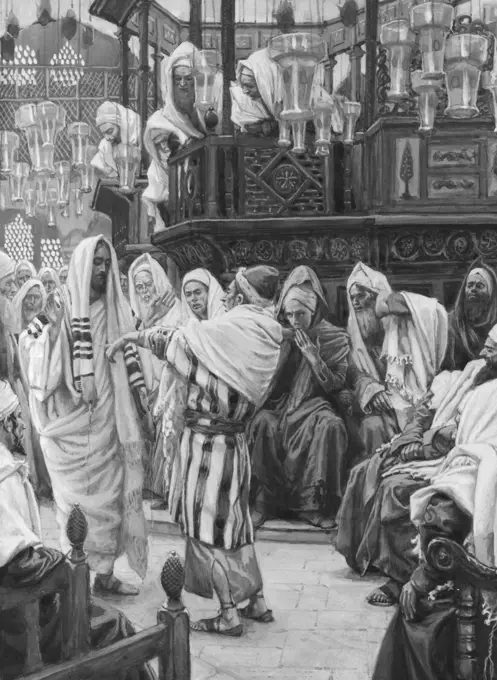
Christ Fortelling the Destruction of the Temple James Tissot (1836-1902 French)
1899-48156870
Slaves at a well, watering hole, 1659, Historical, digitally restored reproduction from a 19th-century original.
999-297
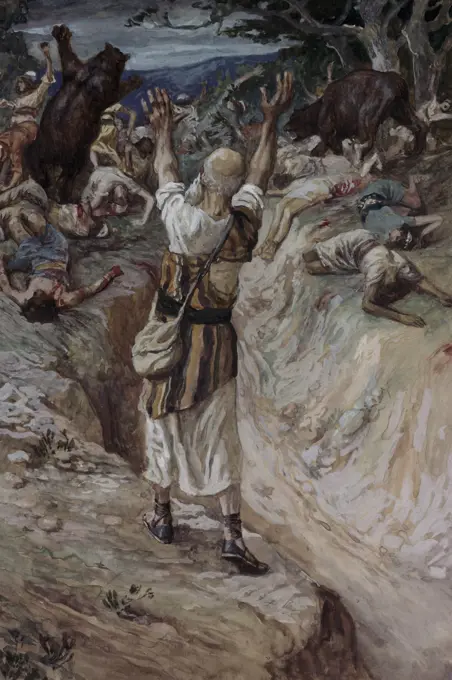
The Children Devoured By Bears James Tissot (1836-1902 French) Jewish Museum, New York City
1848-61020710
Das Grab des Lazarus, Bethany, Heiliges Land, Westjordanland, ca. 1890, Historic, digitally restored reproduction from a 19th century original, The tomb of Lazarus, Bethany, the Holy Land, West Bank, 1890, Historic, digitally restored reproduction from a 19th century original
6145-51828477
Judas Goes to Find the Jews (Judas va trouver les Juifs) James Tissot (French, 1836-1902). , 1886-1894. Opaque watercolor over graphite on gray wove paper, Image: 7 3/16 x 10 in. (18.3 x 25.4 cm).  In two short verses, Mark recounts the deal struck between Judas and the chief priests, who will give him money to betray Jesus. Here, Judas negotiates his fee (he is shown with his fingers raised). With his suspicious backward glance at the exchange between Judas and the priests, the unidentified foreground figure draws the viewers attention to the proceedings. European Art 1886-1894
6176-67070795
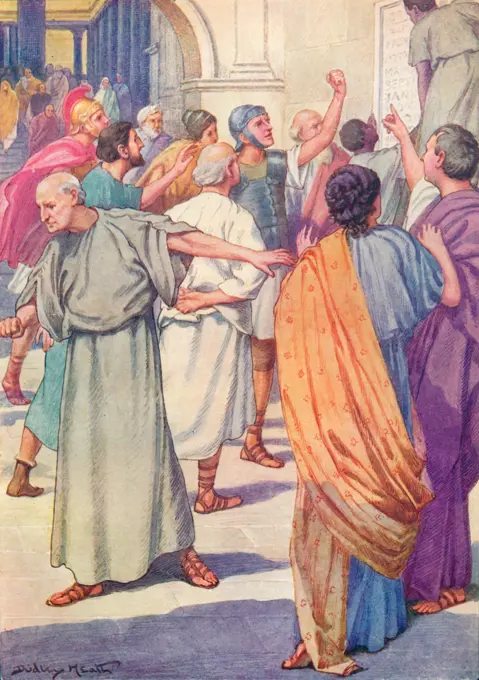
'Lists of those who were doomed were hung up in the Forum', c1912 (1912). Artist: Ernest Dudley Heath.
1606-206620
Saint-Jean de Montmartre church. Marriage at cana. Paris. France.
6145-51833207
Jesus Teaches the People by the Sea (Jésus enseigne le peuple près de la mer) James Tissot (French, 1836-1902). , 1886-1896. Opaque watercolor over graphite on gray wove paper, Image: 6 11/16 x 9 1/4 in. (17 x 23.5 cm).   European Art 1886-1896
6145-51825164
The Sermon of the Beatitudes (La sermon des béatitudes) James Tissot (French, 1836-1902). The Sermon of the Beatitudes (La sermon des béatitudes), 1886-1896. Opaque watercolor over graphite on gray wove paper, Image: 9 5/8 x 6 7/16 in. (24.4 x 16.4 cm).  Jesus now has a significant following, demonstrated visually by the crowd stretching along narrow paths from the distant shores of a lake all the way to the peak of the mountain; he preaches with hands upraised to a group of men, women, and children. In the episode illustrated here, often called the Sermon on the Mount, Jesus enunciates many of the key moral and ethical tenets of his ministry. In the beatitudes, he identifies the blessed among the community including the meek, the righteous, the peacemakers, and the persecutedand offers consolation to those who suffer, indicating that they will receive their reward in the kingdom of heaven. European Art 1886-1896
6176-66080340
Jehu's companions finding the remains of Jezebel. Old Testament. Antique digitally colored Biblical illustration by Gustave Doré (1832-1883)
6145-51827794
The Evil Counsel (Le mauvais conseil) James Tissot (French, 1836-1902). The Evil Counsel (Le mauvais conseil), 1886-1894. Opaque watercolor over graphite on gray wove paper, Image: 10 3/8 x 7 1/8 in. (26.4 x 18.1 cm).  In Johns account, the Pharisees seek the counsel of the chief priest Caiaphas, fearful that Jesus growing ministry will provoke the wrath of the Romans and thereby jeopardize the Jewish nation. For the sake of political expediency, Caiaphas urges the priests to find a way to kill Jesus. Tissot emphasizes the clandestine nature of the meeting by placing the participants at the top of the stair, at a distance from the viewer, a rare compositional strategy. Their turned backs and black hoods accentuate the sense of conspiracy. European Art 1886-1894
6145-51827713
The Resurrection of Lazarus (La résurrection de Lazare) James Tissot (French, 1836-1902). The Resurrection of Lazarus (La résurrection de Lazare), 1886-1894. Opaque watercolor over graphite on gray wove paper, Image: 10 1/16 x 7 1/4 in. (25.6 x 18.4 cm).  Following the death of his friend Lazarus, Jesus goes to Bethany to comfort Martha and Mary Magdalene for a loss that he also felt keenly. Both women lament that Jesus was absent when Lazarus took ill, knowing that he would have prevented the death with his healing powers. Affected by the loss, Jesus weeps. Led to the darkened tomb of Lazarus, Jesus commands the removal of the stone covering the opening and, after a prayer to God, resurrects the dead man before witnesses who gasp in astonishment. European Art 1886-1894
4409-63011029
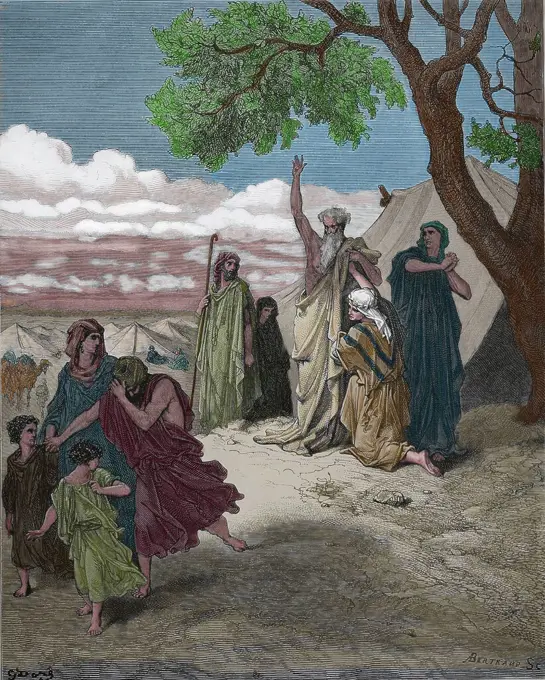
The Bible. Genesis. Noah. The Curse of Ham and Canaan. Engraving by Dore, 1866. Author: GUSTAVE DORÉ.
6145-51831938
The Magdalene Runs to the Cenacle to Tell the Apostles that the Body of Jesus is No Longer in the Tomb (Madeleine court au cénacle et avertit les apôtres que le corps de Jésus n'est plus dans le tombeau) James Tissot (French, 1836-1902). The Magdalene Runs to the Cenacle to Tell the Apostles that the Body of Jesus is No Longer in the Tomb (Madeleine court au cénacle et avertit les apôtres que le corps de Jésus n'est plus dans le tombeau), 1886-1894. Opaque watercolor over graphite on gray wove paper, Image: 7 1/4 x 11 5/16 in. (18.4 x 28.7 cm).   European Art 1886-1894
6176-67056607
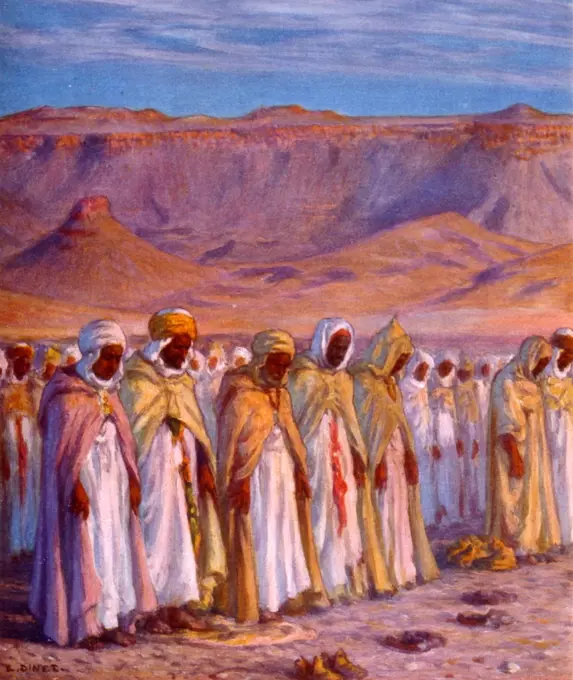
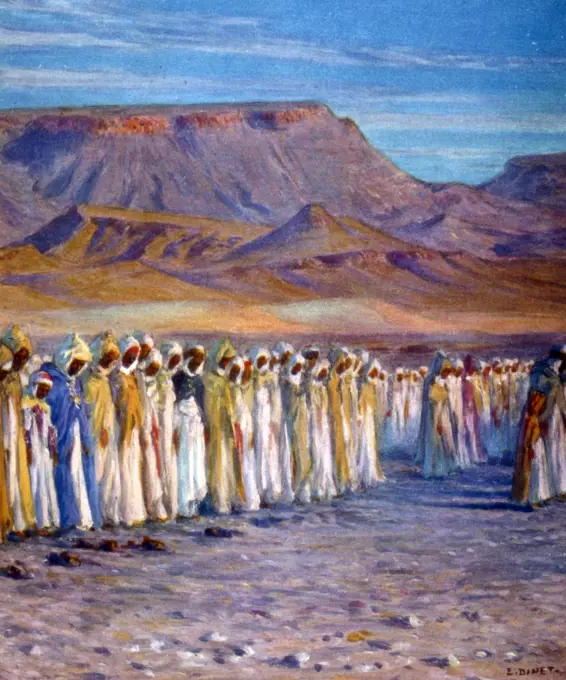
'L'invocation (La Priere)' ('Prayer of Invocation'), 1918. Artist: Etienne Dinet
999-65
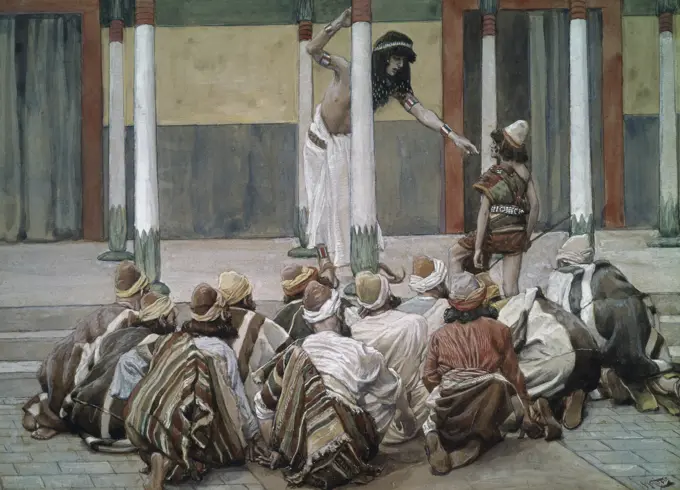
The Brothers of Joseph James Tissot (1836-1902 French) Watercolor Jewish Museum, New York
4409-63014705
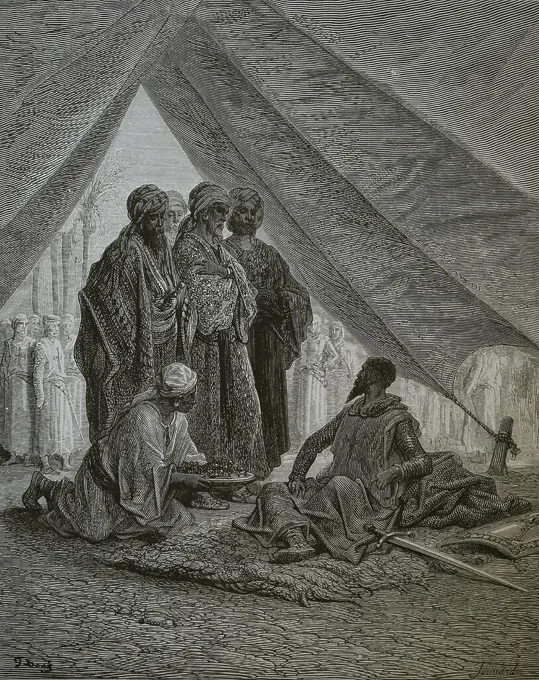
Crusaders. Godfrey Imposes Tributes Upon Emirs of Caesarea, Ptolemaïs and Ascalon. Engraving by Dore. 19th century. Author: GUSTAVE DORÉ.
4409-17956
The Decapitation of Saint Paul. Malaga, Chapel of the cathedral. Location: CATEDRAL DE LA ENCARNACION. Malaga. SPAIN. SAN PABLO APOSTOL-PABLO DE TARSO.
1899-33102
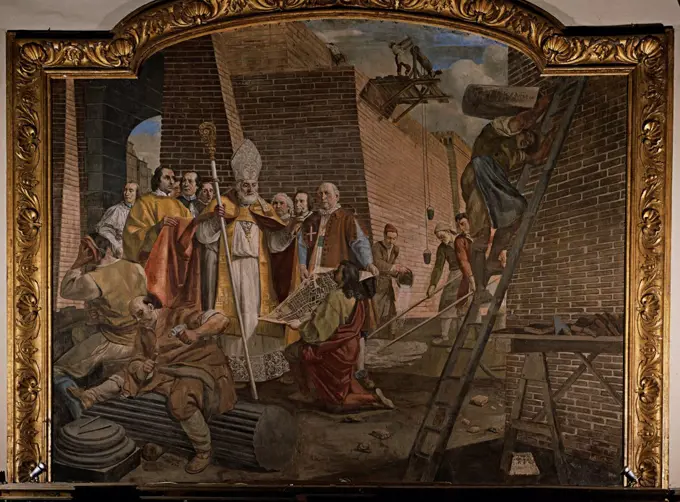
St Florido Promotes the Rebuilding of Citta di Castello, by Benefial Marco, 1684 - 1764, 18th Century, fresco. Italy, Umbria, Citta di Castello, Perugia, Cathedral. Whole artwork. Saint St Fiorio the Bishop construction: building city walls bricklayers columns.
6145-51825408
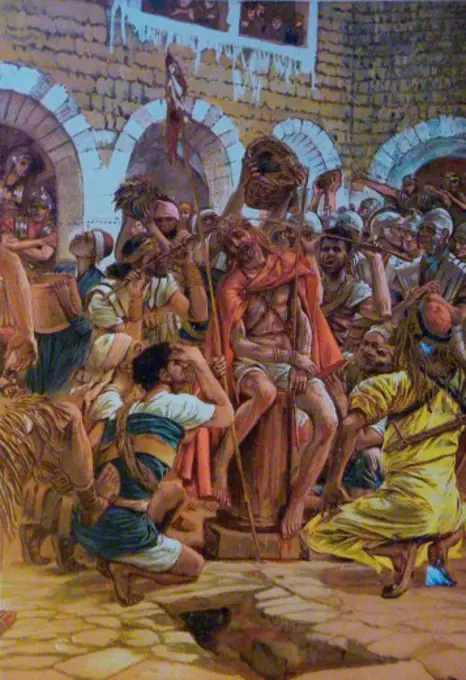
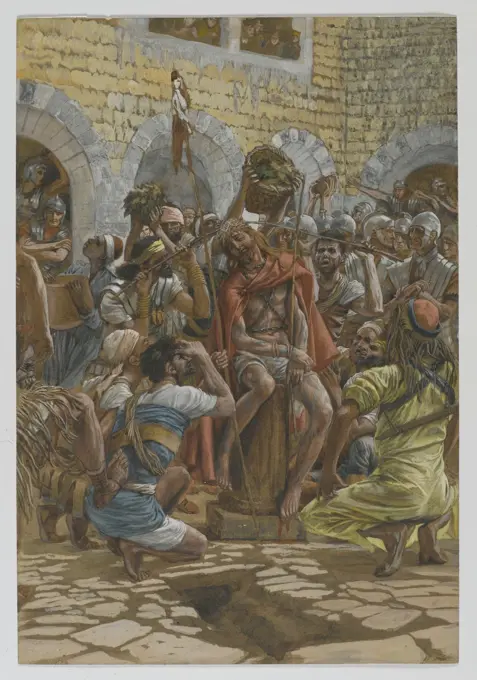
The Crowning of Thorns (Le couronnement d'épines) James Tissot (French, 1836-1902). The Crowning of Thorns (Le couronnement d'épines), 1886-1894. Opaque watercolor over graphite on gray wove paper, Image: 14 3/16 x 9 11/16 in. (36 x 24.6 cm).  Following the scourging, or flagellation, the Roman soldiers clothe Christ in a scarlet cloak, thus mocking his claims to royalty. Tissot reminds his readers of the colors associations in Jewish tradition, noting that wearing this color marks Jesus as the bearer of humanitys sins. Tissot discusses in great detail the construction of the crown of thorns shown here, the base of which, he claims, was formed by a band of rushes and could still be seen at the Cathedral of Notre-Dame in Paris among its collection of relics. Rather than a wreath of thorns, which would have largely confined the pain to the area around the temples, Tissot surmised that the crown was actually shaped like a domed hat (this can be more clearly seen in later scenes); the bl
1746-28993691
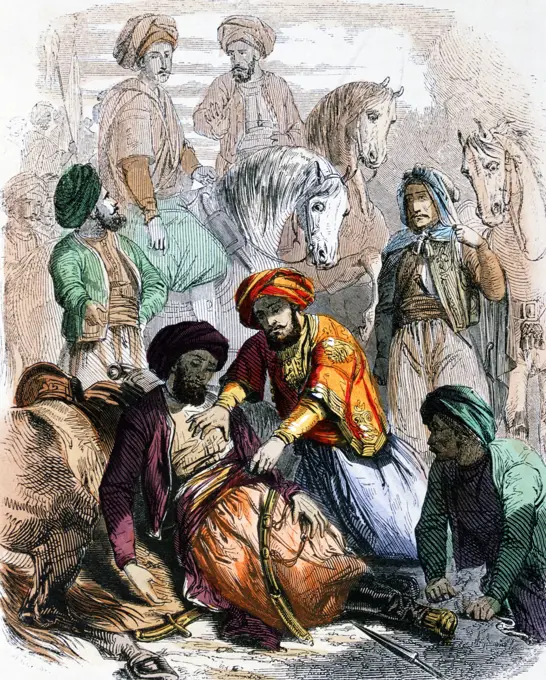
Ibrahim Pasha (eldest son of Muhammad Ali) blesses a dying soldier in Arabia 1818. Watercolour by the French painter Jean-Adolphe Beaucé (1818 - 1875). Ibrahim Pasha (1789-1848) commanded the Egyptian army. After his father became senile Ibrahim ruled Egypt.
999-256
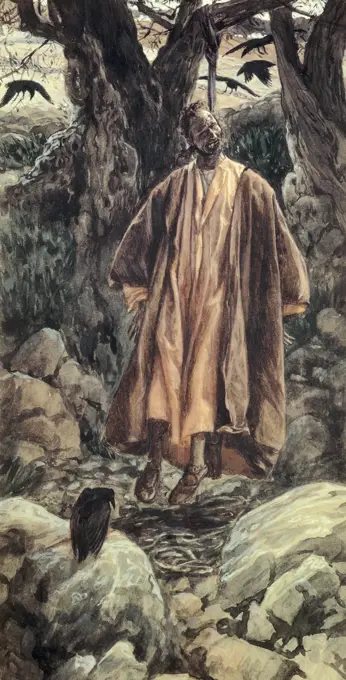
Judas Hangs Himself James Tissot (1836-1902/French)
4409-17505572
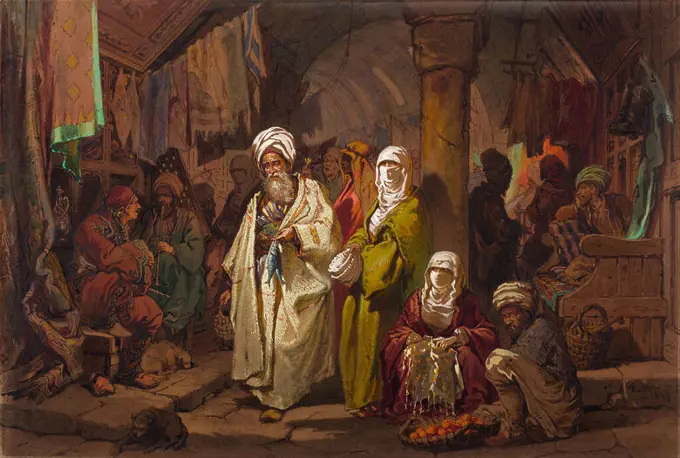
The Grand Bazaar. Date/Period: Second half of the 19th century. Painting. Watercolor on paper. Height: 455 mm (17.91 in); Width: 670 mm (26.37 in). Author: AMADEO PREZIOSI.
1848-72876040
Scene from the biblical story, story of Ruth and Boaz, is about the Moabite widow Ruth, who remains loyal to her mother-in-law Naomi, moves to Bethlehem and regains prosperity and security there through her goodness and Boaz's mercy by marrying Boaz, authentic reproduction of a school mural, historical, around 1900
4048-21182495
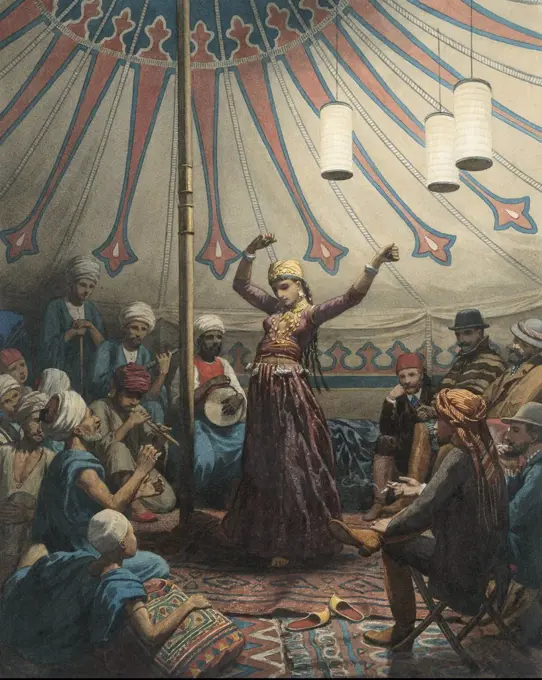
Egyptian Dancer in a Tent, by Willem de Famars Testas, 1863, Dutch Painting, watercolor. Young woman dancer performs with musician for audience of Arabs and Europeans. (BSLOC_2016_1_17)
6145-51824997
The Disbelief of Saint Thomas (Incredulité de Saint Thomas) James Tissot (French, 1836-1902). The Disbelief of Saint Thomas (Incredulité de Saint Thomas), 1886-1894. Opaque watercolor over graphite on gray wove paper, Image: 7 13/16 x 5 5/16 in. (19.8 x 13.5 cm).  The apostle Thomas, who had received the news but not a visit from the risen Christ, refuses to believe in the reality of the Resurrection. When Christ again appears to the disciples, Thomas is still not convinced and, for confirmation, wants to put his fingers into Christs wounds. Jesus invites him to do just that but then reproaches him for his lack of belief. Now kneeling before his master, Thomas hangs his head in shame, as Jesus bares his wounded side and declares to Thomas, as well as to all who doubt, “Thomas, because thou hast seen me, thou hast believed: blessed are they that have not seen, and yet have believed.” European Art 1886-1894
1746-111928176
Illustration depicting Moslem Arab pilgrims en-route to Mecca, by Nasreddine Dinet (Alphonse-Étienne Dinet); 1861 - 1929, a French orientalist painter; 1918. Mecca is the most sacred site in Islam. It is considered by Muslims to be the bayt Allah, the "House of God". Muslims are expected to face the Kaaba when performing salat (prayer). One of the Five Pillars of Islam requires every Muslim who is able to do so to perform the hajj pilgrimage at least once in their lifetime.
6176-66085977
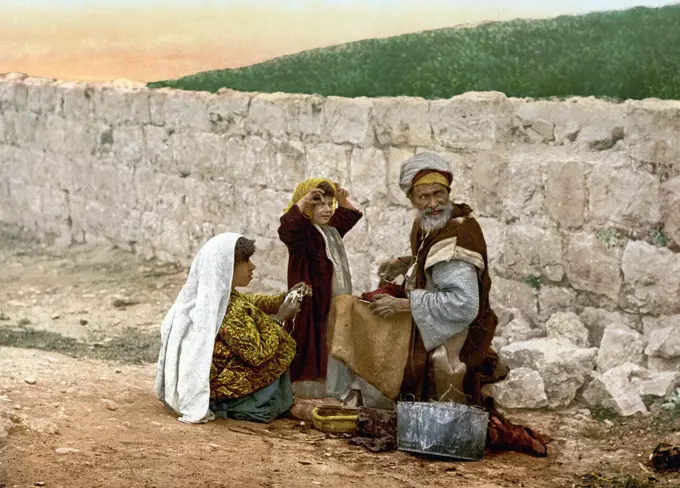
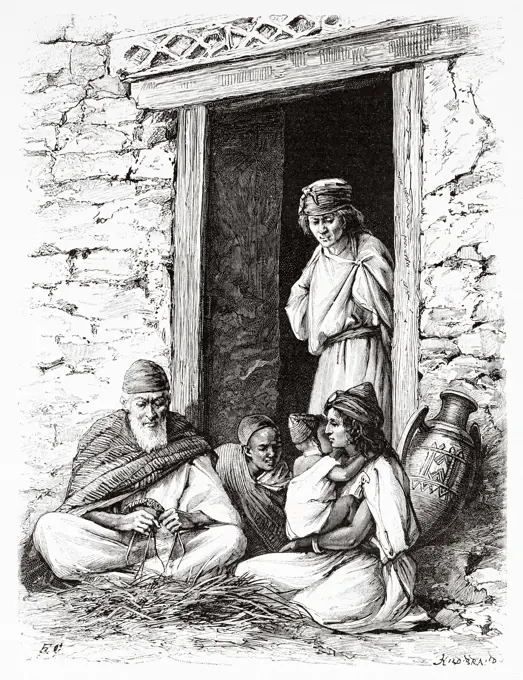
Berber family Traras. Traras mountains, Northwest Algeria, Africa. Old 19th century engraved illustration, Six month with the Traras Berber tribe in Oran by Charles de Mauprix,1888 from Le Tour du Monde 1889
999-9989
Healing the Leper at Capernaum James Tissot (1836-1902 French)
4220-20409556
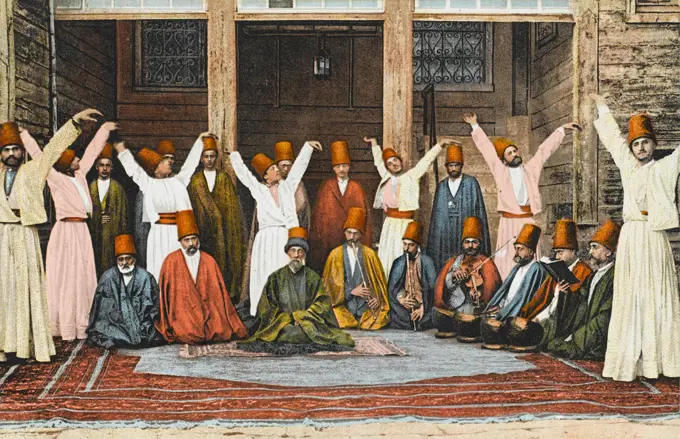
Group of Mevlevi Dervishes (colourised) at St. Sophia Mosque, Constantinople. The Mevlevi Whirling Dervishes of Konya (Konia). This Dervish order was founded in memory of Jelaluddin Rumi (1207 - 1273)  mystic and poet. When the great Andalusian mystic Muhyiddin Ibn Arabi met Rumi (as a boy) with his Father in Baghdad  he commented when he saw him walking away behind his Father How strange, there goes a Sea followed by an Ocean. The advancing Mongol hordes forced Rumis Family to leave Balkh  arri
1848-60271306
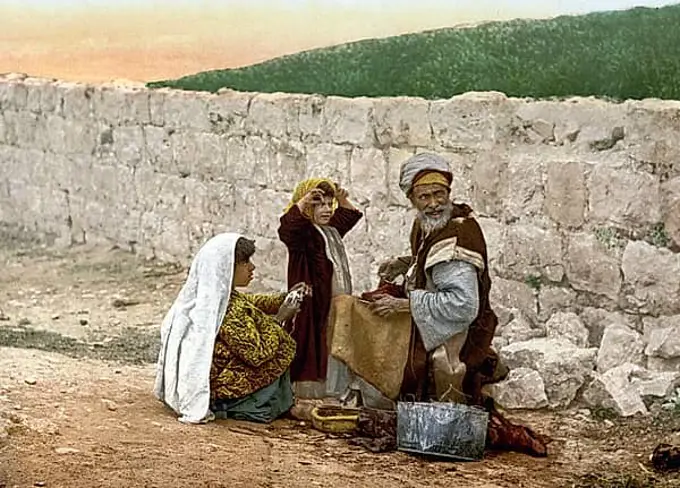
Travelling shoemaker in Jerusalem, Holy Land, today Israel, Historical, digitally restored reproduction from a 19th century original, Record date not stated
999-247
Abigail Kneels Before David James Tissot (1836-1902 French) Jewish Museum, New York
6188-64601836
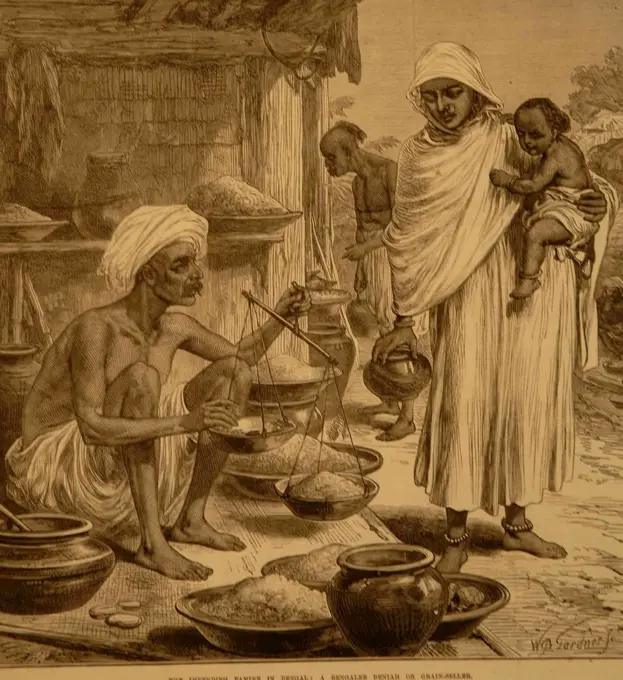
General View The impending famine in Bengal A Bengalee Bengali Beniah or grain seller  West Bengal  India Copyright: xJehangirxSorabjee/DinodiaxPhotox
6145-51827659
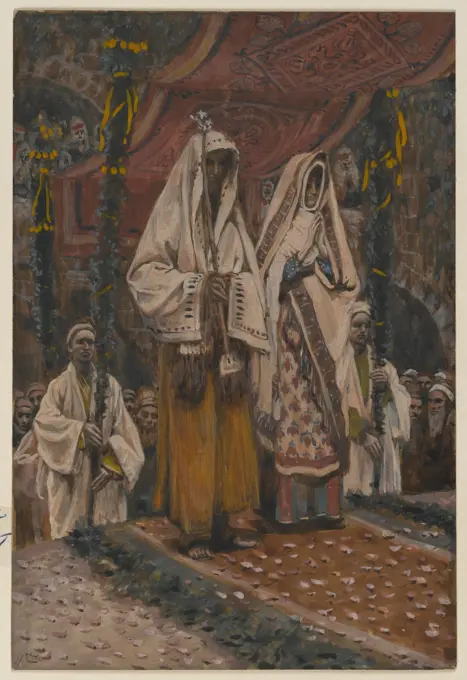
The Betrothal of the Holy Virgin and Saint Joseph (Fiançailles de la sainte vierge et de saint Joseph) James Tissot (French, 1836-1902). The Betrothal of the Holy Virgin and Saint Joseph (Fiançailles de la sainte vierge et de saint Joseph), 1886-1894. Opaque watercolor over graphite on gray wove paper, Image: 6 5/8 x 4 1/2 in. (16.8 x 11.4 cm).  Although Luke devotes just two verses to the betrothal of Mary and Joseph, their formal promise of future marriage, Tissot inventively elaborates on the event, calling on his extensive research into ancient Jewish ritual. Before a sea of onlookers, Joseph, with staff still in hand, and Mary stand with heads bowed beneath a painted canopy held aloft by attendants who grasp lushly garlanded poles. Tissot crams this tiny work with a multitude of details, from the patterned robes of Mary and Joseph to the petal-strewn carpet beneath their feet. European Art 1886-1894
6145-51827774
The Man Who Hoards (L'homme qui thésaurise) James Tissot (French, 1836-1902). The Man Who Hoards (L'homme qui thésaurise), 1886-1894. Opaque watercolor over graphite on gray wove paper, Image: 7 7/8 x 5 1/16 in. (20 x 12.9 cm).  This is one of a group of paintings illustrating parables told by Jesus to his followers, rather than episodes from his life. Here, a rich man amasses possessions, taking pride in their accumulation rather than praising God for their plenitude and use. Dazzled by the goods that surround him, he remains oblivious to the threat of death hovering behind him in the form of a sword-bearing angel. European Art 1886-1894
6176-67071974
'Fellah in History Dress', 1902. Creator: John Fulleylove.
6145-51827700
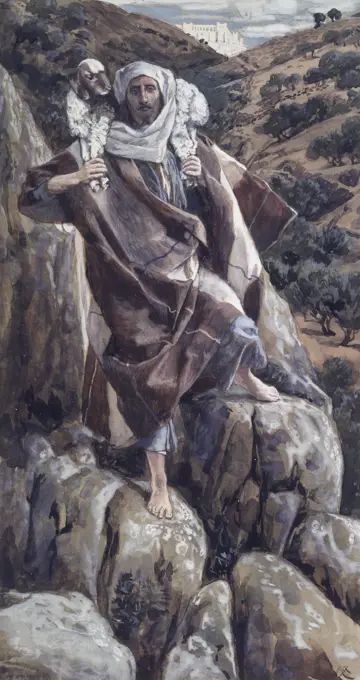
The Good Shepherd (Le bon pasteur) James Tissot (French, 1836-1902). The Good Shepherd (Le bon pasteur), 1886-1894. Opaque watercolor over graphite on gray wove paper, Image: 11 1/16 x 5 7/8 in. (28.1 x 14.9 cm).  Speaking to those who challenge his teachings and his deeds, Jesus likens himself to the good shepherd, pictured here, who devotes his life, and sacrifices his own well-being, to protect the sheep in his care. This analogy anticipates the ultimate sacrifice that Jesus will make for his flock” of followers and humankind. Tissot notes that this parable is among the most beautiful in the Gospels—and, indeed, one with an enduring visual history. The artist cites the earliest examples in the catacombs of ancient Rome. But again seeking to distance himself from previous visual traditions, Tissot asserts that this image found its roots in the devoted acts of caretaking among shepherds that he witnessed. European Art 1886-1894
1746-21120763
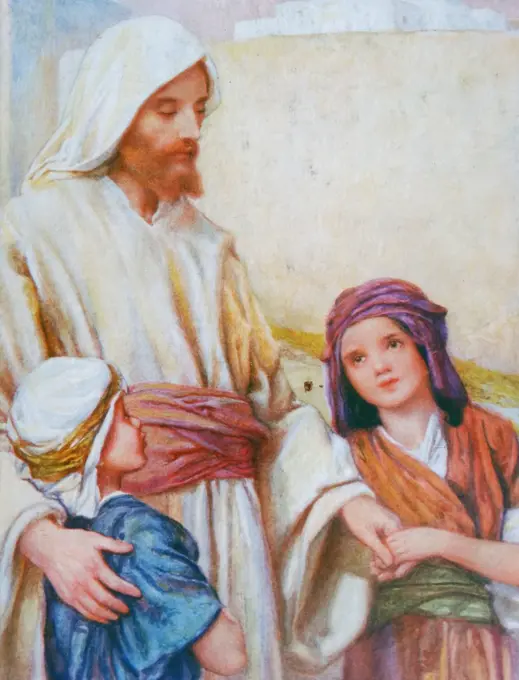
Jesus with children. Illustration by Arthur A. Dixon 1872-1959. From the Precious Gift: Bible Stories for Children by T W Wilson (1910)
4409-17397717
The Capture of Jericho. By faith the walls of Jericho fell down, after they were compassed about sevend days. 1907.
6145-51827823
The Pilgrims of Emmaus on the Road (Les pèlerins d'Emmaüs en chemin) James Tissot (French, 1836-1902). The Pilgrims of Emmaus on the Road (Les pèlerins d'Emmaüs en chemin), 1886-1894. Opaque watercolor over graphite on gray wove paper, Image: 7 7/16 x 10 5/8 in. (18.9 x 27 cm).  Jesus also appears to two of his disciples on the road to Emmaus. Not able to recognize him, they tell the seeming stranger of Christs death and his subsequent mysterious disappearance from his tomb. Though they had believed him to be the Messiah, they confess to doubts, as he “should have redeemed Israel,” as Luke recounts, or freed the Jews from the rule of the Romans. As they walk on toward their destination, the stranger instructs his companions on the ancient prophecies regarding the Messiah. In a later scene, when Jesus joins them for a meal at their destination and breaks bread with them, they do recognize him, before he disappears from their presence. European Art 1886-1894
900-101822
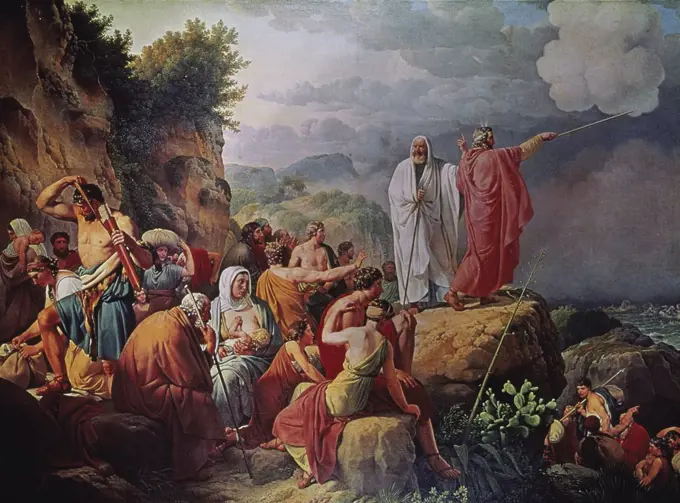
Moses Divides the Waters of the Red Sea Christoffer W. Eckersberg (1783-1853 Danish)
999-9257
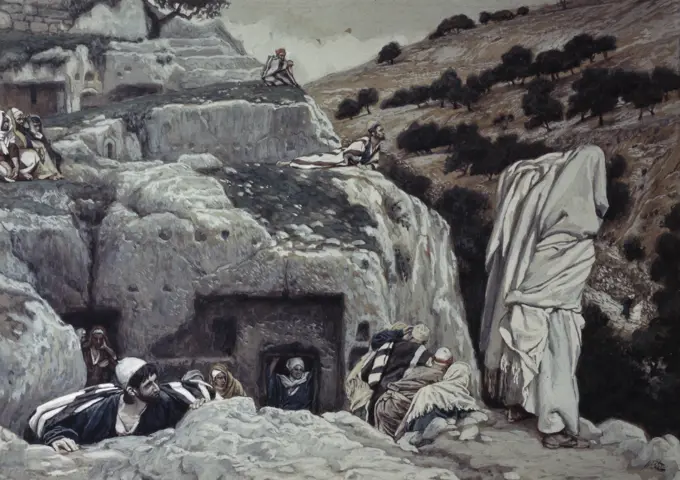
Apostles Hiding in the Valley of Hinnom James Tissot (1836-1902 French)
4069-6145
Nativity Scene at Bethlehem, fresco, church of St Francois de Sales, Paris, 1917
999-358
Daniel and the Wise Men James Tissot (1836-1902 French) Jewish Museum, New York City
4409-17487075
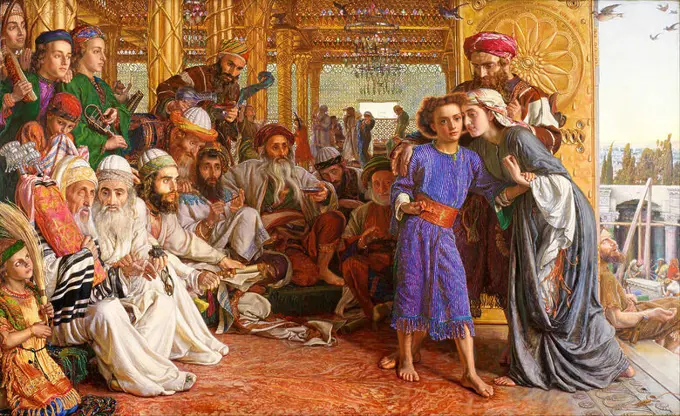
The Finding of the Saviour in the Temple. Date/Period: 1854/1855. Painting. Oil on canvas. Width: 1410 mm. Height: 857 mm. Author: William Holman Hunt.
1848-53986855
A friendly tournament during the third crusade in 1189, Historical, digitally restored reproduction from a 19th century original, Record date not stated
1746-29951702
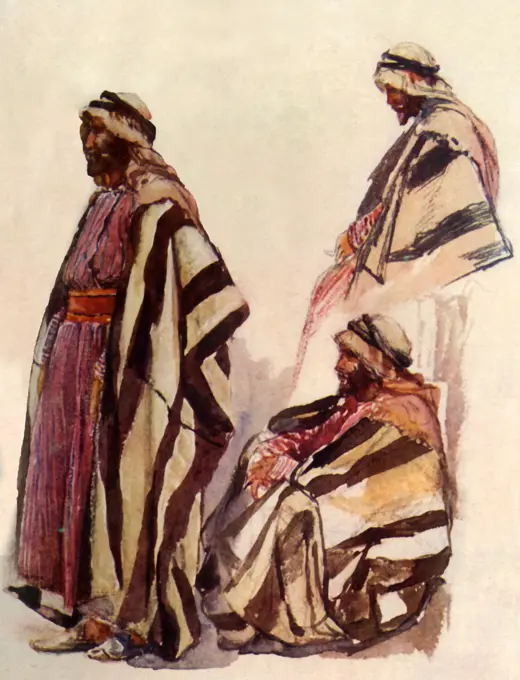
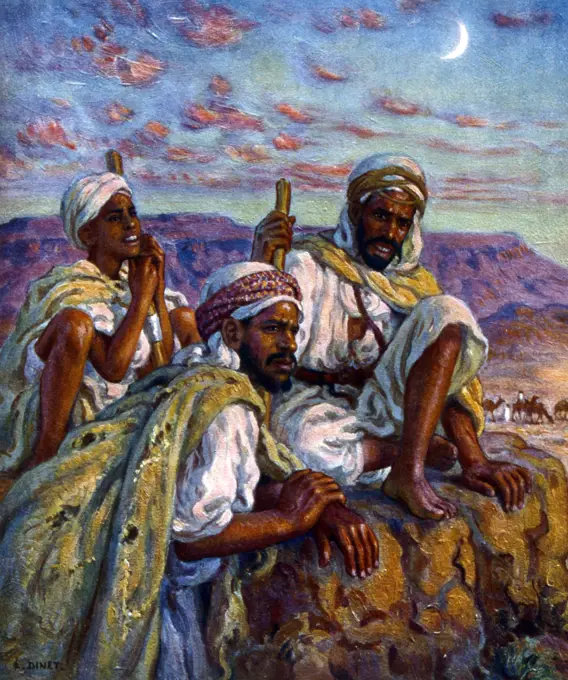
Group of Arab shepherds by Nasreddine Dinet (Alphonse-Étienne Dinet); 1861 - 1929, a French orientalist painter 1918
1746-29011978
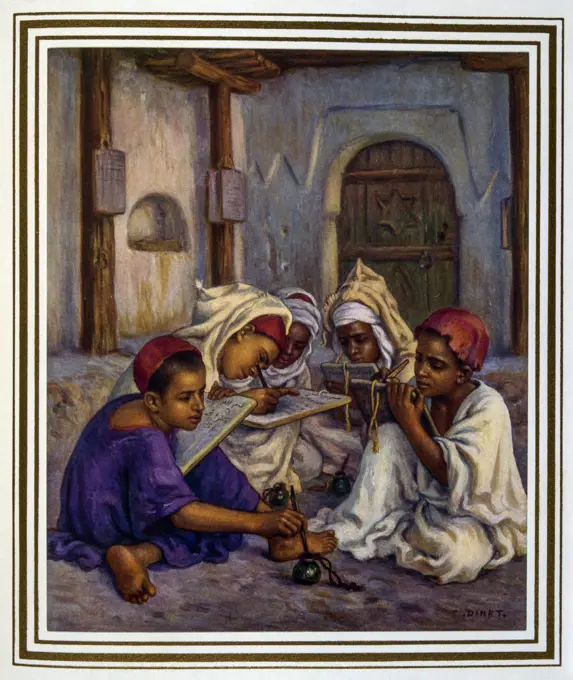
Arab boys learn at school. By Nasreddine Dinet (Alphonse-Etienne Dinet (1861 - 1929). French orientalist painter. Illustration for 'The life of Mohammad the prophet of Allah' 1918
1838-21995802
Hopi Family, Lithograph, early 1900's
6145-59118031
W Tetmajer (1861-1923), His Piast; Czernecki, Jan (Wieliczka, Kraków; Publisher; 1905-1939), Anczyc, W Adys Aw Ludwik and Spóka (Kraków; Drukarnia; 1875-1948); 1909 (1909-00-00-1909-00-00);
4435-8673
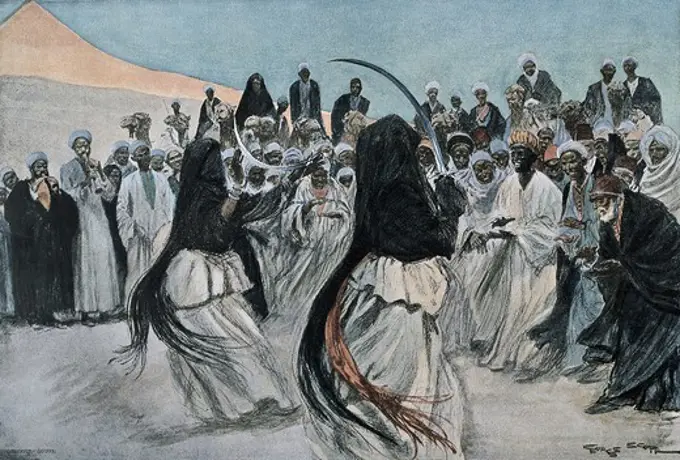
Africa (1901). The dance of the sabre of the Bedouins in the desert. Illustration by Georges Scott.
1848-72871043
Scene from the biblical story, On the Day of Jesus' Resurrection, two disciples, one of them named Cleopas, wander from Jerusalem to the village of Emmaus about eleven kilometers away, authentic reproduction of a school mural, historical, around 1900
4409-62731047
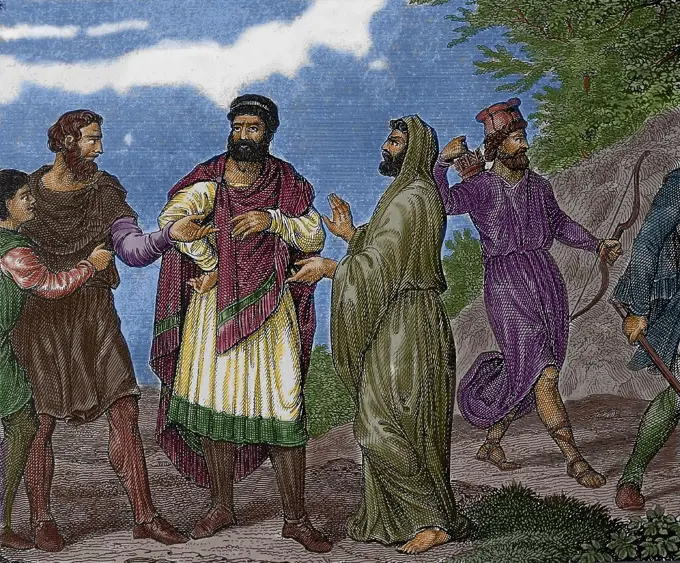
Ancient Age. Carthaginian king and subjects. Engraving. (Later colouration). Iconographic Enclyclopaedia of science, Literature and Art. 19th century. Author: Johan George Heck.
1848-49169695
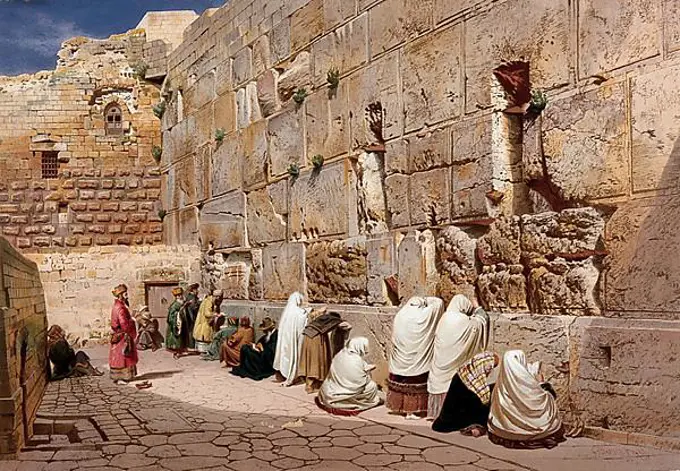
Jerusalem, Western Wall, Wailing Wall, 1865, today Israel, Western Wall, Wailing Wall, today Israel, Historical, digitally restored reproduction from a 19th century original
1746-29963515
Calvary 1893, by Nikolai Ge (1831- 1894), Russian artist. Nikolai Nikolaevich Ge was a Ukrainian realist painter and an early Ukrainian symbolist. He was famous for his works on historical and religious motifs.
4409-17292896
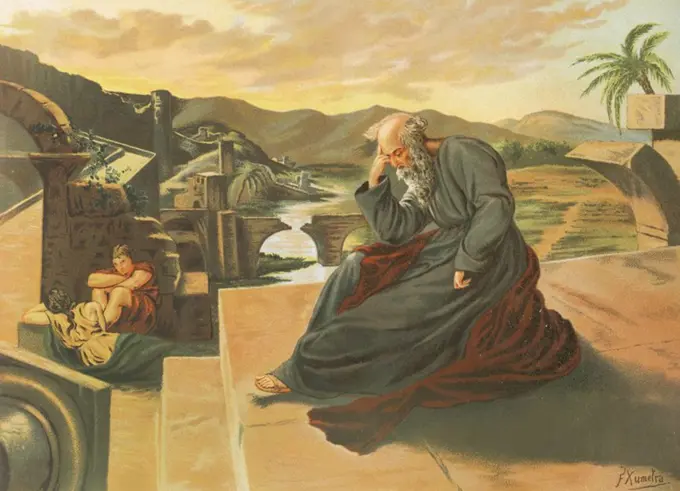
The Hebrew prophet Jeremiah (650 BC-585 BC) weeping the misfortunes of Jerusalem. He prophesied the invasion of the Babylonians. Drawing by the Spanish illustrator Fernando Xumetra (1860-1920). Chromolithography. La Civilizacion (The Civilization), volume II, 1881.
1746-29951868
Illustration depicting Moslem Arab pilgrims en-route to Mecca, by Nasreddine Dinet (Alphonse-Étienne Dinet); 1861 - 1929, a French orientalist painter; 1918. Mecca is the most sacred site in Islam. It is considered by Muslims to be the bayt Allah, the "House of God". Muslims are expected to face the Kaaba when performing salat (prayer). One of the Five Pillars of Islam requires every Muslim who is able to do so to perform the hajj pilgrimage at least once in their lifetime.
999-150
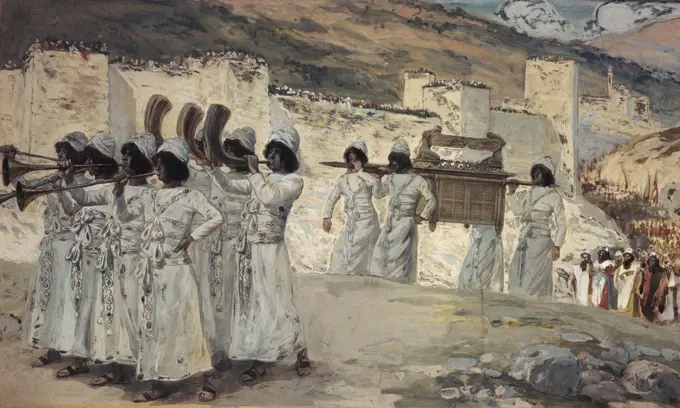
The Seven Trumpets of Jericho James Tissot (1836-1902 French)
6239-71059824
Oral Tradition. Evolution of the Book Series  | Library of Congress
6176-66913025
A Blaze of Sun - India, circa 1902
PREVIOUS
of 2
NEXT
2401 S. Ervay, Suite 206
Dallas, Texas 75215
United States
Browse
CategoriesGalleriesFree Research
For Creators
License Your ContentSuperStock For StudentsFrame of Mind BlogContributor PortalNew Image SpotlightLicense AI Imagery
Resources
About UsLicensingTerms & ConditionsAPI AccessPrivacyPricing
Contact
+1 866 236 0087help@superstock.com Contact form
©2026 SuperStock. All Rights Reserved. -A
This site is protected by reCAPTCHA and Google Privacy Policy and Terms of Service apply.