Fine ArtVintageFootageSubscriptionBoardsFree ResearchPricing
  • Fine Art
  • Vintage
  • Footage
  • Subscription
  • Boards
  • Free Research
  • Pricing

Historical Armor Collection

A selection of various historical helmets including barbutes, close helmets, and armets from the 15th and 16th centuries, showcasing intricate designs and metalwork.

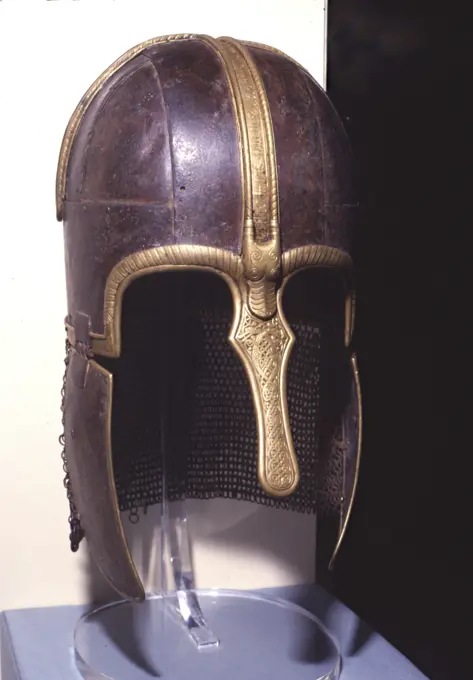
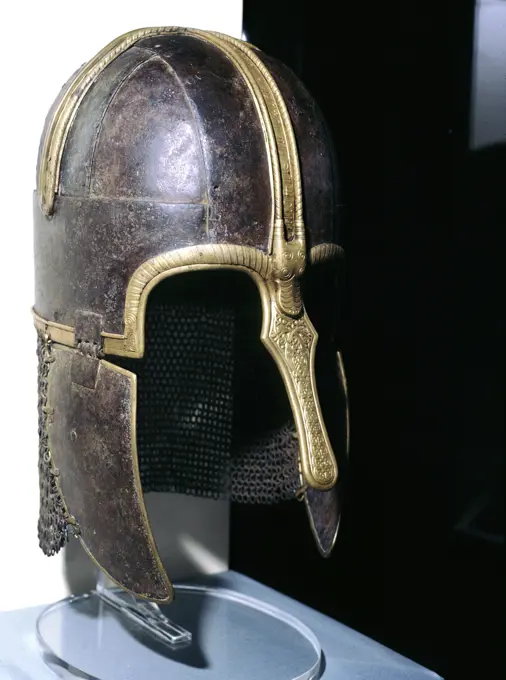
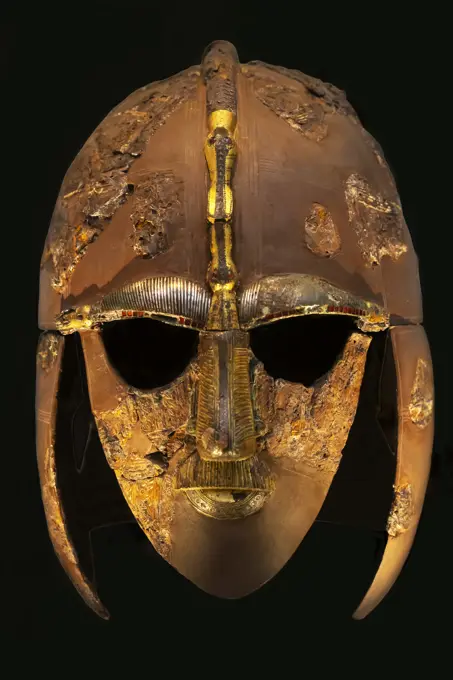
Coppergate Helmet- saxon Helmet. 750-775 AD ENGLAND.
93 assets in this story
6145-29191063
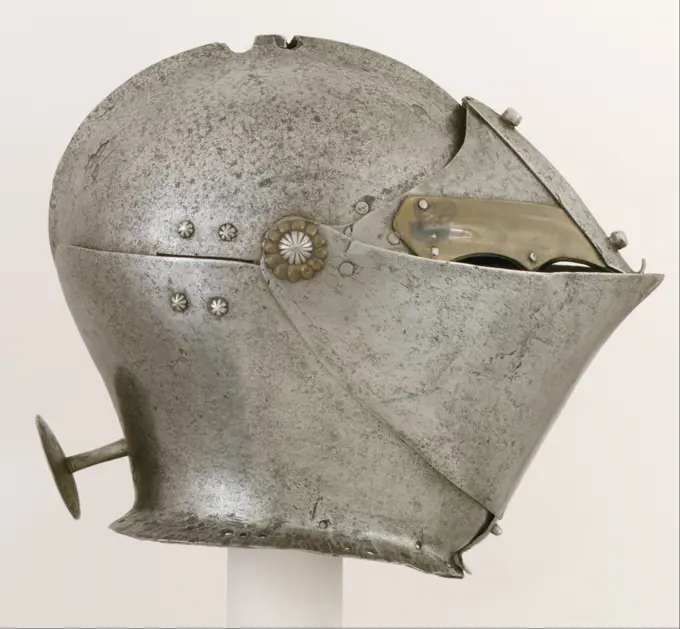
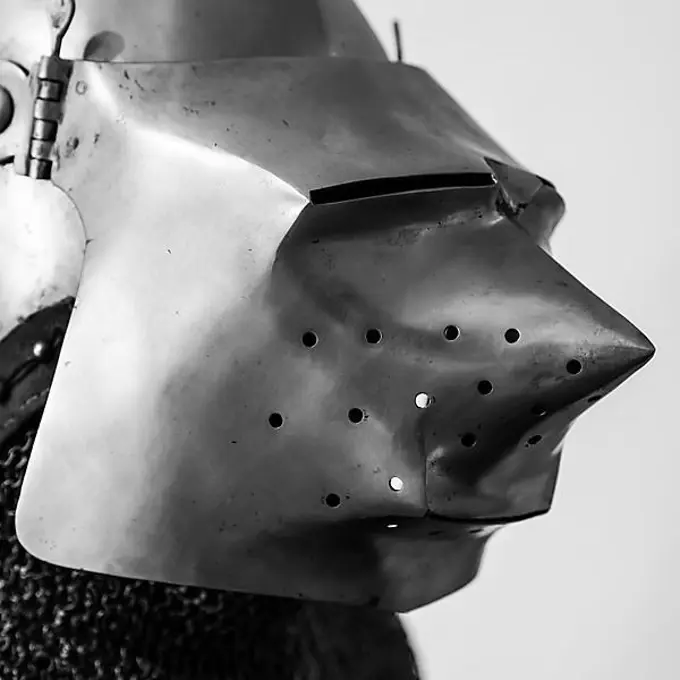
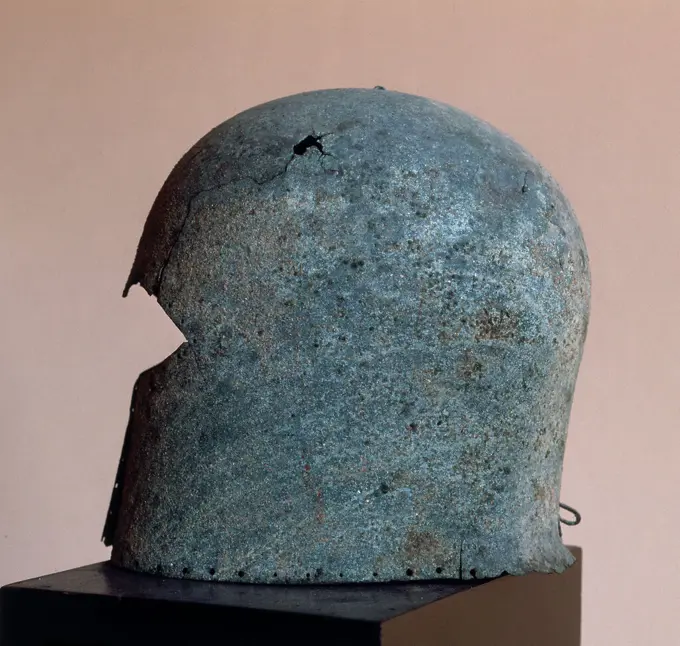
Barbute with Hinged Nasal ca. 1450 Italian, probably Milan Barbutes with hinged nasals are recorded in Italian paintings and miniatures, but only two helmets with surviving nasals are known, both from Chalcis.. Barbute with Hinged Nasal 23235
6145-30149649
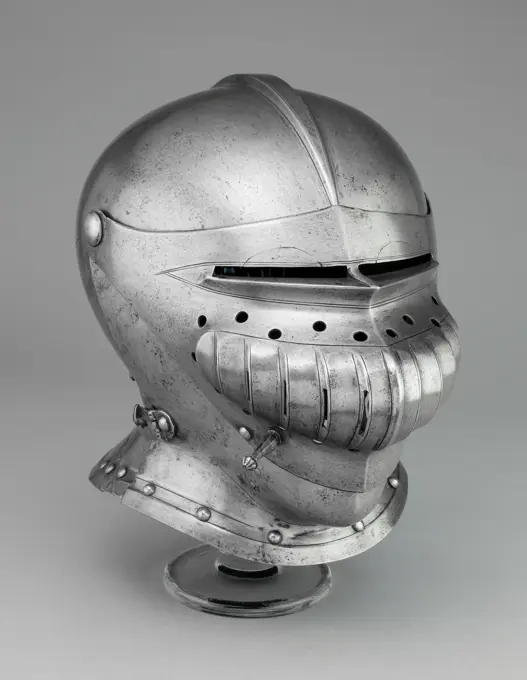
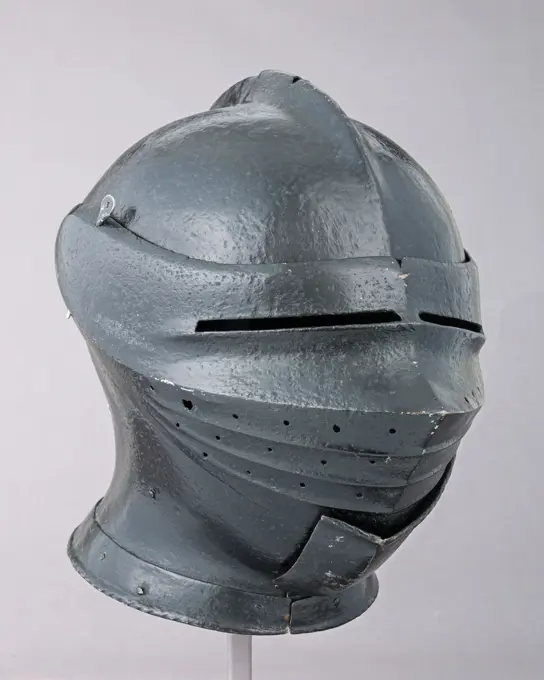
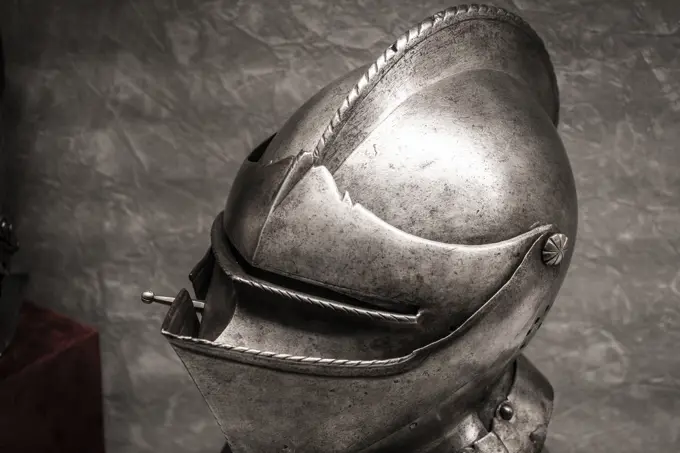
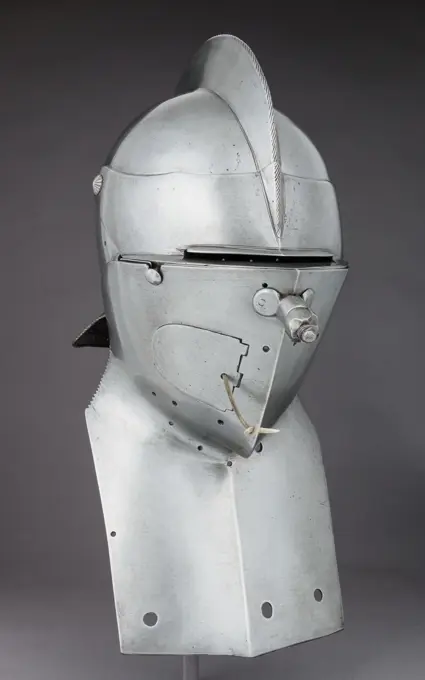
Close Helmet Made 1500-1530 Southern Germany. Steel .
6145-29737024
Armet ca. 1510-15 German White retaining earlier armet construction, with hinged cheekpieces closing in front of the chin, this helmet also exhibits features current in the early sixteenth century: fluted surfaces, the lower edge of the helmet embossed so as to turn on the rim of the gorget, and a small "sparrow's-beak" visor. A Moor's head stamped on the right side of the visor may be a mark of ownership, perhaps referring to the partician Tucher family of Nuremberg, rather than the personal mark of the armorer. (The right cheeckpiece is a restoration.). Armet. German. ca. 1510-15. Steel. Helmets
6145-45987131
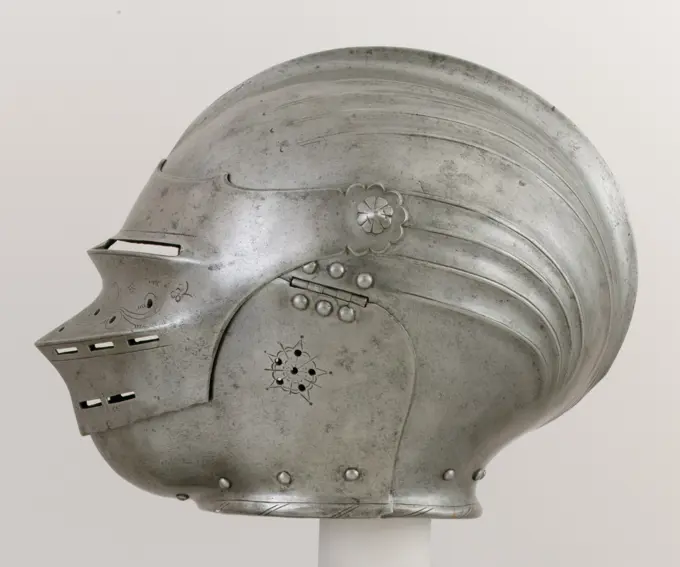
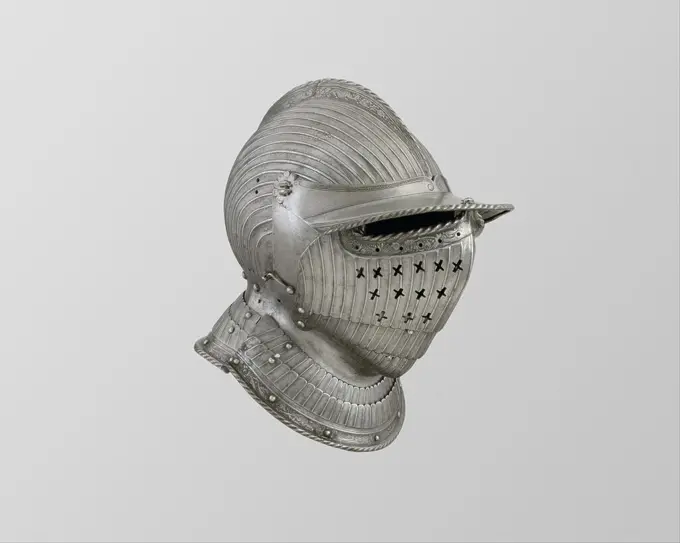
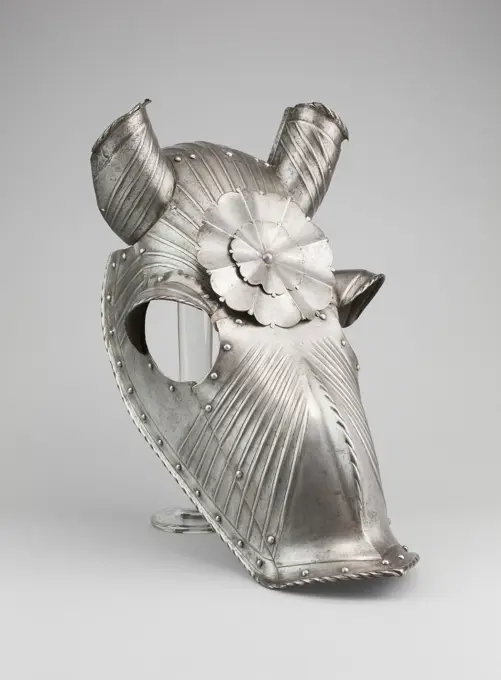
Closed vizier helmet from rider harnas. Closed vizier helmet with two star-shaped air openings at the front; decorations with copper rosettes; Vederbos holder is engraved at the rear. Note: Part of Inv. Nr. Ng-NM-528.
4409-17393937
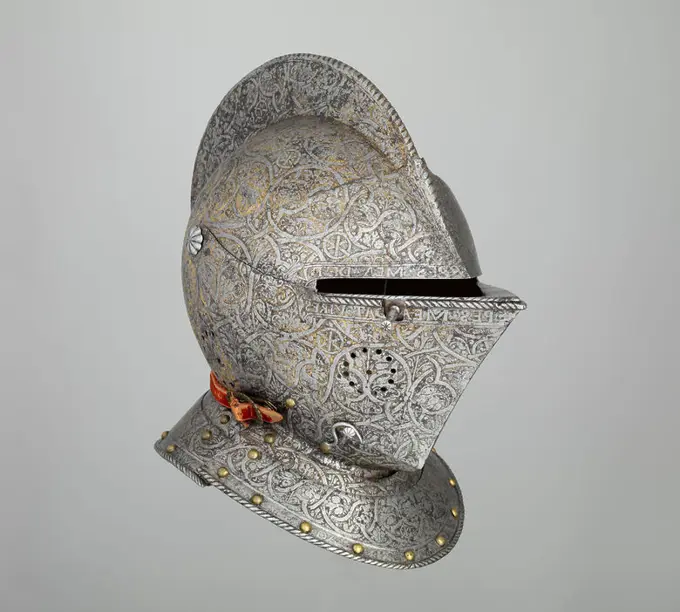
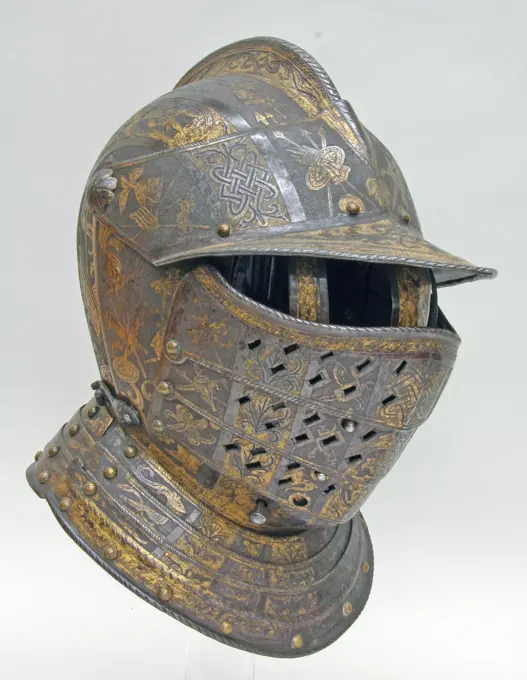
Close Helmet of Claude Gouffier (1501-1570). Culture: French. Dimensions: H. 15 3/4 in. (40 cm); W. 8 1/4 in. (21 cm); D. 14 1/2 in. (36.8 cm); Wt. 6 lb. 5 oz. (2863 g). Date: ca. 1555-60.This is an excellent example of a French heavy cavalry helmet of the mid-sixteenth century. Its elaborate decoration includes the monogram of Claude Gouffier (1501-1570), Master of the Horse (Grand Écuyer) for Henry II and Charles IX. This monogram is also on a knee piece from the armor of Gouffier's in the Metropolitan Museum's collection (acc. no. 1994.390). Museum: Metropolitan Museum of Art, New York, USA.
6145-29168244
Armet ca. 1490, with later additions Italian, Milan The medieval English custom of hanging a helmet over a tomb as part of the deceased's funerary "achievement" continued well into the seventeeth century. Thanks to this practice, numerous early helmets have been preserved. Like many "church helmets," this example is composite, being made up of old, reused parts assembled somewhat haphazardly for mortuary use. The bowl, which originally was fitted with a brow reinforce, and the cheekpieces are Italian. The right side of the bowl at the back bears faint traces of three Milanese armorers' marks: a crown surmounting letters and, struck twice below, a split-legged cross enclosing two letters. (The visor and upper bevor are adapted from other helmets and the rondel is modern.). Armet 26454
6145-29142451
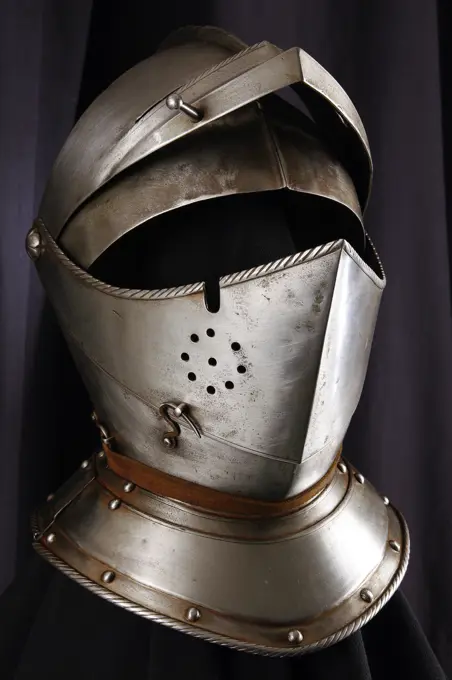
Close Helmet with Falling Buffe ca. 1590-95 Attributed to Pompeo della Cesa Italian. Close Helmet with Falling Buffe. Italian, Milan. ca. 1590-95. Steel, gold. Milan. Helmets
7155-70381827
Coppergate Helmet- saxon Helmet. 750-775 AD ENGLAND.
4409-17546090
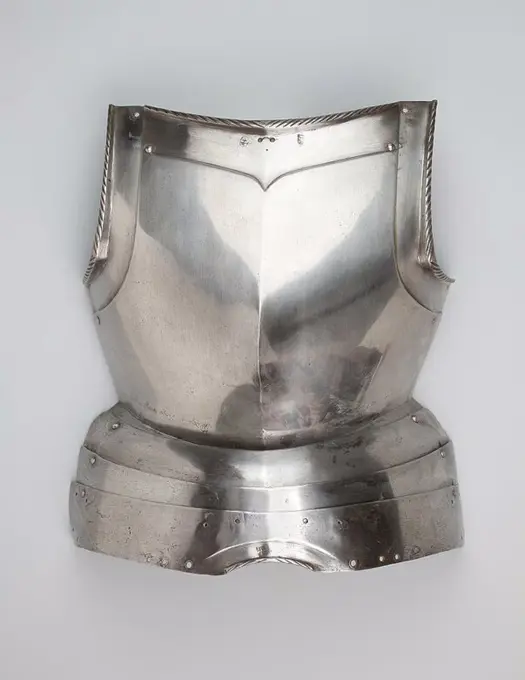
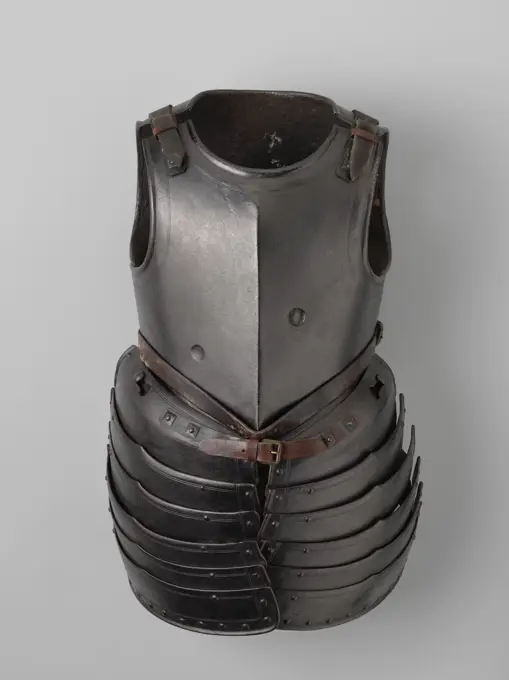
Breastplate. South German, Nuremberg; Mark breastplate: City of Nuremberg mark; Armorer's mark; Mark fauld: Vienna Arsenal mark. Date: 1560-1570. Dimensions: Wt. 6 lb. 11 oz. Steel and leather. Origin: Nuremberg. Museum: The Chicago Art Institute, Chicago, USA.
7155-70382289
Helmet with Cheek pieces. 750-775 AD. The Coppergate Helmet. York.
1525-21023910
Iron helmet of the medieval knight. Very heavy headdress.
6145-45306296
Persian szyszak
6145-29190705
Armet ca. 1500-1510 British or Flemish This helmet is one of the most complete and best-preserved examples of a distinctly English or Flemish armet.. Armet 22901
6188-63816043
Armour Armour of the medieval knight. Metal protection of the soldier against the weapon of the opponent Copyright: xZoonar.com/ValeryxxSibrikovx 2416564
6145-29808543
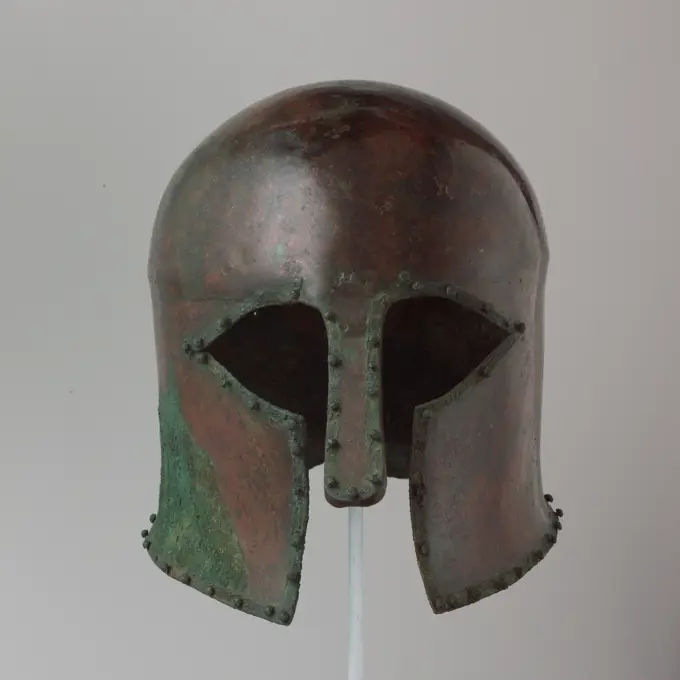
Bronze helmet of Corinthian type early 6th century B.C. Greek The helmet represents a characteristic form of the late seventh and early sixth century B.C. Unusual, however, is the interior, because it shows three sections that have been joined together--the calotte, the lower wall, and the nose-piece. The projections along the edges are the remains of rivets that would have secured an added material such as bone or ivory.. Bronze helmet of Corinthian type. Greek. early 6th century B.C.. Bronze. Archaic. Bronzes
4409-17424830
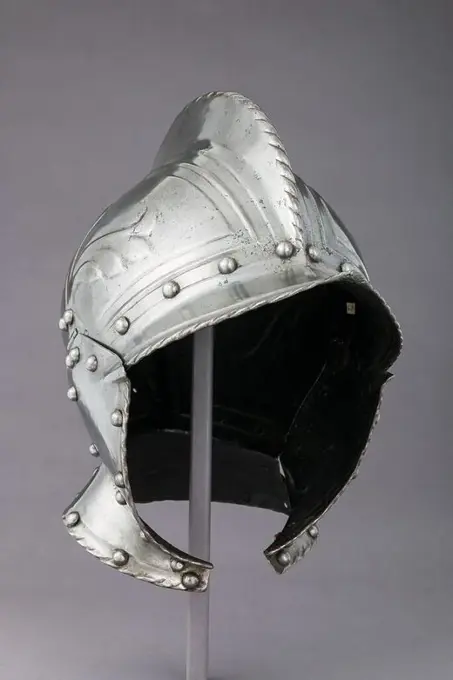
Closed Burgonet. Armorer: Attributed to Kolman Helmschmid (German, Augsburg 1471-1532). Culture: German, Augsburg. Dimensions: H. 14 5/8 in. (37.1 cm); W. 9 in. (22.9 cm); D. 12 7/8 in. (32.7 cm); Wt. 6 lb. 10 oz. (3004 g). Date: ca. 1525-30.This helmet combines features common to burgonets, notably the projecting peak and falling buffe, with close-helmet construction, in which all elements of the face defense pivot together at the sides of the bowl. Closed burgonets in the fluted style are particularly rare. This finely made example is etched in the manner of Daniel Hopfer (1471-1536) of Augsburg and may have been made by Kolman Helmschmid, the leading armorer of his generation, with whom Hopfer seems to have been associated. Museum: Metropolitan Museum of Art, New York, USA.
6145-29720053
Defense for the Lower Left Forearm (Vambrace) ca. 1400-1425 Italian This piece is notable for the early presence of stop-ribs, the two curved struts riveted to the outer and inner plates. These were designed to stop the point of a weapon from sliding into a vulnerable joint or gap between the plates.. Defense for the Lower Left Forearm (Vambrace). Italian. ca. 1400-1425. Steel. Armor Parts
1525-21611697
Iron helmet of the medieval knight. Very heavy headdress
6145-29220663
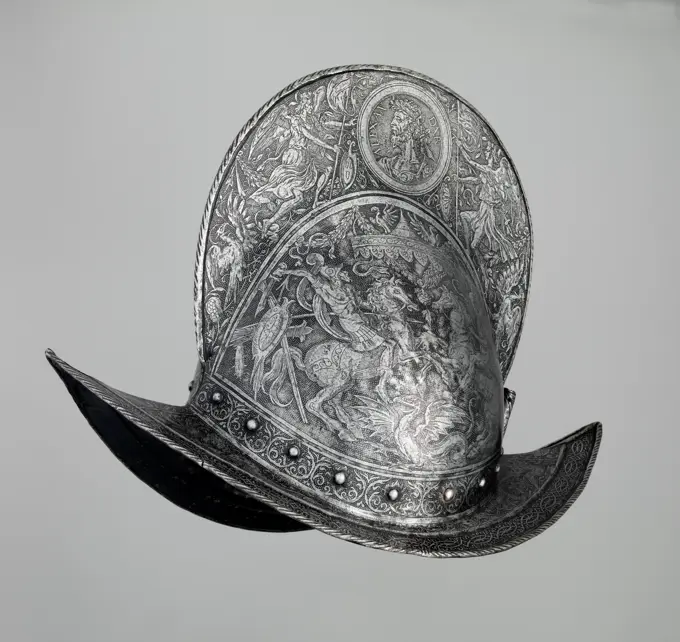
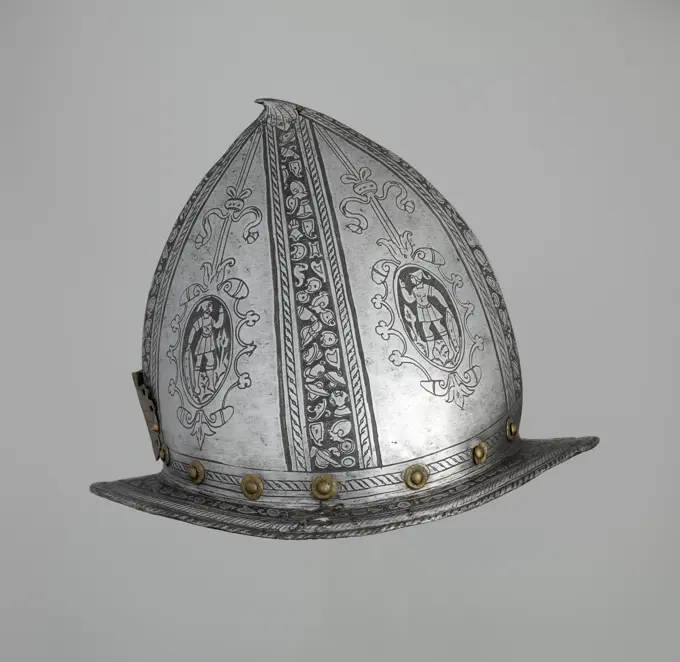
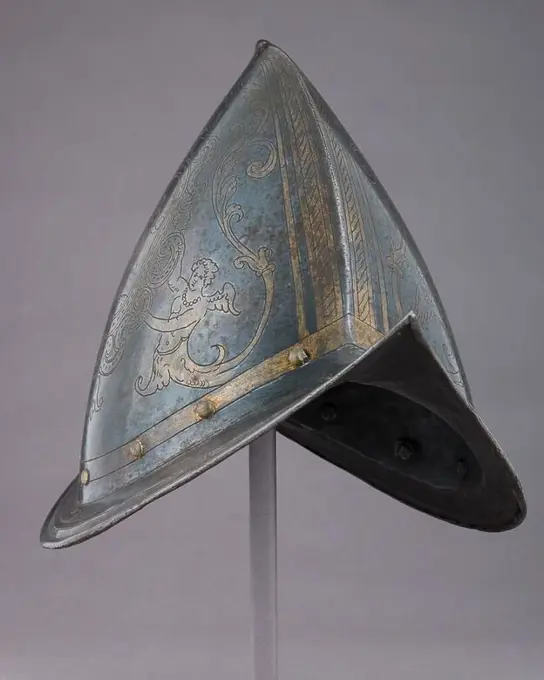
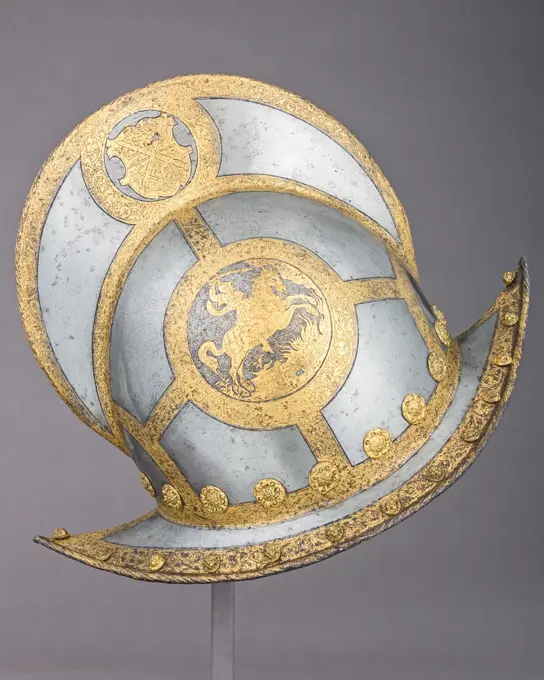
Comb Morion ca. 1560-65 German, Brunswick This helmet is an outstanding example of parade armor made in northern Germany for the court of Duke Heinrich the Younger of Brunswick-Wolfenbüttel (r. 1514-68) and his son Julius (r. 1568-89). Characteristic of the Brunswick school is the prominent and finely etched figural decoration, with historical, mythological, and biblical subjects.The etching on this morion is exceptionally accomplished and includes (on the raised comb) portrait medallions of Alexander the Great and Antonia Sabina Augusta, wife of the Roman emperor Hadrian. The classical subjects, complex design, and horror vacui typify the northern Mannerist aesthetic. The decoration on the left side includes a shield emblazoned with three small shieldsthe emblem of the guild of Saint Luke, the painter's guild to which many etchers belonged. The quality and originality of the etching suggest that this helmet may have been the artist's "masterpiece," submitted to the guild by the etche
4409-17349745
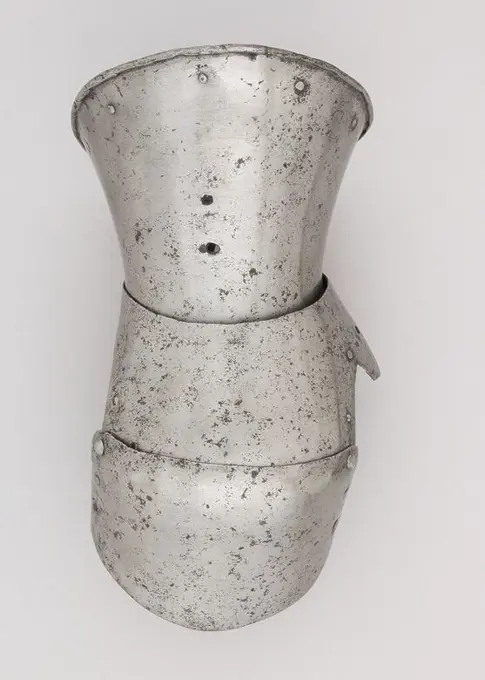
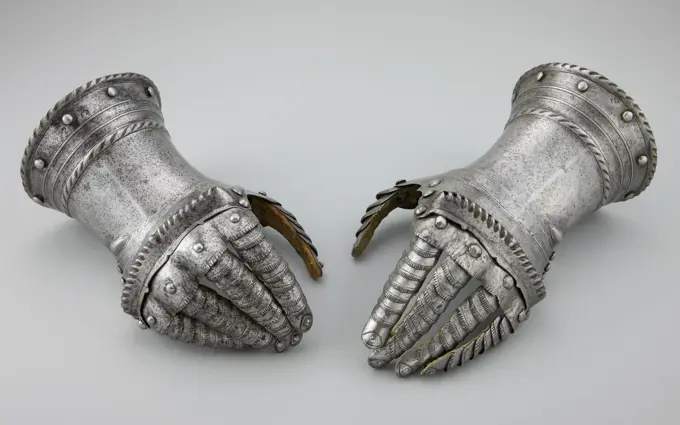
Gauntlet for the Right Hand. Culture: Italian. Dimensions: L. 9 1/4 in. (23.5 cm); W. 5 in. (12.7 cm); D. 5 1/4 in. (13.3 cm); Wt. 1 lb. 0.9 oz. (479.1 g). Date: ca. 1440-50. Museum: Metropolitan Museum of Art, New York, USA.
6145-29062791
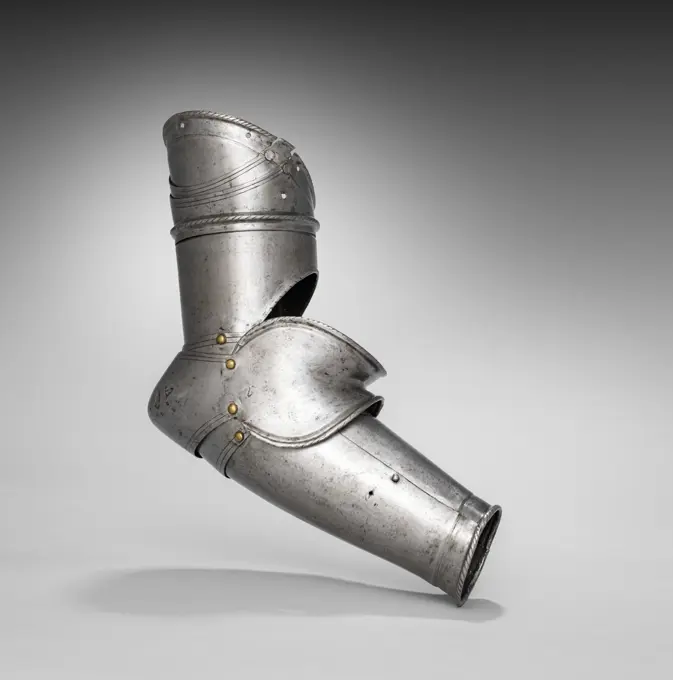
Proper Right Arm (Vambrace, Rerebrace and Couter), c. 1560-80. South Germany, 16th century. Steel, leather straps, brass rivets; overall: 44.2 cm (17 3/8 in.). This armor was developed for the joust--a sporting combat between two mounted contestants. Although all of the elements of this armor date from the same period, they are not all from the same suit. This armor is thus called "composed." It also shows the asymmetry of jousting armor. The participants rode along a wall-like barrier known as a "tilt" with their left sides facing one another. Consequently, armor on that side of the body had to be thicker. Note the large plate (grandguard) over the left shoulder for extra protection. Also, the breathing holes in the helmet were placed on the right side (farthest from an opponent's lance) to avoid injuries from splinters. The bracket attached to the right breastplate is called the lance-rest, a shock-absorbing support designed to accommodate the lance when "couched" under the right ar
4409-17520404
Morion. Northern Italian. Date: 1570-1590. Dimensions: H. 22.9 cm (9 in.) Wt. 2 lb. 14 oz. Steel, brass, and leather. Origin: Northern Italy. Museum: The Chicago Art Institute, Chicago, USA.
4409-17552614
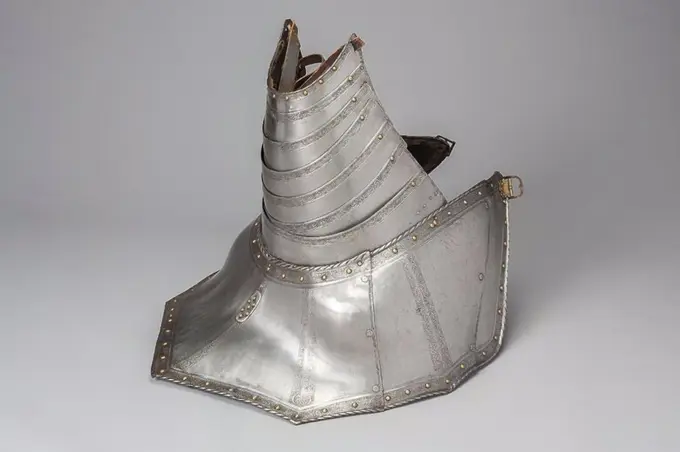
Peytral and Lower Neck Defense of a Horse Armor. Southern German. Date: 1525-1575. Dimensions: . Steel. Origin: Augsburg. Museum: The Chicago Art Institute, Chicago, USA.
6189-53753110
engole helmet, 16th century, Álava Armory Museum, Vitoria, Basque Country, Spain
6145-29165884
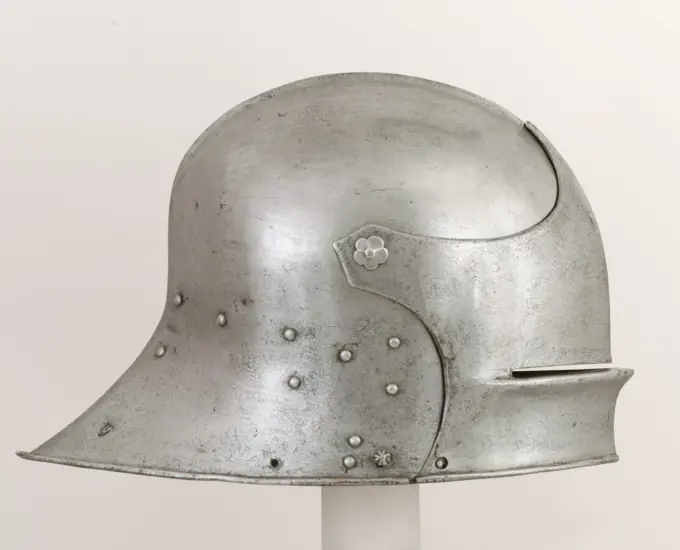
Sallet ca. 1470-80 Attributed to Hans Blarer the Younger German During the fifteenth century, the city of Basel, which became part of the Swiss Confederation in 1501, was a thriving center for armor making. Despite this fact, almost no armor from Basel can be identified today.The maker's mark on this helmet allows it to be recognized as the only known surviving helmet made by an armorer of Basel. It also demonstrates that armor from Basel could be of comparable quality to that from such well-known centers as Innsbruck, Augsburg, and Nuremberg, examples of which are also displayed in gallery 373.. Sallet. German, Basel. ca. 1470-80. Steel. Basel. Helmets
6188-63820607
Ritter Armour of the medieval knight. Metal protection of the soldier against the weapon of the opponent Copyright: xZoonar.com/ValeryxxSibrikovx 3126703
6145-29219517
Cabasset ca. 1550-75 Italian This cabasset is part of an unusually large armor garniture (acc. no. 27.159.1) from the armory of the Dos Aguas family in Valencia, Spain. The garniture contains pieces for use in battle and for the tilt in both the Italian and German fashions. The tilt was a tournament fought on horseback between two opponents armed with lances and separated by a lengthwise barrier.The armor as mounted is equipped with a helmet and vambraces (arm defenses) for the tournament. The buffe (chin defense), second breastplate (27.159.2), and manifer (reinforced left gauntlet) (27.159.6) would have been added to make the armor ready for exchange pieces for different forms of the tournament. For the German tilt, the trellised targe (shield) (27.159.7), small elbow defense (27.159.5), and small stomach defense (27.159.3) were added. For the Italian tilt, these elements were replaced by the form-fitting reinforce covering the left half of the torso and left shoulder (mezzo sovrapet
4409-17388742
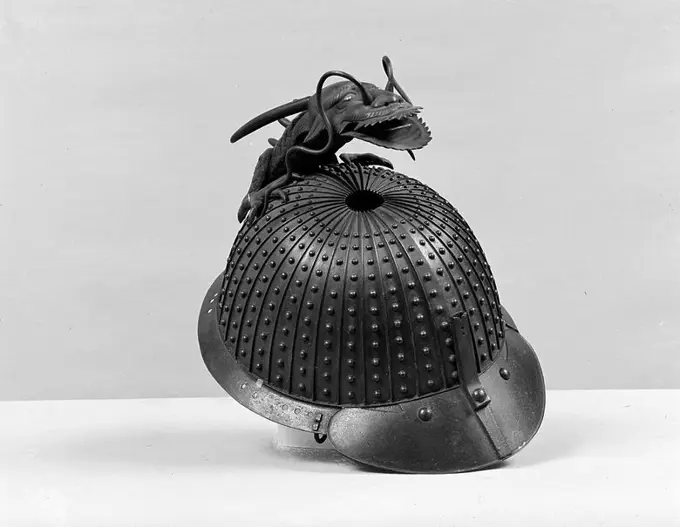
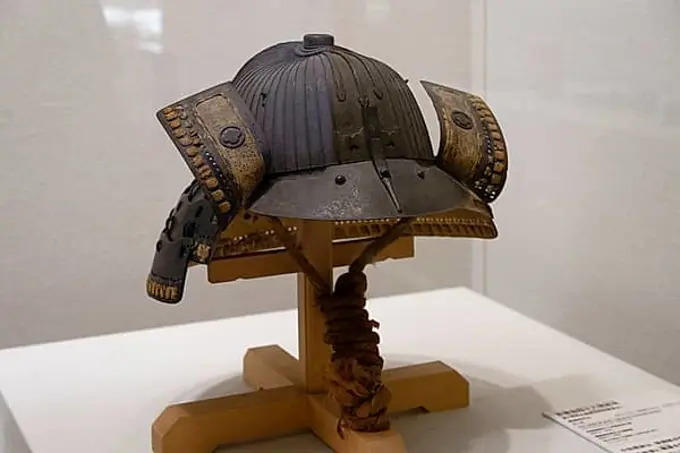
Helmet (Hachi). Culture: Japanese. Dimensions: 10 in. (25.4 cm) x 12 in. (30.5 cm).. Date: early 19th century. Museum: Metropolitan Museum of Art, New York, USA.
1030-1214
Amure Avec Poulaines Armor Antiques Musee de L'Armee, Paris, France
4409-17519908
Infantry Armor. German, possibly Cologne. Date: 1500-1525. Dimensions: H. 137.2 cm (54 in.). Steel and leather. Origin: Cologne. Museum: The Chicago Art Institute, Chicago, USA.
6145-29184435
Sallet and Buffe for a Rennzeug in the Saxon Fashion ca. 1570-1600 German The long-tailed German sallet was out of fashion as a field helmet by the early sixteenth century, but it continued to be used thereafter for the Scharfrennen, a joust fought between two contestants with sharp (rather than blunted) lances in an open field. Specially designed armors for this contest, known as Rennzeuge, included sallets bolted at the front to a buffe--a large rigid defense covering the lower face and neck--which in turn was bolted to the breastplate so that the head and upper body remained immobile. This sallet and buffe belong to a distinctive series of Rennzeuge made for use in the Saxon court at Dresden. Although unmarked, they are thought to have been made by the court armorers at Annaberg, in the Saxon territories. Two complete harnesses of this type are in the Metropolitan Museum's collection (acc. nos. 29.92.3, .4).. Sallet and Buffe for a Rennzeug in the Saxon Fashion 26519
6145-29222354
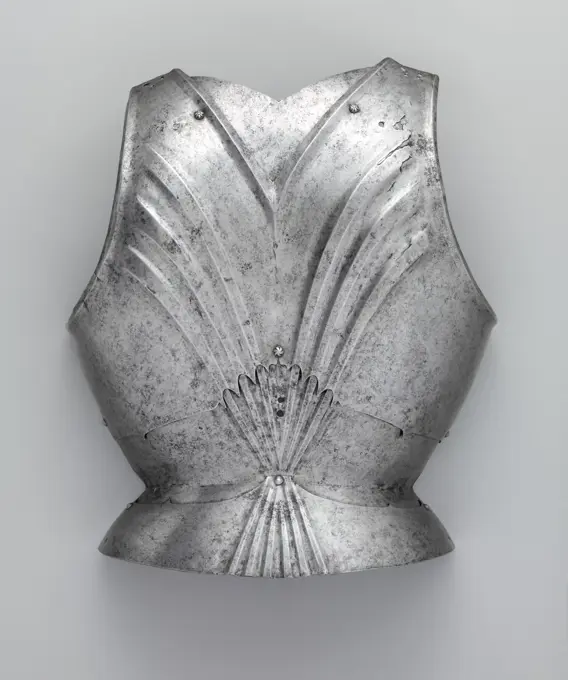
Backplate ca. 1475 German. Backplate. German. ca. 1475. Steel. Armor Parts-Backplates
4409-17426092
Morion-Cabasset. Culture: Italian. Dimensions: H. 10 3/8 in. (26.4 cm); W. 9 1/2 in. (24.1 cm); D. 13 1/2 in. (34.3 cm); Wt. 3 lb. 3 oz. (1446 g). Date: ca. 1570. Museum: Metropolitan Museum of Art, New York, USA.
4409-17499899
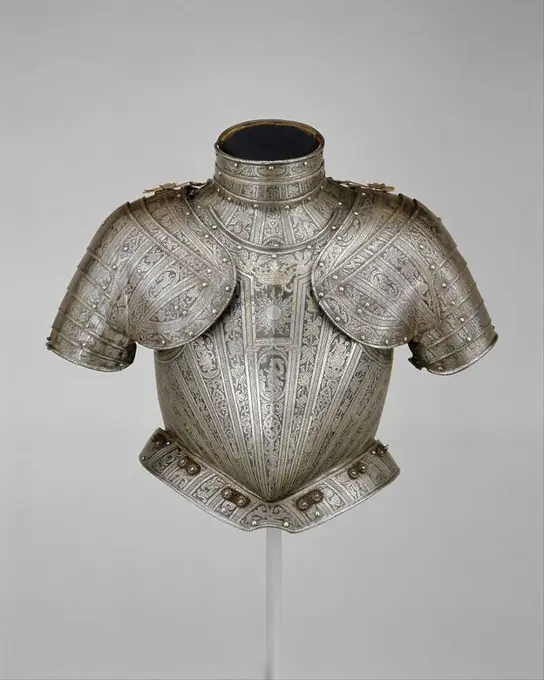
Portions of an Armor for Vincenzo Luigi di Capua (d. 1627). Armorer: Pompeo della Cesa (Italian, Milan, ca. 1537-1610). Culture: Italian, Milan. Dimensions: H. as mounted 19 in. (48 cm). Date: ca. 1595.These elements form part of a light-cavalry or infantry armor made for the Neapolitan nobleman Vincenzo Luigi di Capua (d. 1627), count of Altavilla and prince of Riccia. The breastplate bears his personal impresa (emblem), a sunburst above the motto Nulla Quies Alibi (No Repose But Here).Pompeo della Cesa, whose etched signature "Pompeo" is found near the top of the breastplate in the center, was the foremost Milanese armorer of the late sixteenth century. His patrons included Philip II of Spain, who also ruled as duke of Milan; Alessandro Farnese, duke of Parma; and Emanuele Filiberto, duke of Savoy. Pompeo probably headed a large workshop and also acted as a contractor in cooperation with other shops to fill particularly large commissions. The decoration includes bands of trophies alt
4409-63015065
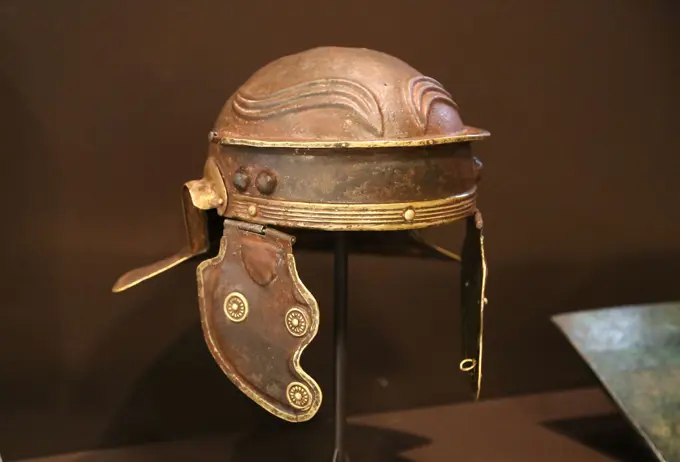
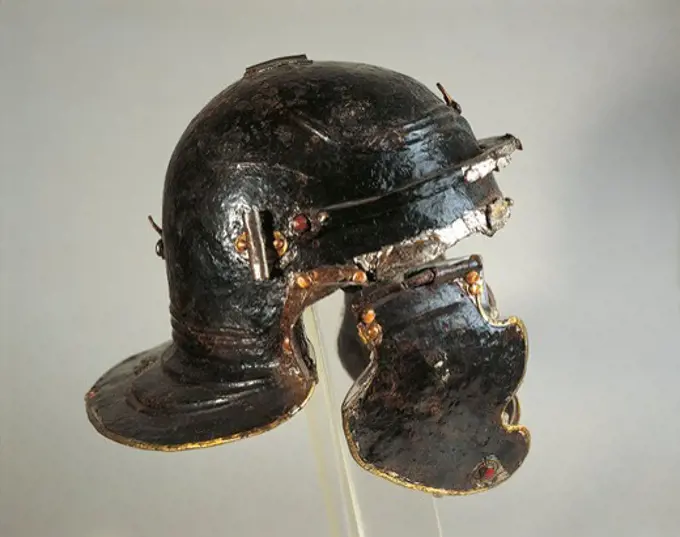
Galea. The roman soldier's helmet. Centurion. Roman Hispania. Replica. National Archaeological Museum, Madrid. Spain.
4409-17391439
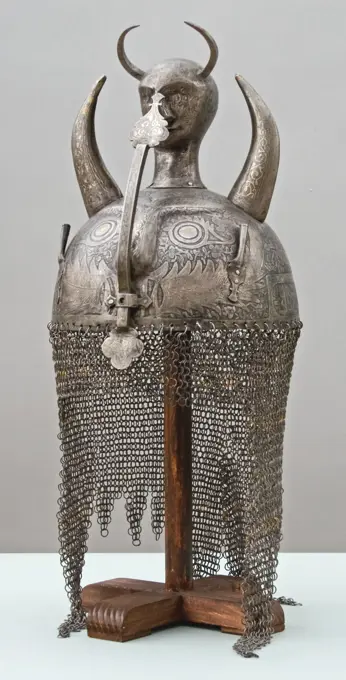
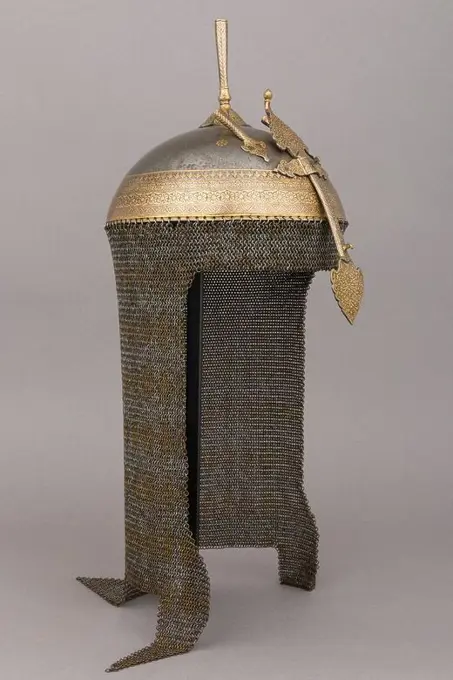
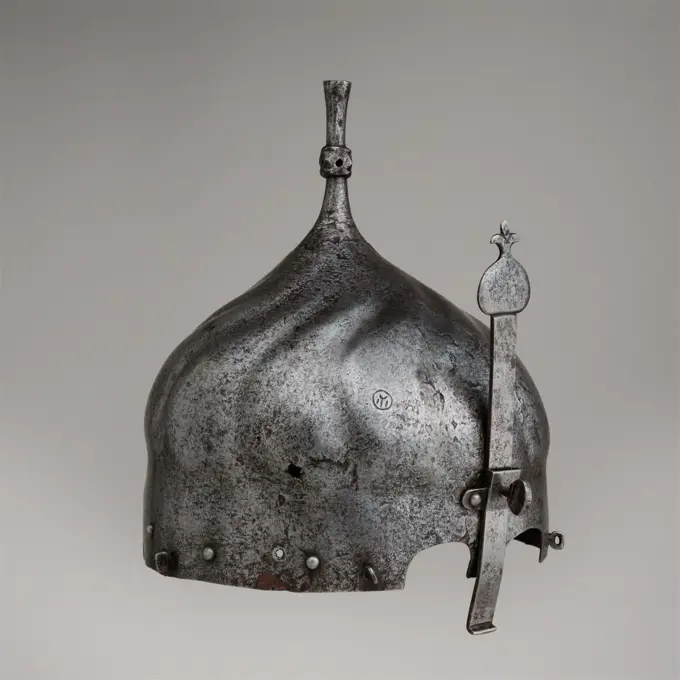
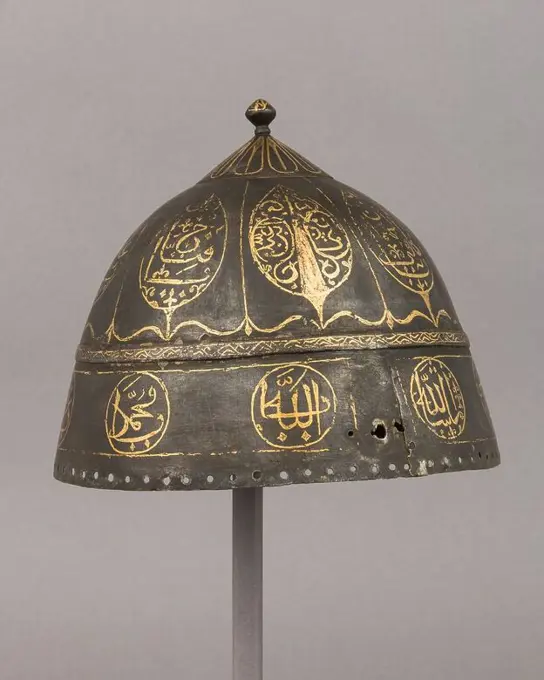
Helmet (Kulah Khud). Culture: Persian. Dimensions: H. including mail 21 1/2 in. (54.6 cm); H. including nasal 10 in. (25.4 cm); H. excluding mail and nasal 6 in. (15.2 cm); Diam. 7 1/2 in. (19.1 cm); Wt. 3 lbs. 4.4 oz. (1485.5 g). Date: 18th century. Museum: Metropolitan Museum of Art, New York, USA.
1746-19699040
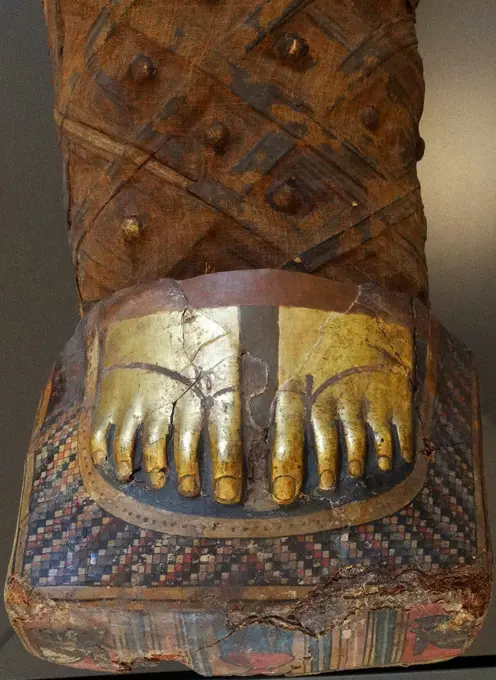
Mummy of a two year old boy from Fayum; Egypt 100 AD Roman period
6145-29185421
Morion ca. 1600 German, Nuremberg The electors of Saxony appear to have been the only German princes in the sixteenth century to outfit their bodyguards with matching equipment. Silvered morions of this type were probably worn by the officers of the bodyguards of the prince-electors of Saxony.. Morion 27158
4409-17553681
Armor for Heavy Calvary (Cuirassier). Italian; Milan. Date: 1605-1615. Dimensions: H. 127 cm (50 in.). Steel and leather. Origin: Milan. Museum: The Chicago Art Institute, Chicago, USA.
4409-17412622
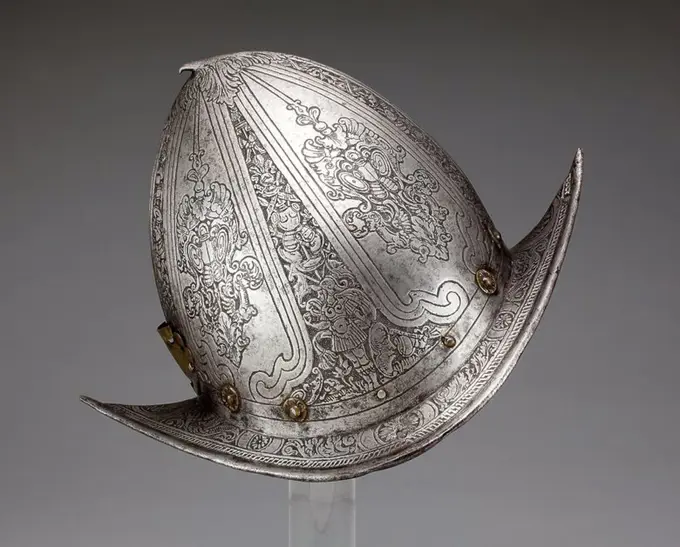
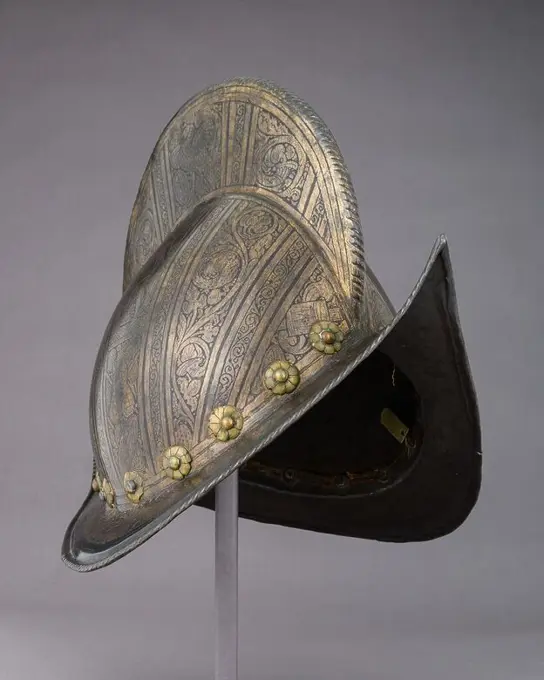
Morion. Culture: Italian. Dimensions: H. 11 13/16 in. (30 cm); H. of comb 3 3/8 in. (8.6 cm); W. 10 1/16 in. (25.6 cm); D. 14 1/2 in. (36.8 cm); Wt. 3 lb. 2 oz. (1417 g). Date: ca. 1575. Museum: Metropolitan Museum of Art, New York, USA.
6145-29067388
Corinthian Helmet, 500-475 BC. Greece. Bronze with silver inlay; overall: 21.5 cm (8 7/16 in.).
6145-29869942
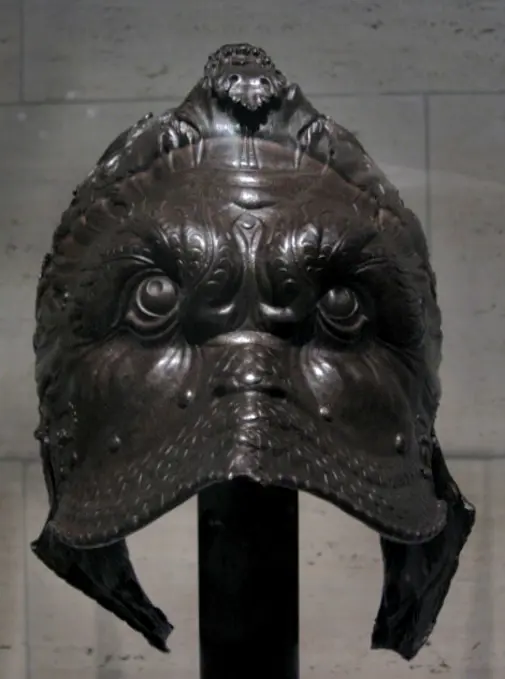
Negroli  Helmet in the Form of a Dolphin Mask Helmet (burgonet) in the Form of a Dolphin Mask
1558-28768401
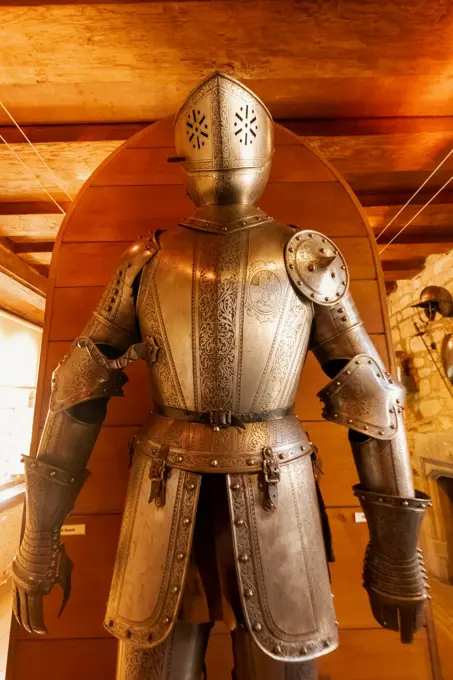
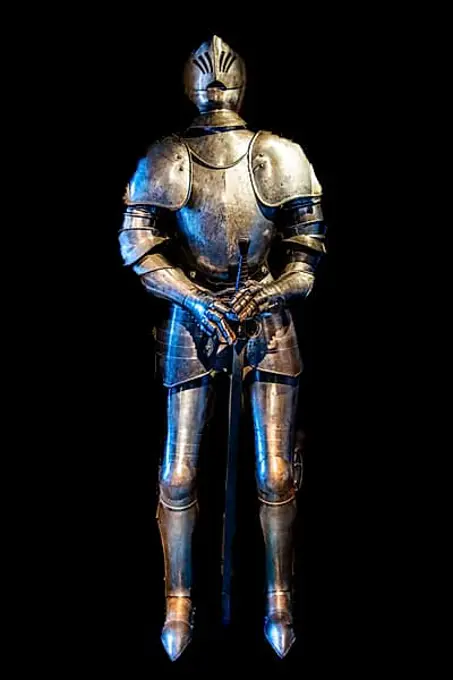
England, Kent, Hever, Hever Castle, Exhibit of French 16th century Style Suit of Armour
1899-91017
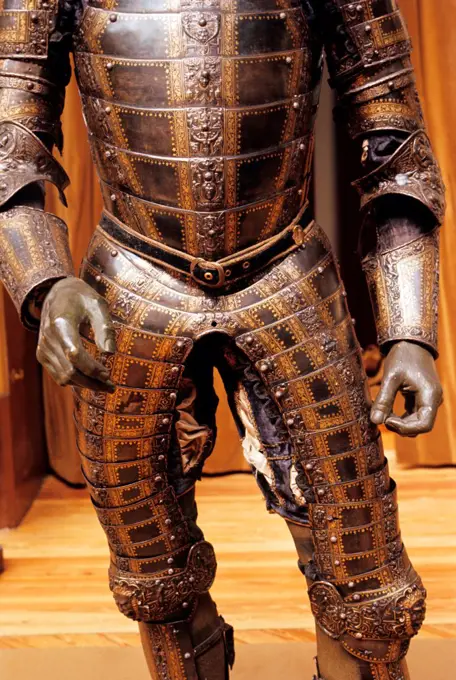
Close-up of the magnificent, lavishly decorated armour (cuirass and cuisses) of Philip II, first King of Spain from 1556 to 1598. Madrid (Spain), 1966.
6145-29165893
Burgonet in Oriental Fashion (Zischägge) ca. 1560 German, probably Nuremberg Despite the persistent threat of Turkish invasion in the sixteenth century, the courts in eastern and Central Europe were attracted to the exotic and colorful costumes and military equipment of their Ottoman enemies. Tournaments and parades in Turkish, or related Hungarian, fashion were held at the Hapsburg courts in Vienna and Prague by the mid-sixteenth century. This helmet provides evidence of that taste, as its fluted conical bowl, peak with sliding nasal (missing), large shaped cheekpieces (missing), and articulated neck plates (several missing) were copied directly from contemporary Turkish models. The surfaces are etched and gilt overall with decoration based on "Moresque" ornament of Oriental inspiration. A similar burgonet dated 1561, coming from the armory of the Prices Radziwill, is in Wawel Castle, Cracow.. Burgonet in Oriental Fashion (Zischägge). German, probably Nuremberg. ca. 1560. Steel, gold,
6145-30189273
Zischägge (Helmet) Made 1620-1640 Germany. Steel, brass, gilding, and textile .
1899-76245417
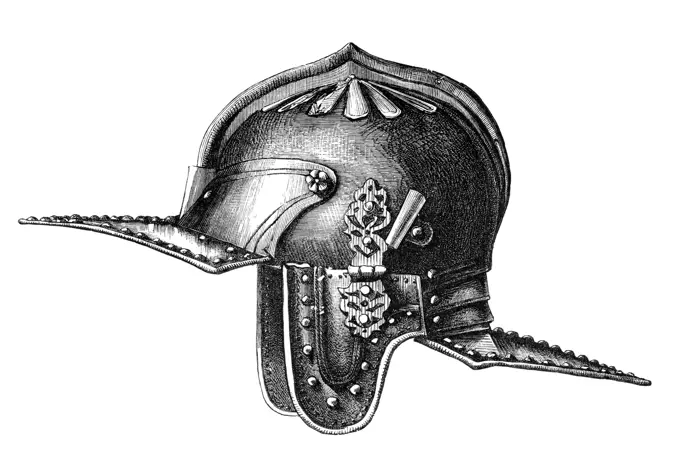
17th-century helmet said to have belonged to Oliver Cromwell. from the book The British Army. 1868. Historical. digitally restored reproduction from a 19th-century original
6145-29116228
Armor. Turkey, 15th-16th century. Arms and Armor; armor. Steel, forged
1788-32138
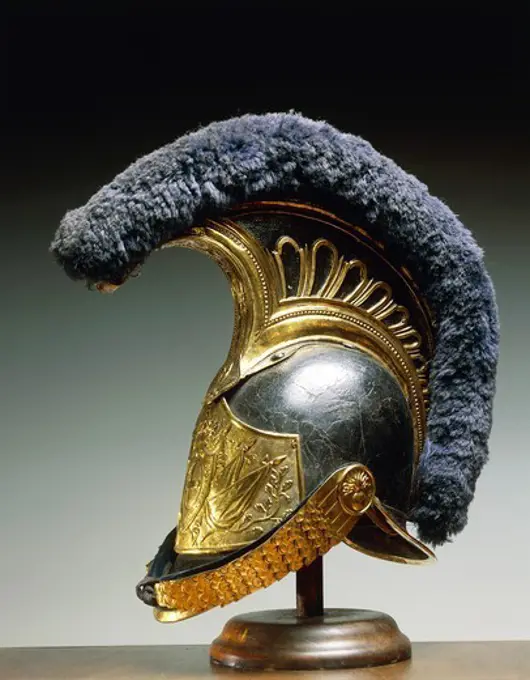
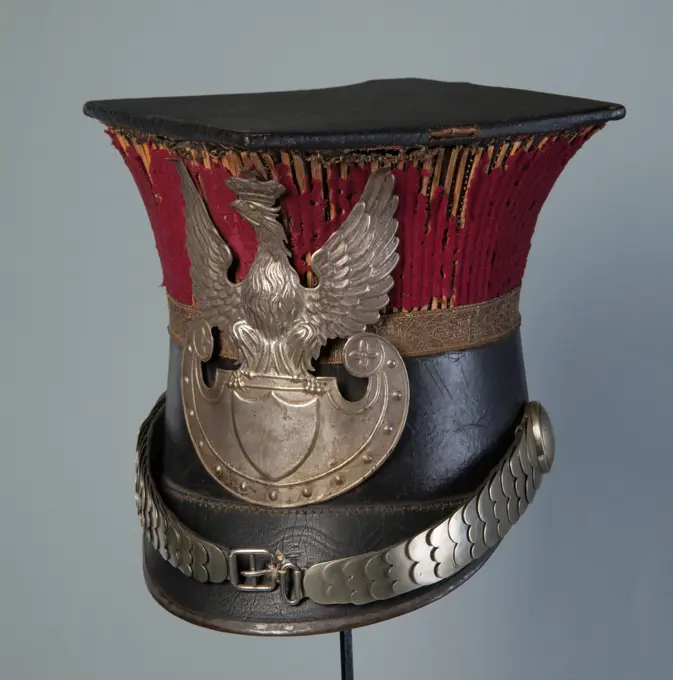
Militaria, Italy, 19th century. Leather and gilded metal helmet worn by the Piedmont dragoons, 1814.
4409-17546297
Armor for the Joust. Italian. Date: 1540-1570. Dimensions: H. 182.9 cm (72 in.). Steel. Origin: Italy. Museum: The Chicago Art Institute, Chicago, USA.
6145-30172434
Pair of Fingered Gauntlets Made 1510-1530 Flanders. Steel and leather .
1848-55289831
Arms Museum, Castle of San Giusto, medieval castle and fortress, 15th-16th century, Colle di San Giusto, Trieste, harbour town on the Adriatic, Friuli, Italy, Trieste, Friuli, Italy, Europe
6145-59509128
Armour of Piet Heyn, c. 1600 - in or before 1629  The harness, consisting of a breastplate, back plate, two thigh pieces, a ring collar and a lost helmet, is in all probability the harness that on July 4, 1629 at the funeral of Piet Hein in the Oude Kerk in Delft in a weapon cabinet above his grave was placed. Netherlands iron (metal)   Old church
7155-70381822
Helmet from Sutton Hoo. Anglo-Saxon. 7th cent. AD. England.
6145-29195628
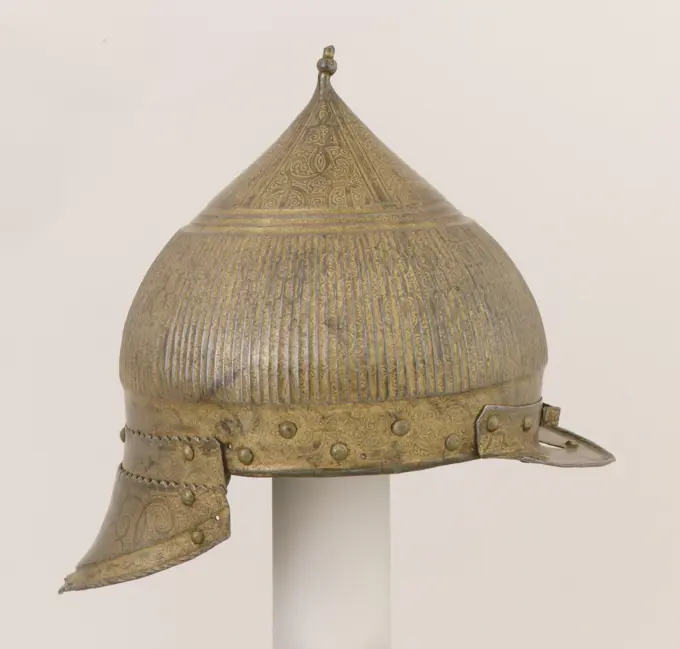
Helmet 16th century Turkish. Helmet 32064
1848-53661374
Tuscany, Italy. Detail of an original Medieval armour
6145-29757938
Cuirassier Armor ca. 1610-30 Italian, Milan or Brescia The construction and build of this armor are typical of a cuirassiers harness, a type developed toward the end of the sixteenth century in response to the growing use and efficiency of firearms. The advent of firearms caused armorers to increase the thickness and weight of plates and to supplement them with separate reinforcing plates. Before an armor of this type was finished, it was fired at with a pistol or musket to test its effectiveness against bullets, and the bullet dents were left as a guarantee of the strength and quality of its steel. This particular armor retains two reinforces with such dents, a rarely encountered plate for the back of the helmet bowl, and a plackard for the breastplate; it formerly possessed a third plate for the front of the visor. Weighing more than eighty-six pounds, it is one of the heaviest field armors known.Although generally conforming to the construction of cuirassier harnesses worn througho
1746-21118408
Horse Armour. One of only three complete horse armours, this is one of the best preserved. Made from carbon steel, copper alloy and leather.
6145-45383996
Lviv Herbal Guard cap unknown
6145-29152893
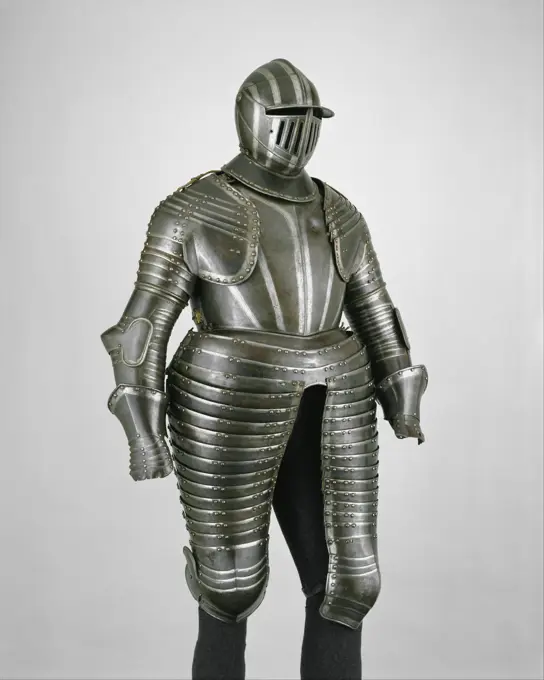
Half-Armor (Composed) dated 1562 (helmet ca. 1560) German. Half-Armor (Composed). German. dated 1562 (helmet ca. 1560). Steel, leather, copper alloy. Armor for Man-1/2 Armor
4042-73023851
Sutton Hoo Helmet, Anglosaxon, circa 600 AD, British Museum, London, England, UK
4409-17393783
Burgonet. Culture: Italian. Dimensions: H. 12 1/2 in. (31.8 cm); W. 7 9/16 in. (19.2 cm); D. 11 1/2 in. (29.2 cm); Wt. 3 lb. 11 oz. (1673 g). Date: mid-16th century. Museum: Metropolitan Museum of Art, New York, USA.
1848-73099775
Interior view, Helmet, Odawara Castle, Odawara, Kanagawa Prefecture, Japan
6145-29818210
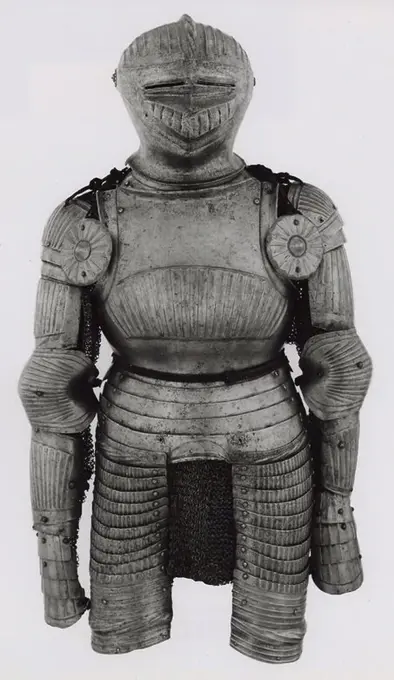
Elements of a Half Armor 16th century and later German, Nuremberg. Elements of a Half Armor. German, Nuremberg. 16th century and later. Steel. Nuremberg. Armor for Man-1/2 Armor
1788-23030
France, Besancon, Iron, copper and silver helm found in the amphitheatre of Besancon
4409-17427972
Helmet. Culture: Arabian. Dimensions: H. 6 7/8 in. (17.5 cm); Diam. 8 1/4 in. (21 cm); Wt. 15.6 oz. (442.3 g). Date: ca. 1734. Museum: Metropolitan Museum of Art, New York, USA.
4409-17323288
CASCO GRIEGO DEL SIGLO VII-VISTA LATERAL. Location: MUSEO DE CADIZ-ARQUEOLOGIA. Cadiz. SPANIEN.
6145-29190515
Morion for the Bodyguard of the Prince-Elector of Saxony ca. 1570 German, Nuremberg The electors of Saxony appear to have been the only German princes in the sixteenth century to outfit their bodyguards with matching equipment. The guards' helmets are etched and gilt on one side with the coat of arms of the dukedom of Saxony and on the other side with the crossed swords that signify the duke's office as archmarshal of the Holy Roman Empire. Originally, the gilt decoration was contrasted with black painted surfaces (some now polished bright). The black and gold derived from the Saxon coat of arms and were also the colors of the guards' uniforms. This helmet and a similar one also in the Metropolitan Museum's collection (acc. no. 14.25.633) were made by armorers in Nuremberg.. Morion for the Bodyguard of the Prince-Elector of Saxony 22238
6145-29063241
Right Gauntlet, c.1550-1570. Germany, 16th century. Iron, steel, leather and brass rivets; overall: 34.5 x 20 x 31.2 cm (13 9/16 x 7 7/8 x 12 5/16 in.).
6188-63820574
Ritter Armour of the medieval knight. Metal protection of the soldier against the weapon of the opponent Copyright: xZoonar.com/ValeryxxSibrikovx 3115143
6145-29165939
Elements of a Horse Armor 16th century German. Elements of a Horse Armor 34873
6145-30165618
Shaffron 1510-1530 Southern Germany. Steel .
6145-29118058
Horse Helmet. Iran, 224-651. Tools and Equipment; horse trappings. Bronze
6145-29783038
Pair of Greaves (Lower Leg Defenses) ca. 1550 to 1575 Italian This pair of greaves (lower leg defenses) is part of an unusually large armor garniture (acc. no. 27.159.1) from the armory of the Dos Aguas family in Valencia, Spain. The garniture contains pieces for use in battle and for the tilt in both the Italian and German fashions. The tilt was a tournament fought on horseback between two opponents armed with lances and separated by a lengthwise barrier.The armor as mounted is equipped with a helmet and vambraces (arm defenses) for the tournament. The buffe (chin defense), second breastplate (27.159.2), and manifer (reinforced left gauntlet) (27.159.6) would have been added to make the armor ready for exchange pieces for different forms of the tournament. For the German tilt, the trellised targe (shield) (27.159.7), small elbow defense (27.159.5), and small stomach defense (27.159.3) were added. For the Italian tilt, these elements were replaced by the form-fitting reinforce covering
6188-63815215
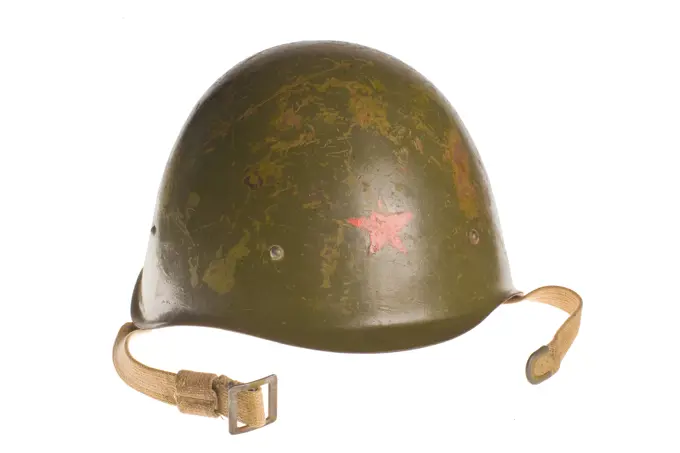
Green Russian Soviet army helmet of times of the second world war isolated on a white background with clipboard. Green Russian Soviet army helmet of times of the second world war isolated on a white background with clipboard. ,model released, Symbolfoto ,property released Copyright: xZoonar.com/SergeyxxKozoderovx 2141095 ,model released, Symbolfoto ,property released
6019-17881761
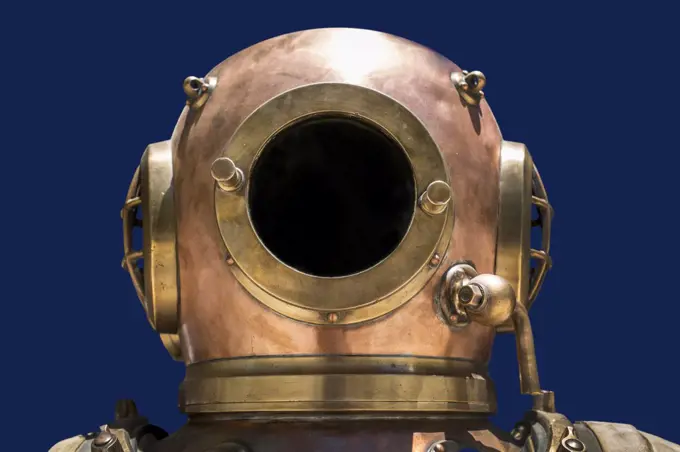
Vintage Copper and brass diving helmet
4409-17389514
Armor for Man and Horse with Horse Trappings. Culture: German. Dimensions: Wt. of armor for man 61 lb. 11 oz. (28.05 kg); Wt. of armor for horse 63 lb. 13 oz. (29.00 kg); 29.158.4aa (shaffron); H. 27 in. (68.6 cm); W. 13 in. (33 cm); D. 15 in. (38.1 cm); Wt. 8 lb. 0.6 oz. (3645.7 g). Date: ca. 1515 and later. Museum: Metropolitan Museum of Art, New York, USA.
4409-17389492
Portions of a Jousting Half Armor. Culture: German. Dimensions: Wt. 48 lb. 13 oz. (22.14 kg); mail sleeve (29.156.67o): L. 27 5/8 in. (70 cm); W. 13 in. (33 mm.); Diam. (outside) of links 13/32 in. (10.5 mm.); Diam. (inside) of links 5/16 in. (7.9 mm); Diam. (outside) of earlier solid links 7/16 in. (10.7 mm); Diam. (inside) of earlier solid links 1/4 in. (6.5 mm); Diam. (outside) of riveted links 13/32 in. (10.5 mm); Diam. (inside) of riveted links 9/32 in. (7.4 mm); mail sleeve (29.156.67p): L. 22 in. (56 cm); W. 13 in. (33 cm); Diam. (outside) of links 13/32 in. (10.7 mm); Diam. (inside) of links 9/32 in. (7.2 mm).. Date: ca. 1500 and later. Museum: Metropolitan Museum of Art, New York, USA.
1848-61536888
Medieval head helmets
6188-63839052
Iron helmet Iron helmet of the medieval knight. Very heavy headdress Copyright: xZoonar.com/VALERY-SIBRIKOVx 7138911
4409-62747430
Armor for combat. Plate armour for man and horse. Europe. Metropolitan Museum of Art. New York. USA.
6145-45447447
Saddle and horse tack owned by Hetman Stefan Czarnecki
7125-70425431
Knights armor and weapons. Edinburgh Castle, Scotland.
1848-50178875
Marienburg Castle, interior, knight's armour, Pattensen, Lower Saxony, Germany, Europe
1848-50259859
Knight's helmet with open visor, 14th century, Fashion history, Costume history, Historical, Digitally restored reproduction of an original 19th century pattern
1848-55296271
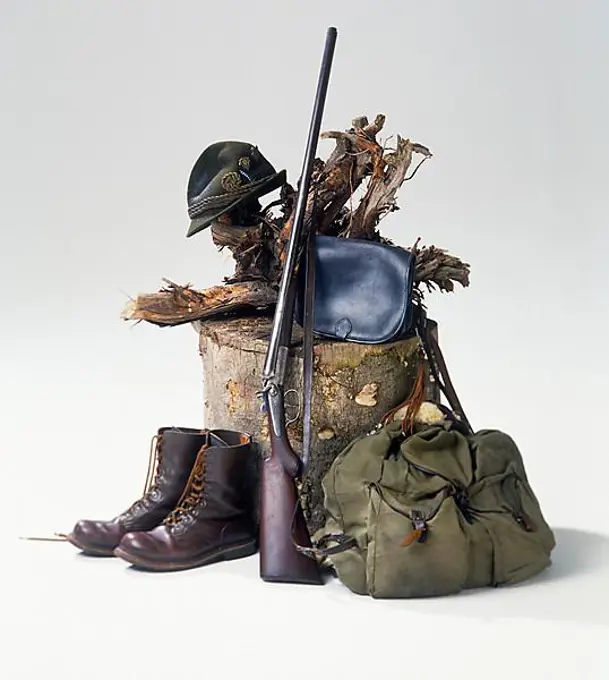
Hunting equipment
7172-70157606
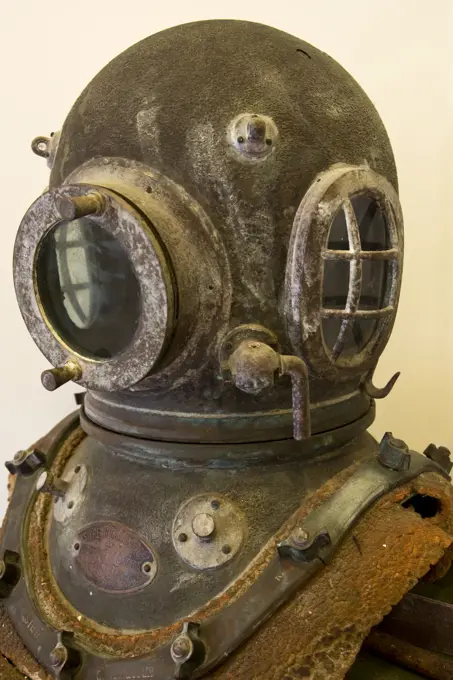
French Polynesia, Cook Islands, Rarotonga. An antique diver's helmet.
1848-49208530
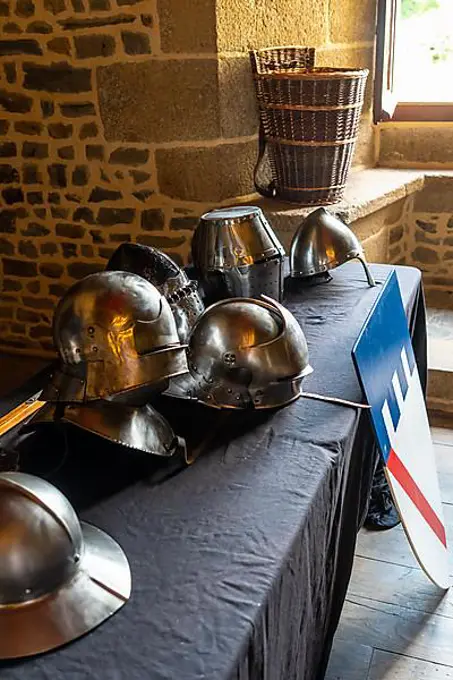
Knights and medieval armor in the castle of Fougeres. Brittany region, Ille et Vilaine department, France, Europe
6145-59313036
Six helmets leaf, a star, a heraldic lily, a bell and three fruit bunches, monogrammist Ta, 1593 drawing   prepared paper. deck paint brush helmet
1525-22896789
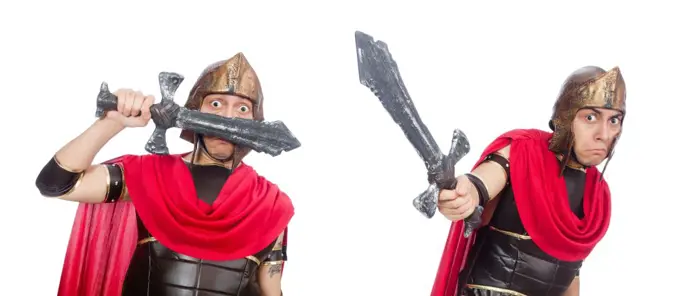
Gladiator holding sword isolated on white. The gladiator holding sword isolated on white
1848-49758751
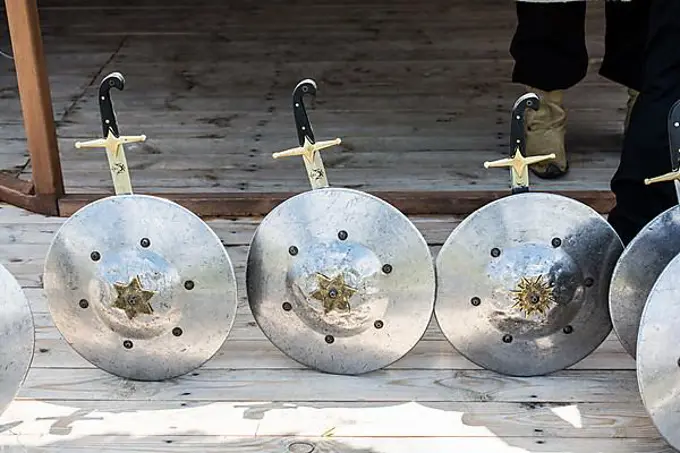
Shiny steel shields and knives in the view
442-7926
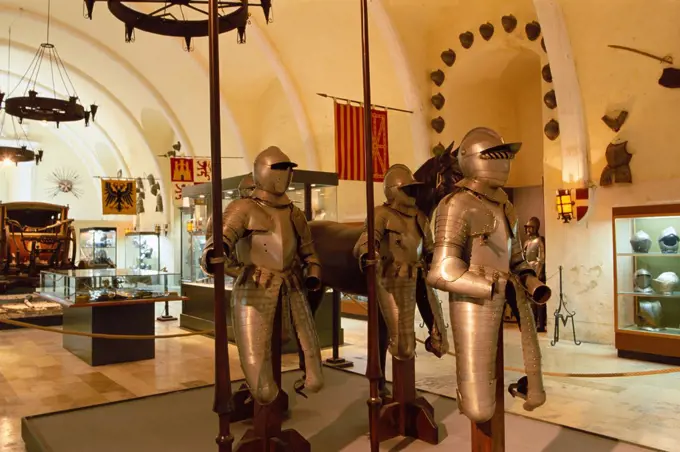
Artifacts at a museum, Knight's Museum, Valletta, Malta
1848-49855353
Old style wooden arrows in the case of an archer
PREVIOUS
of 1
NEXT
2401 S. Ervay, Suite 206
Dallas, Texas 75215
United States
Browse
CategoriesGalleriesFree Research
For Creators
License Your ContentSuperStock For StudentsFrame of Mind BlogContributor PortalNew Image SpotlightLicense AI Imagery
Resources
About UsLicensingTerms & ConditionsAPI AccessPrivacyPricing
Contact
+1 866 236 0087help@superstock.com Contact form
©2026 SuperStock. All Rights Reserved. -A
This site is protected by reCAPTCHA and Google Privacy Policy and Terms of Service apply.