Fine ArtVintageFootageSubscriptionBoardsFree ResearchPricing
  • Fine Art
  • Vintage
  • Footage
  • Subscription
  • Boards
  • Free Research
  • Pricing

Historical Armor Helmets

Detailed images of various historical helmets from different cultures and eras, showcasing intricate metalwork and design on a neutral background.
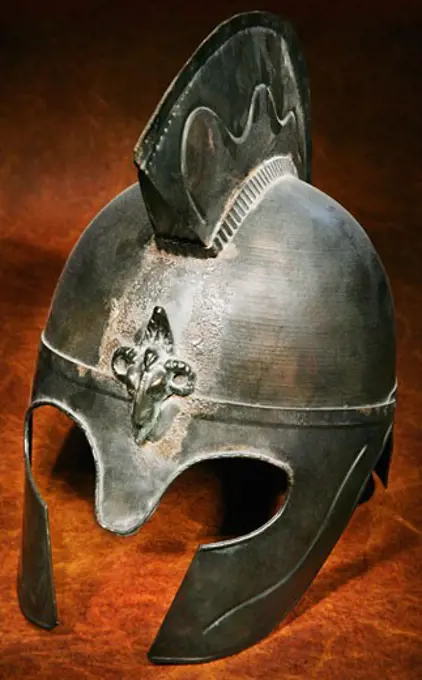
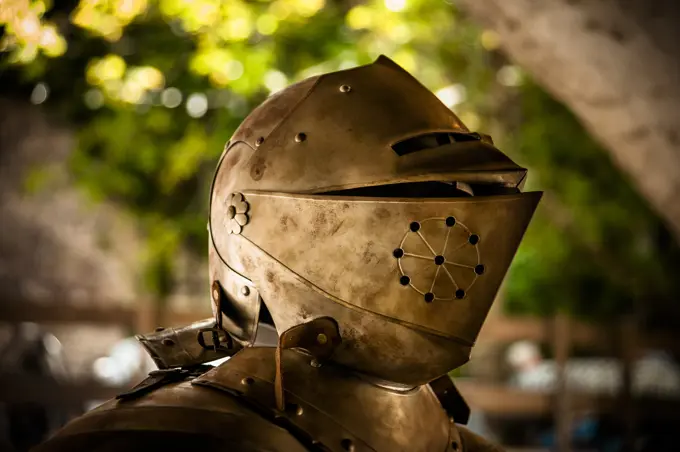
A helmet
A helmet
95 assets in this story
6145-29062558
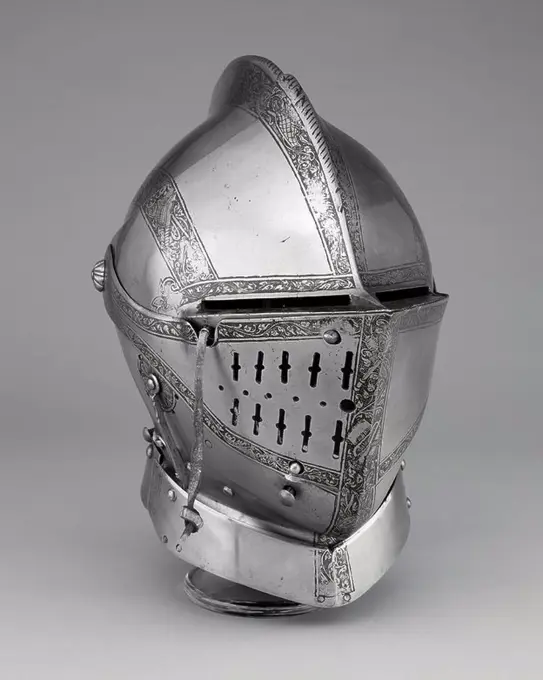
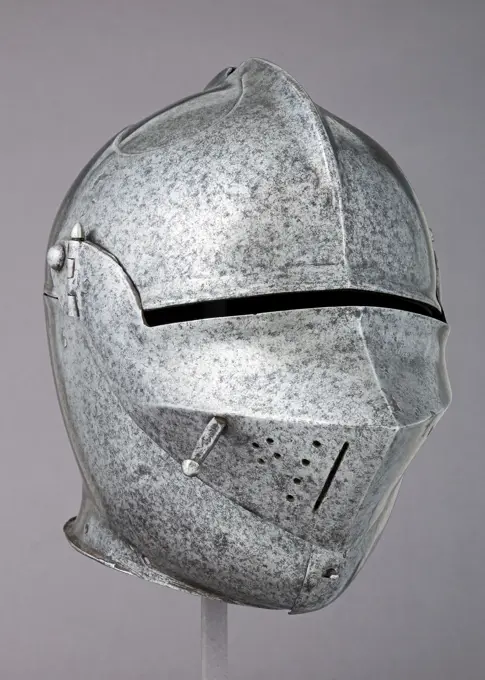
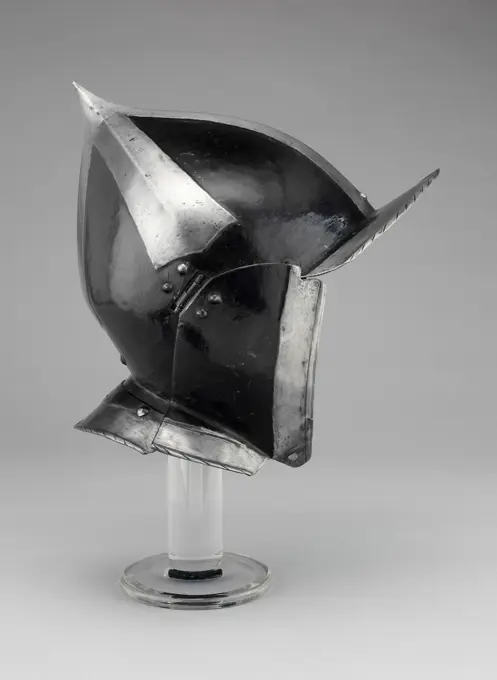
Close Helmet, c. 1510-30. Germany, 16th century. Steel with black paint; overall: 27.3 x 33 cm (10 3/4 x 13 in.).
4409-17520010
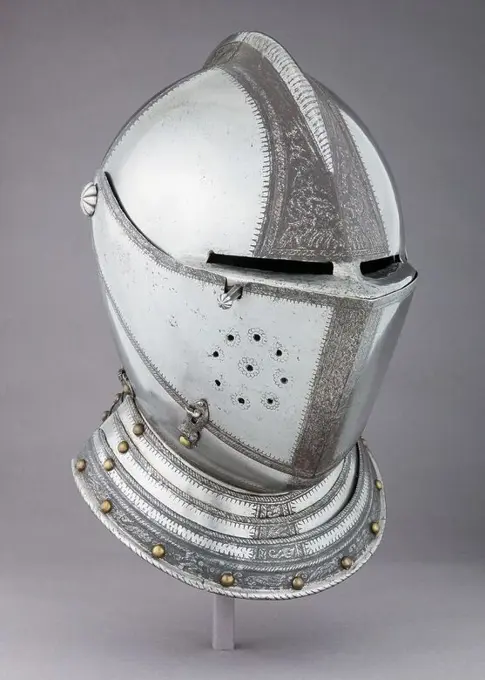
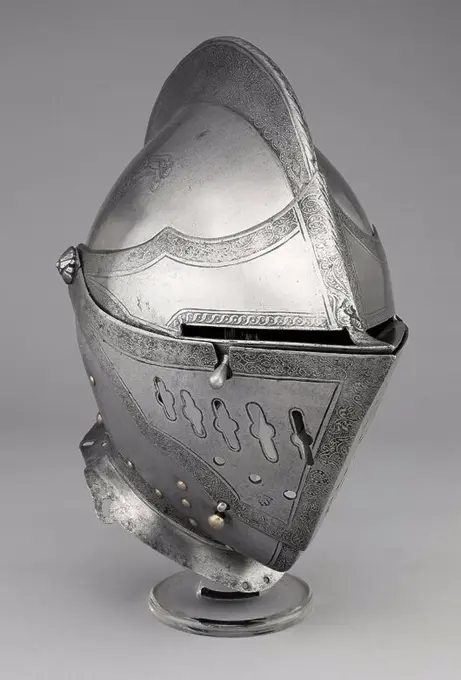
Close Helmet for the Tourney. South German; Landshut. Date: 1550-1570. Dimensions: H. 25.4 cm (10 in.). Steel and leather. Origin: Landshut. Museum: The Chicago Art Institute, Chicago, USA.
6145-29187982
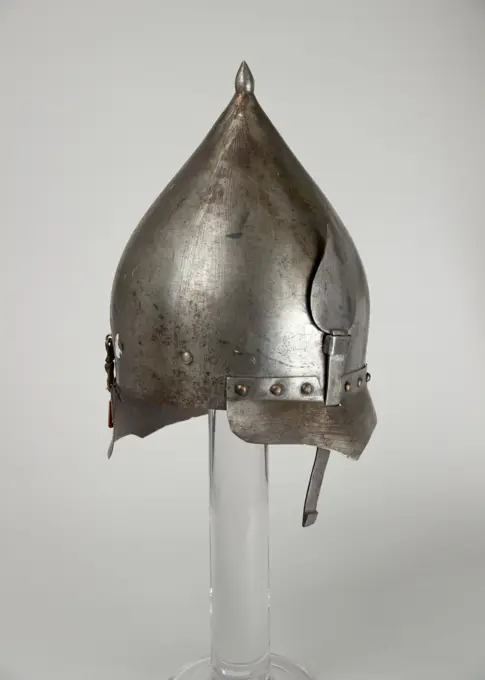
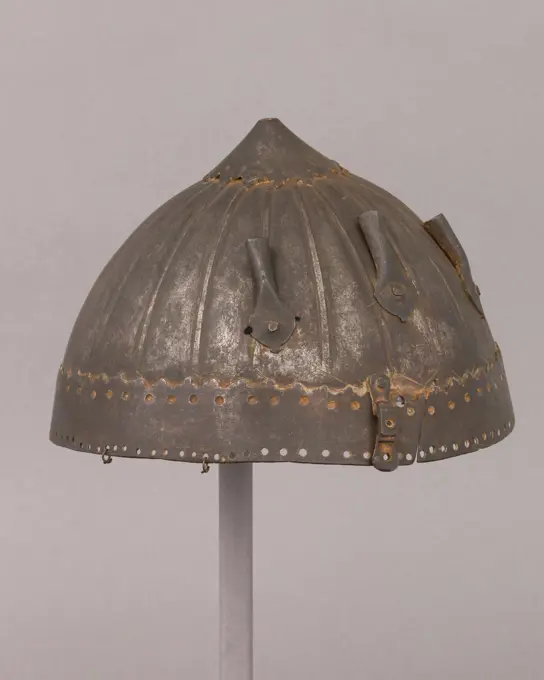
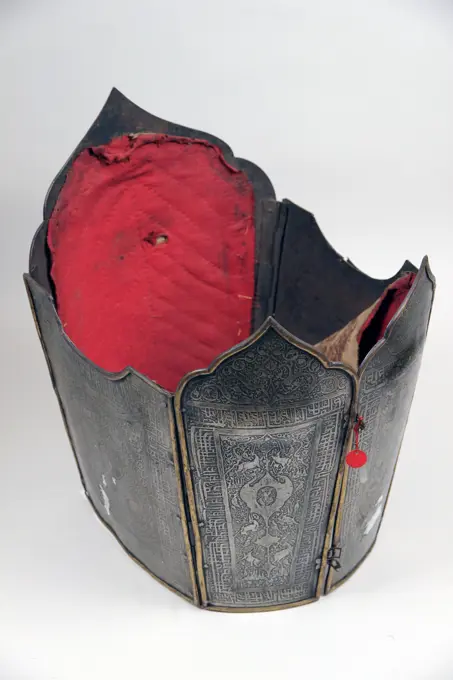
Helmet 16th-17th century Turkish. Helmet 24003
4409-17406408
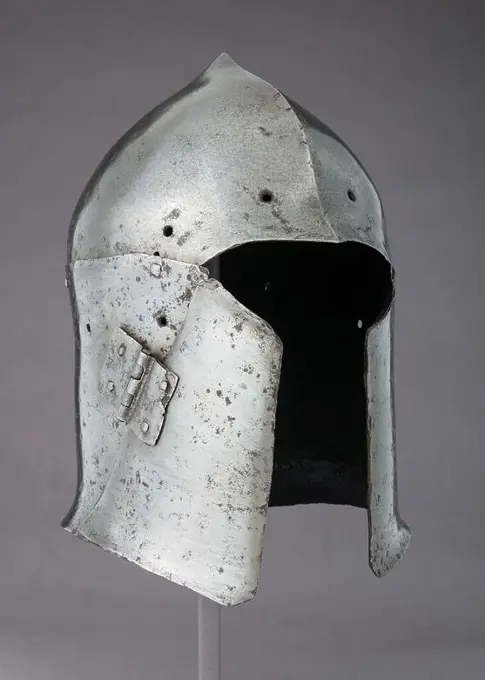
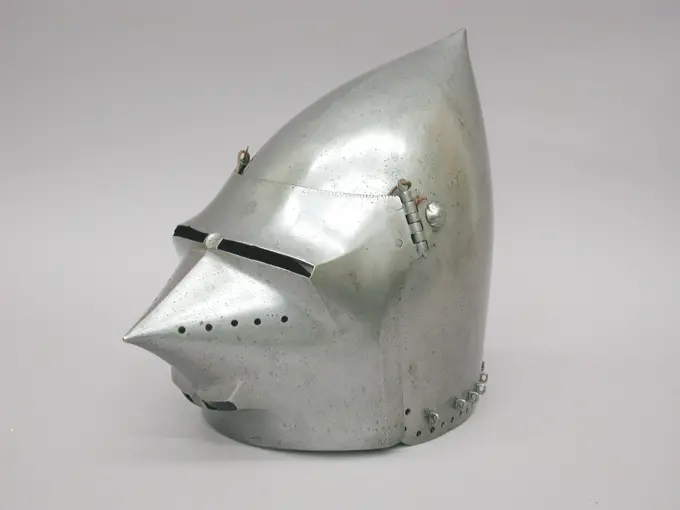
Bascinet. Culture: Italian. Dimensions: H. 12 1/4 in. (31.1 cm); W. 8 7/16 in. (21.4 cm); D. 9 5/8 in. (24.4 cm); Wt. 7 lb. 2.2 oz. (3237.5 g). Date: 1425-50. Museum: Metropolitan Museum of Art, New York, USA.
4409-17386005
Armet. Culture: Italian. Dimensions: H. 14 1/4 in. (36.2 cm); W. 8 3/4 in. (22.2 cm); D. 11 in. (27.9 cm); Wt. 5 lb. 5 oz. (2410 g). Date: ca. 1570. Museum: Metropolitan Museum of Art, New York, USA.
4409-17520314
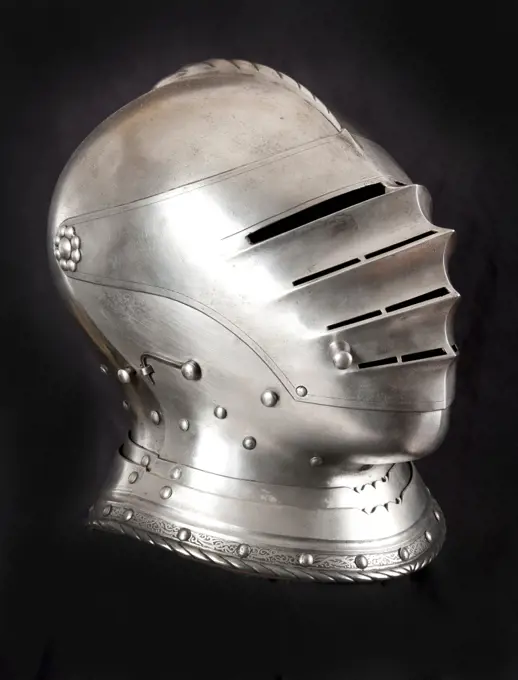
Close Helmet for the Tourney. South German; Nuremberg. Date: 1540-1570. Dimensions: H. 22.2 cm (8 3/4 in.)Wt. 7 lb. 8 oz. Steel. Origin: Nuremberg. Museum: The Chicago Art Institute, Chicago, USA.
1889R-20978
A helmet
6145-29805276
Visored Bascinet in the 14th century style 19th century French. Visored Bascinet in the 14th century style. French. 19th century. Steel. Forgeries
4409-17520134
Close Helmet. South German, Probably Nuremberg. Date: 1510-1530. Dimensions: H. 24.6 cm (9 3/4 in.). Steel. Origin: Nuremberg. Museum: The Chicago Art Institute, Chicago, USA.
6145-29189696
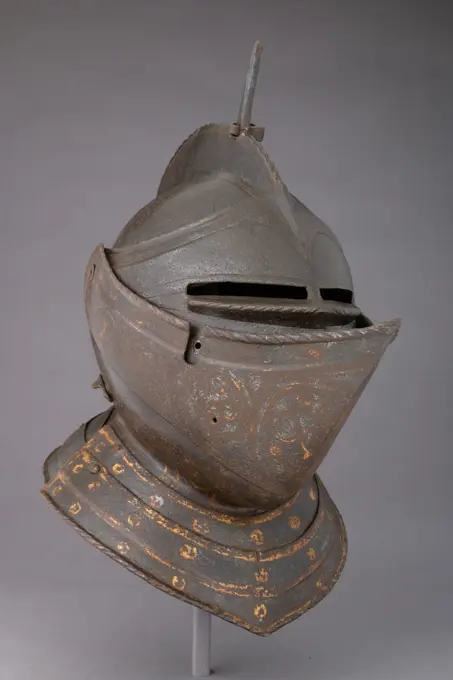
Close-Helmet ca. 1560 British or Flemish The prow-like lower visor of this helmet is the most recognizable characteristic of a distinctive style that was made about the middle of the sixteenth century in either England or Flanders. This particular helmet is interesting because it was later adapted and reused as a funerary achievement, meaning that it was hung in a church above the tomb of a gentleman. Indicators of this are the painted decoration and the relatively crude spike, designed to hold a crest, piercing the comb at the top. Funerary helmets are rare, particularly outside the context of English churches.. Close-Helmet 35953
6145-29185705
Sallet and Bevor 1480 German. Sallet and Bevor 34258
6188-63816980
Rüstung Armour of the medieval knight. Metal protection of the soldier against the weapon of the opponent Copyright: xZoonar.com/ValeryxxSibrikovx 2628259
6145-46310278
Morion. Morion, iron, blank, made of two plates, deep helmet globe with high-folded ridge and front and behind steps. Edge of the valve is folded. Around the base of the helmet bulb around six glasses of decorative rosons. Three jigsidates are missing on both sides. Blackened inside, two white scratches on weather from the comb slot.
6145-30174933
Close Helmet Made 1520-1540 Nuremberg. Steel .
6145-59514338
Right arm cover, 1499 - 1699  Arm cover, iron, white, consists of a articulated shoulder plate, upper arm pipe, an elbow hood and a forearm pipe. There is an iron buckle on the top of the shoulder plate, underneath a articulated strip that is sturled at the oven pip, the edges are high -quality and tilted. The upper arm pipe consists of two parts that are sounded together on two points, a cacked bone in the middle. The elbow hood has two parts and has flared wired edges. The lower arm pipe consists of two parts are stuck together with two hinges so that the pieces can be opened. The whole is painted from black. Europe iron (metal)
4409-17504330
Helmet. Culture: Indian. Dimensions: H. 6 1/2 in. (16.5 cm); W. 6 3/4 in. (17.1 cm); D. 9 1/4 in. (23.5 cm); Wt. 1 lb. 6.6 oz. (640.7 g). Date: 19th century. Museum: Metropolitan Museum of Art, New York, USA.
6145-29719967
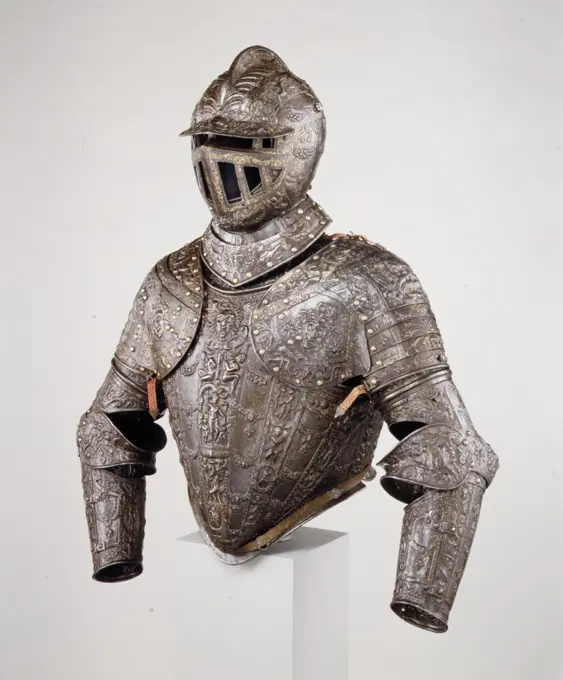
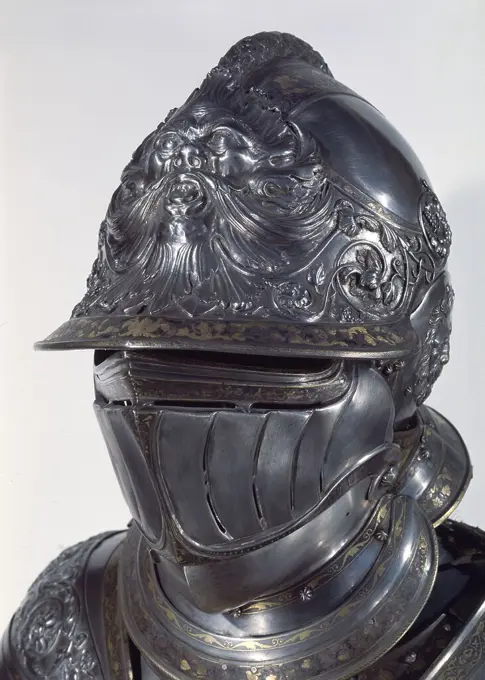
Armor of the Dukes of Alba ca. 1575-85 Lucio Piccinino Italian This is one of the few armors attributable to Lucio Piccinino, the last of the great Italian armor embossers. Distinctive of Piccinino's style is the covering of the armor surface with a dense network of embossed ornament with vertical bands connected laterally by swags of acanthus and fruit. Originally, the steel ground was blued and highlighted with gold and silver damascening. Although damaged by fire in the nineteenth century, this armor amply demonstrates Piccinino's skill in designing a complex program of Classically inspired decoration.Acquired directly from the ancestral collection of the dukes of Alba in Madrid in 1861, this armor appears to combine the remains of two armors of nearly identical size and style. They were probably made for two of the sons of Fernando Alvarez de Toledo (1507-1582), third duke of Alba, a famous Spanish general.. Armor of the Dukes of Alba. Italian, Milan. ca. 1575-85. Steel, gold, silv
4409-17357191
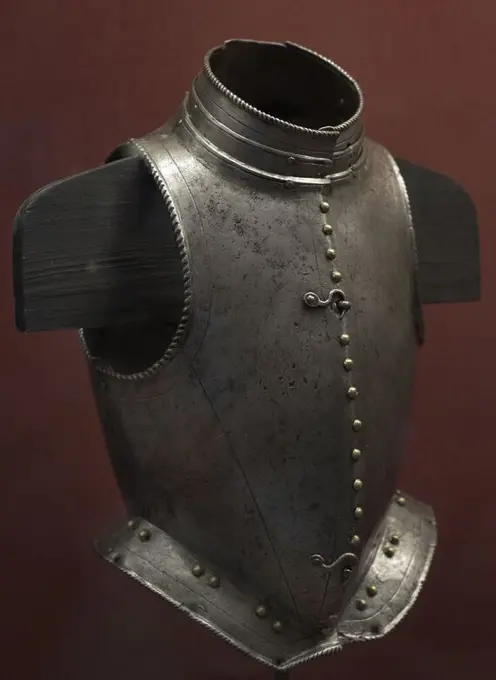
Waistcoat cuirass, ca.1580. North Italian. Armoury. Grandmaster Palace. Valletta. Malta.
6145-30189222
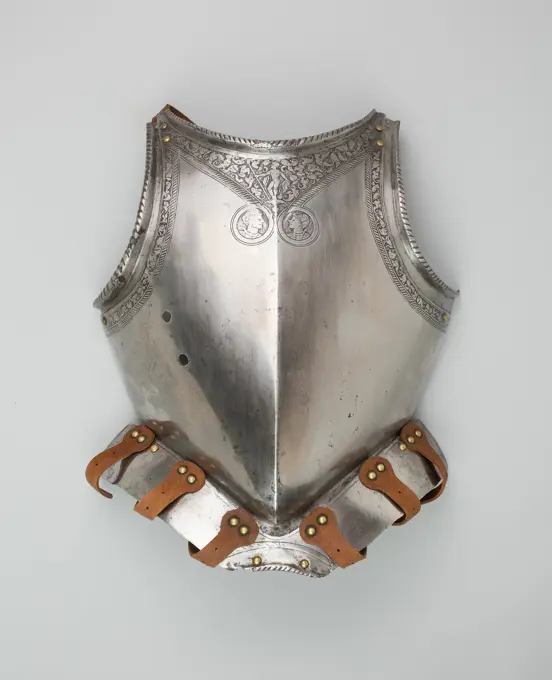
Breastplate with Associated Skirt for Half-Armor 1570-1600 Italy, northern. Steel, etched .
6145-45536267
Szyszak husarski
1525-21660167
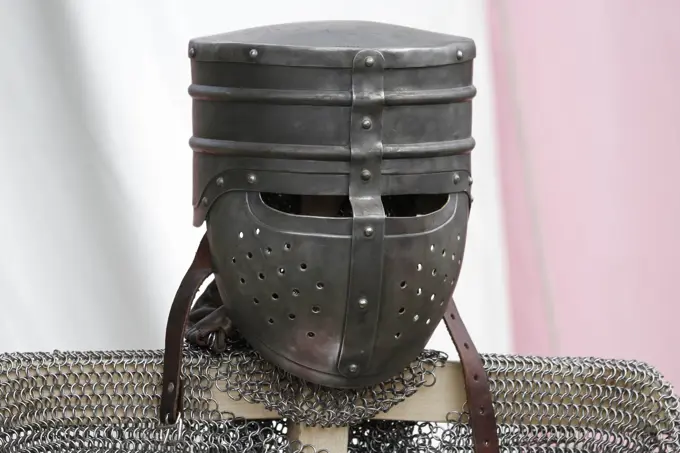
Iron helmet of the medieval knight. Very heavy headdress
4443-21910759
Helmet with visor belonging to an equestrian harness, helmet headgear protective clothing clothes horseman harness wrought iron leather, forged riveted iron helmet with visor belonging to horseman harness with lance support protect weapon equipment war lancer cover head
6145-29730870
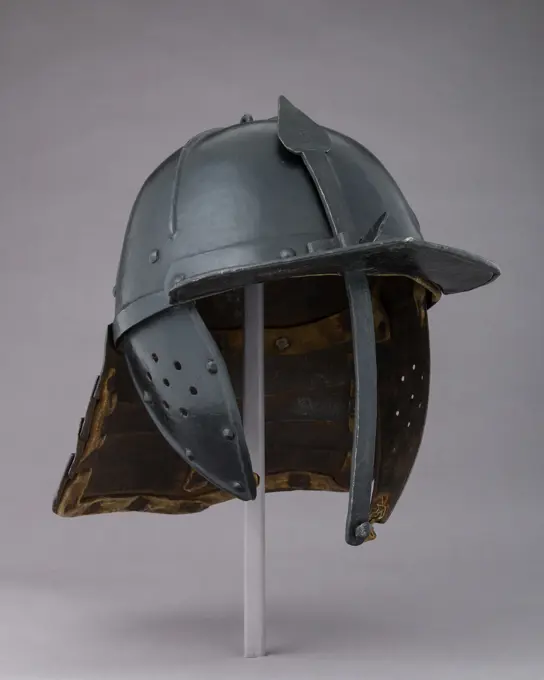
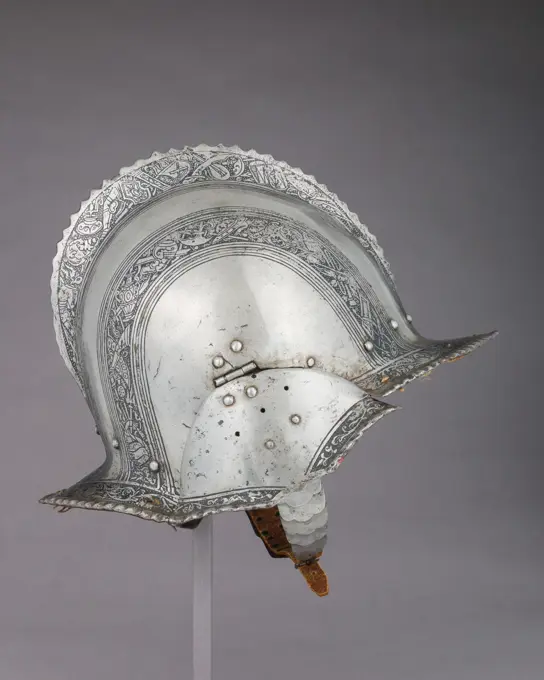
Lobster-Tail Burgonet 17th century German. Lobster-Tail Burgonet. German. 17th century. Steel, leather. Helmets
1788-19515
Bronze gladiator's helmet
6145-29766546
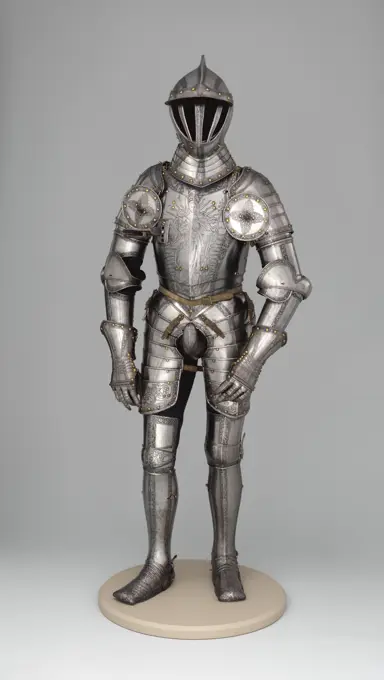
Armor of Emperor Ferdinand I (1503-1564) dated 1549 Kunz Lochner German The ownership of this armor by Ferdinand I (1503-1564) is indicated by the heraldic emblems on the toe caps: the imperial double-headed eagle surmounted by a royal crown, which signifies Ferdinands honorific status as king of the Romans and designated successor to his brother, Emperor Charles V. The image of the Virgin and Child on the breastplate was also used by Charles V on his own armors. The backplate is decorated with crossed staves and firesteels, the insignia of the Order of the Golden Fleece, an elite chivalric society of which Ferdinand was a member.Kunz Lochner, Nurembergs most celebrated armorer of the period, made several armors for both Ferdinand and his son Archduke Maximilian (1527-1576), including two matching armors produced about 1546 that are very similar to the one exhibited here.The helmet of the Museums armor was not made for it originally but has been associated with the armor since at le
1746-19629634
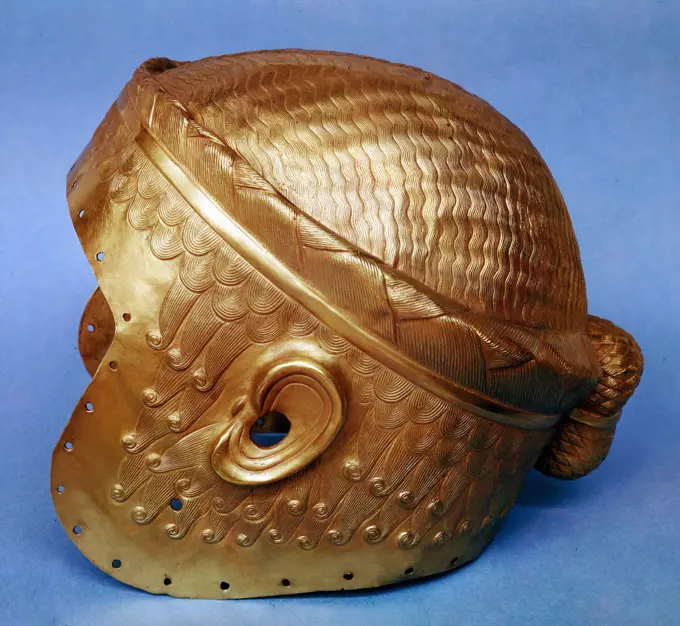
Gold helmet from Mesopotamia. 2,500 BC. Iraq Museum.
1525-22095386
Iron helmet of the medieval knight. Very heavy headdress
6145-46463447
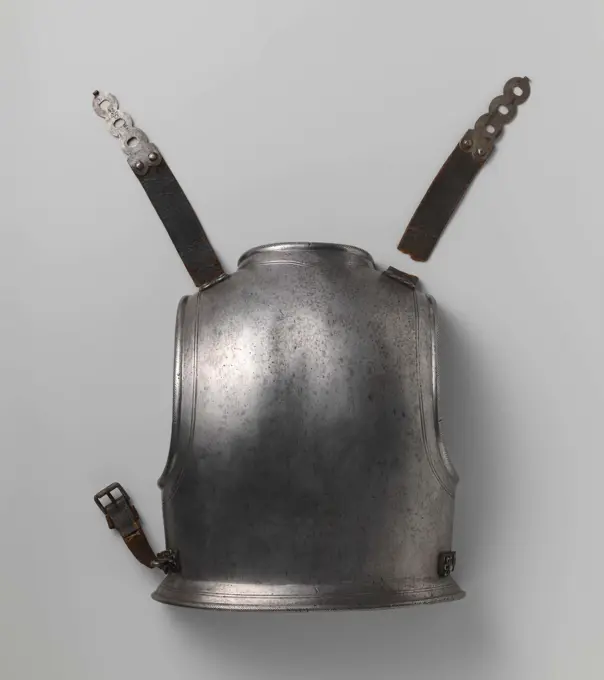
Back plate of a harbus armor for a young man. Back plate of Harquebusiers harness for a young man. See Description Breast piece
6145-29190854
Armet ca. 1490 Italian The term armet is generally used to denote a visored helmet of particular construction, one in which large cheekpieces are hinged to the base of the bowl just above the ears and close in front of the chin. The face opening is formed in the space between the rim of the bowl and the edges of the cheekpieces, an area closed and protected by a short, pointed visor hinged to pivots on either side of the bowl. The right side of the visor is pierced with a slot and holes for ventilation, and has a lifting peg. A cusped brow reinforce riveted to the front of the bowl, and a circular plate (rondel) attached by a short stem to the base of the bowl at the rear of the helmet are two other features common to the armet. Apart from the rondel and stem, which are restorations, this armet is entirely homogeneous. Its original appearance would have included a protective curtain-like mail fringe attached by rivets to the lowermost edge of the helmet, and several plates known as a b
6145-29185462
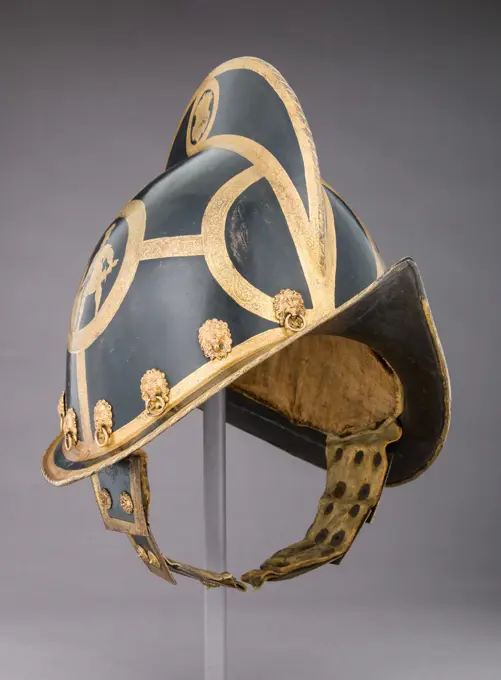
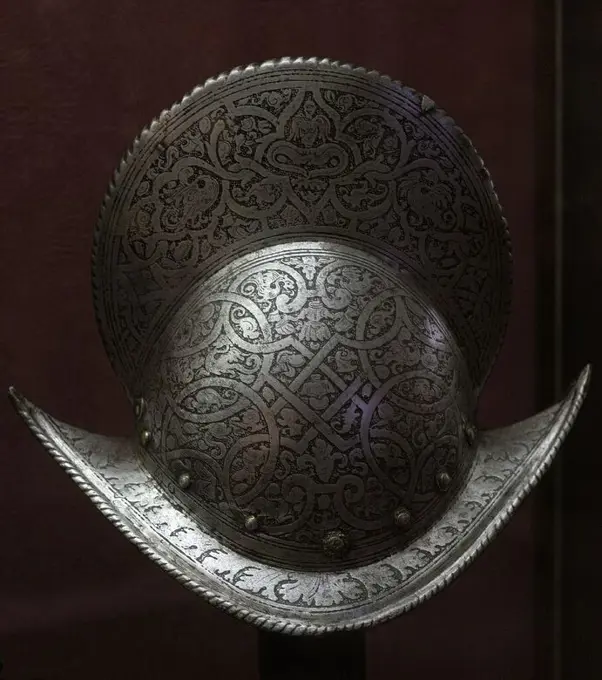
Morion ca. 1600 German, Nuremberg Forged in one piece this helmet has a high comb across its rounded bowl and an elegantly swept brim rising to sharp points at the front and back. Cheekpieces with chin straps are built up from three overlapping plates. The decorative heads of the rivets securing the lining are lion's masks holding rings in their mouths; the rivet heads on the cheekpieces are brass rosettes. A brass plume holder in the shape of a winged female half-figurine is attached to the rear end of the comb. The entire surface is blackened except for etched and gilt bands of arabesques along the edges of brim and comb and circular medallions on bowl and comb. The smaller medallions on the comb show the arms of the Dukes of Saxony, barry of ten, or and sable, a crancelin vert in bend overall, on one side, and on the other those of the archmarshalship of the empire, per fess sable and argent, two swords gules in saltire overall. The large medallions on either side of the bowl show f
1788-41300
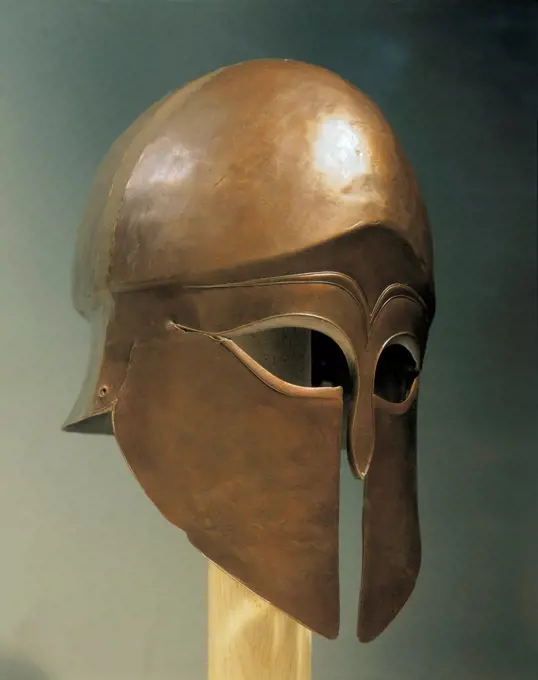
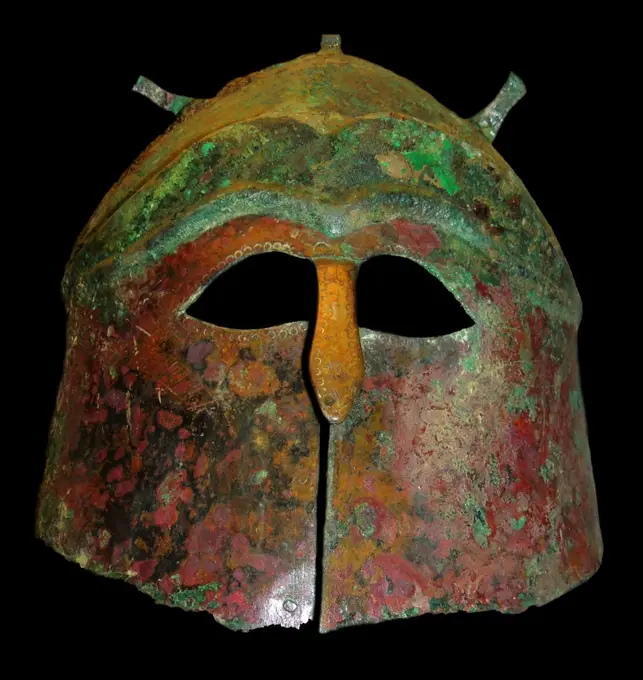
Corinthian bronze helmet, from Celopek, Bulgaria. Thracian Civilization, 5th Century BC.
6145-29724149
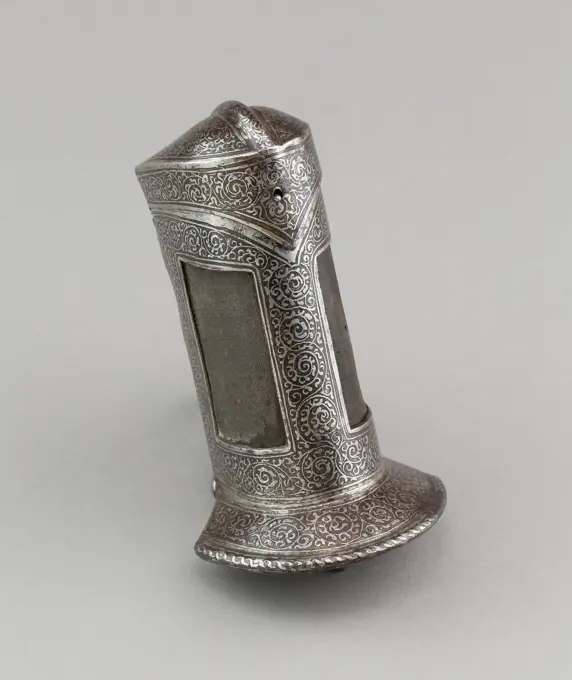
Helmet and Arm Guards 16th century Indian. Helmet and Arm Guards. Indian. 16th century. Steel, gold, copper alloy, brass, textile, metallic thread. Helmets
6145-29738794
Burgonet ca. 1560 South German. Burgonet. South German. ca. 1560. Steel, leather, textile. Helmets
4409-17519956
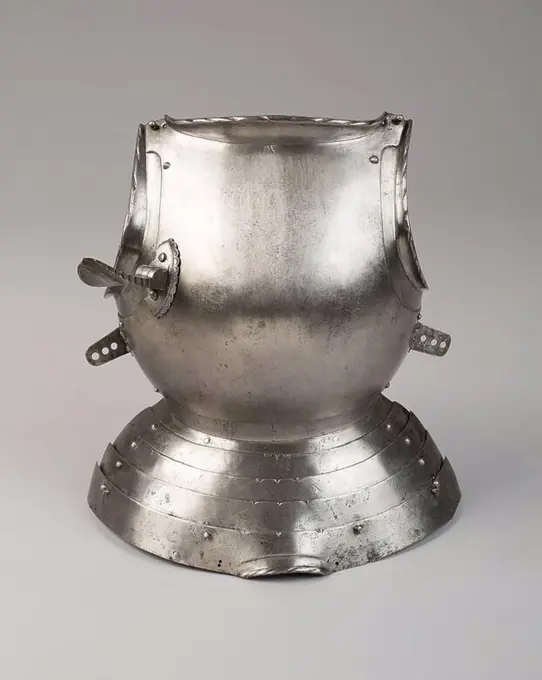
Breastplate with Folding Lance Rest and Fauld. German, Innsbruck; Mark: Michel Witz the Younger of Innsbruck. Date: 1540-1560. Dimensions: . Steel. Origin: Innsbruck. Museum: The Chicago Art Institute, Chicago, USA.
4409-15243
CASCO DE LA ARMADURA DE CARLOS V - SIGLO XVI. Location: PALACIO REAL-REAL ARMERIA DE MADRID. MADRID. SPAIN.
4409-17520042
Sallet. German. Date: 1450-1470. Dimensions: H. 24.6 cm (9 3/4 in.). Steel. Origin: Germany. Museum: The Chicago Art Institute, Chicago, USA.
1525-19895695
Iron helmet of the medieval knight. Very heavy headdress
4409-60290218
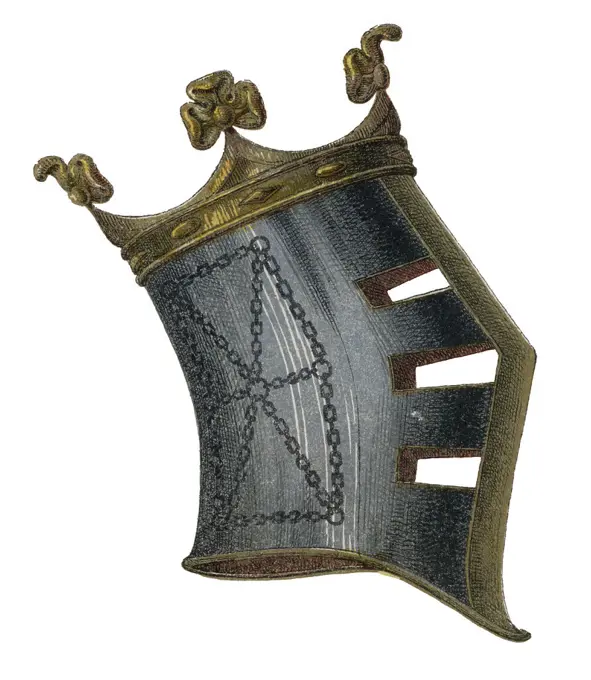
Historia. Siglo XIII. Yelmo con corona y escudo de Navarra, elemento de la armadura que protege la cabeza y el rostro del guerrero.
6188-63816587
Armour Armour of the medieval knight. Metal protection of the soldier against the weapon of the opponent Copyright: xZoonar.com/ValeryxxSibrikovx 2470290
4443-28732927
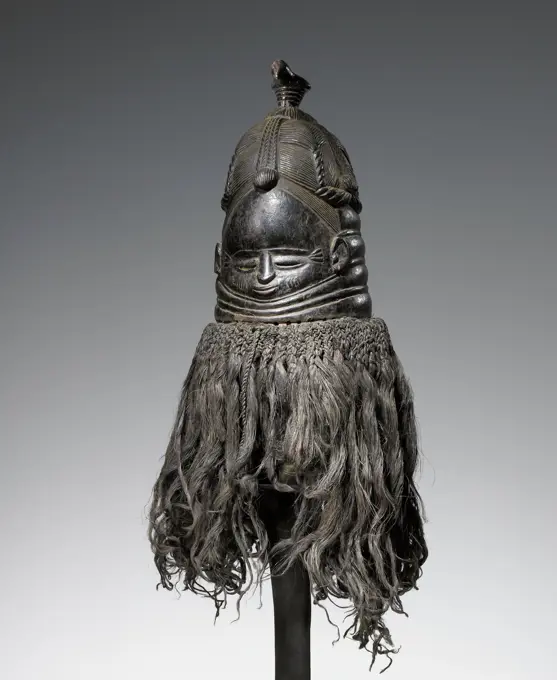
Sande mask, second quarter of 20th century, 13 x 8 x 8 in. (33.0 x 20.3 x 20.3 cm), Wood, raffia, Sierra Leone, 20th century, A mask sometimes embodies ideals of physical and moral beauty or goodness. Here, the high forehead, downcast eyes, and elaborate coiffure suggest the pinnacle of female attractiveness among the Mende people. One of the very few types of masks worn by women in Africa, it accompanied young girls who had undergone initiation into the Sande association that prepared them for adulthood. The dyed raffia attached to the mask was part of a larger costume that would have entirely covered the dancer.
6145-29062465
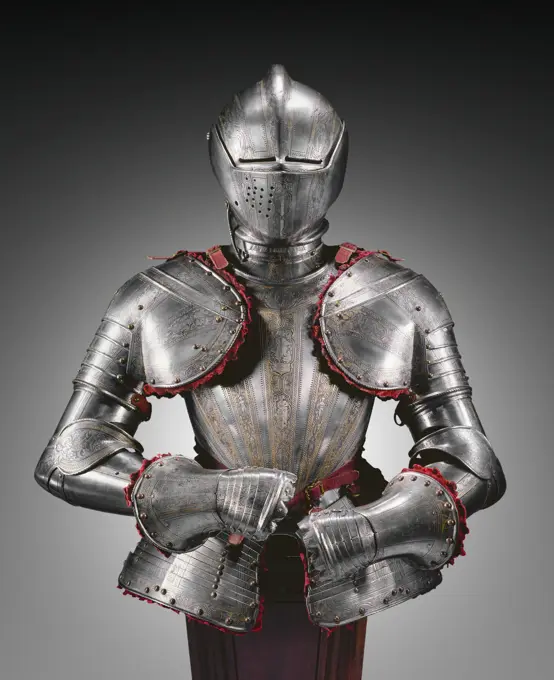
Half Armor for the Foot Tournament, c. 1590. Pompeo della Cesa (Italian, active 1572-93). Etched and gilded steel, brass rivets, leather and velvet fittings; overall: 31.7 x 27.7 x 21.6 cm (12 1/2 x 10 7/8 x 8 1/2 in.). This armor was designed for the foot tournament, an event that was separate from the equestrian jousts popularized during the Middle Ages and still favored among Renaissance aristocracies throughout Europe. Foot tournaments were commonly fought over a barrier that separated the combatants and gave protection to their legs, so a half-armor such as this one provided sufficient protection. The original owner of this suit would have worn it with colorful puffed and slashed britches and hose. The use of outlandish accessories, such as a large ostrich feather plume (a brass plume holder may be seen on the back of the helmet) and red velvet pickadils between the steel plates, provided additional splendor.
6145-58825352
Iron helmet with silver inlaid, anonymous, 1600 - 1868 Iron helmet with silver inlaid, consisting of a forehead valve, an upper part that is divided into eight segments and a jealousy-shaped rear section. Japan iron (metal). textile materials Iron helmet with silver inlaid, consisting of a forehead valve, an upper part that is divided into eight segments and a jealousy-shaped rear section. Japan iron (metal). textile materials
7050-70034474
Greek metal helmet, Olympia Museum, Olympia, Greece
1525-19895699
Iron helmet of the medieval knight. Very heavy headdress
6188-64632774
Knight armor
6188-63834303
Iron helmet Iron helmet of the medieval knight. Very heavy headdress Copyright: xZoonar.com/ValeryxxSibrikovx 5893774
6188-63836612
Armour Armour of the medieval knight. Metal protection of the soldier against the weapon of the opponent Copyright: xZoonar.com/ValeryxxSibrikovx 6496782
6145-29183206
Helmet 18th-19th century Persian. Helmet 32131
4409-17265788
SPAIN - Llanada Alavesa (district) - BASQUE COUNTRY - ALAVA. Vitoria, "Museo de Armas" (Arms Museum interior)
7155-70377544
helmet. Bronze armour from Thrace. Greek period. 5th cent. BC>, Bulgaria.
1525-21023906
Armour of the medieval knight. Metal protection of the soldier against the weapon of the opponent
4409-17357183
Morion. Type of helmet, 16th century. Armoury. Grandmaster Palace. Valletta. Malta.
6145-30188868
Tournament Sallet (Rennhut) with Buffe Made 1560-1610 Saxony. This type of helmet, called a sallet, was part of a complete jousting armor. Its buffe (lower face and neck guard) would be bolted down over the breastplate to bolster the jouster against heavy blows from an opponentís lance. The ensemble formed part of a group of locally made jousting armors that stocked the Duke of Saxonyís armory. Members of the dukeís court used them on festive occasions. Records show that they continued to be used for over three hundred years, long after most courts had abandoned the sport.. Steel, iron, brass, and leather .
4409-17582763
'"Blank for a Seal Shaped Like the Bust of Yermak Timofeevich"'. Russia, Second half of the 19th century. Dimensions: h. 14 cm. Museum: State Hermitage, St. Petersburg.
6145-29179663
Cuirass late 17th century Persian. Cuirass 31986
1788-41148
Corinthian bronze helmet from Roccanova, Basilicata, Italy. Ancient Greek civilization, Magna Graecia, 6th Century BC.
6145-29745371
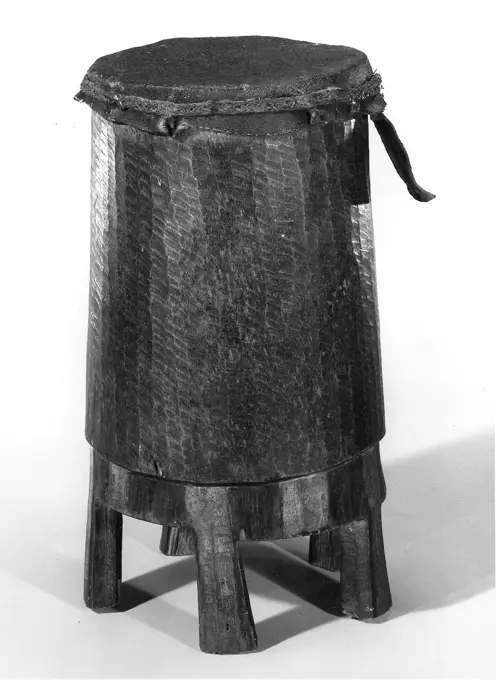
Drum 19th century probably Poto people. Drum. probably Poto people. 19th century. Rattan, wood, nail, hide. Democratic Republic of the Congo. Membranophone-single-headed / conical drum
6145-30190454
Fingered Gauntlet for the Right Hand Made 1570-1610 Nuremberg. Steel and leather .
6145-30189400
Burgonet Made 1550-1570 Southern Germany. Steel and black paint .
4409-17503230
Armor in the style of the 15th century. Culture: Italian. Date: ca. 1450 and ca. 1850. Museum: Metropolitan Museum of Art, New York, USA.
6145-29165898
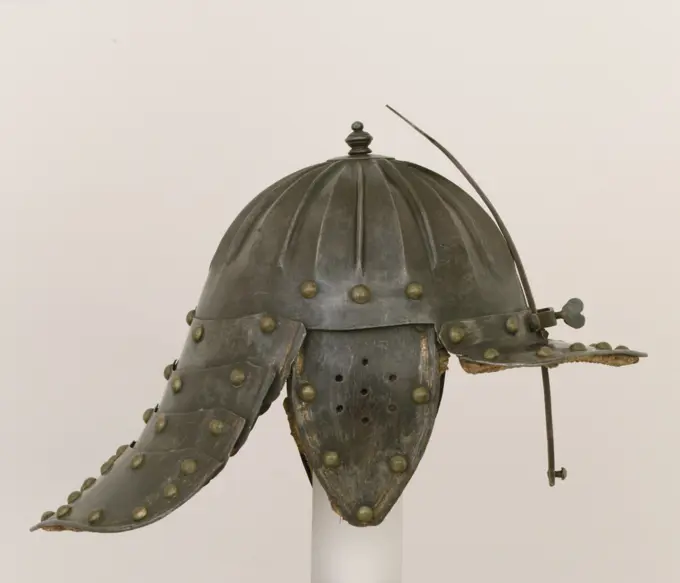
Lobster-Tail Burgonet (Zischägge) ca. 1630-40 German The term Zischägge refers to a distinctive type of seventeenth-century helmet consisting of a hemispherical bowl, a brim with sliding nosepiece (nasal), cheekpieces, and a long laminated tail over the back of the neck. The German word is a corruption of the Turkish chichak, which refers to a similar helmet used throughout much of the Ottoman world.Unlike most Zischägge, which were relatively simple, this example has a finely fluted and ribbed bowl with a baluster finial at the top, and surfaces that are blued and gilt. It also has its original leather lining in the bowl, brim, tail, and cheekpieces.. Lobster-Tail Burgonet (Zischägge). German. ca. 1630-40. Steel, gold, brass, leather, textile. Helmets
7012-69893802
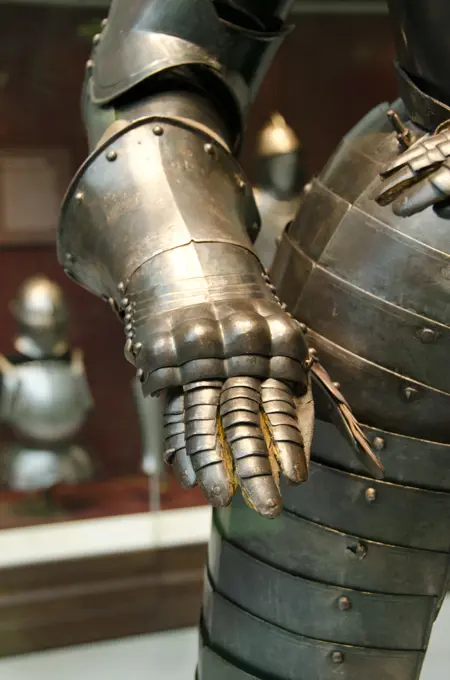
Ohio, Cleveland. The Cleveland Museum of Art. Austrian Heavy Cavalry (Cuirassier's) steel Armor, c. early 1600, glove detail.
1746-19692000
Apulo-Corinthian helmets were not made in Greece much after 500 BC. When not in use, Greek soldiers pushed the helmets back over their heads.
6145-54679692
Helmet Indian 17th-18th century
1746-29016532
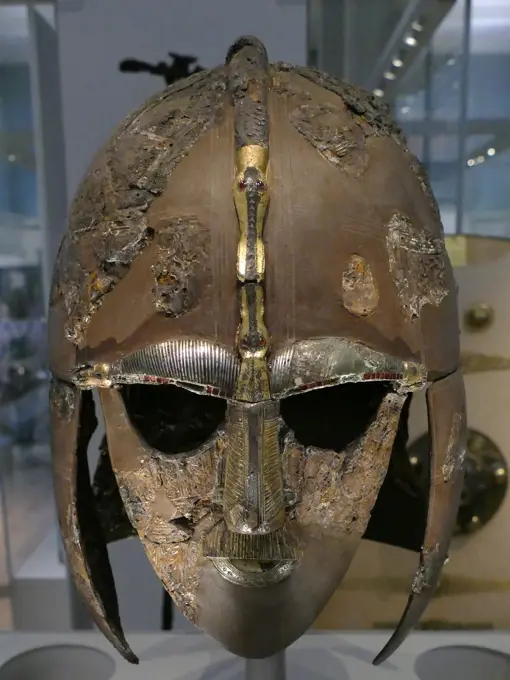
reconstruction of the Sutton Hoo helmet, a decorated Anglo-Saxon helmet discovered during the 1939 excavation of the Sutton Hoo ship-burial. Buried around 625 AD. it is believed to have been the helmet of King Raedwald; for whom its elaborate decoration may have given it a secondary function almost akin to a crown.
6188-63836615
Armour Armour of the medieval knight. Metal protection of the soldier against the weapon of the opponent Copyright: xZoonar.com/ValeryxxSibrikovx 6496797
4409-17402344
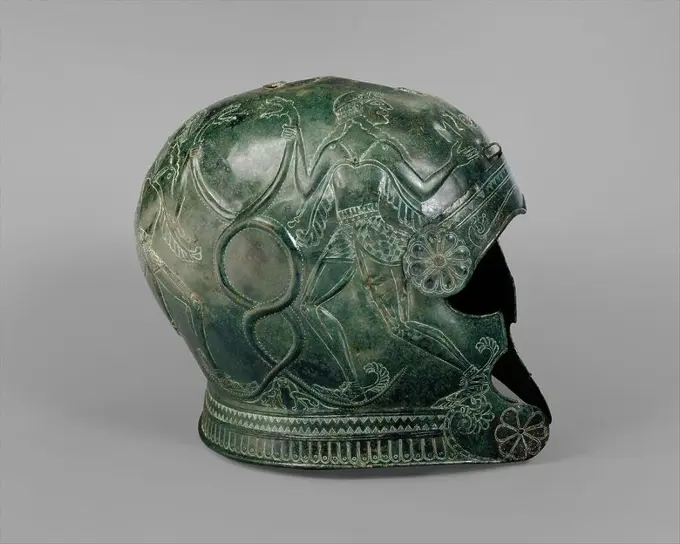
Two bronze helmets. Culture: Greek, Cretan. Dimensions: H. (1989.281.49): 9 5/8 in. (24.5 cm)H. (1989.281.50): 8 1/4 in. (21 cm). Date: late 7th century B.C..These helmets and the three mitrai exhibited below them are the finest pieces of a large cache of armor that came to light in southern central Crete, where it was undoubtedly made. The inscriptions suggest that the armor was captured as booty and offered as a dedication. In repoussé on both sides of one helmet is a pair of winged youths grasping a pair of intertwined snakes. Below them are two panthers with a common head. The helmet is inscribed "Neopolis." In repoussé on both sides of the other helmet is a horse; incised on each cheekpiece is a lion. The inscription states that Synenitos, the son of Euklotas, took this object. Museum: Metropolitan Museum of Art, New York, USA.
6188-65174070
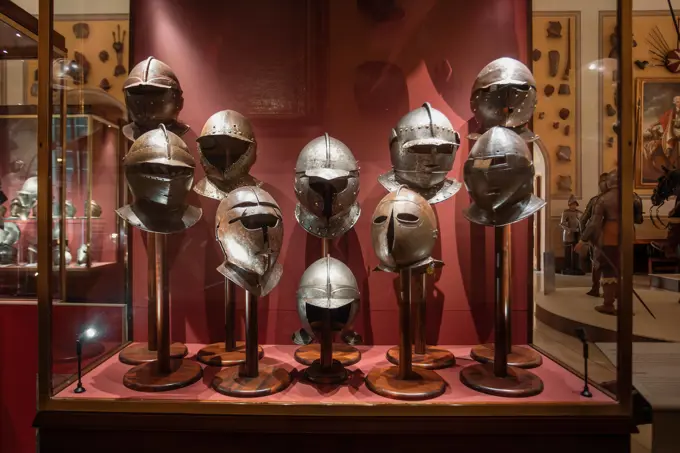
Grandmaster s Palace, Valletta, Malta, Ausstellung historischer Helme. Valletta, Malta - May 12, 2024: A captivating display of historic helmets at the Grandmaster s Palace, showcasing the rich history of warfare. Copyright: xZoonar.com/www.artushfoto.eux 22441889
6145-48881589
Helmet. Unknown
4409-17293651
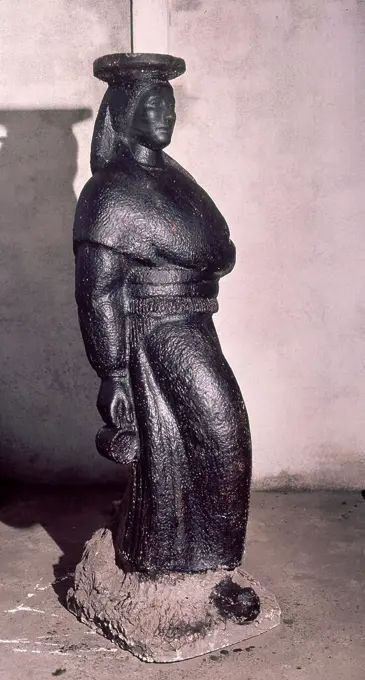
LA LECHERA-IMAGEN DE AZABACHE. Location: INTERIOR. SANTIAGO DE COMPOSTELA. A CORUÑA. SPANIEN.
6189-53753332
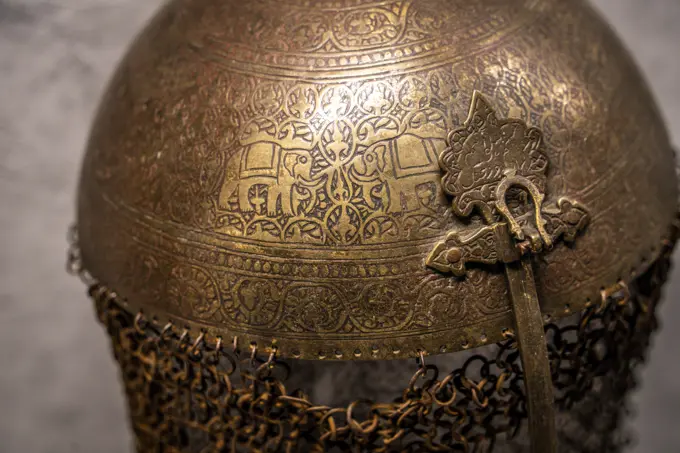
Persian helmet with engraved elephant scene, 16th century, Álava Armory Museum, Vitoria, Basque Country, Spain
6145-46070875
Begging figure on two stools. Beggar on two stools.
4409-17545802
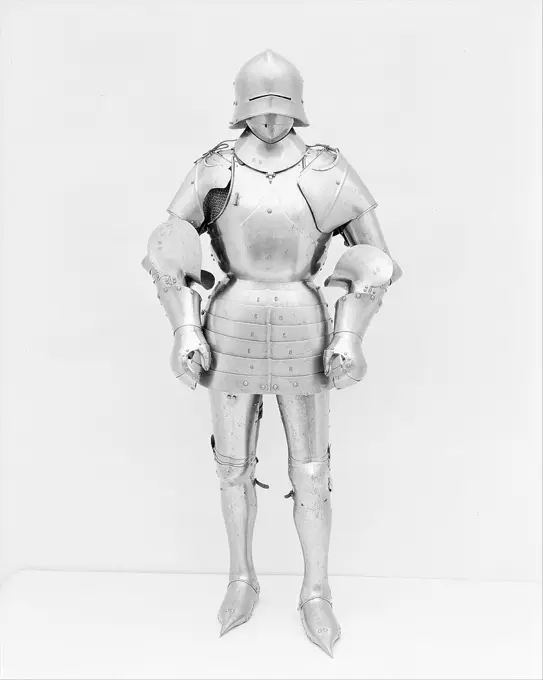
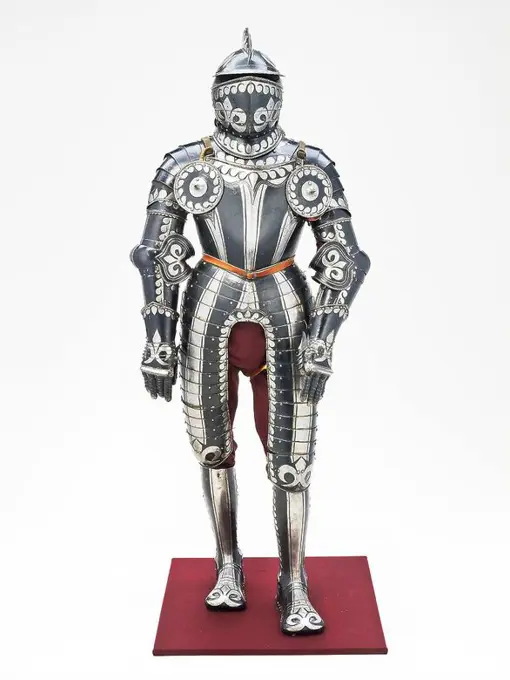
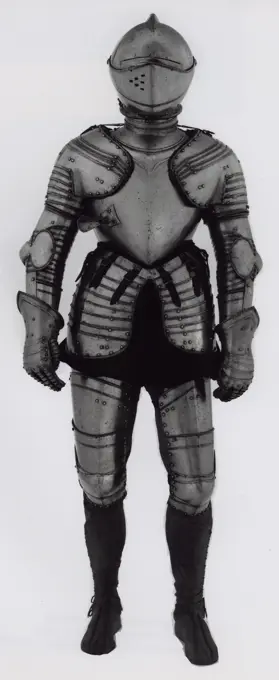
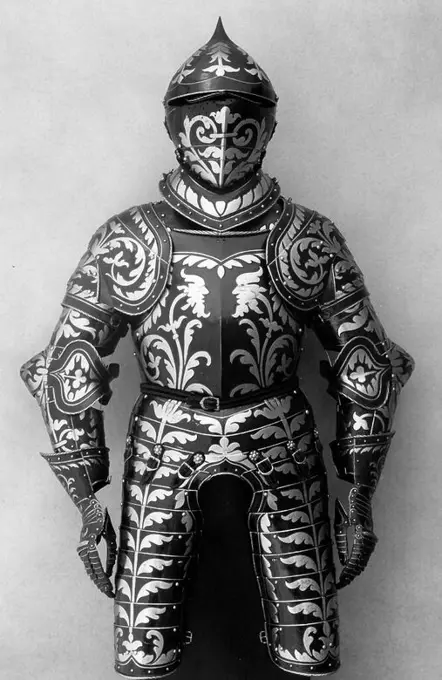
Black-and-White Field Armor. Northern German. Date: 1550-1570. Dimensions: H. 182.9 cm (72 in.). Steel with paint and leather. Origin: Northern Germany. Museum: The Chicago Art Institute, Chicago, USA.
1746-1014
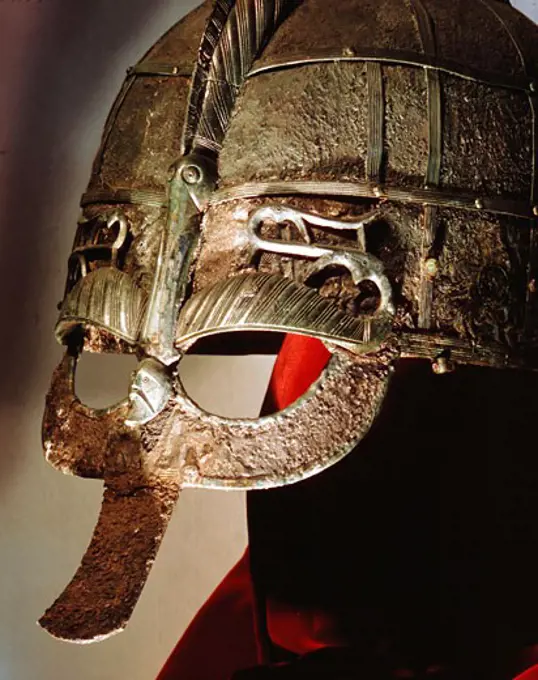
Anglo-Saxon helmet part of the Sutton Hoo treasure excavated near Woodbridge, Suffolk, England, 1939. British Museum
4409-17456504
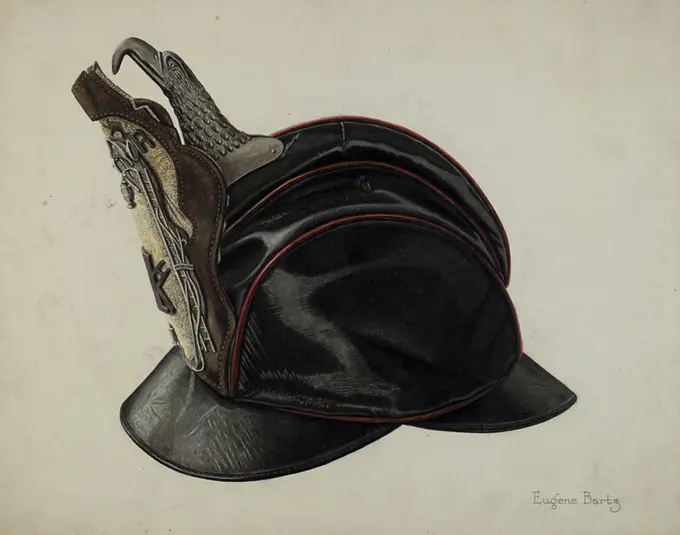
Fireman's Helmet. Dated: c. 1939. Dimensions: overall: 28 x 35.7 cm (11 x 14 1/16 in.). Medium: watercolor, graphite, and colored pencil on paperboard. Museum: National Gallery of Art, Washington DC. Author: Eugene Bartz.
1848-54972208
Hall with medieval armour, full plate armour from southern Germany, 16th Century, Bavarian National Museum, Prinzregentenstrasse 3, Munich, Bavaria, Germany, Europe
6145-30190826
Cartridge Box 1570-1600 Saxony. Wood, buckram, leather, and iron .
4409-17386693
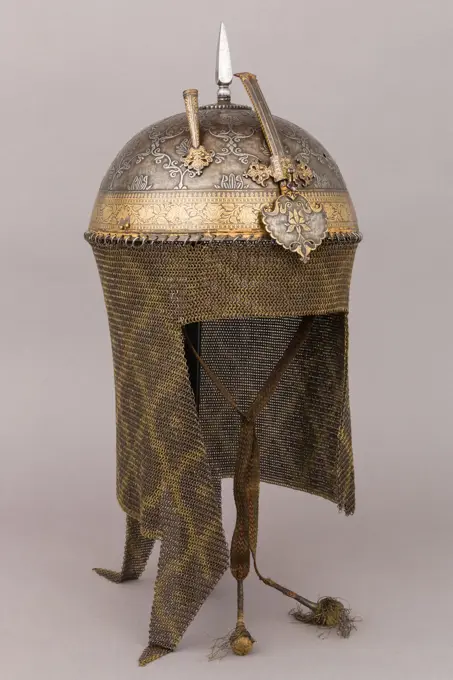
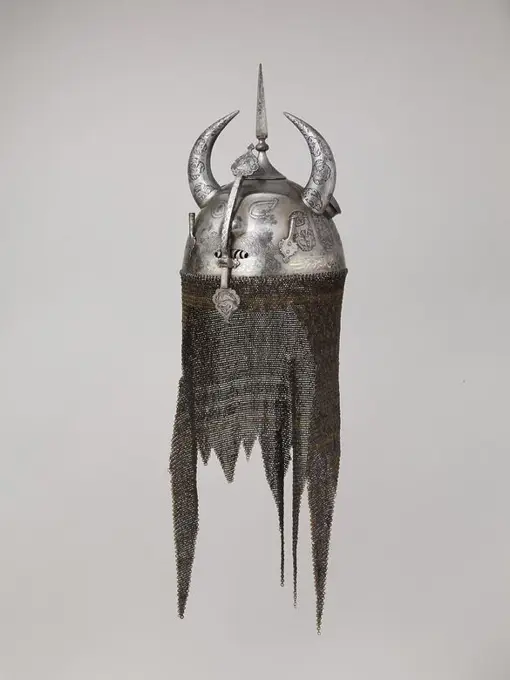
Helmet (Khula Khud). Culture: Iranian. Dimensions: H. including mail 27 in. (68.6 cm); H. including nasal 12 in. (30.5 cm); H. excluding mail and nasal 10 in. (25.4 cm); Diam. 8 in. (20.2 cm); Wt. 4 lbs. 10.8 oz. (2120.5 g). Date: first half 19th century.Despite the modernization of Iran's military in the nineteenth century, traditional armor continued to be manufactured. Its purpose, however, is uncertain: for military parades, as costume for religious or historical plays, or as romantic souvenirs for the tourist trade. This helmet, with its feline face and horns, features imagery inspired by Iran's national epic, the Shahnama (Book of Kings)--notably, the tiger-skin headdress and the horned ox-headed mace that were the distinguishing arms of the hero Rustam. Inscriptions in Persian refer to Rustam and several other heroes from the poem. Museum: Metropolitan Museum of Art, New York, USA.
1525-24684096
German World War One (Stahlhelm) military helmet isolated on white background
6145-30189192
Closed Helmet of Elements of Armor for Foot Tournament at the Barriers 1590-1620 Milan. Steel and gilding .
1525-25078105
Roman helmet on head of Roman soldier
6145-51904456
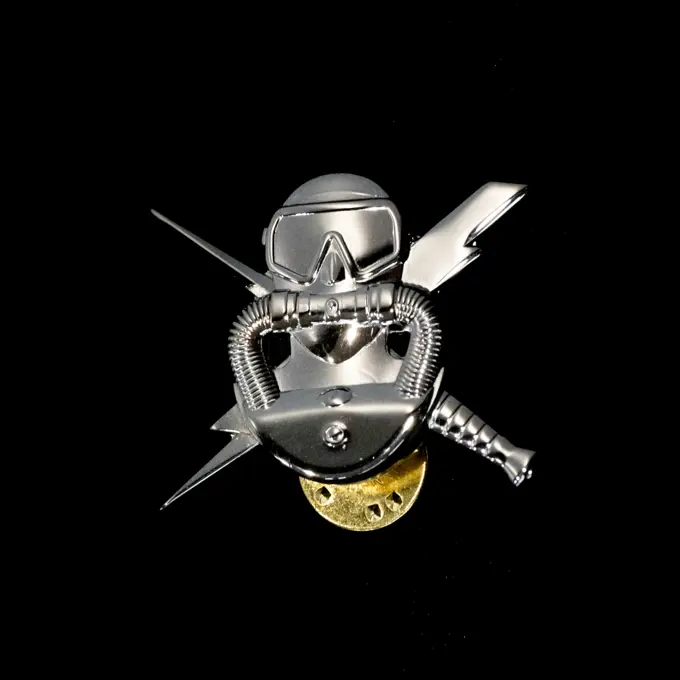
Newly authorized Air Force Combat Dive Supervisor and Diver pins issued for the first time, Oct. 20.
1525-27750054
Key search engine icon. Outline Key search engine vector icon for web design isolated on white background color flat. Key search engine icon vector flat
6188-65175822
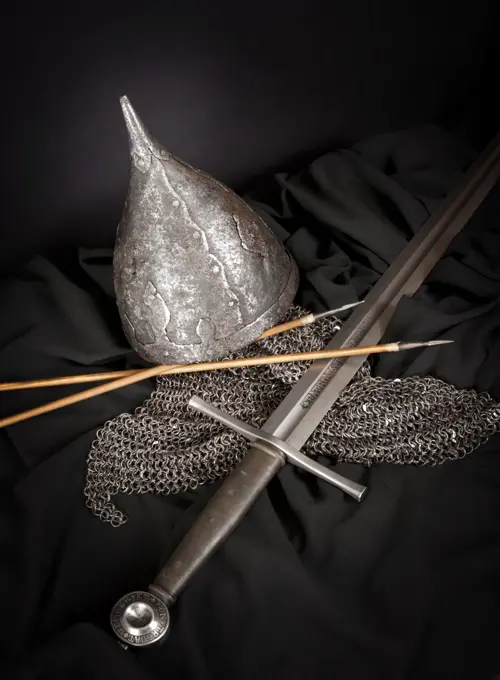
Kettenhemd, Helm und Schwert. knight s armor, Old chain mail with a helmet and sword from the Middle Ages. Copyright: xZoonar.com/FernandoxGenzorx 22441767
7113-70308869
The helmet and shoulder piece of a medieval knights armor
1848-51142450
Knights armor, harness, around 1590, National Museum, Munich, Upper Bavaria, Bavaria, Germany, Europe
4409-17556039
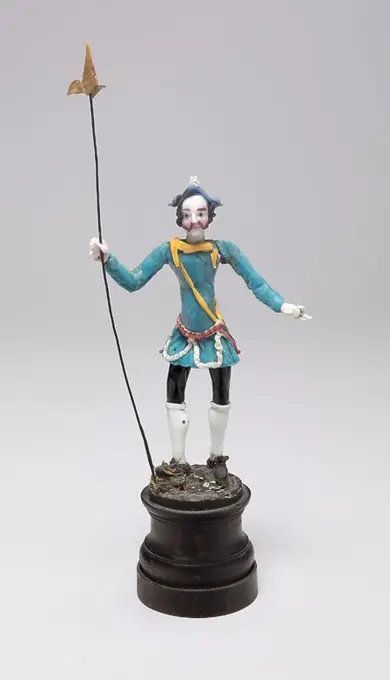
Soldier with Lance. Nevers, France. Date: 1675-1725. Dimensions: H. 16.5 cm (6 1/2 in.). Glass; lampwork (verre de Nevers), metal armature; wood pedestal. Origin: France. Museum: The Chicago Art Institute, Chicago, USA.
4409-17504206
Half Armor. Culture: Probably Austrian, Innsbruck. Dimensions: Wt. 37 lb. 5 oz. (16.92 kg); Wt. of helmet 5 lb. 7 oz. (2466.4 g). Date: ca. 1560 and later. Museum: Metropolitan Museum of Art, New York, USA.
1788-31811
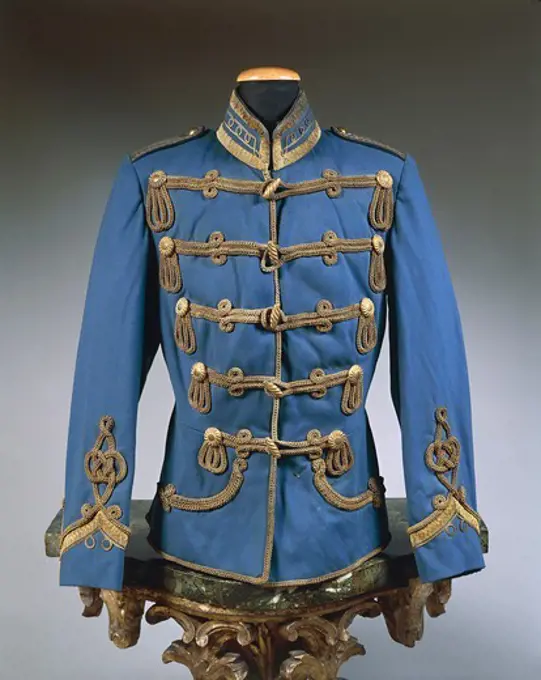
Militaria, Prussia, 19th-20th century. Uniform of the Hussars, 1858-1915. Ninth Regiment lieutenant's jacket.
6188-63833908
Ancient sabre Ancient sabre. A smart variant of the fighting weapon Copyright: xZoonar.com/ValeryxxSibrikovx 5812424
1558-14112370
Germany, Bavaria, Romantic Road, Rothenburg-ob-der-Tauber, Waffenkammer Shop, Display of Replica Medieval Armour
1525-27778886
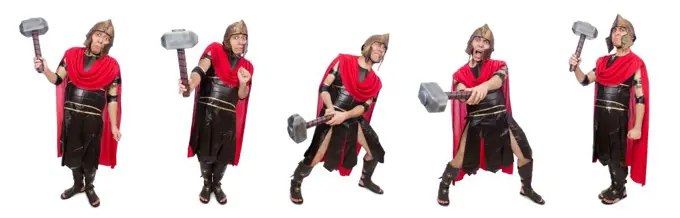
Gladiator isolated on white background. Gladiator with hammer isolated on white
1525-24703332
Coif of the soldiers in the Middle Ages, vintage engraved illustration. Industrial encyclopedia E.-O. Lami - 1875.
1525-25691417
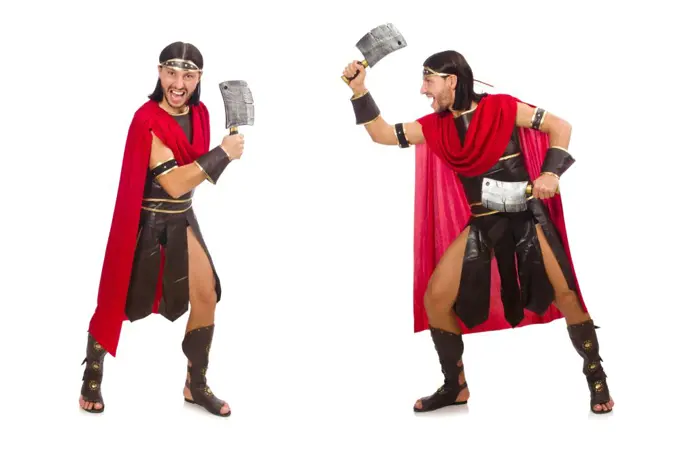
Gladiator with cleaver isolated on white
4445R-3055
Toy
PREVIOUS
of 1
NEXT
2401 S. Ervay, Suite 206
Dallas, Texas 75215
United States
Browse
CategoriesGalleriesFree Research
For Creators
License Your ContentSuperStock For StudentsFrame of Mind BlogContributor PortalNew Image SpotlightLicense AI Imagery
Resources
About UsLicensingTerms & ConditionsAPI AccessPrivacyPricing
Contact
+1 866 236 0087help@superstock.com Contact form
©2026 SuperStock. All Rights Reserved. -A
This site is protected by reCAPTCHA and Google Privacy Policy and Terms of Service apply.