Fine ArtVintageFootageSubscriptionBoardsFree ResearchPricing
  • Fine Art
  • Vintage
  • Footage
  • Subscription
  • Boards
  • Free Research
  • Pricing

Medieval Armor Collection

Impressive display of steel helmets and equestrian armor designs from the 15th to 17th centuries, highlighting craftsmanship and historical significance.

Armour Armour of the medieval knight. Metal protection of the soldier against the weapon of the opponent Copyright: xZoonar.com/ValeryxxSibrikovx 2494304
79 assets in this story
6145-30190951
Armet Made 1490-1510 Milan. Steel and leather .
4409-17520308
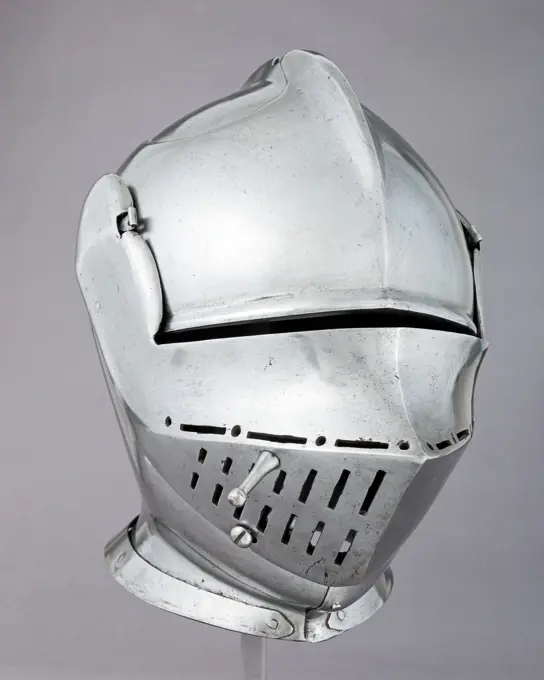
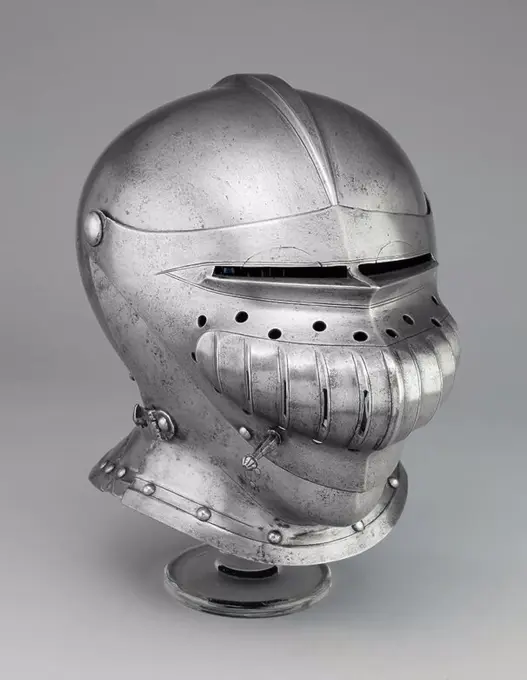
Close Helmet. South German. Date: 1500-1530. Dimensions: H. 20.3 cm (8 in.). Steel. Origin: Southern Germany. Museum: The Chicago Art Institute, Chicago, USA.
6145-59489334
Closed Vizierhelm van Ruiterharnas, Anonymous, 1600 - 1625 helmet Closed sight helmet with two star -shaped air openings at the front; decorations with copper rosettes; At the rear, holder for Vederbos is engraved. Note: part of inv. No. NG-NM-528. Netherlands iron (metal). leather forging / striking (metalworking) / engraving  Amsterdam
6145-59503461
Ruiterhelm (Mantelhelm) Staatse Army, Anonymous, 1600 - 1649  Rider helmet or mantle helmet. The helmet is made of polished iron and equipped with a comb that is filed to mimic hair; An ajour processed plume cooker is attached to the rear; The visor is pointed and has a long lift on the right; There is a large rivet in the shape of a flower challenge on both sides; The facial plate is worked on both sides Ajour with four hearts around a circle with 16 laps around it; The rear hook has an extra eye for a leather lace that made it easier to open with gloves on the hook; This rider helmet has a push button or lifting pal to keep the visor up instead of a visor support; The edges of the helmet are decorated in the same way as the comb and further with a double incised line, and with round rivets. The appearance and manufacture of the helmet are very Dutch; A typical Dutch element is the decoration of the edges, giving you, as it were, eyebrows. Netherlands iron (metal)
4409-17414451
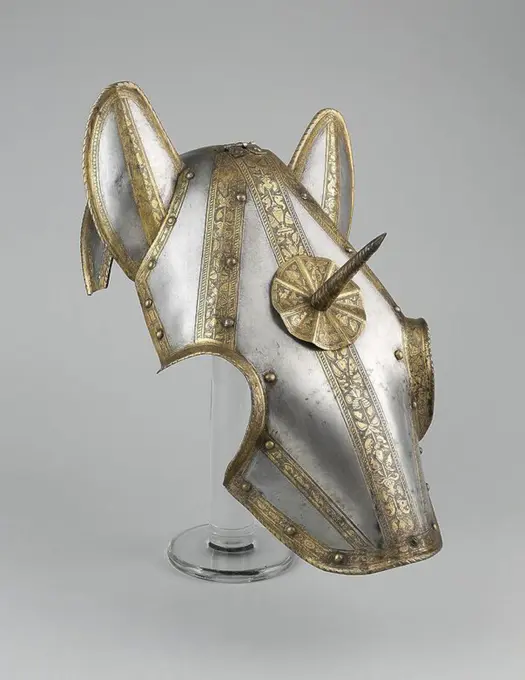
Shaffron (Horse's Head Defense) with arms of the Freyberg family. Culture: German, probably Landshut. Dimensions: H. 24 7/8 in. (63.2 cm); W. 12 1/4 in. (31.1 cm); D. 8 1/4 in. (21 cm); Wt. 4 lb. 13 oz. (2188 g). Date: ca. 1540.This shaffron is fitted with an escutcheon plate bearing the arms of the barons of Freyberg. It comes from the armory at Hohenaschau Castle in Bavaria, the seat of that noble family, and probably belonged to Pancraz von Freyberg (1508-1565), a courtier in the service of the dukes of Bavaria in nearby Munich. Although unmarked, the shaffron is comparable in form to documented examples made in Landshut, a famous Bavarian armor-making center. Museum: Metropolitan Museum of Art, New York, USA.
6145-29190387
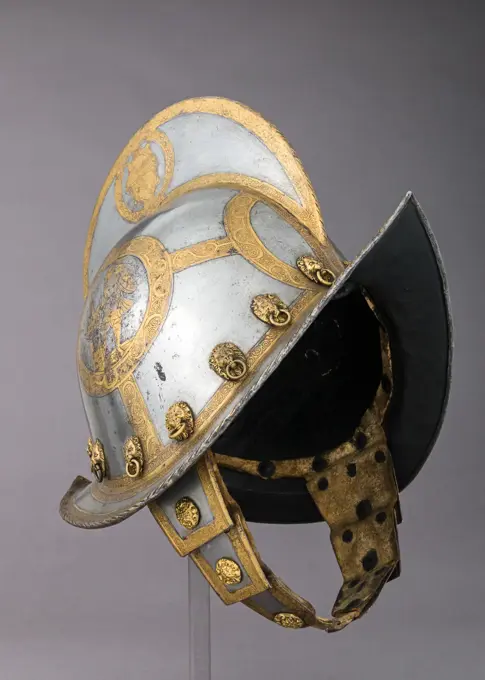
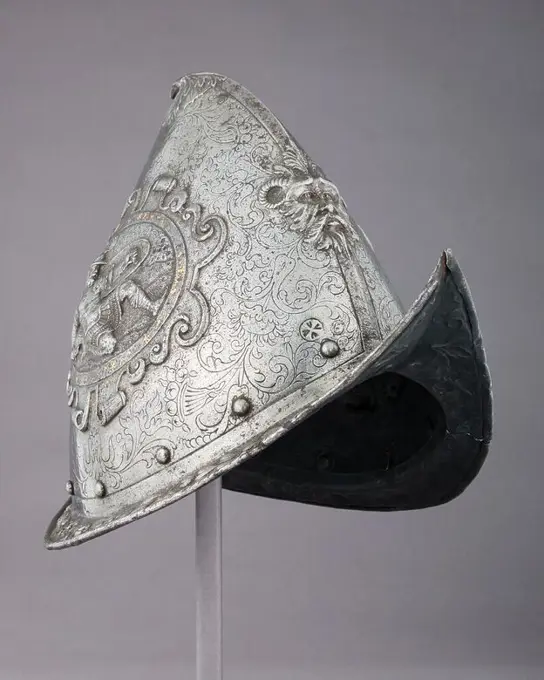
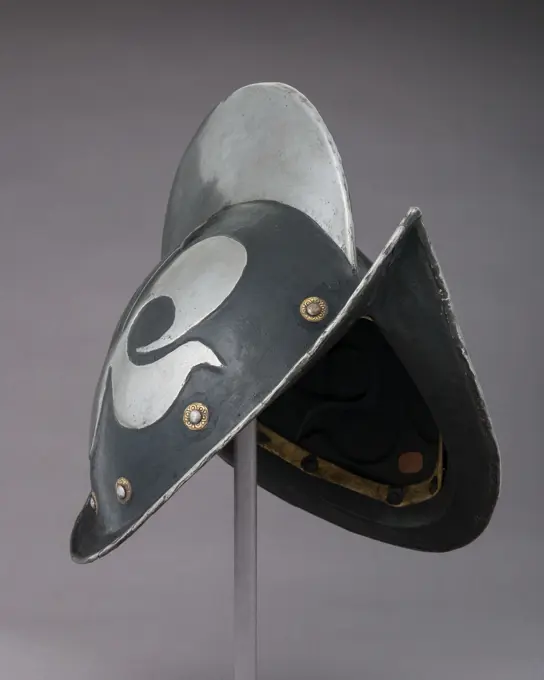
Morion for the Bodyguard of the Prince-Elector of Saxony ca. 1570 German, Nuremberg The electors of Saxony appear to have been the only German princes in the sixteenth century to outfit their bodyguards with matching equipment. The guards' helmets are etched and gilt on one side with the coat of arms of the dukedom of Saxony and on the other side with the crossed swords that signify the duke's office as archmarshal of the Holy Roman Empire. Originally, the gilt decoration was contrasted with black painted surfaces (some now polished bright). The black and gold derived from the Saxon coat of arms and were also the colors of the guards' uniforms. This helmet, and another like it in the Museum's collection (acc. no. 1989.288) were made by armorers in Nuremberg. The similar helmet (acc. no. 1989.288) is dated 1568. The only dated morion of this series known, it establishes that the creation and use of the guard morions in the reign of August I (1553-86) occurred twenty to thirty years earl
6145-30174924
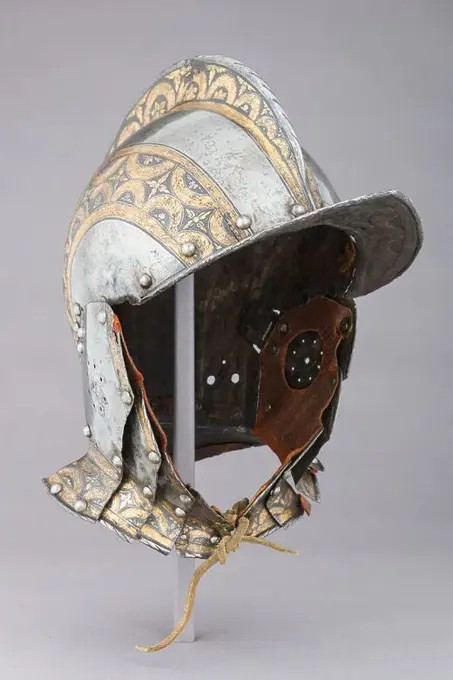
Closed Burgonet Made 1600-1620 Nuremberg. Steel and leather .
1899-18611588
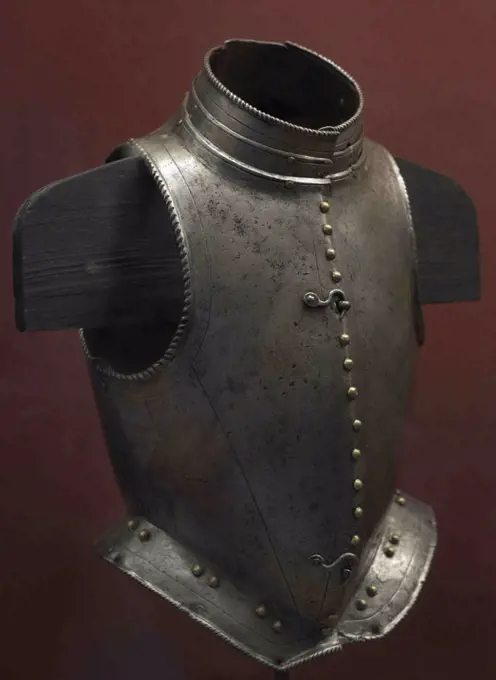
Waistcoat cuirass, ca.1580. North Italian. Armoury. Grandmaster Palace. Valletta, Malta.
6188-63816796
Armour Armour of the medieval knight. Metal protection of the soldier against the weapon of the opponent Copyright: xZoonar.com/ValeryxxSibrikovx 2494304
6145-29062513
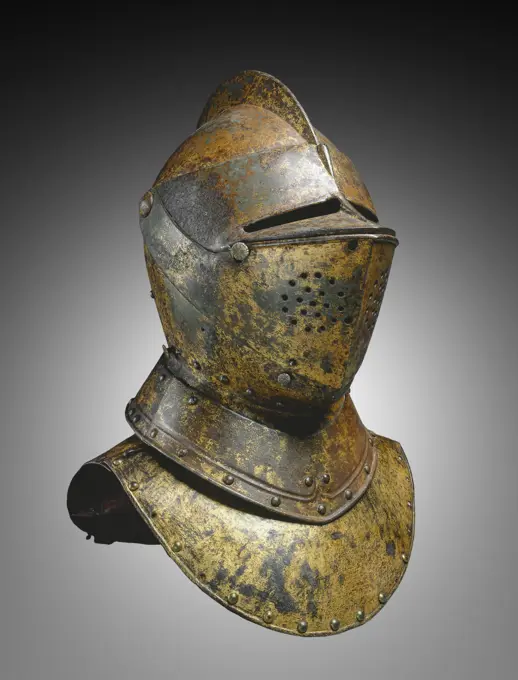
Gorget (from a funerary achievement), c.1590-1625. Netherlands(), late 16th-early 17th Century. Gilded steel (invaded with rust); red velvet lining, plume holder; overall: 32.4 x 24.8 x 19.1 cm (12 3/4 x 9 3/4 x 7 1/2 in.). This helmet was originally intended for field use. Later, it seems to have served a funerary purpose, probably as an ornament (known as a funerary achievement) suspended over the church tomb of an unidentified knight. As such, it would have been a rich and imposing symbol of the dead knight's social rank and personal authority.
1525-20404738
Iron helmet of the medieval knight. Very heavy headdress
6145-30150993
Bevor ( Falling Buff ) and Gorget Plate 1485-1495 Europe. Steel .
6145-29165878
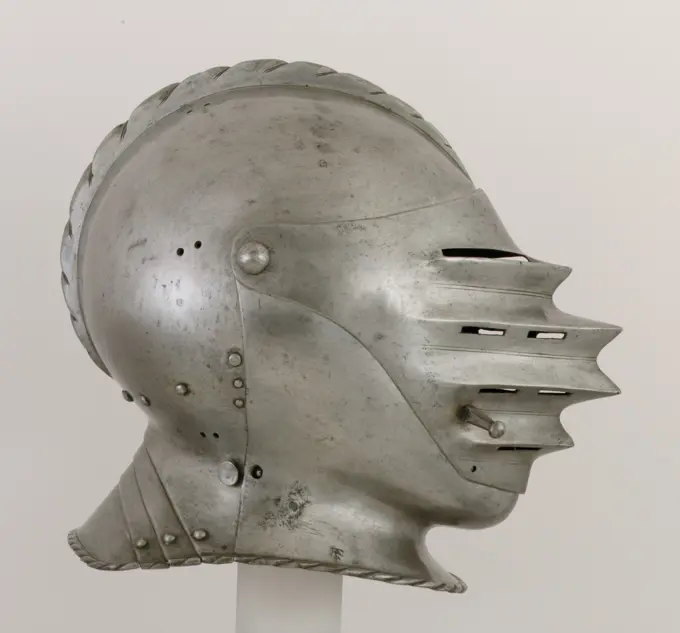
Close-Helmet for the Field ca. 1520 German, Nuremberg Although fluted surfaces generally characterize German armor of about 1510-30, smooth-surfaced harnesses were equally commonplace and were more quickly and cheaply manufactured. This helmet is fitted with a new form of visor, one of elaborately forged "bellows" shape, whereas the articulated neck lames look back to earlier sallet construction (see acc. no. 29.158.34). The right side of the bevor is struck on the outside with the arms of Nuremberg; inside the same plate is a stamped N within a pearled circle, another Nuremberg control mark. Along with Augsburg, the city of Nuremberg was a major center for armor manufacture in Germany and was especially renowned for its fluted harnesses.. Close-Helmet for the Field. German, Nuremberg. ca. 1520. Steel, leather. Nuremberg. Helmets
1525-20404731
Iron helmet of the medieval knight. Very heavy headdress.
6145-29165899
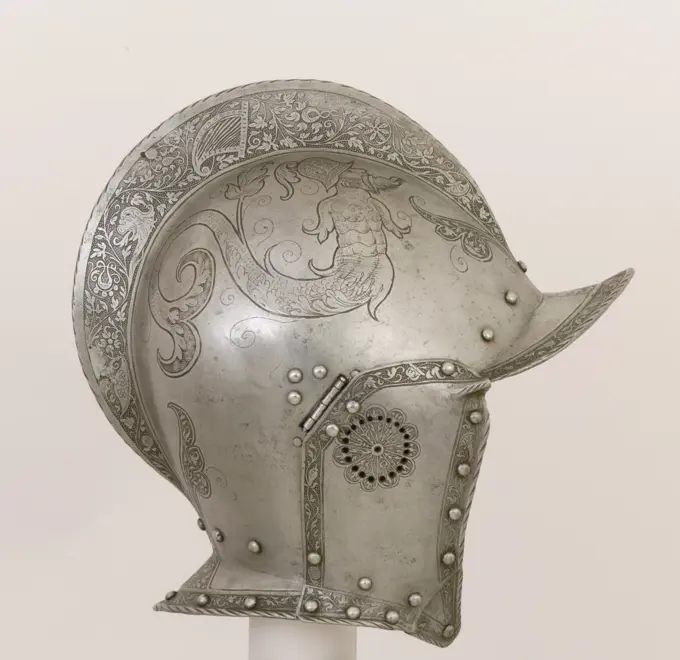
Burgonet ca. 1540-50 Attributed to Kunz Lochner German The peak is struck with the city arms of Nuremberg. The finely etched decoration, particularly the merman on either side of the bowl, recalls signed works by Kunz Lochner, Nuremberg's leading armorer in the mid-sixteenth century.. Burgonet. German, Nuremberg. ca. 1540-50. Steel, leather, textile. Nuremberg. Helmets
1746-21125650
Example of Field Armour Garniture & Half Shaffron featuring a specially hardened steel. Dated 16th Century
6145-29089508
Visored Sallet, c. 1490-1500. Germany, 16th century. Steel; overall: 21 x 25 x 42 cm (8 1/4 x 9 13/16 x 16 9/16 in.). The sallet is a partly open-face helmet common in Europe during the 1400s, used in both equestrian and infantry versions. Sallets with movable visors, like this example, are considered to be more technically and visually interesting; beautifully streamlined, it assumes a highly sculptural teardrop shape. Originally it would have been part of a complete suit of armor. The sallet became the quintessential helmet form of the late Middle Ages and is frequently represented in medieval miniatures and woodcuts.
4409-53362926
Helmet. Bronze. Late 6th century BC. From Tomb I of the necropolis of Trebenista, North Macedonia. National Archaeological Museum. Sofia. Bulgaria.
6145-30189151
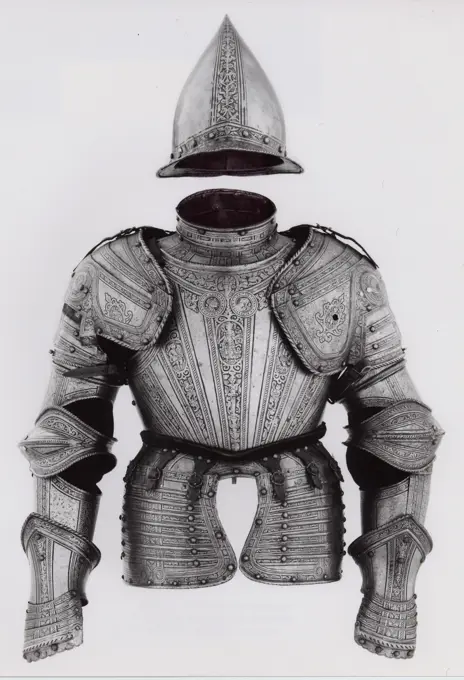
Half Armor 1540-1580 Italy. Steel .
6145-30189468
Breastplate Made 1570-1580 Milan. Steel and leather .
4409-17402380
Burgonet. Culture: German. Dimensions: H. 13 1/2 in. (34.3 cm); W. 8 in. (20.3 cm); D. 12 1/2 in. (31.8 cm); Wt. 3 lb. 9.6 oz. (1632.9 g). Date: ca. 1550. Museum: Metropolitan Museum of Art, New York, USA.
6145-29790138
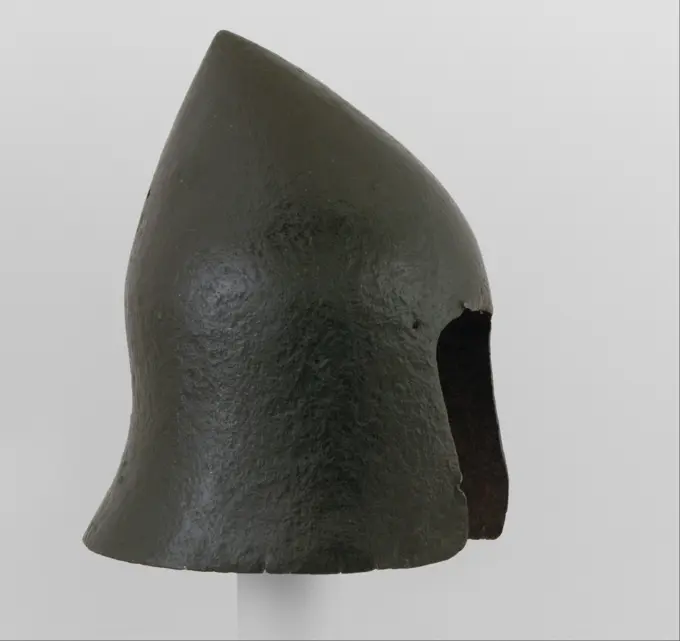
Great Sallet late 14th-mid-15th century Italian This helmet is part of a unique group of late medieval helmets and armor fragments that was discovered about 1840 in the ruins of a Venetian fortress at Chalcis, on the Greek island of Euboea. Founding curator of the Arms and Armor Department at the Metropolitan Museum Bashford Dean saw the Chalcis group in Athens in the 1890s and, recognizing its rarity and importance, eventually was able to acquire a substantial portion of it (a selection is on permanent display in the Museum, gallery 373). After Dean's death, this helmet was owned by Clarence H. Mackay, a major art collection, trustee of the Museum, and great admirer of Dean. It later belonged to Dean's successor, Stephen Grancsay, who subsequently donated it to the Museum.. Great Sallet 26447
6188-63816998
Rüstung Armour of the medieval knight. Metal protection of the soldier against the weapon of the opponent Copyright: xZoonar.com/ValeryxxSibrikovx 2643649
4409-53362463
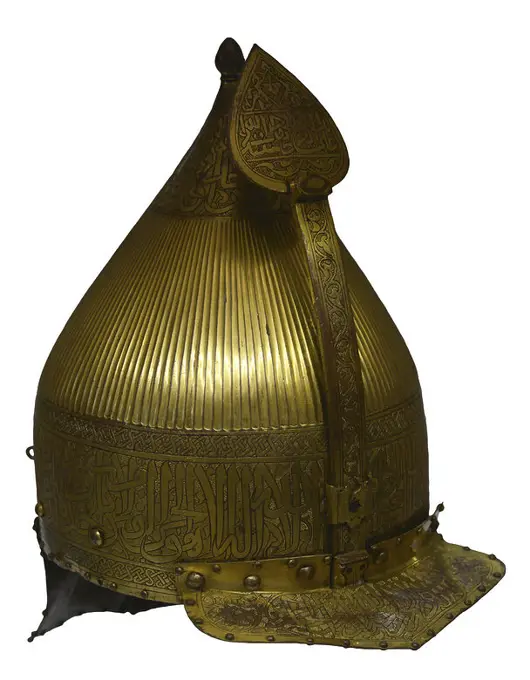
Turkish ceremonial helmet. Gilded bronze. Provenance unknown. 16th-17th centuries. National Archaeological Museum. Sofia. Bulgaria.
6145-29184987
Burgonet ca. 1540 German. Burgonet 27162
4409-17415358
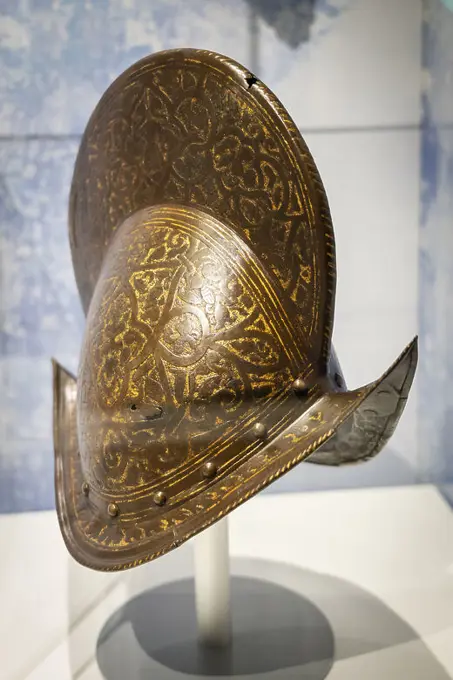
Morion-Cabasset. Culture: Italian. Dimensions: H. 10 1/2 in. (26.7 cm); W. 8 3/4 in. (22.2 cm); D. 14 1/4 in. (36.2 cm); Wt. 3 lb. (1361 g). Date: ca. 1575. Museum: Metropolitan Museum of Art, New York, USA.
4409-17326806
CASCO IBERO HALLADO EN LA NECROPOLIS ILERGETE DE LA PEDRERA (LERIDA). Location: ARCHAEOLOGICAL MUSEUM. Lerida. SPAIN.
4409-17383428
Morion for the Bodyguard of the Prince-Elector of Saxony. Armorer: Probably Martin Schneider the Younger (German, Nuremberg, active ca. 1610-20). Culture: German, Nuremberg. Dimensions: H. 11 9/16 in. (29.4 cm); W. 9 1/4 in. (23.5 cm); D. 13 3/4 in. (34.9 cm); Wt. 3 lb. 5 oz. (1503 g). Date: ca. 1570.The electors of Saxony appear to have been the only German princes in the sixteenth century to outfit their bodyguards with matching equipment. The guards' helmets are etched and gilt on one side with the coat of arms of the dukedom of Saxony and on the other side with the crossed swords that signify the duke's office as archmarshal of the Holy Roman Empire. Originally, the gilt decoration was contrasted with black painted surfaces (some now polished bright). The black and gold derived from the Saxon coat of arms and were also the colors of the guards' uniforms. This helmet and a similar one also in the Metropolitan Museum's collection (acc. no. 14.25.652) were made by armorers in Nurembe
6145-30185759
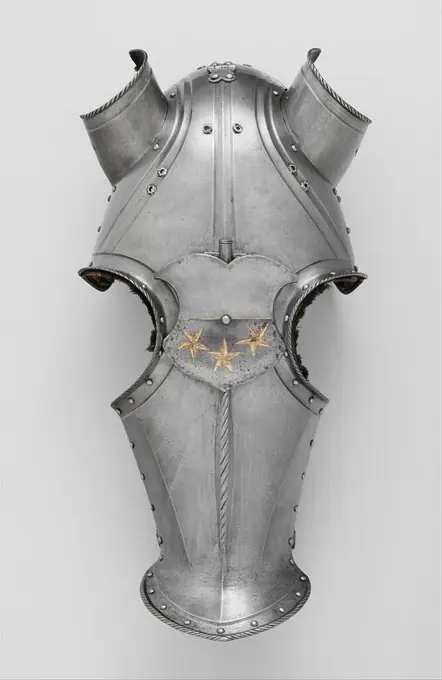
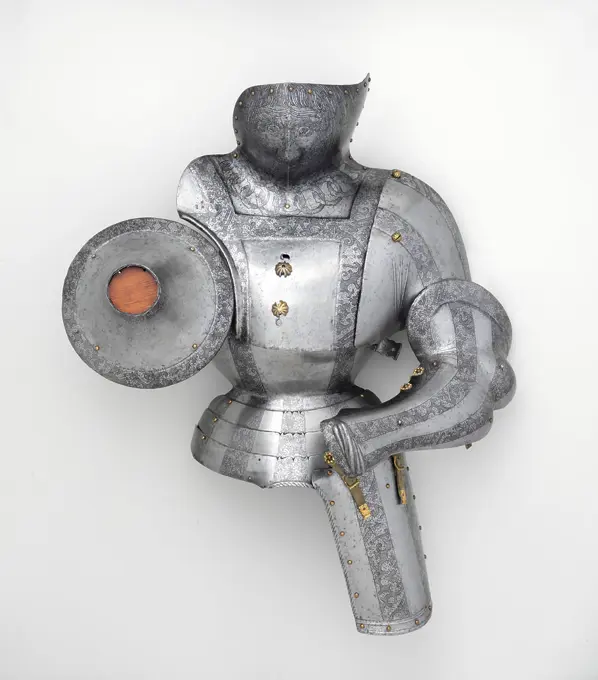
Garniture for Field and Foot Tourney at the Barriers Made 1560-1590 Milan. In the 16th century, Italian armorers produced spectacular armor garnitures for noblemen, professional officers, and bodyguards in the service of princely courts. An armor garniture consisted of many matching, interchangeable pieces that could be added or removed from basic field armor to make it suitable for different occasions. Like jousting armor, this armor for foot tourneys at the barriersóa sporting event in which knights on foot approached each other on opposite sides of a barrieróis quite specialized. It includes a close helmet that locked onto and rotated on the gorget (collar) and asymmetrical pauldrons (shoulder defenses) that provided maneuverability and protection from thrusting across the barrier. The blemish on the helmet of this armor, just above the eye slit, is the result of a glancing blow. This armor, embellished with gilded radiating bands contrasted with steel bands, as well as the Three-Qu
6145-29190702
Armet ca. 1510-15 possibly British or Flemish Developed in Italy as a close fitting and highly protective cavalry helmet, armets were also made in England and Flanders following Italian models.. Armet 22224
4409-17561427
Shaffron. Italian, Milan. Date: 1550-1600. Dimensions: H. 35.6 cm (14 in.). Steel with gilding. Origin: Italy. Museum: The Chicago Art Institute, Chicago, USA.
6145-29764357
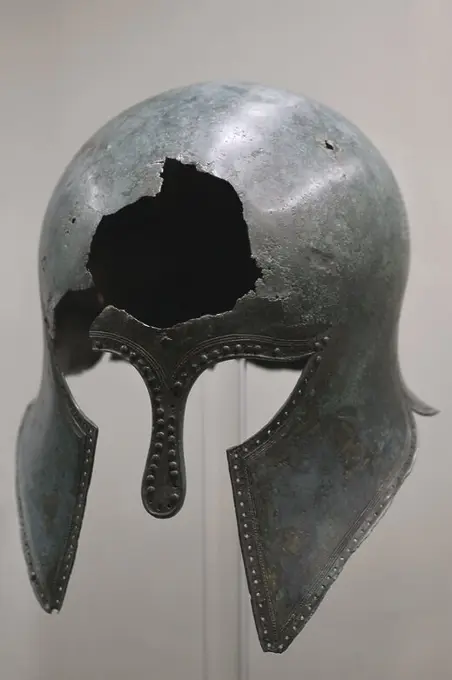
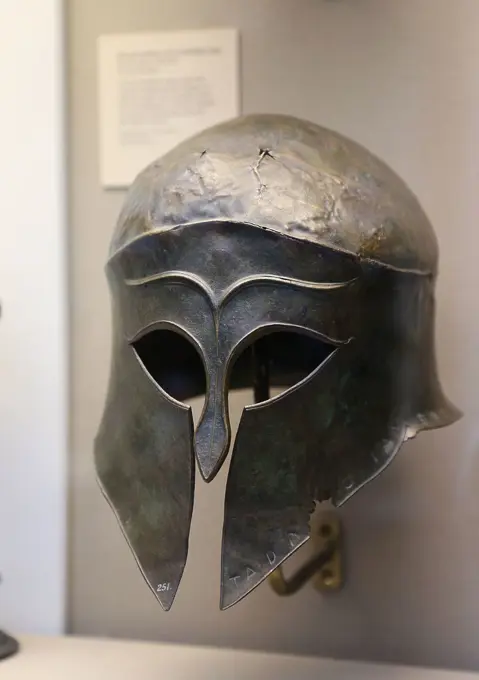
Bronze helmet of the Corinthian type 6th century B.C. Greek With incised eyebrows.. Bronze helmet of the Corinthian type 251033 Greek, Bronze helmet of the Corinthian type, 6th century B.C., Bronze, H.: 8 1/2 in. (21.6 cm). The Metropolitan Museum of Art, New York. Rogers Fund, 1921 (21.88.7)
4409-17410531
Reinforcing Pieces for the Tourney. Armorer: Kolman Helmschmid (German, Augsburg 1471-1532). Culture: German, Augsburg. Dimensions: as mounted, H. 37 in. (94 cm). Date: ca. 1510-15.In the late fifteenth century, specialized exchange and reinforcing pieces were devised that allowed a single field armor to be adapted for use in various forms of the tournament. The ensemble of pieces was known as a garniture. The armorers Lorenz Helmschmid (about 1445-1516) and his son Kolman, working for Emperor Maximilian I (1459-1519), were among the principal inventors of the garniture. Exhibited here are some of the earliest pieces stamped with the mark of Kolman, the most innovative armorer of his generation.These reinforces represent an early form of garniture for the tourney, a combat fought by groups of horseman armed with blunted lances and swords. The decoration imitates the elaborately brocaded textile that was fashionable in court costume. Museum: Metropolitan Museum of Art, New York, USA.
6145-29211431
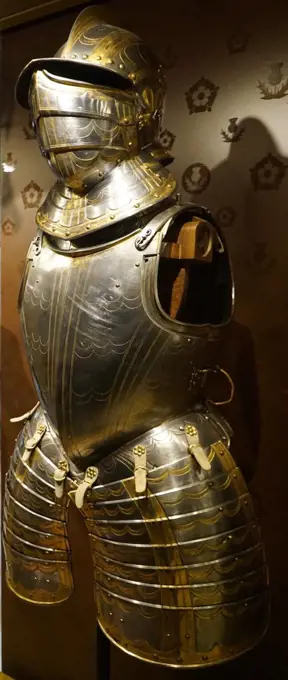
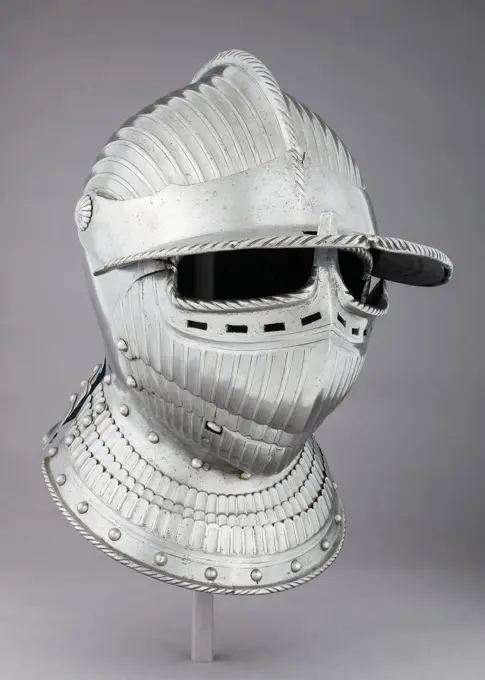
Armor ca. 1535 German, possibly Brunswick This is a fine late example of a fluted armor, made shortly before the style went out of fashion. It is distinguished for its unusually large proportions and impressive height. The bands of scales and the distinctive roping of the lower edge of the associated helmet (acc. no. 38.128.1) and the top edge of the breastplate are features frequently found on armors from northern Germany (possibly Brunswick), a region generally not known for producing fluted armors. The leg defenses are of the same period but originally did not belong with the rest of the armor.. Armor. German, possibly Brunswick. ca. 1535. Steel, leather. possibly Brunswick. Armor for Man
442-21984214
England, London, Tower of London, The White Tower, Display of Medieval Armour dated about 1570
1788-40955
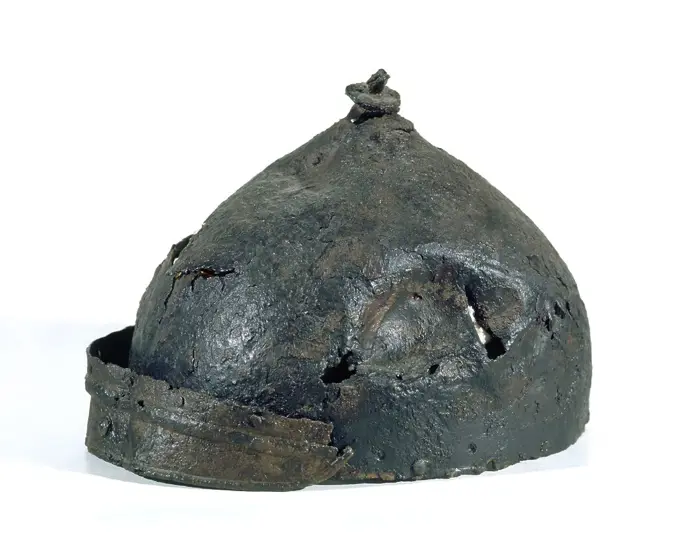
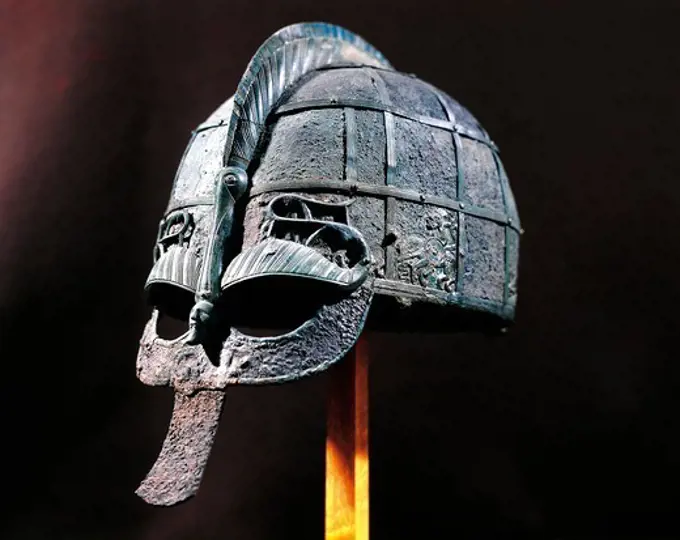
Iron helmet from grave 12 at Vendel, Sweden. Germanic Civilizations, 6th-9th Century
6145-52956975
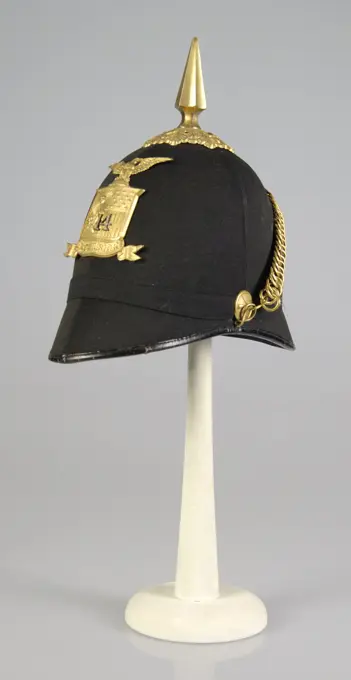
Military helmet Manufacturer J.H. McKenney & Company 1881-82
4409-17420552
Siege Helmet. Culture: probably French. Dimensions: H. 11 3/16 in. (28.4 cm); W. 9 in. (22.9 cm); D. 15 1/4 in. (38.7 cm); Wt. 11 lb. 5.6 oz. (5148.3 g). Date: late 17th century. Museum: Metropolitan Museum of Art, New York, USA.
6145-29185887
Morion-Cabasset 16th century Italian. Morion-Cabasset 34264
6145-30189300
Boy's Fingered Gauntlet for the Left Hand Made 1550-1590 Brunswick. Steel .
6145-29803400
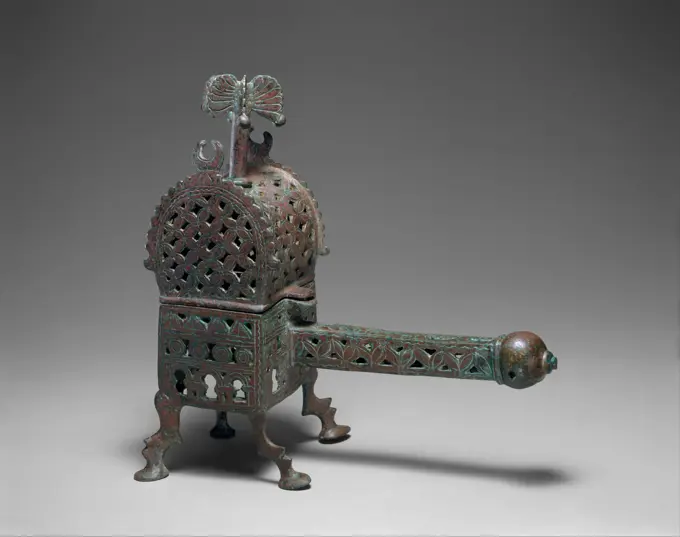
Incense Burner 11th century Long-handled, footed incense burners are known throughout the Islamic Near East, but the square body, high domed lid, and horseshoe arches on the low register of this example suggest Western, probably Spanish production. Incense played an important role in al-Andalus, as it did throughout the medieval world, and the international trade in aromatic substances was a lucrative one.. Incense Burner 451945
4443-21930776
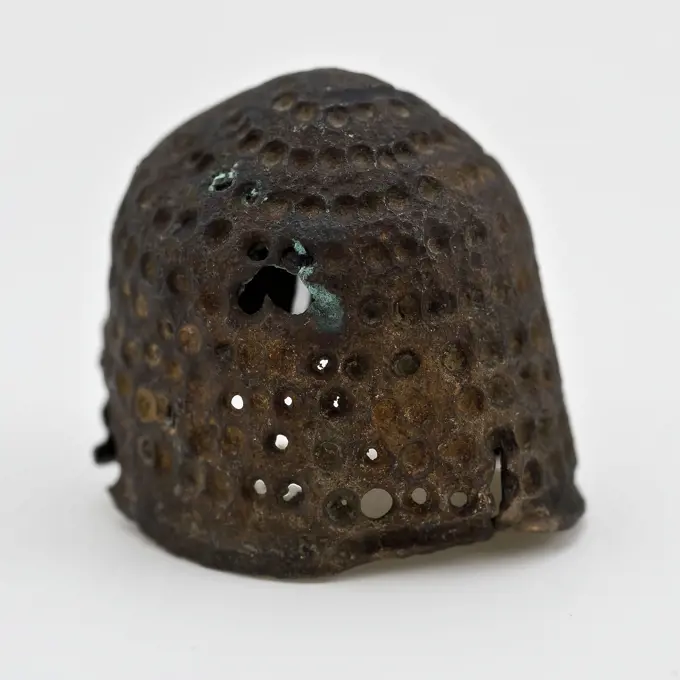
Copper molded thimble, thimble sewing kit soil find copper metal, cast Copper cast thimble spirally left twisted on the top with small blank round in the middle without groove in the shaft with groove on the edge archeology Rotterdam railway tunnel seamstress tailor sewing textile processing clothing needle and thread repair Soil discovery: railway tunnel Rotterdam.
4409-17426224
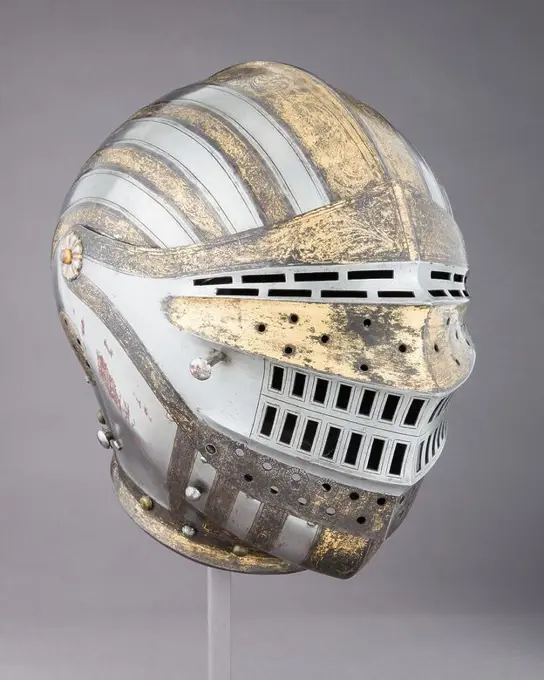
Close-Helmet in the style of the 16th century. Culture: France, Paris. Dimensions: H. 10 3/4 in. (27.3 cm); W. 9 1/2 in. (24.1 cm); D. 12 3/4 in. (32.4 cm); Wt. 4 lb. 10.2 oz. (2103.5 g). Date: ca. 1875. Museum: Metropolitan Museum of Art, New York, USA.
6145-29190885
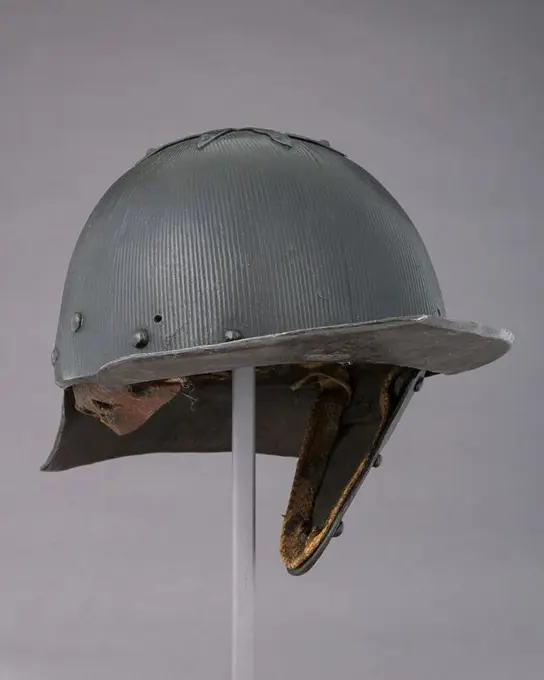
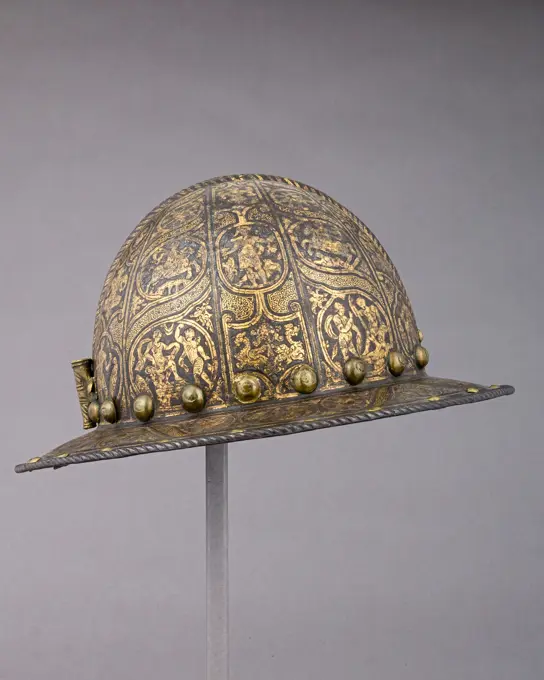
War Hat ca. 1590 Italian, Milan Plain undecorated war hats were a common form of head defense during the Middle Ages and into the early sixteenth century. This helmet is extremely unusual for its late date and its rich decoration indicating that it was made for a nobleman of high rank.. War Hat 24853
4409-53364047
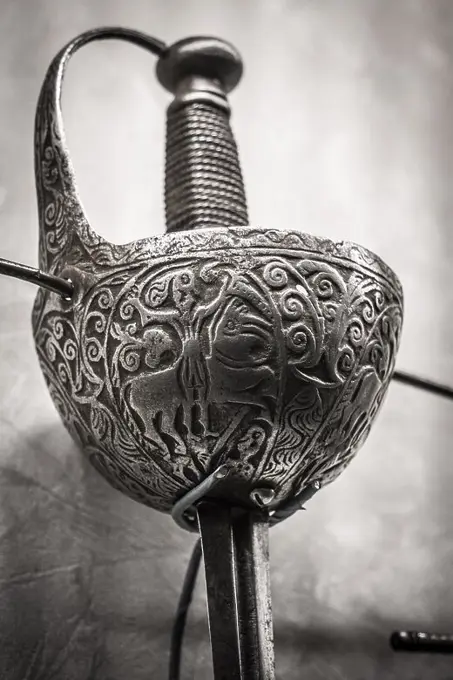
sword with cup handle, Solingen-Germany, 17th century, Álava Armory Museum, Vitoria, Basque Country, Spain.
6145-29188084
Morion late 16th century German. Morion 27095
4409-63010455
Corinthian helmet. Bronze, Greek. 5th century BC. From the trove of spoils a Olimpia. c. 460. BC.British Museum. London. United Kingdom.
6145-29166989
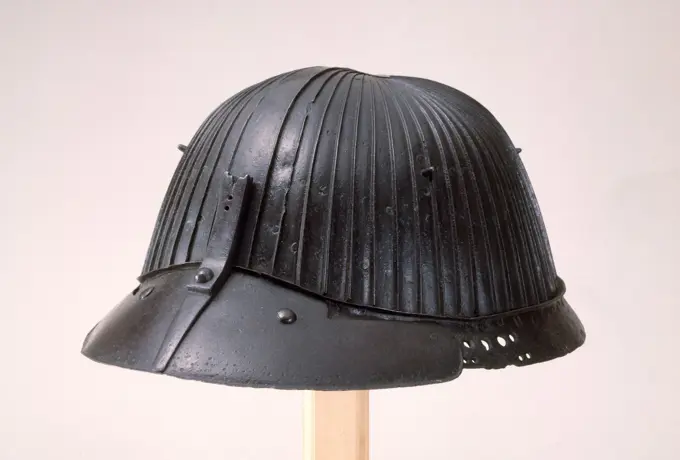
Helmet (Hachi) dated 1472 Japanese. Helmet (Hachi). Japanese. dated 1472. Iron, copper, lacquer. Helmets
6145-29819290
Haniwa Horse's Head 6th century Japan. Haniwa Horse's Head. Japan. 6th century. Earthenware. Kofun period (ca. 300-710). Sculpture
4409-7085
CASCO GRIEGO- VISTA DE FRENTE-HALLADO EN EL RIO GUADALETE-HACIA S VII A.C.- ARTE GRIEGO-FENICIO. Location: ARCHAEOLOGICAL MUSEUM. JEREZ DE LA FRONTERA. Cadiz. SPANIEN.
1746-19984791
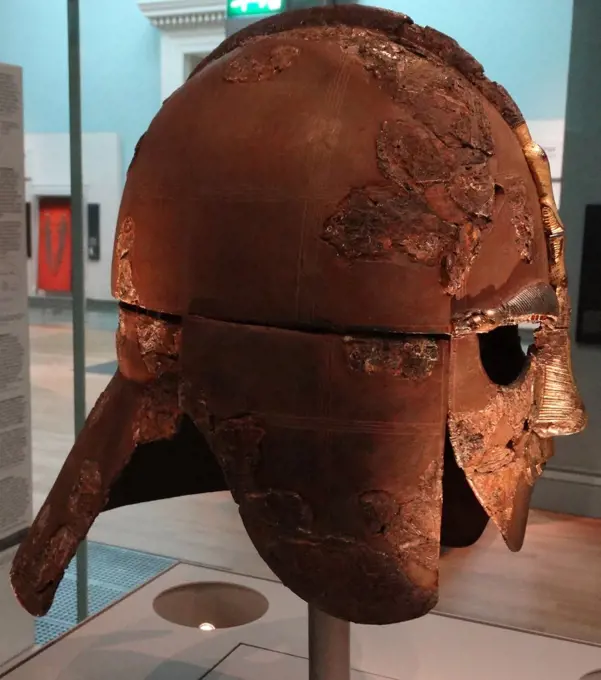
Sutton Hoo helmet Anglo-Saxon, early 7th century AD. Only four complete helmets are known from Anglo-Saxon England: at Sutton Hoo, Benty Grange, Wollaston and York.
1746-21129846
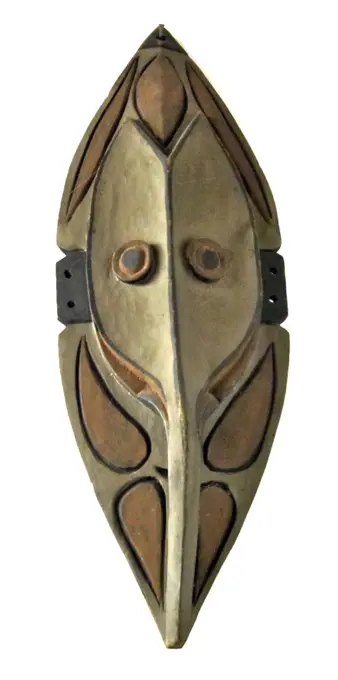
Tribal art: Spirit mask from Tambanum village, Sepik River region, Papua New Guinea.
1606-197361
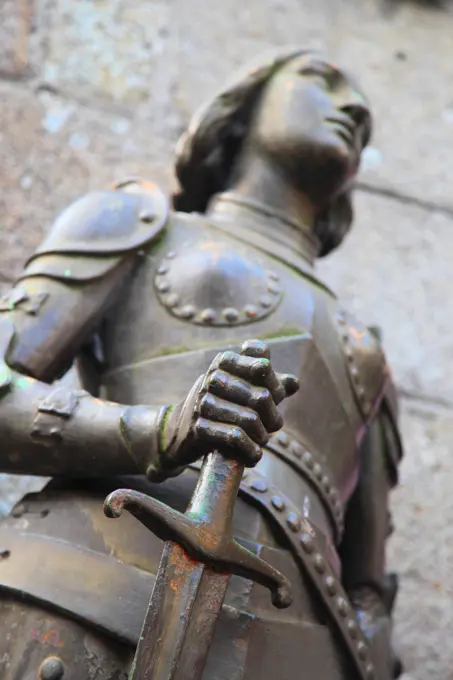
France, Normandy, Mont Saint-Michel.
4409-28751869
Grave morion, XVI century, italy, castle of Foix, 10th century, Foix, department of Ariège, Occitanie, Pyrenean mountain range, France.
6188-63815217
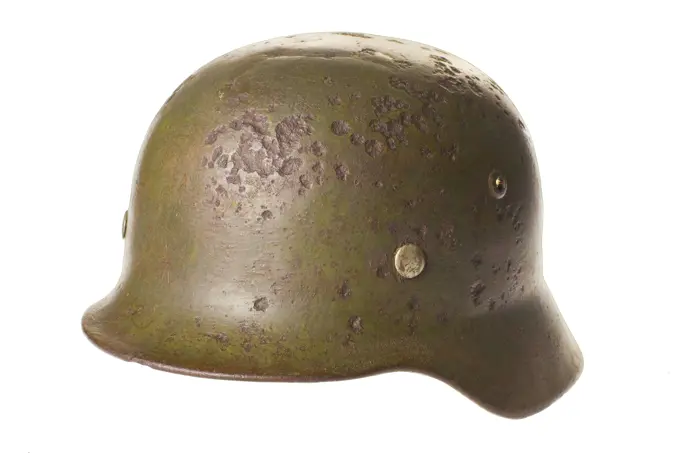
Old German fashists helmet of times of the second Great world war on a white background with clipping path. Old German fashists helmet of times of the second Great world war on a white background with clipping path. ,model released, Symbolfoto ,property released Copyright: xZoonar.com/SergeyxxKozoderovx 2141109 ,model released, Symbolfoto ,property released
1606-175325
England,London,Tower of London,Suit of Armour display in The White Tower
4409-17546711
Cartridge Box. German, Saxony. Date: 1570-1600. Dimensions: H. 14.3 cm (5 5/8 in.). Wood, buckram, leather, and iron. Origin: Saxony. Museum: The Chicago Art Institute, Chicago, USA.
6145-45482274
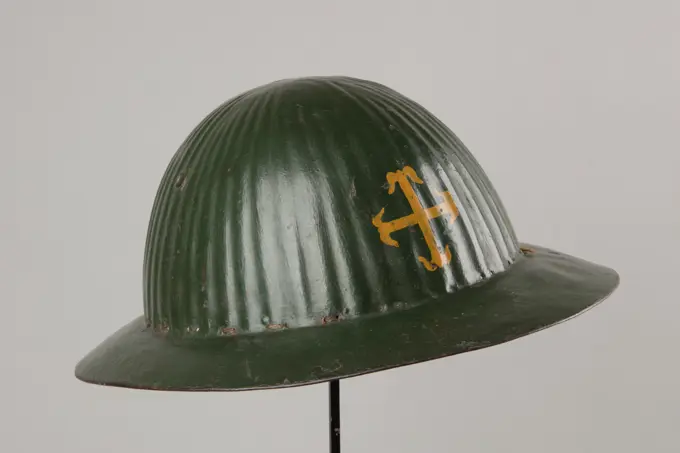
Portuguese helmet pattern 1916 unknown label
6145-45333248
Summer hat unknown
1660R-40241
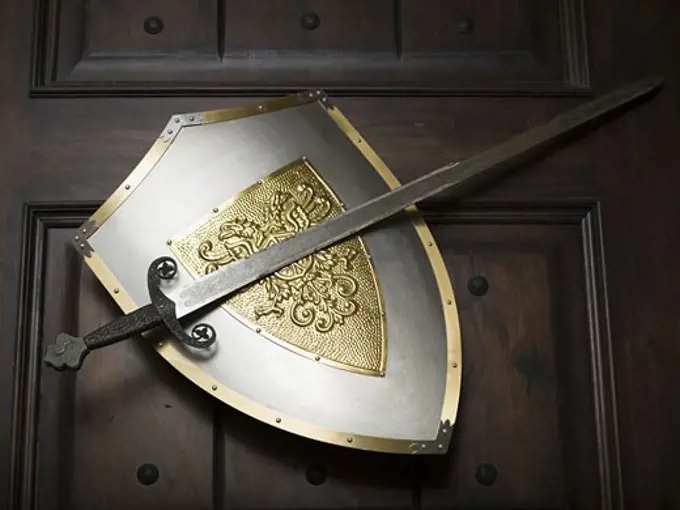
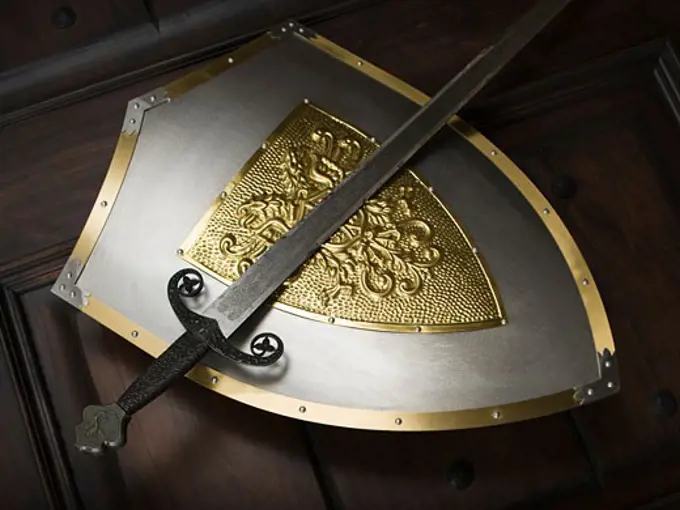
medieval sword and shield
1525-26828881
battle helmet medieval stock vector illustration isolated on white background
6188-56025337
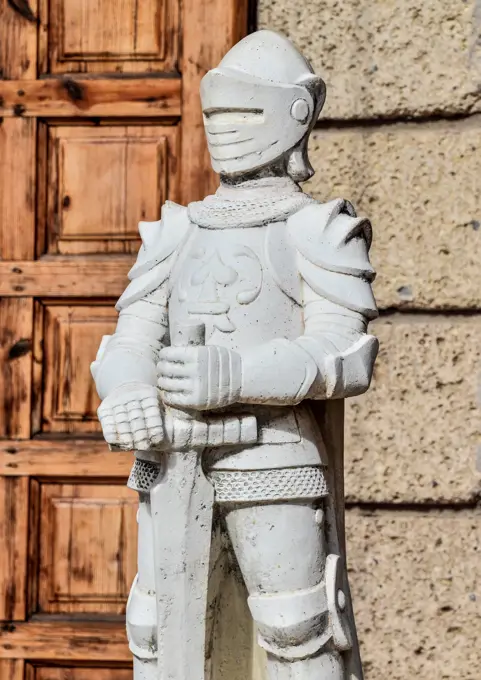
Statue of a Medieval Knight Rock Statue of a Medieval Armor Soldier Copyright: xZoonar.com/albertoxgiacomazzix 20681411
1660R-40240
medieval sword and shield
4409-17520059
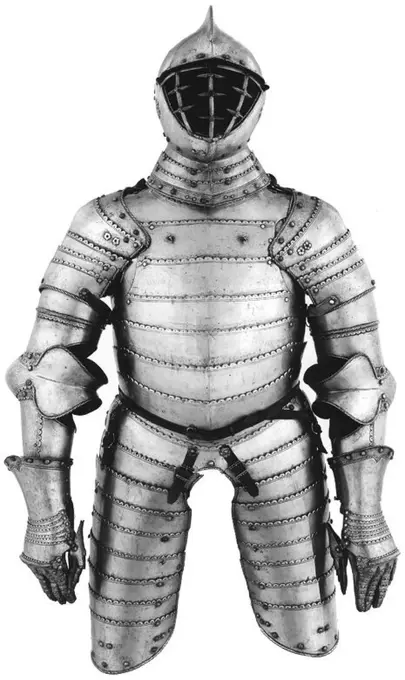
Three-Quarter Field Armor of Anime Construction. Michel Witz the Younger (Austrian, active 1525--60); Innsbruck. Date: 1550-1570. Dimensions: H. 124.46 cm (49 in.). Steel and leather. Origin: Innsbruck. Museum: The Chicago Art Institute, Chicago, USA. Author: the Younger Workshop of Michel Witz.
4409-17438007
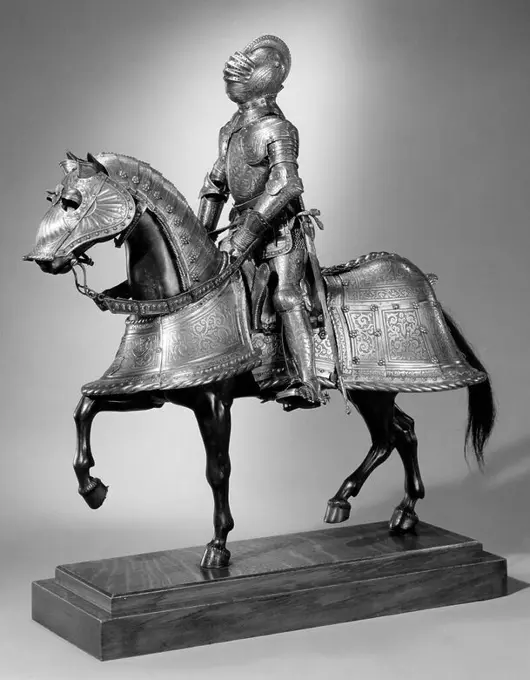
Miniature Italian-Style Armor for Man and Horse. Armorer: Possibly made by Granger LeBlanc (French, active ca. 1840-70). Culture: French. Dimensions: H. as mounted 17 7/8 in. (45.4 cm). Date: ca. 1860. Museum: Metropolitan Museum of Art, New York, USA.
1848-54762458
Human Skull Made in Metal on Black Background in Switzerland
1525-21125160
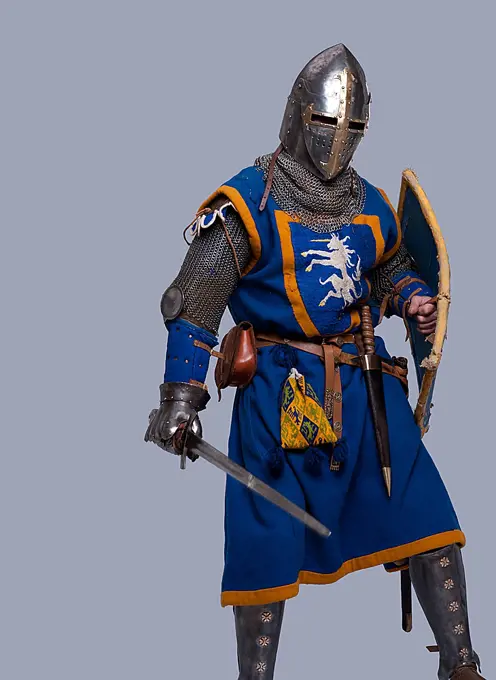
Medieval knight on grey background.
4409-65868261
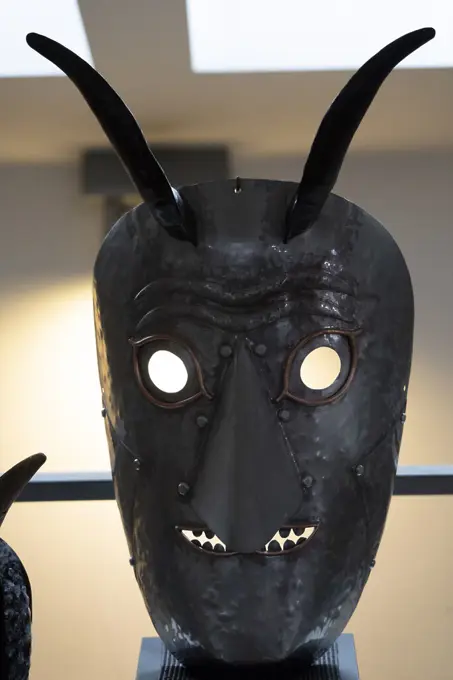
Typical artisan mask for traditional masquerade celebration, Iberian Museum of Masks and Costume, Braganza (Bragança),Trás-os-Montes and Alto Douro, Portugal.
1525-22743184
human skull isolated on white, Halloween concept
6188-55462170
Samurai Costume Mask Isolated Photo Samurai head mask costume photo isolated on white background Copyright: xZoonar.com/DanielxFerreira-LeitesxCiccarinox 14761060
4316-1984
Suit of Armor, Wrapped in Christmas Lights
7148-70507999
Cramer Fire Memorial, North Fork, Idaho
6188-65124854
Military gaz mask Military gaz mask isolated over white background Copyright: xZoonar.com/IvonnexWierinkx 17827292
1525-20566149
Knights armor fairy tale cartoon icons set isolated vector illustration. Knights Cartoon Set
1525-20360174
Human and monkey skull opposite of each other with open mouths isolated on white background
6188-55647356
Russian hat from Filz Russian hat from Filz
6188-65124786
Military gaz masks Military gaz masks isolated over white background Copyright: xZoonar.com/IvonnexWierinkx 17616110
1848-49168909
Old style wooden arrows in the case of an archer
4292-16234083
Europe, Italy, Veneto, Venice, Venice carnival, Carnival masks
PREVIOUS
of 1
NEXT
2401 S. Ervay, Suite 206
Dallas, Texas 75215
United States
Browse
CategoriesGalleriesFree Research
For Creators
License Your ContentSuperStock For StudentsFrame of Mind BlogContributor PortalNew Image SpotlightLicense AI Imagery
Resources
About UsLicensingTerms & ConditionsAPI AccessPrivacyPricing
Contact
+1 866 236 0087help@superstock.com Contact form
©2026 SuperStock. All Rights Reserved. -B
This site is protected by reCAPTCHA and Google Privacy Policy and Terms of Service apply.