Fine ArtVintageFootageSubscriptionBoardsFree ResearchPricing
  • Fine Art
  • Vintage
  • Footage
  • Subscription
  • Boards
  • Free Research
  • Pricing

Moon Exploration Missions

Images of astronauts on the moon during historic Apollo missions, showcasing lunar rovers, experiments, and iconic moments, in monochrome and color.

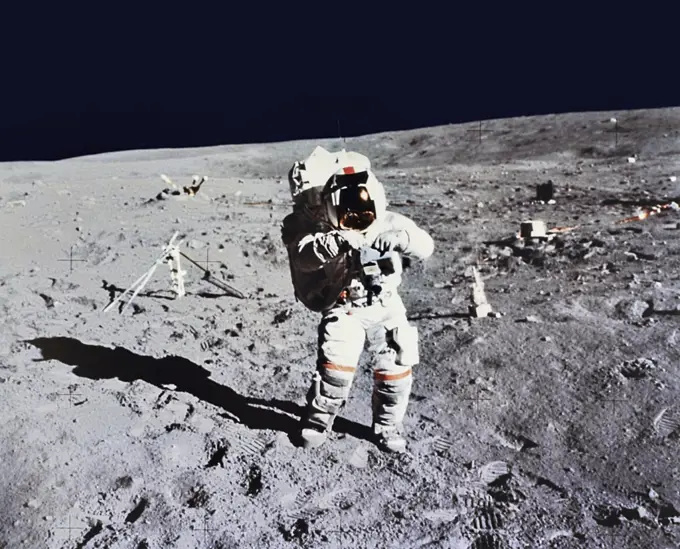
Astronaut walking on the moon, John W. Young, Apollo 16 Mission, April 1972
153 assets in this story
6145-45234424
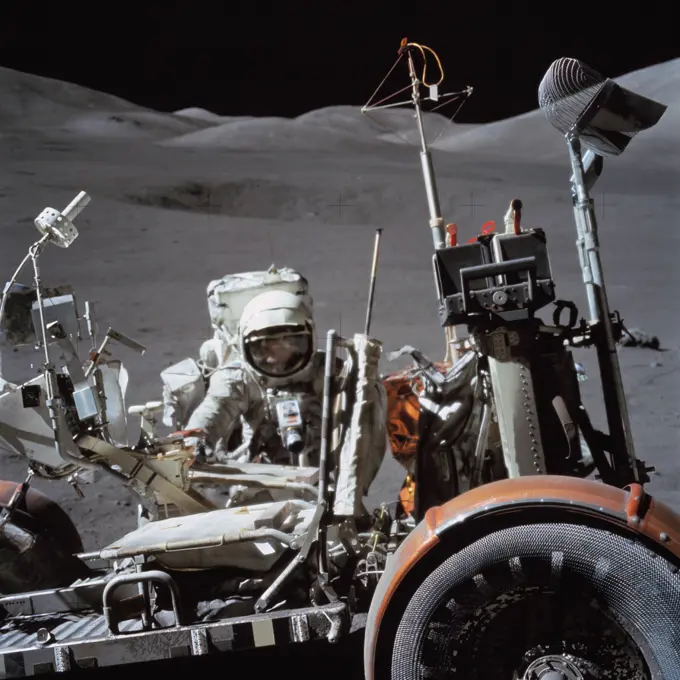
AS17-147-22523 (11 Dec. 1972) --- Astronaut Eugene A. Cernan is seen test driving the stripped down Lunar Rover Vehicle (LRV) prior to loading the LRV up. Equipment later loaded onto the LRV included the ground controlled television assembly, the lunar communications relay unit, the hi-gain antenna, the low-gain antenna, aft tool pallet, and lunar tools and scientific gear.
227-222
Astronaut walking on the moon, John W. Young, Apollo 16 Mission, April 1972
1899-60885
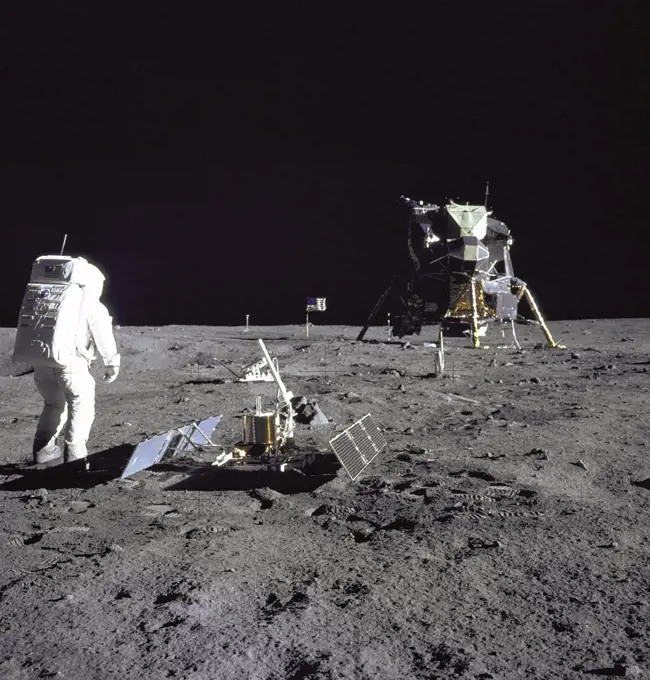
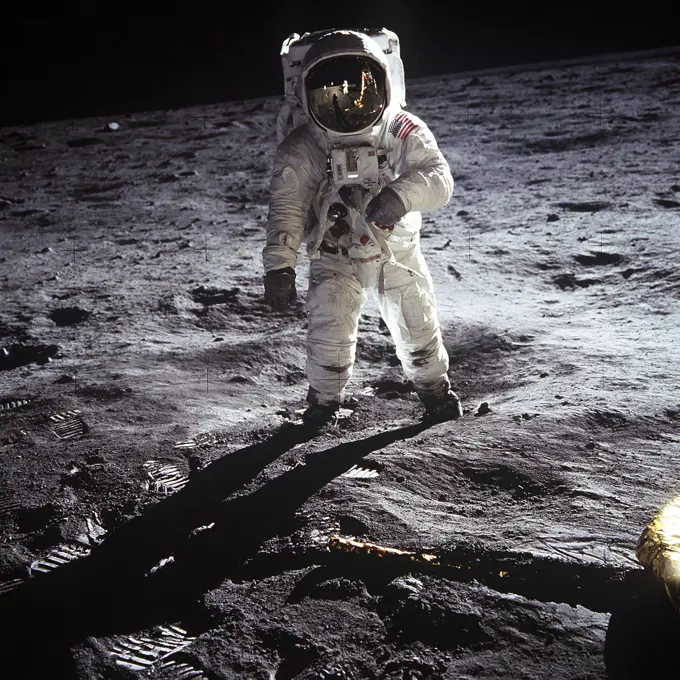
Astronaut Edwin E.""Buzz"" Aldrin Jr., Lunar Module Pilot, Is Photographed During The Apollo 11 Extravehicular Activity On The Moon. He Has Just Deployed The Early Apollo Scientific Experiments Package (Easep). In The Foreground Is The Passive Seismic Exper
1899-19513112
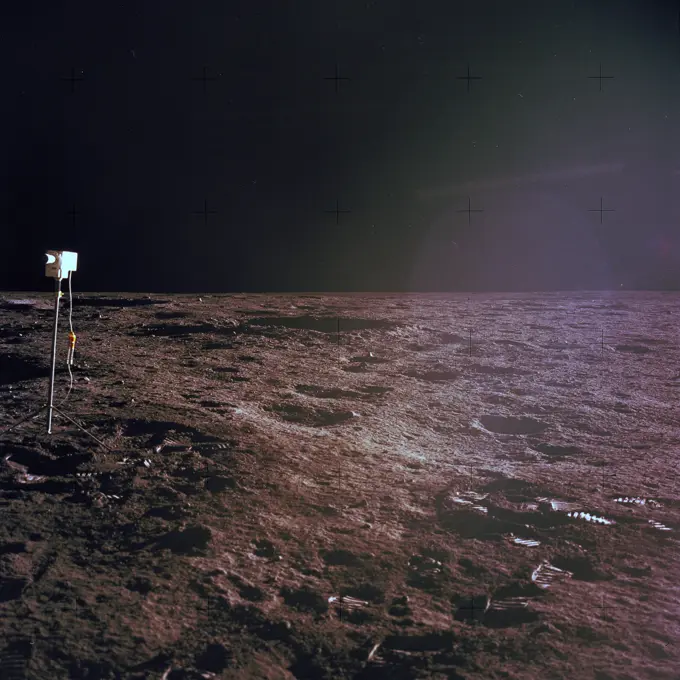
(21 April 1972) --- Astronaut John W. Young, commander of the Apollo 16 lunar landing mission, stands at the Apollo Lunar Surface Experiments Package (ALSEP) deployment site during the first Apollo 16 extravehicular activity (EVA) at the Descartes landing site.
4220-21916952
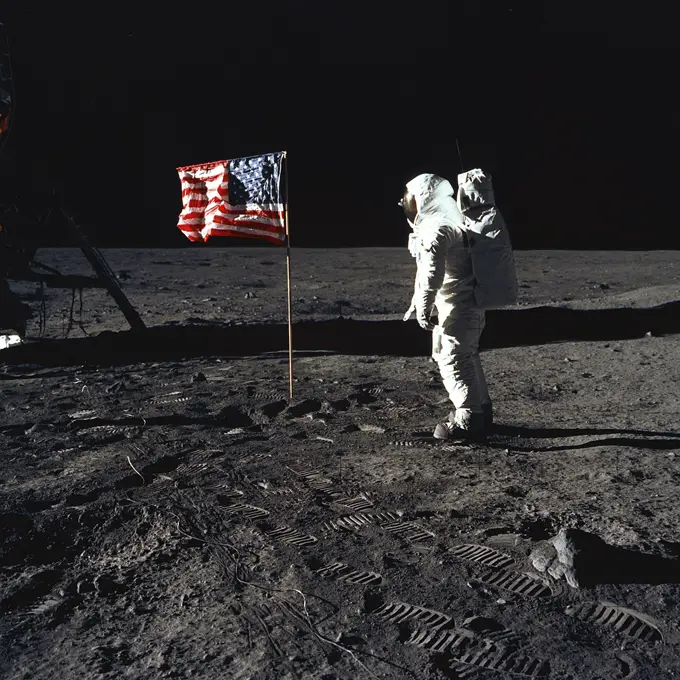
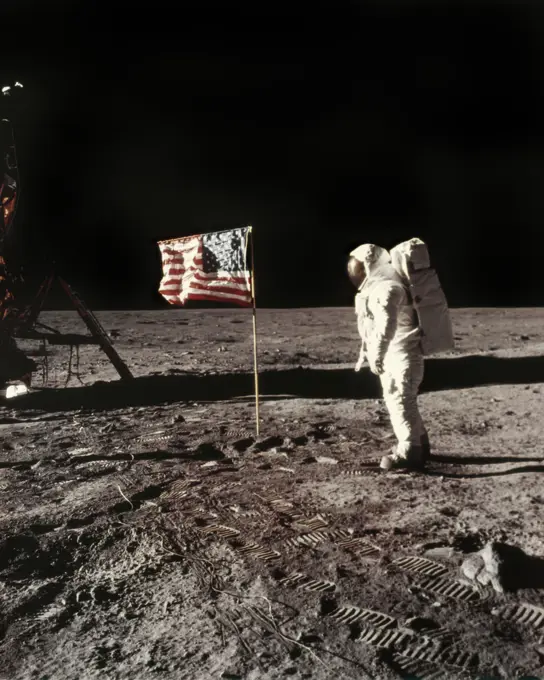
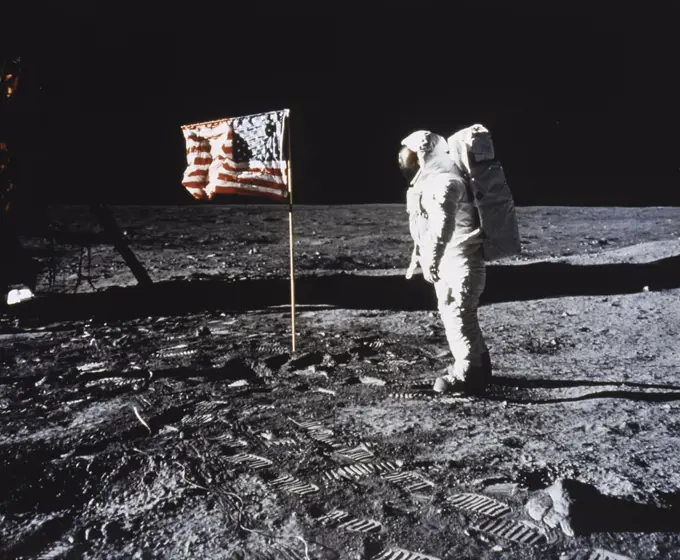
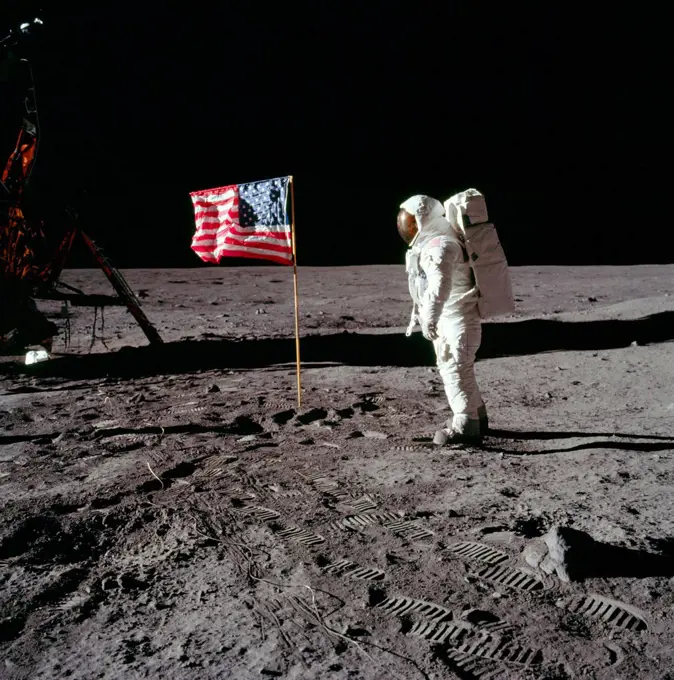
Astronaut Buzz Aldrin, lunar  module pilot of the first  moon landing mission, poses  by the United States flag.  Photograph taken by Neil  Armstrong     Date: 20 July 1969
1838-51330370
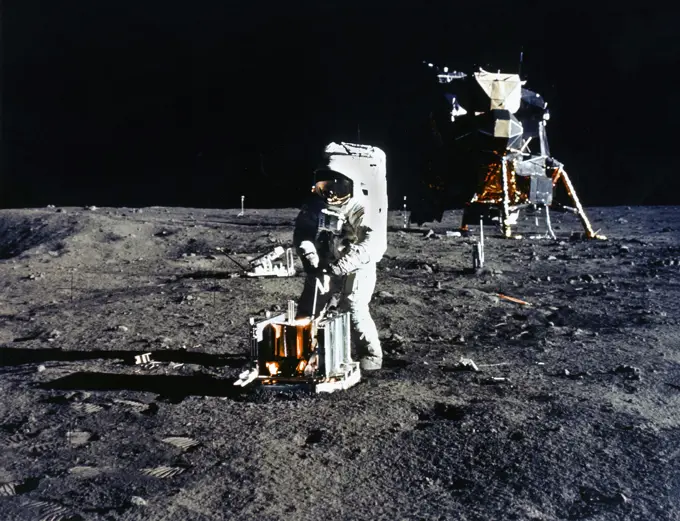
American Astronaut Edwin E. Aldrin deploying passive seismic experiments package (PSEP) during Apollo 11 extravehicular activity, photo by Neil Armstrong, Johnson Space Center, NASA July 20, 1969
1746-28998724
Edgar Dean 'Ed' Mitchell (September 17, 1930  February 4, 2016); NASA astronaut. As the Lunar Module Pilot of Apollo 14, he spent nine hours working on the lunar surface in the Fra Mauro Highlands region, making him the sixth person to walk on the Moon.
4093-20523
Astronaut Alan L. Bean  Lunar Module pilot  pauses near a tool carrier during extravehicular activity (EVA) on the Moon's surface. Commander Charles Conrad Jr.  who took the black and white photo  is reflected in Bean's helmet visor.
4220-21916954
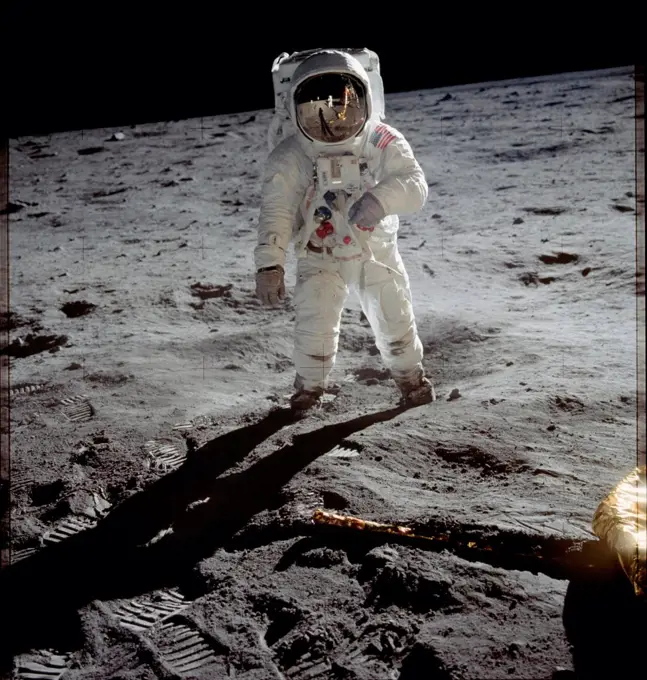
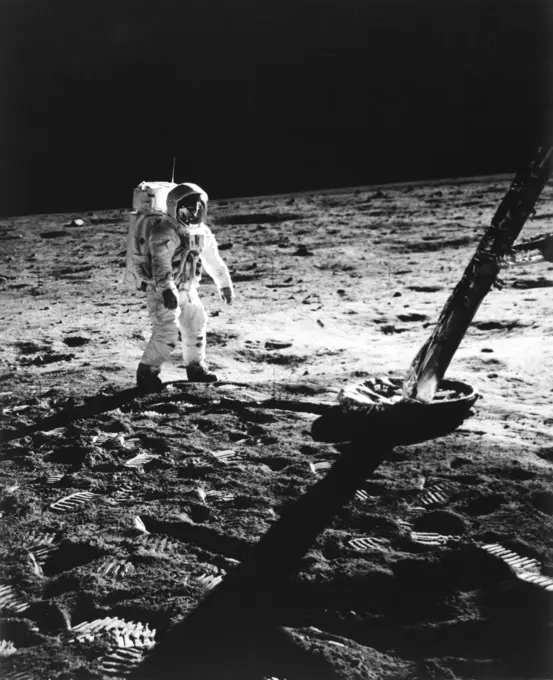
Astronaut Buzz Aldrin - lunar module pilot - walks on the  surface of the moon near the  Lunar Module 'Eagle'.  Photograph taken by Commander  Neil A. Armstrong     Date: 20 July 1969
6145-44618641
The second manned lunar landing mission, Apollo 12, launched from launch pad 39-A at Kennedy Space Center in Florida on November 14, 1969 via a Saturn V launch vehicle. The Saturn V vehicle was developed by the Marshall Space Flight Center (MSFC) under the direction of Dr. Wernher von Braun. Aboard Apollo 12 was a crew of three astronauts Alan L. Bean, pilot of the Lunar Module (LM), Intrepid; Richard Gordon, pilot of the Command Module (CM), Yankee Clipper; and Spacecraft Commander Charles Conrad. The LM, Intrepid, landed astronauts Conrad and Bean on the lunar surface in whats known as the Ocean of Storms while astronaut Richard Gordon piloted the CM, Yankee Clipper, in a parking orbit around the Moon. Lunar soil activities included the deployment of the Apollo Lunar Surface Experiments Package (ALSEP), finding the unmanned Surveyor 3 that landed on the Moon on April 19, 1967, and collecting 75 pounds (34 kilograms) of rock samples. This is the twenty-fourth of 25 images captured by
4186-21545945
APOLLO 11 PLANTING UNITED STATES FLAG ON MOON
4048-8570
Apollo 11 Astronaut Edwin Aldrin on the Moon. Neil Armstrong and the Lunar Module are reflected in Aldrin's gold visor. July 20, 1969.
1899-19513121
(23 April 1972) --- Astronaut John W. Young, Apollo 16 commander, with a sample bag in his left hand, moves toward the bottom part of the gnomon (center) while collecting samples at the North Ray Crater geological site.
6145-44618889
The second manned lunar landing mission, Apollo 12 launched from launch pad 39-A at Kennedy Space Center in Florida on November 14, 1969 via a Saturn V launch vehicle. The Saturn V vehicle was developed by the Marshall Space Flight Center (MSFC) under the direction of Dr. Wernher von Braun. Aboard Apollo 12 was a crew of three astronauts Alan L. Bean, pilot of the Lunar Module (LM), Intrepid; Richard Gordon, pilot of the Command Module (CM), Yankee Clipper; and Spacecraft Commander Charles Conrad. The LM, Intrepid, landed astronauts Conrad and Bean on the lunar surface in whats known as the Ocean of Storms while astronaut Richard Gordon piloted the CM, Yankee Clipper, in a parking orbit around the Moon. Lunar soil activities included the deployment of the Apollo Lunar Surface Experiments Package (ALSEP), finding the unmanned Surveyor 3 that landed on the Moon on April 19, 1967, and collecting 75 pounds (34 kilograms) of rock samples. This is the tenth of 25 images captured by the crew
6145-45234415
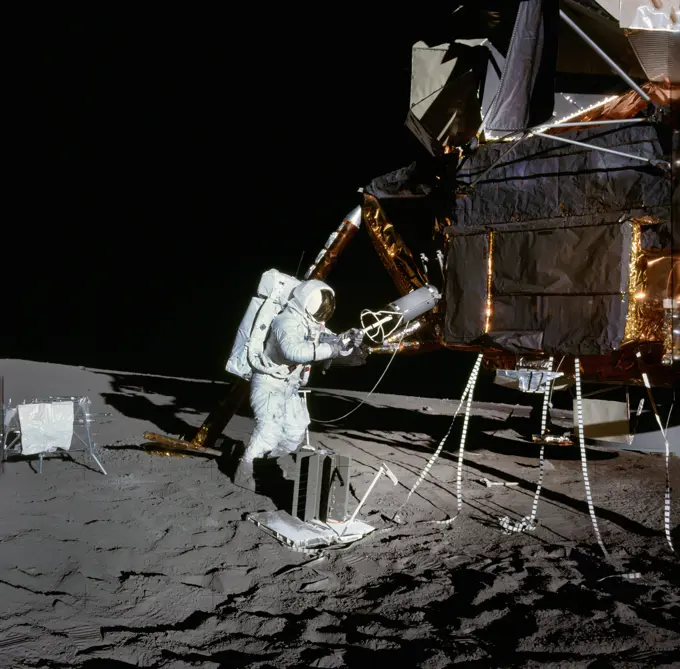
AS12-46-6749 (19 Nov. 1969) --- Astronaut Alan L. Bean, lunar module pilot for the Apollo 12 lunar landing mission, works at the Modular Equipment Stowage Assembly (MESA) on the Apollo 12 Lunar Module (LM) during the mission's first extravehicular activity, (EVA) on Nov. 19, 1969. Astronaut Charles Conrad Jr., commander, and Bean descended in the Apollo 12 LM to explore the moon while astronaut Richard F. Gordon Jr., command module pilot, remained with the Command and Service Modules (CSM) in lunar orbit.
6145-45240263
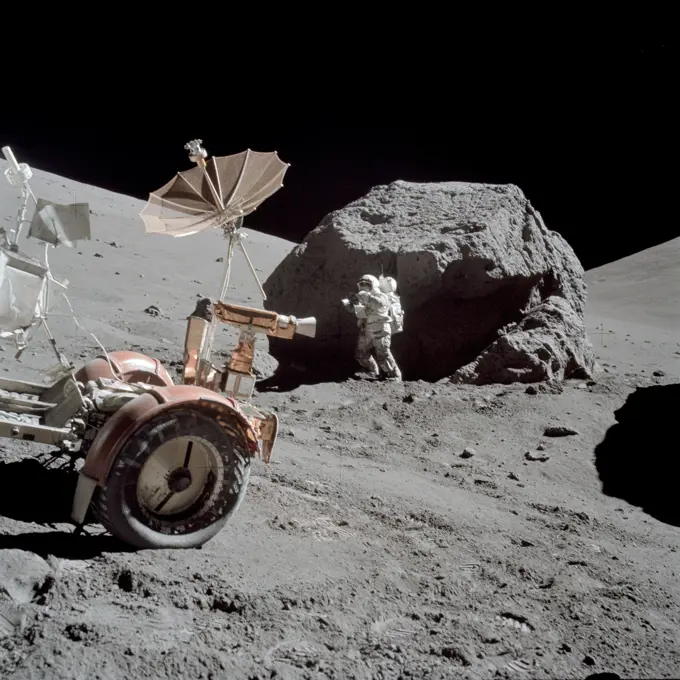
AS17-146-22294 (13 Dec. 1972) --- Scientist-astronaut Harrison H. Schmitt is photographed working beside a huge boulder at Station 6 (base of North Massif) during the third Apollo 17 extravehicular activity (EVA) at the Taurus-Littrow landing site. The front portion of the Lunar Roving Vehicle (LRV) is visible on the left. This picture was taken by astronaut Eugene A. Cernan, Apollo 17 commander. Schmitt is the lunar module pilot. While astronauts Cernan and Schmitt descended in the Lunar Module (LM) Challenger to explore the moon, astronaut Ronald E. Evans, command module pilot, remained with the Apollo 17 Command and Service Modules (CSM) in lunar orbit.
4093-20543
Astronaut John W. Young  Apollo 16 mission commander  drives the Rover  Lunar Roving Vehicle (LRV) to its final parking place near the end of the third extravehicular activity (EVA-3) at the Descartes landing site.
6145-44618414
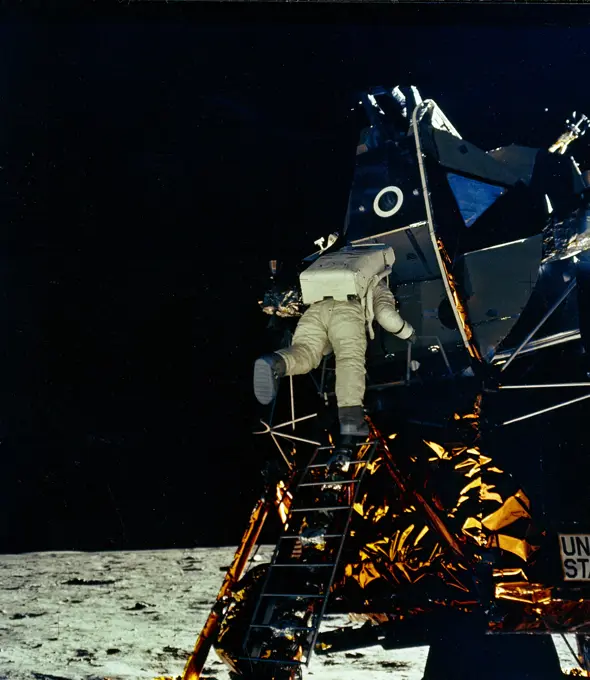
Carrying astronauts Neil A. Armstrong and Edwin E. Aldrin, Jr., the Lunar Module (LM) Eagle” was the first crewed vehicle to land on the Moon. The LM landed on the moon’s surface on July 20, 1969 in the region known as Mare Tranquilitatis (the Sea of Tranquility). Shown here is Aldrin Jr. making his exit from the LM to the lunar surface. Armstrong, who was already on the surface, took this photograph. The Apollo 11 mission launched from the Kennedy Space Center, Florida via a Saturn V launch vehicle on July 16, 1969 and safely returned to Earth on July 24, 1969. The Saturn V vehicle was developed by the Marshall Space Flight Center (MSFC) under the direction of Dr. Wernher von Braun. The 3-man crew aboard the flight consisted of astronauts Neil A. Armstrong, commander; Michael Collins, Command Module (CM) pilot; and Edwin E. Aldrin Jr., Lunar Module pilot. Armstrong was the first human to ever stand on the lunar surface. As he stepped off the LM, Armstrong proclaimed, That’s one smal
1899-19513114
(11 Dec. 1972) --- Scientist-astronaut Harrison H. Schmitt collects lunar rake samples at Station 1 during the first Apollo 17 extravehicular activity (EVA) at the Taurus-Littrow landing site.
4093-20518
Astronaut Eugene A. Cernan  Apollo 17 mission commander  makes a short checkout of the Lunar Roving Vehicle during the early part of the first Apollo 17 extravehicular activity (EVA-1) at the Taurus-Littrow landing site.
6145-45297429
AS17-140-21497 (13 Dec. 1972) --- Scientist-astronaut Harrison H. Schmitt is photographed standing next to a huge, split lunar boulder during the third Apollo 17 extravehicular activity (EVA) at the Taurus-Littrow landing site. Schmitt is the Apollo 17 lunar module pilot. This picture was taken by astronaut Eugene A. Cernan, commander. While Cernan and Schmitt descended in the Lunar Module (LM) Challenger to explore the Taurus-Littrow region of the moon, astronaut Ronald E. Evans, command module pilot, remained with the Apollo 17 Command and Service Modules (CSM) America in lunar orbit.
6145-45233156
AS16-108-17622 (22 April 1972) --- Astronaut John W. Young, commander of the Apollo 16 lunar landing mission, reaches for tools in the Apollo Lunar Hand Tool Carrier at the aft end of the Lunar Roving Vehicle (LRV) during the second Apollo 16 extravehicular activity (EVA) at the Descartes landing site. This photograph was taken by astronaut Charles M. Duke Jr., lunar module pilot. This view is looking south from the base of Stone Mountain. While astronauts Young and Duke descended in the Lunar Module (LM) Orion to explore the Descartes highlands region of the moon, astronaut Thomas K. Mattingly II, command module pilot, remained with the Command and Service Modules (CSM) Casper in lunar orbit.
1899-19513201
(13 Dec. 1972) --- Scientist-astronaut Harrison H. Schmitt is photographed standing next to a huge, split boulder during the third Apollo 17 extravehicular activity (EVA) at the Taurus-Littrow landing site on the moon.
1570-V111111203
4186-603
1960S Astronaut Buzz Aldrin In Space Suit Walking On The Moon Near The Apollo 11 Lunar Module
4093-20545
An extraordinary lunar panorama at Station 4 (Shorty Crater) showing Geologist-Astronaut Harrison H. Schmitt working at the Lunar Roving Vehicle (LRV) during the second Apollo 17 extravehicular activity (EVA-2) at the Taurus-Littrow landing site.
4239-57495573
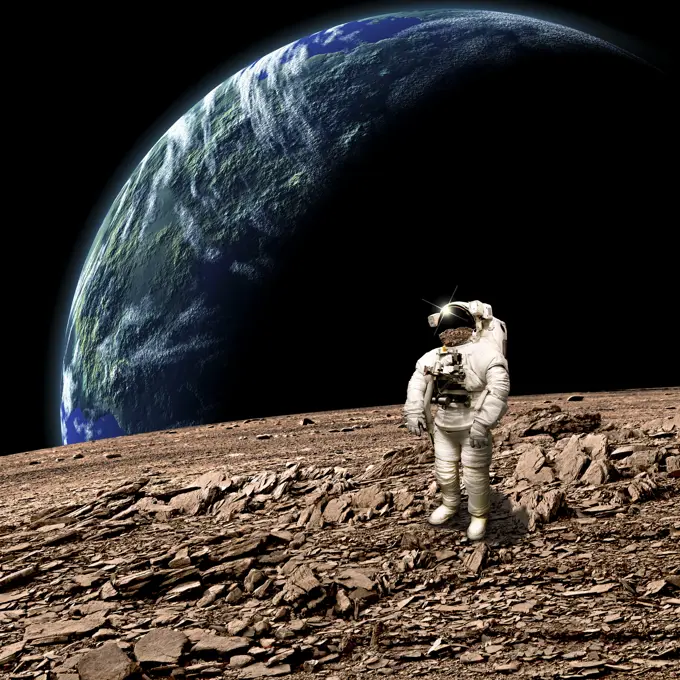
An astronaut on a barren planet with Earth-like planet in background.
1899-19513116
(20 July 1969) --- Astronaut Edwin E. Aldrin Jr., lunar module pilot, prepares to deploy the Early Apollo Scientific Experiments Package (EASEP) during the Apollo 11 lunar surface extravehicular activity (EVA).
6145-44618891
The second manned lunar landing mission, Apollo 12, launched from launch pad 39-A at Kennedy Space Center in Florida on November 14, 1969 via a Saturn V launch vehicle. The Saturn V vehicle was developed by the Marshall Space Flight Center (MSFC) under the direction of Dr. Wernher von Braun. Aboard Apollo 12 was a crew of three astronauts Alan L. Bean, pilot of the Lunar Module (LM), Intrepid; Richard Gordon, pilot of the Command Module (CM), Yankee Clipper; and Spacecraft Commander Charles Conrad. The LM, Intrepid, landed astronauts Conrad and Bean on the lunar surface in whats known as the Ocean of Storms while astronaut Richard Gordon piloted the CM, Yankee Clipper, in a parking orbit around the Moon. Lunar soil activities included the deployment of the Apollo Lunar Surface Experiments Package (ALSEP), finding the unmanned Surveyor 3 that landed on the Moon on April 19, 1967, and collecting 75 pounds (34 kilograms) of rock samples. This is the eighth of 25 images captured by the cr
6145-45237749
AS15-85-11437 (31 July 1971) --- Astronaut David R. Scott, commander, with tongs and gnomon in hand, studies a boulder on the slope of Hadley Delta during the Apollo 15 lunar landing mission's first extravehicular activity (EVA). The Lunar Roving Vehicle (LRV), Rover , is in the right foreground. The view is looking slightly south of west. Bennett Hill is at extreme right. Astronaut James B. Irwin, lunar module pilot, took this photograph. While astronauts Scott and Irwin descended together in the Lunar Module (LM) Falcon to explore the Hadley-Apennine area of the moon, astronaut Alfred M. Worden, command module pilot, remained with the Command and Service Modules (CSM) in lunar orbit.
1899-19513154
This is an Apollo 17 Astronaut standing upon the lunar surface with the United States flag in the background.
1838-51330394
American astronaut Alan L. Bean using fuel transfer tool to remove fuel element from fuel cask mounted on lunar module during Apollo 12 extravehicular activity, photograph taken by astronaut Charles Conrad Jr., NASA , November 19, 1969
6145-45235179
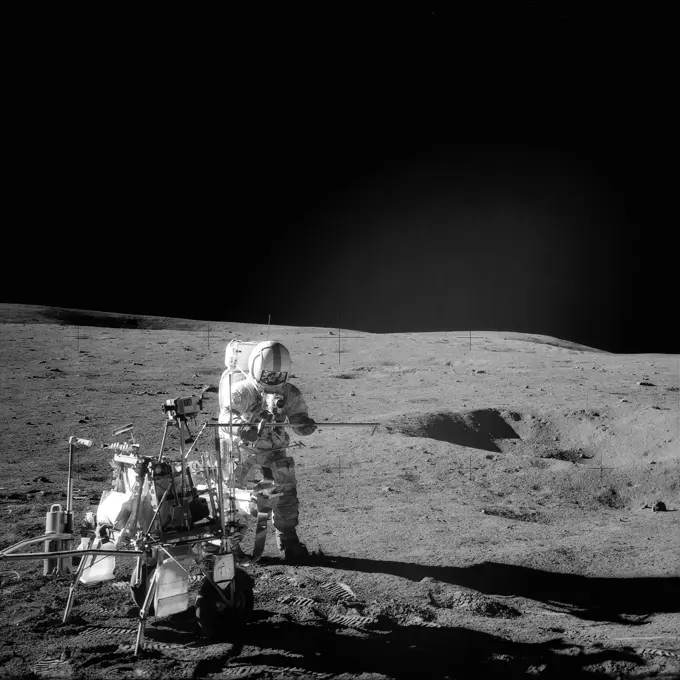
AS14-68-9405 (6 Feb. 1971) --- Astronaut Alan B. Shepard Jr., Apollo 14 commander, assembles a double core tube as he stands beside the rickshaw-type portable workbench or modularized equipment transporter (MET) unique to this mission. The photograph was taken by astronaut Edgar D. Mitchell, lunar module pilot, standing some 170 meters northeast of the Lunar Module (LM), during the mission's second extravehicular activity (EVA) on Feb. 6, 1971. While astronauts Shepard and Mitchell descended in the LM Antares to explore the Fra Mauro region of the moon, astronaut Stuart A. Roosa, command module pilot, remained with the Command and Service Modules (CSM) Kitty Hawk in lunar orbit.
4389-247
Apollo 11 - Past, Present and Humanity's Future in One Glimpse
227-523
Astronaut Edwin Eugene Aldrin Jr. Apollo 11 Mission, July 20, 1969
4389-253
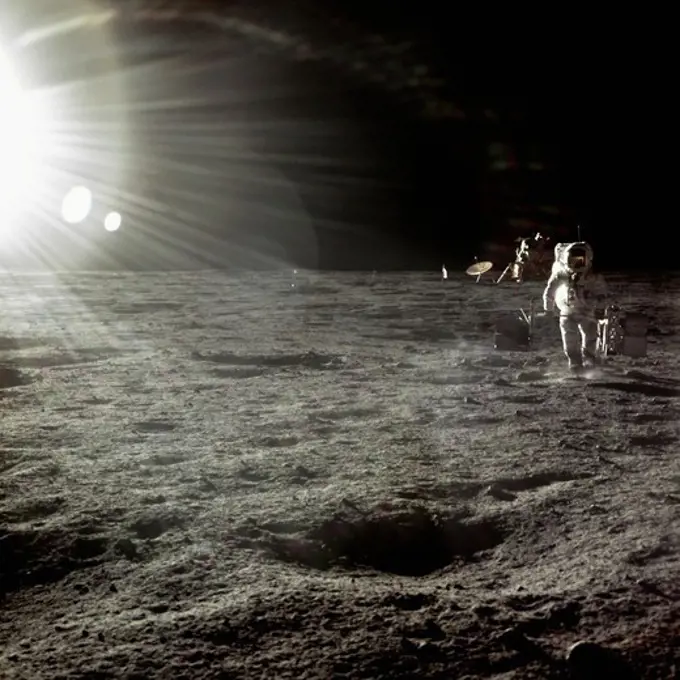
Apollo 12 - A Blinding Sunrise Lights the Way for an Astronaut on the Surface of the Moon
1899-19513118
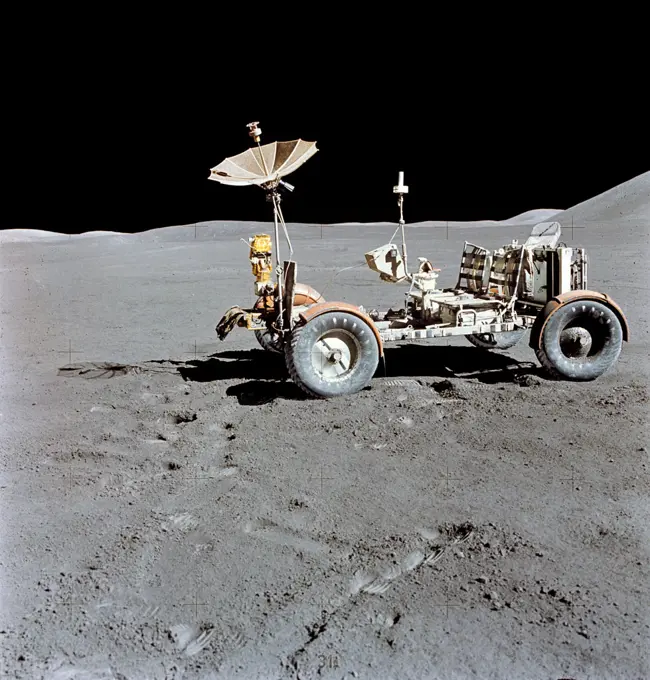
(31 July-2 Aug. 1971) --- The Lunar Roving Vehicle (LRV) is photographed alone against the desolate lunar background during the third Apollo 15 lunar surface extravehicular activity (EVA) at the Hadley-Apennine landing site.
1899-61015
Astronaut With U.S. Flag On Moon
4389-2248
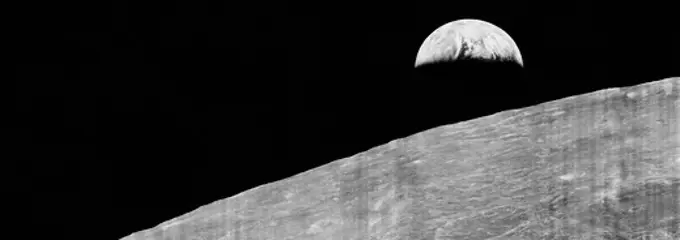
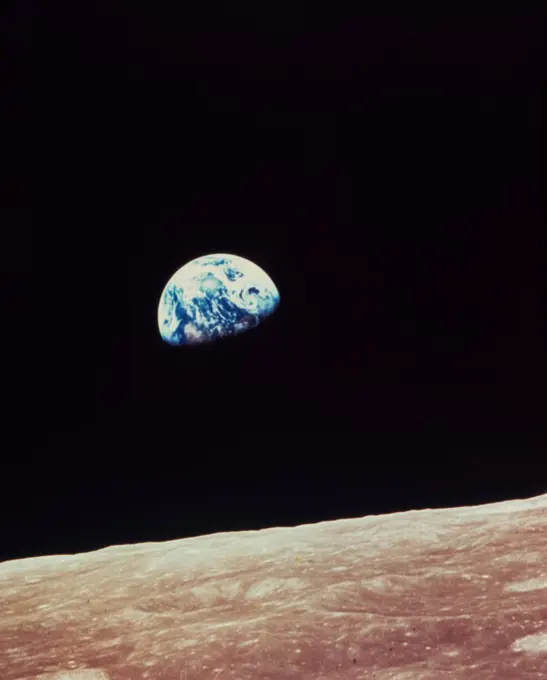
Earthrise by Lunar Orbiter
1570R-133481
An astronaut on the moon sitting on a rock using a laptop
4389-300
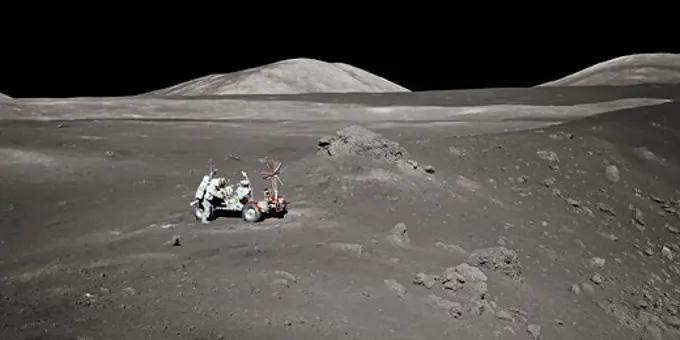
An Apollo 17 Astronaut and Lunar Rover in a Moon Valley
6145-45234198
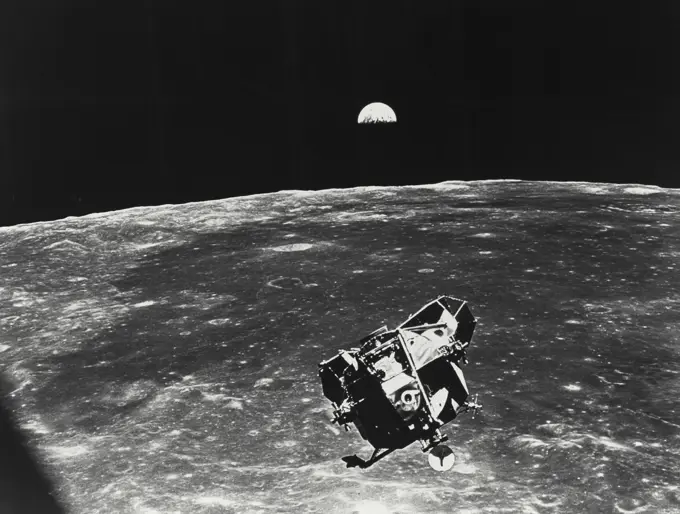
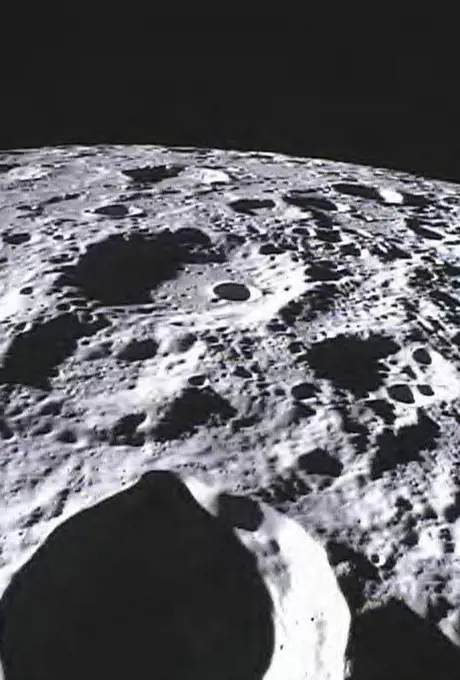
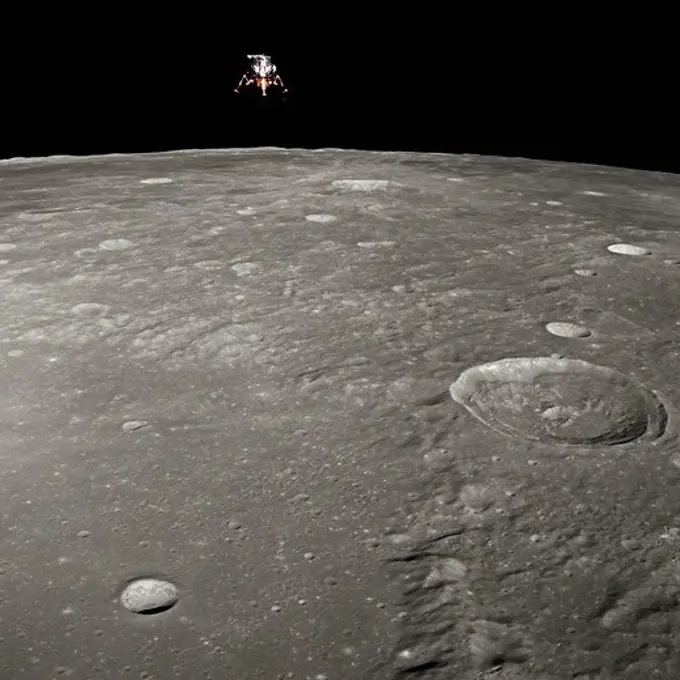
AS10-27-3873 (22 May 1969) --- The Apollo 10 Command and Service Modules (CSM) are photographed from the Lunar Module (LM) after CSM/LM separation in lunar orbit. The CSM was about 175 statute miles east of Smyth's Sea and was above the rough terrain which is typical of the lunar far side. The eastward oblique view of the lunar surface is centered near 105 degrees east longitude and 1 degree north latitude. The horizon is approximately 600 kilometers (374 statute miles) away. Numerous bright craters and the absence of shadows show that the sun was almost directly overhead when this photograph was taken.
7050-70037051
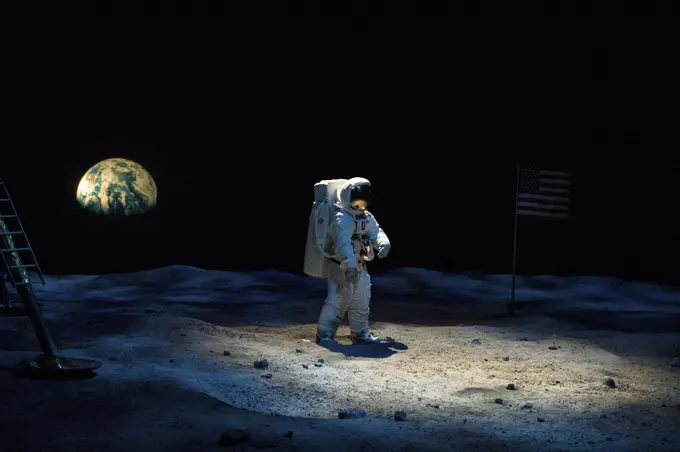
USA, Florida, Titusville, Kennedy Space Center, Apollo/Saturn V center, NASA, astronaut on moon display.
4048-8618
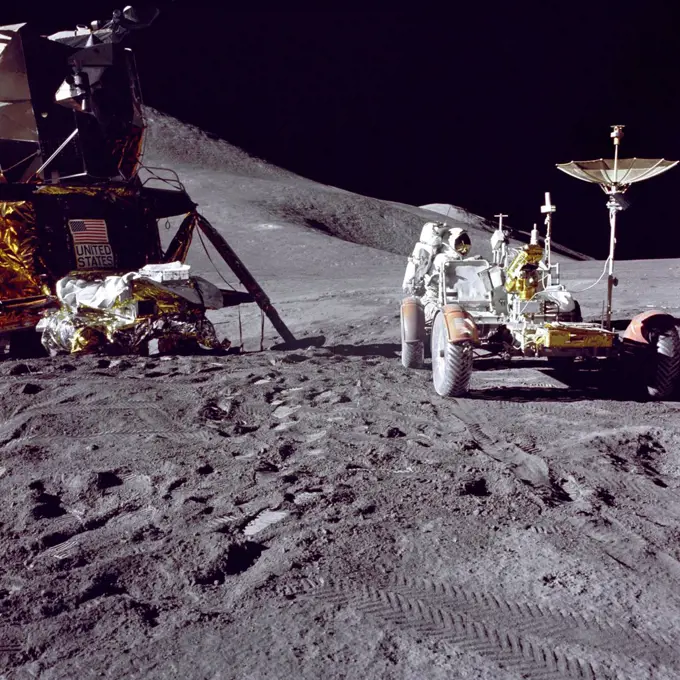
Apollo 15 astronaut James Irwin loads the Lunar Roving Vehicle with tools and equipment at the Hadley-Apennine landing site. Hadley Delta and the Apennine Front are in the background to the left. St. George crater is approximately 5 kilometers (about 3 statute miles) in the distance behind Irwin's head. July 31. 1971
6145-44618646
The second manned lunar landing mission, Apollo 12, launched from launch pad 39-A at Kennedy Space Center in Florida on November 14, 1969 via a Saturn V launch vehicle. The Saturn V vehicle was developed by the Marshall Space Flight Center (MSFC) under the direction of Dr. Wernher von Braun. Aboard Apollo 12 was a crew of three astronauts Alan L. Bean, pilot of the Lunar Module (LM), Intrepid; Richard Gordon, pilot of the Command Module (CM), Yankee Clipper; and Spacecraft Commander Charles Conrad. The LM, Intrepid, landed astronauts Conrad and Bean on the lunar surface in whats known as the Ocean of Storms while astronaut Richard Gordon piloted the CM, Yankee Clipper, in a parking orbit around the Moon. Lunar soil activities included the deployment of the Apollo Lunar Surface Experiments Package (ALSEP), finding the unmanned Surveyor 3 that landed on the Moon on April 19, 1967, and collecting 75 pounds (34 kilograms) of rock samples. This is the nineteenth of 25 images captured by th
6145-44684057
The first manned lunar landing mission, Apollo 11, launched from the Kennedy Space Center (KSC) in Florida via the Marshall Space Flight Center (MSFC) developed Saturn V launch vehicle on July 16, 1969 and safely returned to Earth on July 24, 1969. Aboard the space craft were astronauts Neil A. Armstrong, commander; Michael Collins, Command Module (CM) pilot; and Edwin E. (Buzz) Aldrin Jr., Lunar Module (LM) pilot. The CM, piloted by Michael Collins, remained in a parking orbit around the Moon, while the LM, named Eagle’’, carrying astronauts Armstrong and Aldrin, landed on the Moon in the Sea of Tranquility. During 2½ hours of surface exploration, the crew set up experiments, collected 47 pounds of lunar surface material for analysis back on Earth, planted the U.S Flag, and left a message for all mankind. In this photograph, Aldrin is deploying the Early Apollo Scientific Experiment Package.
4389-142
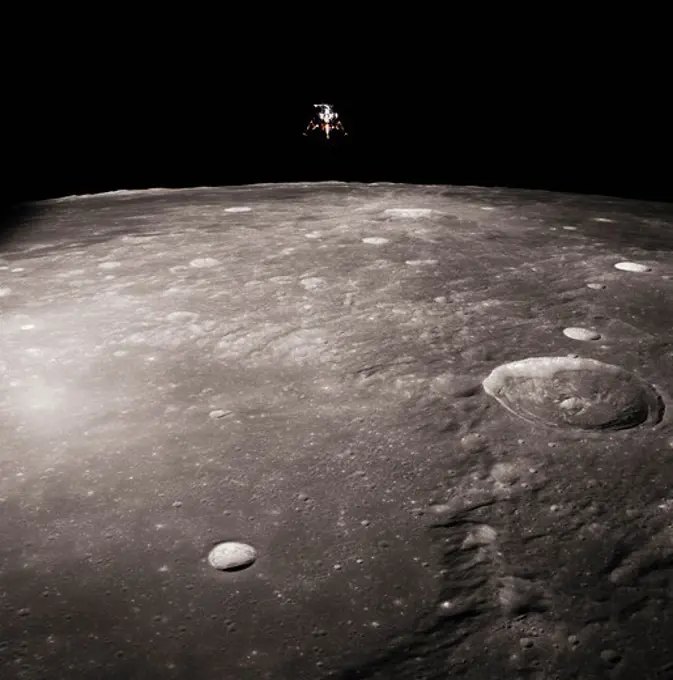
A View From Apollo 12's Command Module of Lunar Module after Separation
1746-19663761
Astronaut Neil A. Armstrong, Apollo ll mission commander, at the modular equipment storage assembly (MESA) of the Lunar Module Eagle on the historic first extravehicular activity (EVA) on the lunar surface. Astronaut Edwin E. Aldrin Jr. took the photograph with a Hasselblad 70mm camera. Most photos from the Apollo 11 mission show Buzz Aldrin. This is one of only a few that show Neil Armstrong 20 July 1969
4389-2117
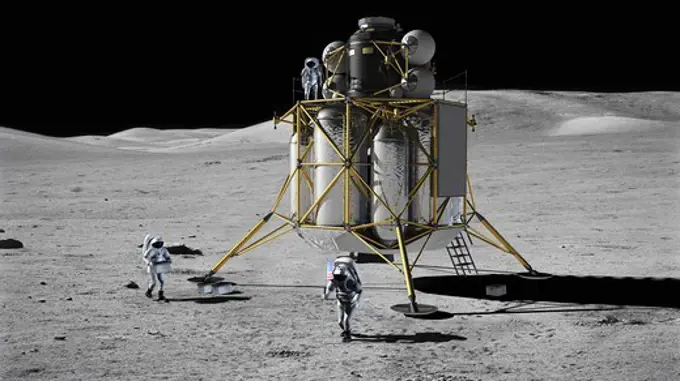
Altair Lunar Lander
1746-28998727
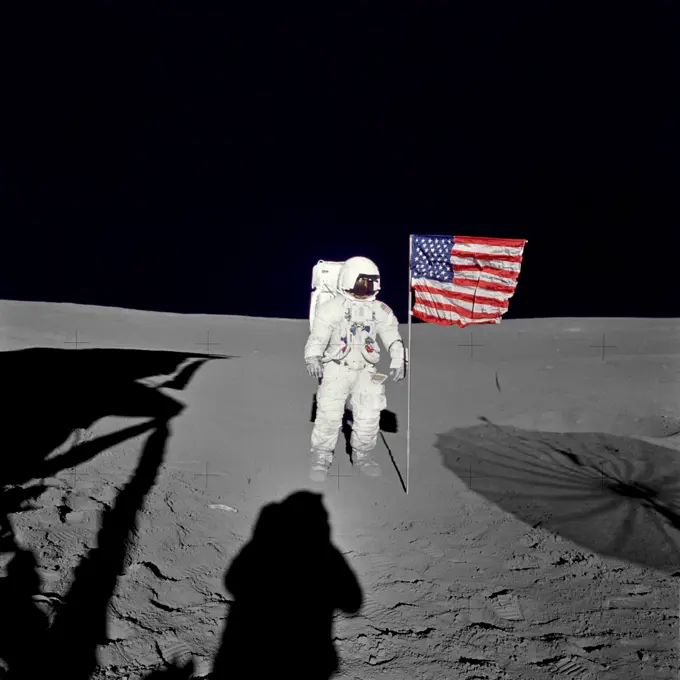
Astronaut Edgar D. Mitchell, lunar module pilot for the Apollo 14 lunar landing mission, stands by the deployed U.S. flag on the lunar surface during the early moments of the first extravehicular activity (EVA) of the mission. He was photographed by astronaut Alan B. Shepard Jr., mission commander,
4285-1197
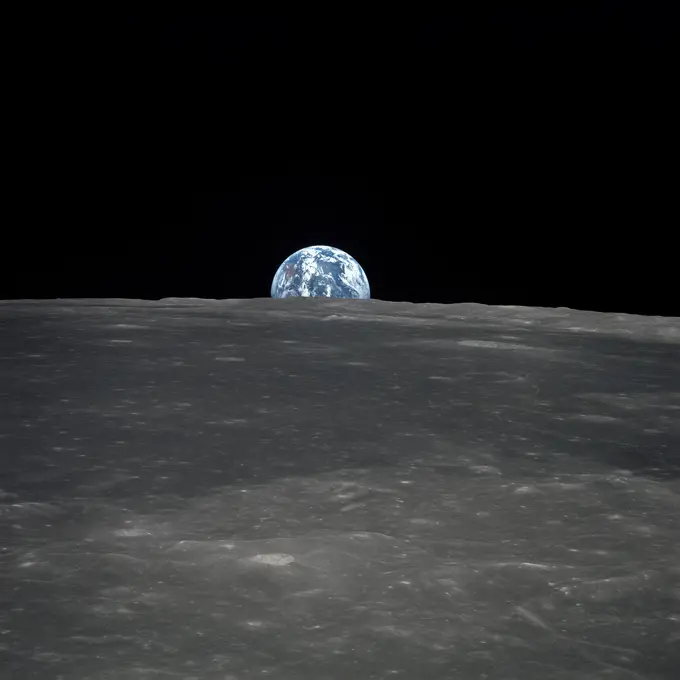
Earthrise over the moon. Shot from Apollo 11.
6145-45233017
AS12-47-6988 (19 Nov. 1969) --- Astronaut Charles Conrad Jr., commander of the Apollo 12 lunar landing mission, stands at the Module Equipment Stowage Assembly (MESA) on the Lunar Module (LM) following the first Apollo 12 extravehicular activity (EVA) on the lunar surface. The erectable S-band antenna is already deployed at right. The carrier for the Apollo Lunar Hand Tools (ALHT) is near Conrad. While astronauts Conrad and Alan L. Bean, lunar module pilot, descended in the LM to explore the lunar surface, astronaut Richard F. Gordon Jr., command module pilot, remained with the Command and Service Modules (CSM) in lunar orbit.
4048-8577
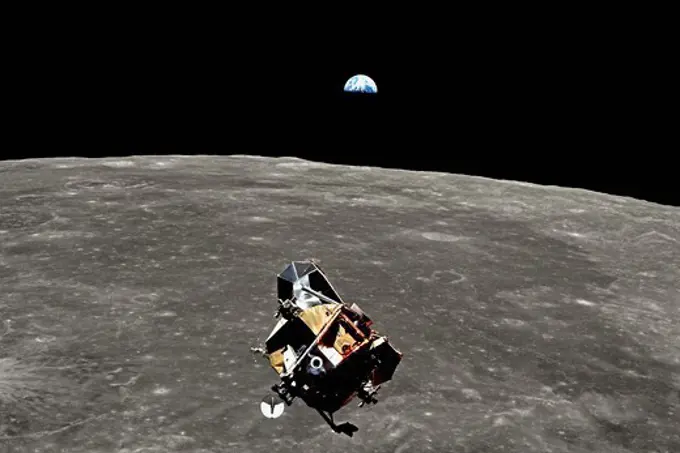
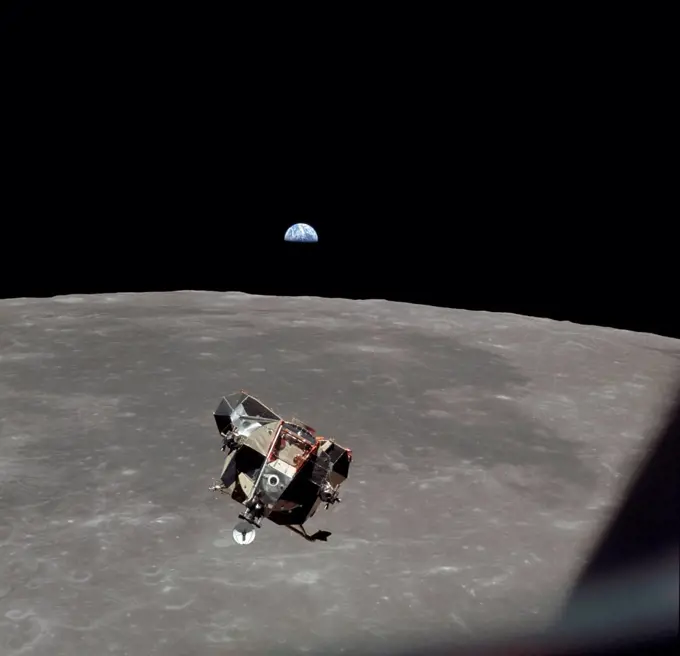
The Apollo 11 Lunar Module ascending from Moon's surface. In the background is Mare Smythii with the Earth on horizon. July 20, 1969.
6145-44519544
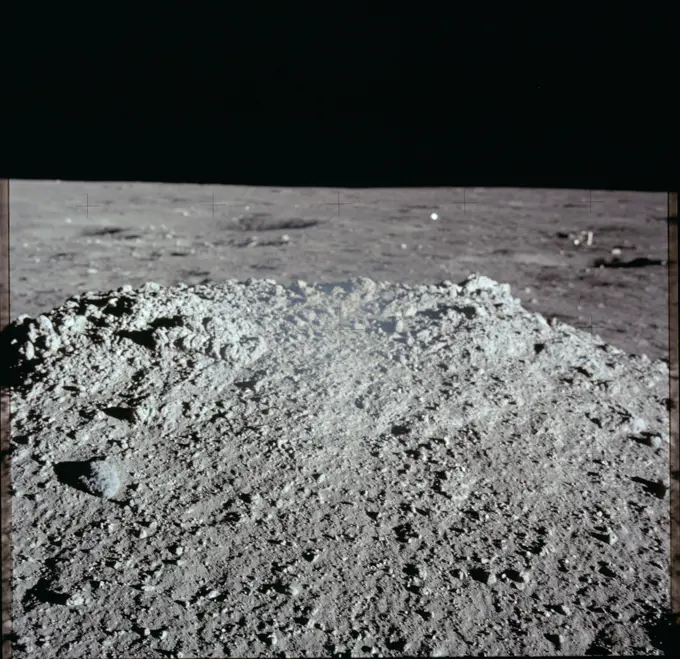
AS12-46-6832 (19 Nov. 1969) --- A close-up view of a lunar mound as photographed during the Apollo 12 extravehicular activity (EVA) on the lunar surface. Astronaut Richard F. Gordon Jr., command module pilot, remained with the Apollo 12 Command and Service Modules (CSM) in lunar orbit while astronauts Charles Conrad Jr., commander, and Alan L. Bean, lunar module pilot, descended in the Lunar Module (LM) to explore the moon.
4389-290
An Apollo 17 Astronaut is Dwarfed by a Moon Boulder
4239R-20480258
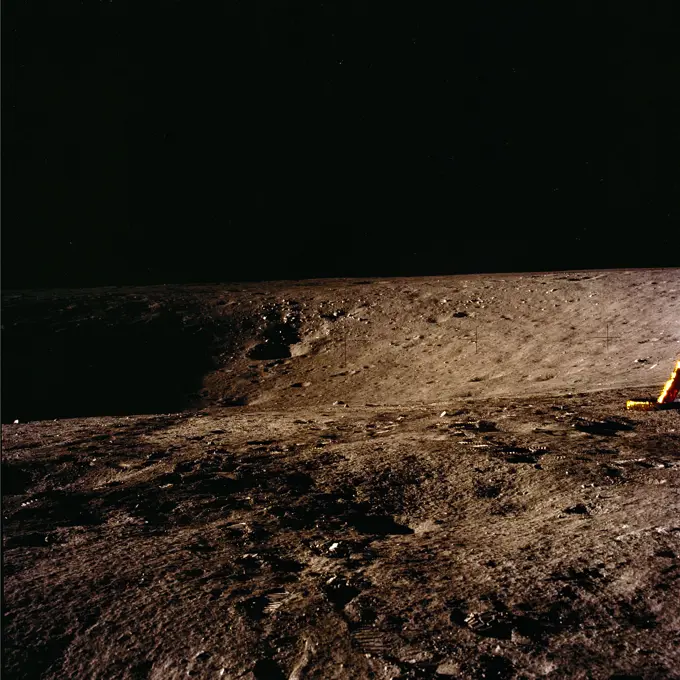
Lunar surface of Earths moon.
1570R-130667
Light shining on the surface of the moon
4389-260
Apollo 16 - Lunar Module Dwarfed in a Lunar Landscape
6145-44520067
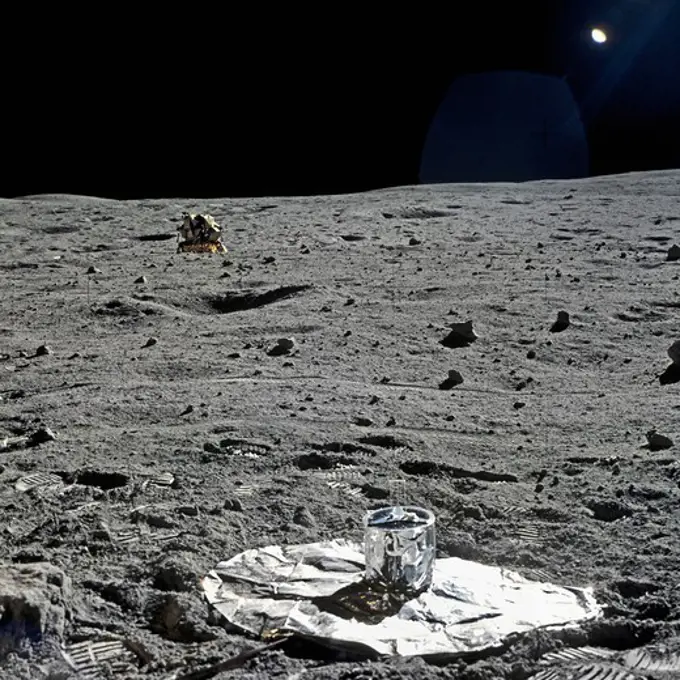
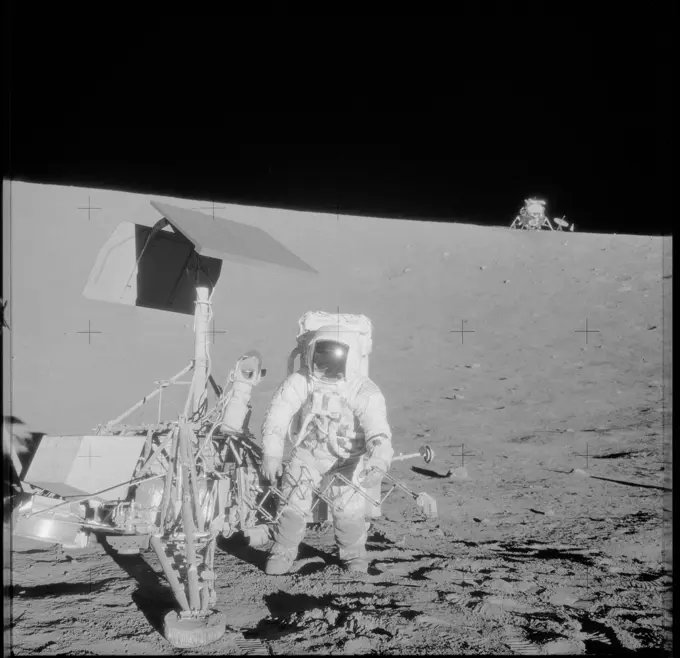
AS12-48-7134 (20 Nov. 1969) --- This unusual photograph, taken during the second Apollo 12 extravehicular activity (EVA), shows two U.S. spacecraft on the surface of the moon. The Apollo 12 Lunar Module (LM) is in the background. The unmanned Surveyor 3 spacecraft is in the foreground. The Apollo 12 LM, with astronauts Charles Conrad Jr. and Alan L. Bean aboard, landed about 600 feet from Surveyor 3 in the Ocean of Storms. The television camera and several other pieces were taken from Surveyor 3 and brought back to Earth for scientific examination. Here, Conrad examines the Surveyor's TV camera prior to detaching it. Astronaut Richard F. Gordon Jr. remained with the Apollo 12 Command and Service Modules (CSM) in lunar orbit while Conrad and Bean descended in the LM to explore the moon. Surveyor 3 soft-landed on the moon on April 19, 1967.
6177-V53460876
1570-V111111125
4239R-20480257
Lunar surface of Earths moon.
4128R-14846567
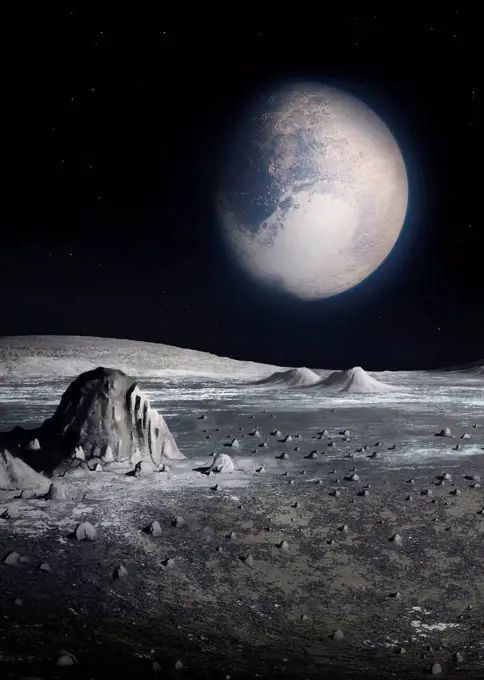
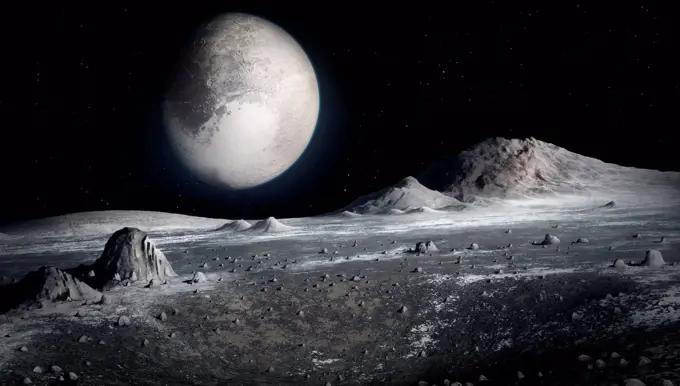
Pluto from the surface of Charon, illustration
4389-272
Apollo 15 - What Every Kid Wanted in 1971
1570-V111111173
6145-45237954
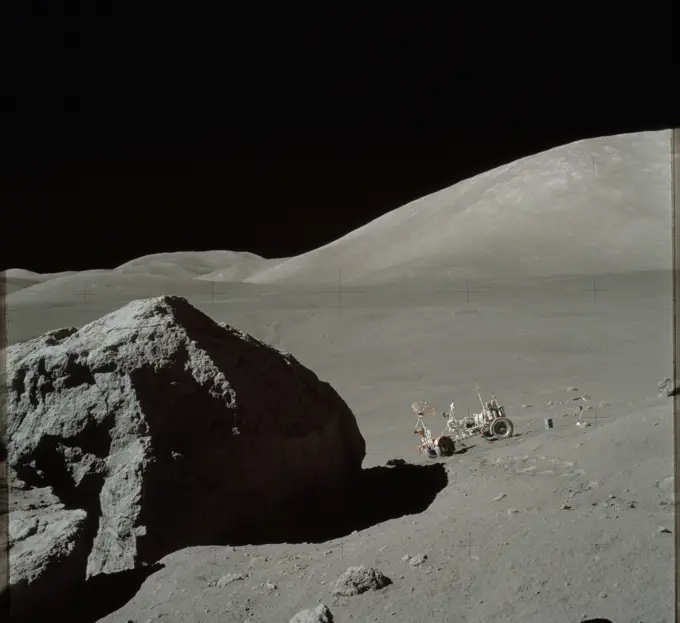
AS17-140-21494 (13 Dec. 1972) --- This view shows the Lunar Roving Vehicle (LRV) parked by an outcrop of rocks by astronauts Eugene A. Cernan and Harrison H. (Jack) Schmitt during their visit to extravehicular activity Station 6 (Henry Crater).
6145-45235668
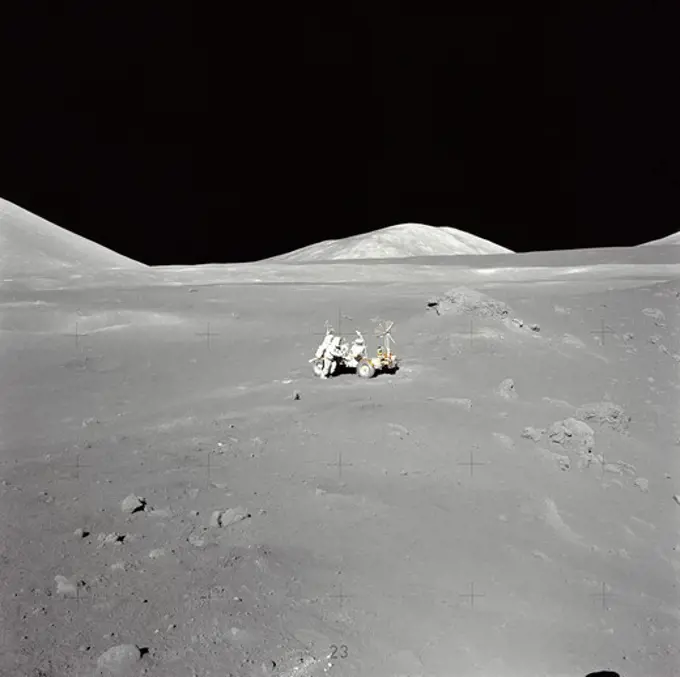
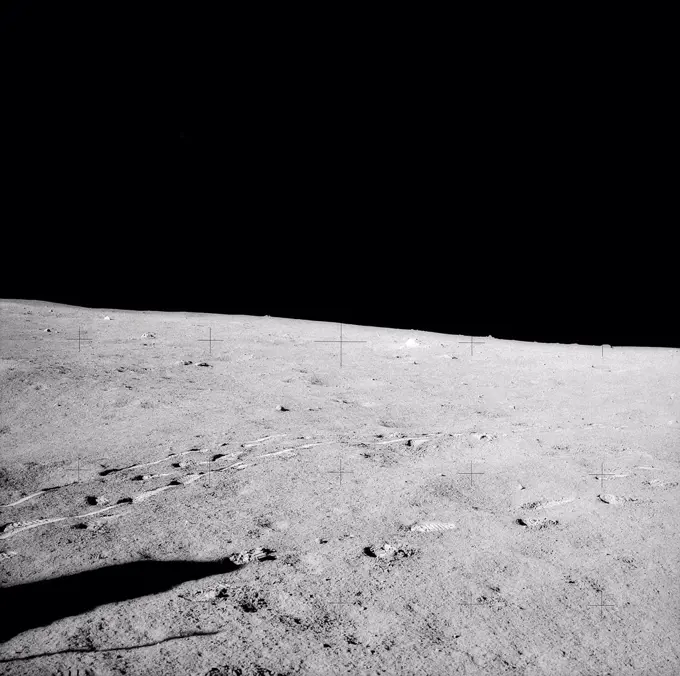
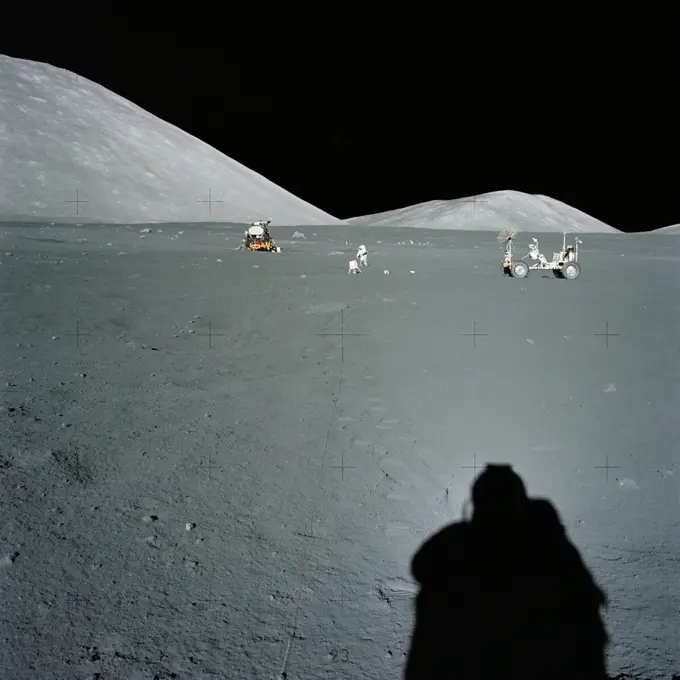
AS17-134-20435 (10 Dec. 1972) --- Wide-angle view of the Apollo 17 Taurus-Littrow lunar landing site. To the left in the background is the Lunar Module. To the right in the background is the Lunar Roving vehicle. An Apollo 17 crewmember is photographed between the two points. The shadow of the astronaut taking the photograph can be seen in the right foreground.
1838-51330410
American astronaut Charles Conrad Jr., commander of Apollo 12 lunar landing mission, during extravehicular activity on lunar surface, EVA checklist is on Conrad's left wrist, a set of tongs, an Apollo Lunar Hand Tool, is held in his right hand, NASA, November 20, 1969
4048-8590
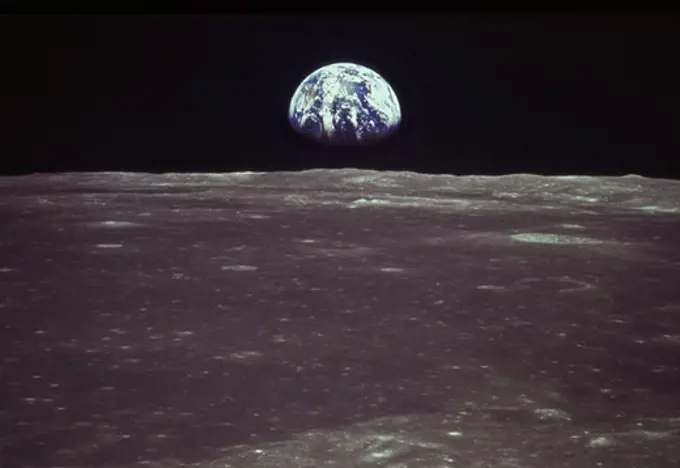
Apollo 11 Earth rise over the Moon. Earth on the horizon in the Mare Smythii Region of the Moon. Image 6 of a NASA sequence of 18. July 20, 1969.
255-28354
Lunar Module approaching the Command Module for docking, Apollo 11, July 21, 1969
1570-V111111196
4093-20546
David R. Scott  Commander of Apollo 15  works at the Lunar Roving Vehicle (LRV) during the third lunar surface extravehicular activity (EVA) of the mission at the Hadley-Apennine landing site.
6145-45235669
AS17-140-21388 (7-19 Dec. 1972) --- Astronaut Eugene A. Cernan, mission commander, walks toward the Lunar Roving Vehicle (LRV) during extravehicular activity (EVA) at the Taurus-Littrow landing site of NASA's sixth and final Apollo lunar landing mission. The photograph was taken by astronaut Harrison H. Schmitt, lunar module pilot. While astronauts Cernan and Schmitt descended in the Lunar Module (LM) Challenger to explore the Taurus-Littrow region of the moon, astronaut Ronald E. Evans, command module pilot, remained with the Command and Service Modules (CSM) America in lunar orbit.
6177-V53837441
6145-45235455
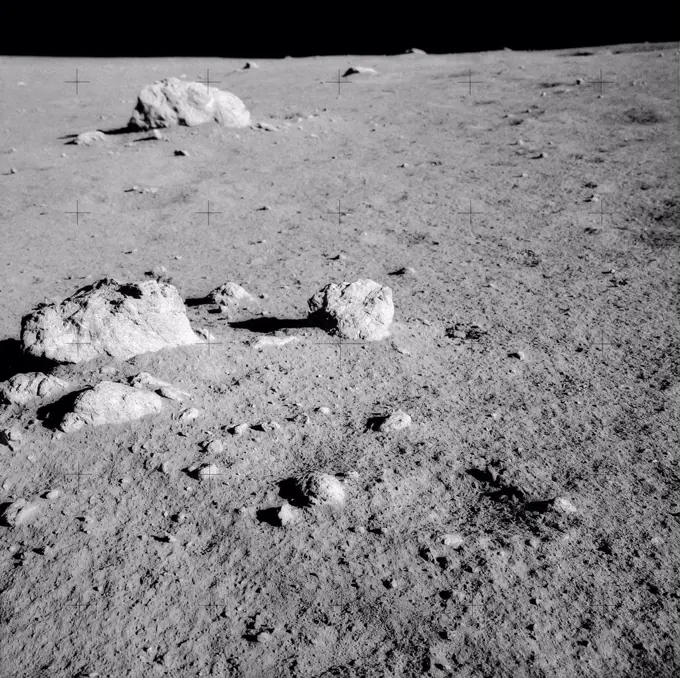
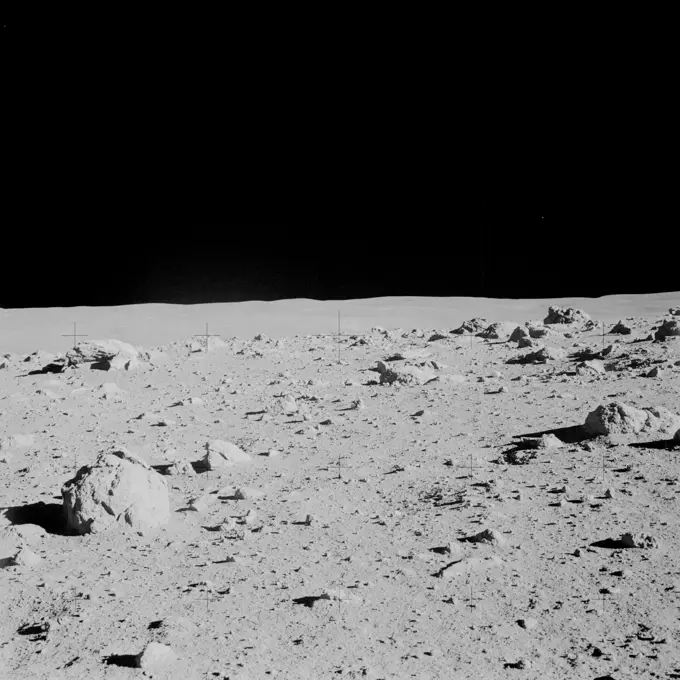
AS14-64-9103 (6 Feb. 1971) --- Astronaut Alan B. Shepard Jr., commander, photographed this overall view of a field of boulders on the flank of Cone Crater during the second extravehicular activity (EVA) on the lunar surface. Astronaut Edgar D. Mitchell, lunar module pilot, joined Shepard in exploring the moon, while astronaut Stuart A. Roosa, command module pilot, remained with the Command and Service Modules (CSM) in lunar orbit.
6145-44748325
AS08-14-2384 (Dec. 1968)--- The rising Earth is about five degrees above the lunar horizon in this photograph--one of a pair taken within a short time of each other --from the Apollo 8 spacecraft .  The horizon, about 570 kilometers (350 statute miles) from the spacecraft, is near the eastern limb of the Moon as viewed from Earth.  Width of the view at the horizon is about 150 kilometers (95 statute miles).  On the Earth 240,000 statute miles away, the sunset terminator crosses Africa.  The South Pole is in the white area near the left end of the terminator.  North and South America are almost totally under clouds.  However, part of North America is visible at the top (western) part of the planet.
6145-44520078
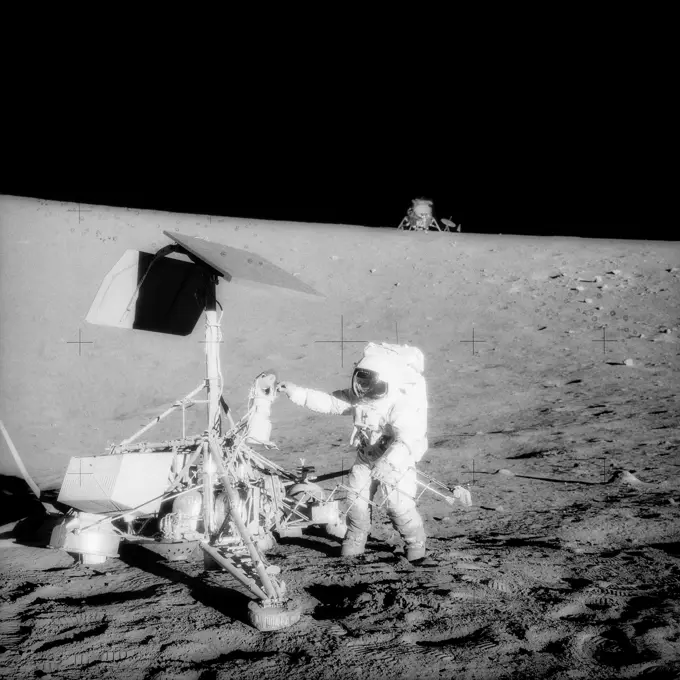
AS12-48-7136 (20 Nov. 1969) --- Astronaut Charles Conrad Jr., commander, examines the unmanned Surveyor 3 spacecraft during the second Apollo 12 extravehicular activity (EVA).In the background is the lunar module, parked where the crew had landed it in the Ocean of Storms only 600 feet from Surveyor 3. This series of pictures documents the only occasion wherein Apollo astronauts landed near or had hands-on contact with another spacecraft which had arrived on the moon's surface well ahead of them. This picture was taken by astronaut Alan L. Bean, lunar module pilot. The television camera and several other pieces were taken from Surveyor 3 and brought back to Earth for scientific examination. Surveyor 3 soft-landed on the moon on April 19, 1967. Astronaut Richard F. Gordon Jr., command module pilot, remained with the Command and Service Modules (CSM) in lunar orbit while astronauts Conrad and Bean descended in the LM to explore the moon.
6145-45237958
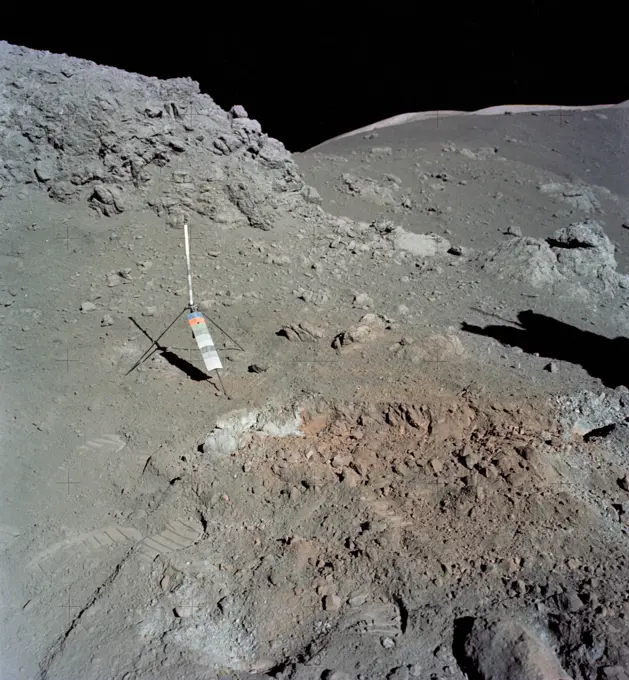
AS17-137-20990 (12 Dec. 1972) --- A view of the area at Station 4 (Shorty Crater) showing the now highly-publicized orange soil which the Apollo 17 crew members found on the moon during the second Apollo 17 extravehicular activity (EVA) at the Taurus-Littrow landing site. The tripod-like object is the gnomon and photometric chart assembly which is used as a photographic reference to establish local vertical sun angle, scale and lunar color. The gnomon is one of the Apollo lunar geology hand tools. While astronauts Eugene A. Cernan, commander, and Harrison H. Schmitt, lunar module pilot, descended in the Lunar Module (LM) Challenger to explore the Taurus-Littrow region of the moon, astronaut Ronald E. Evans, command module pilot, remained with the Command and Service Modules (CSM) America in lunar orbit. Schmitt was the crew man who first spotted the orange soil.
1838-51330396
American astronaut Charles Conrad Jr., Apollo 12 commander, standing beside American flag after it was unfurled on lunar surface during  first extravehicular activity, NASA , November 19, 1969
6145-45297202
AS17-146-22296 (13 Dec. 1972) --- Astronaut Harrison H. Schmitt, lunar module pilot, works near the Lunar Roving Vehicle (LRV) during the third Apollo 17 extravehicular activity (EVA) at the Taurus-Littrow site on the lunar surface. The front part of the LRV is out of frame at left, but the seats and several geological tools can be seen. The photo was taken by astronaut Eugene A. Cernan, mission commander.
6145-45234935
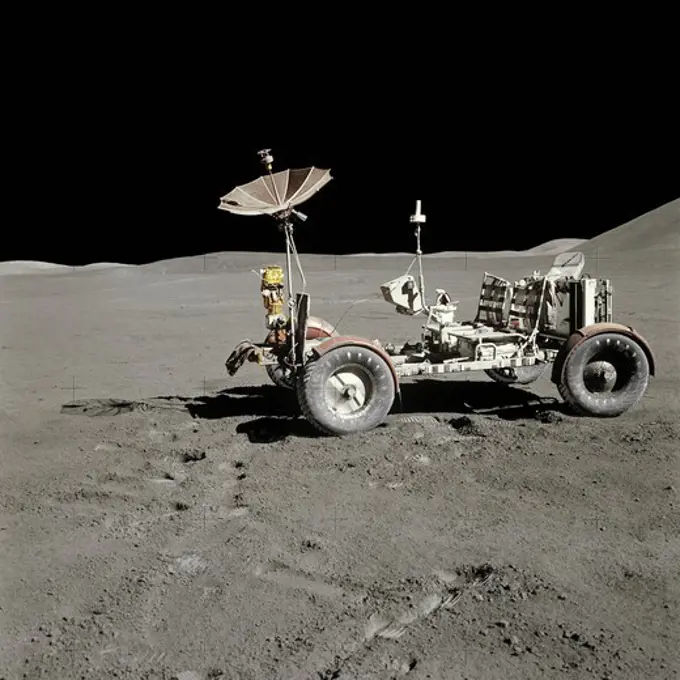
This is an Apollo 17 onboard photo of an astronaut beside the Lunar Roving Vehicle (LRV) on the lunar surface. Designed and developed by the Marshall Space Flight Center and built by the Boeing Company, the LRV was first used on the Apollo 15 mission and increased the range of astronauts' mobility and productivity on the lunar surface. This lightweight electric car had battery power sufficient for about 55 miles. It weighed 462 pounds (77 pounds on the Moon) and could carry two suited astronauts, their gear, cameras, and several hundred pounds of bagged samples. The LRV's mobility was quite high. It could climb and descend slopes of about 25 degrees.
227-1166A
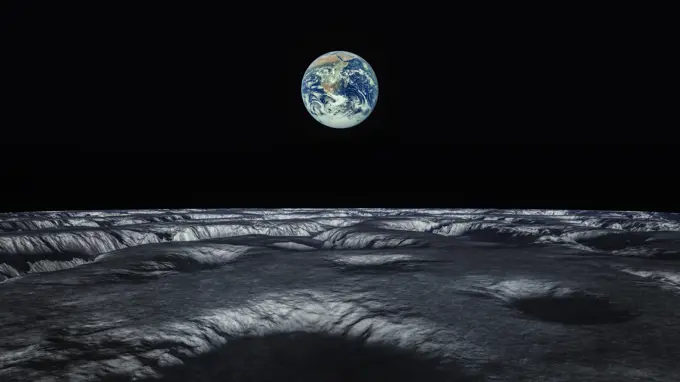
View of Earth from Moon
6177-V53547124
1746-19670938
Image of the lunar surface taken by NASA's MoonKAM system onboard the Ebb spacecraft.
6177-V53648208
6177-V53855878
4093-20547
David R. Scott  Apollo 15 Commander  is seated in the Rover  Lunar Roving Vehicle (LRV) during the first lunar surface extravehicular activity (EVA-1) at the Hadley-Apennine landing site.
1838-51330366
View from Apollo 11 spacecraft of moon with Earth on horizon, Mare Smythii Region, Johnson Space Center, NASA, July 16, 1969
6145-44525758
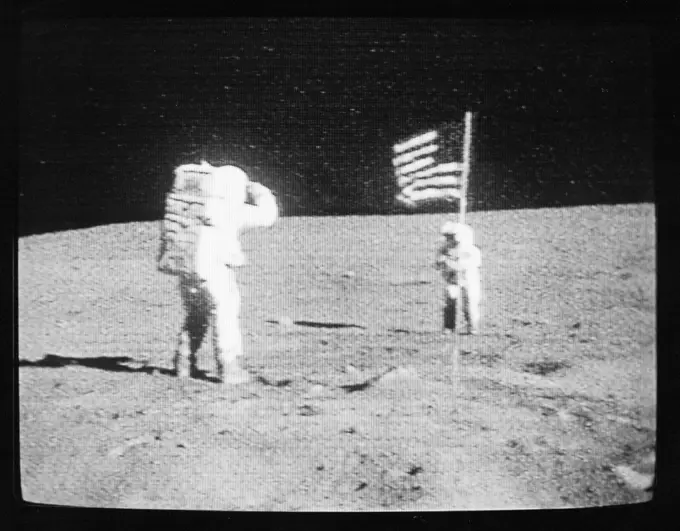
S72-35595 (21 April 1972) --- Astronaut Charles M. Duke Jr., lunar module pilot, salutes the United States flag during the first Apollo 16 extravehicular activity (EVA) on the moon, as seen in this black & white reproduction taken from a color television transmission made by the color TV camera mounted on the Lunar Roving Vehicle (LRV). Astronaut John W. Young, commander of the Apollo 16 lunar landing mission, stands beside the flag. While astronauts Young and Duke descended in the Apollo 16 Lunar Module (LM) "Orion" to explore the Descartes highlands landing site on the moon, astronaut Thomas K. Mattingly II, command module pilot, remained with the Command and Service Modules (CSM) "Casper" in lunar orbit.
6145-44502195
Artist rendering of the lunar excursion module approaching the moon. The lunar module design underwent gradual evolution from the first configuration proposed by Grumman in 1962. This model is a 1964 rendering. Langley had the task of building a simulator for the astronauts to practice lunar landings. The configuration of the initial vehicle used with the Lunar Landing Research Facility (LLRF) was changed in 1967 to more accurately reflect the standing position of the astronauts, cockpit arrangement, instrumentation, controls and field of view.
4239R-365
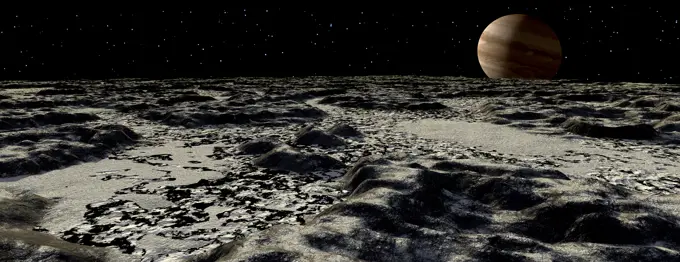
Jupiter's large moon, Europa, is covered by a thick crust of ice above a vast ocean of liquid water
4093-20521
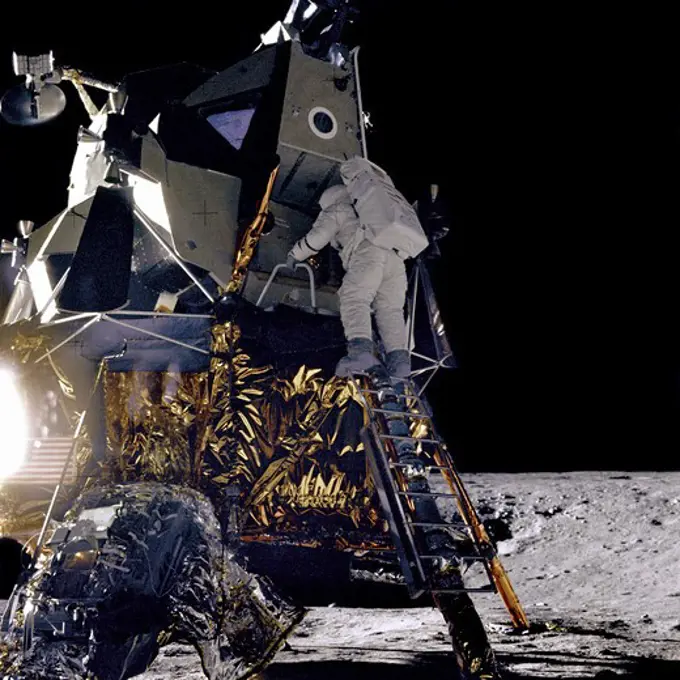
Alan L. Bean  Lunar Module pilot for the Apollo 12 mission  starts down the ladder of the Lunar Module (LM) Intrepid to join astronaut Charles Conrad  Jr.  mission Commander  on the lunar surface.
6145-44718525
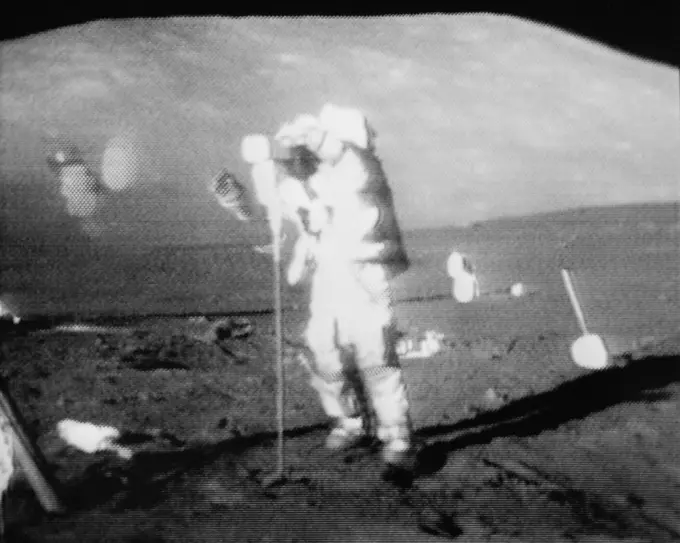
S72-55064 (11 Dec. 1972) --- Astronaut Eugene A. Cernan operates the Apollo Lunar Surface Drill during the first Apollo 17 extravehicular activity (EVA) at the Taurus-Littrow landing site, in this black and white reproduction taken from a color television transmission made by the RCA color TV camera mounted on the Lunar Roving Vehicle. Cernan is the commander of the Apollo 17 lunar landing mission. Astronaut Ronald E. Evans, command module pilot, remained with the Apollo 17 Command and Service Modules in lunar orbit while astronaut Cernan and scientist-astronaut Harrison H. Schmitt, lunar module pilot, descended in the Lunar Module to explore the moon.
6177-V53547200
4389-251
The Apollo 12 Lunar Lander Descends
6145-45297199
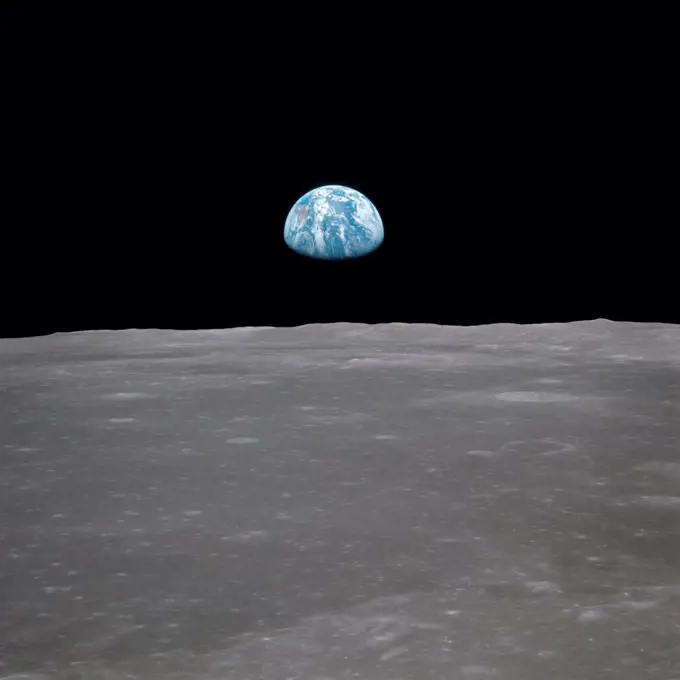
AS11-44-6550 (16-24 July 1969) --- This view from the Apollo 11 spacecraft shows Earth rising above the moon's horizon. The lunar terrain pictured is in the area of Smyth's Sea on the nearside. Coordinates of the center of the terrain are 86 degrees east longitude and 3 degrees north latitude. While astronauts Neil A. Armstrong, commander, and Edwin E. Aldrin Jr., lunar module pilot, descended in the Lunar Module (LM) Eagle to explore the Sea of Tranquility region of the moon, astronaut Michael Collins, command module pilot, remained with the Command and Service Modules (CSM) Columbia in lunar orbit. Apollo 11 was NASA's first lunar landing mission in the Apollo program.
1899-61055
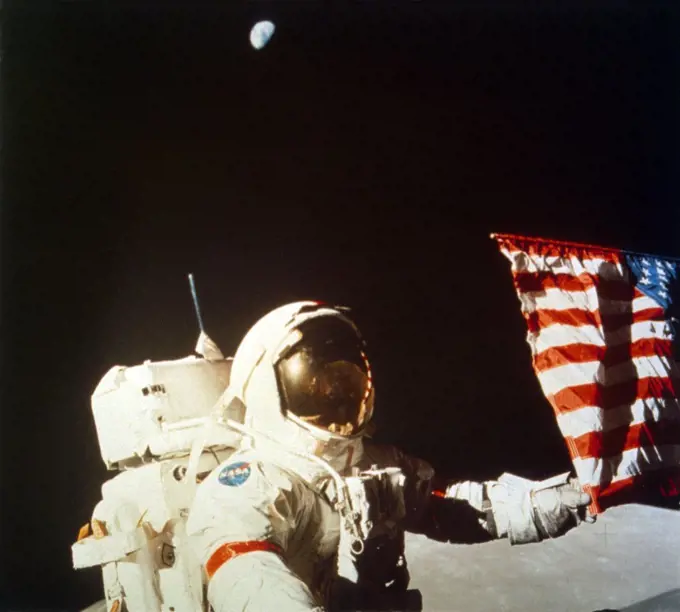
Astronaut Eugene Cernan, Apollo 17 On Moon With U.S. Flag, Earth Visible.
6188-65609274
view to our planet earth from moon a space view to our planet earth from moon 3d illustration done with NASA textures Copyright: xZoonar.com/magannx 15369956
6177-V53834973
4128R-13587591
A view of Pluto seen from the surface of its largest moon Charon. Because Pluto and Charon are tidally locked, they keep the same face towards each ot...
PREVIOUS
of 2
NEXT
2401 S. Ervay, Suite 206
Dallas, Texas 75215
United States
Browse
CategoriesGalleriesFree Research
For Creators
License Your ContentSuperStock For StudentsFrame of Mind BlogContributor PortalNew Image SpotlightLicense AI Imagery
Resources
About UsLicensingTerms & ConditionsAPI AccessPrivacyPricing
Contact
+1 866 236 0087help@superstock.com Contact form
©2026 SuperStock. All Rights Reserved. -A
This site is protected by reCAPTCHA and Google Privacy Policy and Terms of Service apply.