Fine ArtVintageFootageSubscriptionBoardsFree ResearchPricing
  • Fine Art
  • Vintage
  • Footage
  • Subscription
  • Boards
  • Free Research
  • Pricing

Planetary Images

Stunning illustrations of planets, primarily Saturn and Jupiter, highlighting their rings, moons, and comparative sizes against Earth.

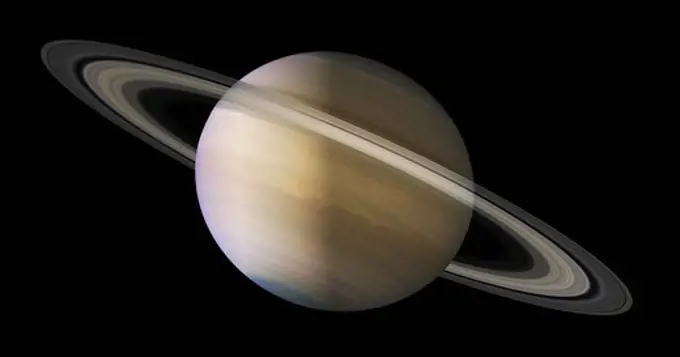
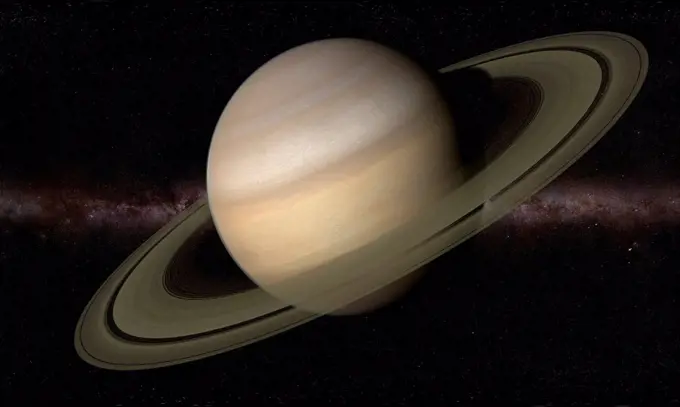
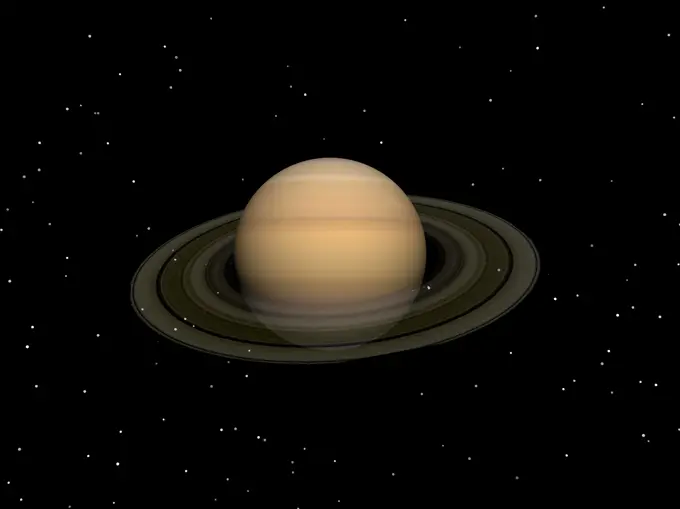
Digital Illustration of the Planet Saturn
152 assets in this story
6145-44618093
Ringworld Waiting
4128R-14846292
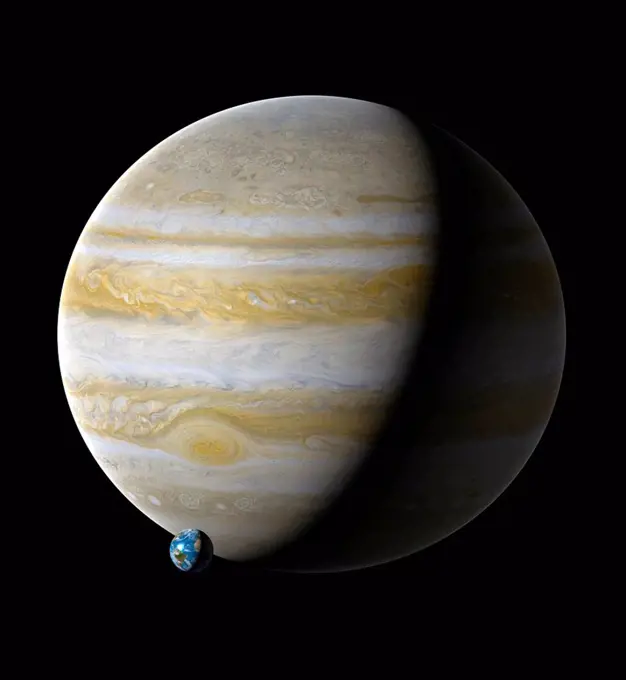
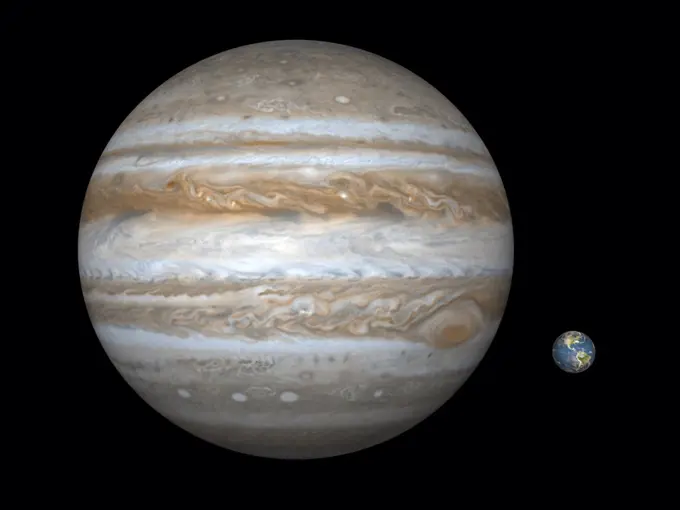
Earth compared to Jupiter, illustration
6145-45115999
This frame from a movie is one of many exposures taken by NASA's Cassnii spacecraft. Cassini stared at Saturn for nearly 44 hours on April 25 to 27, 2016, to obtain exposures showing just over four Saturn days. A movie is available at the Photojournal.
6145-44728720
Many Colors, Many Moons
6145-44710190
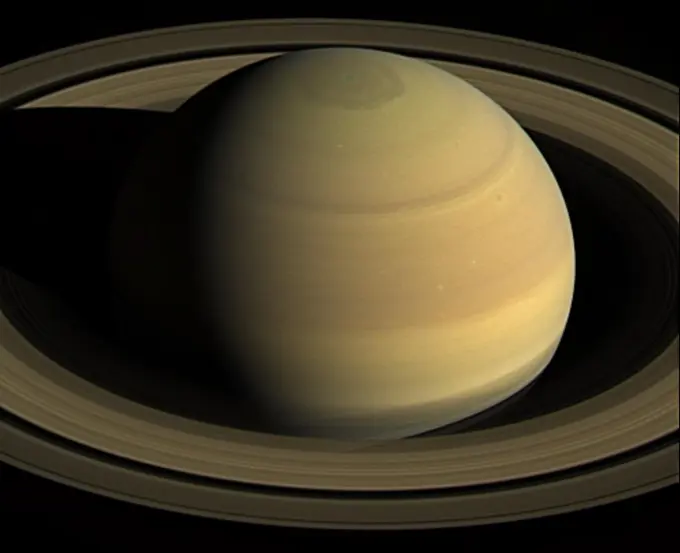
The ringed planet sits in repose, the center of its own macrocosm of many rings and moons and one artificial NASA satellite named Cassini. Mimas (397 kilometers, or 247 miles across) is visible at upper left.
4353-296
Digital Illustration of the Planet Saturn
4239R-20483137
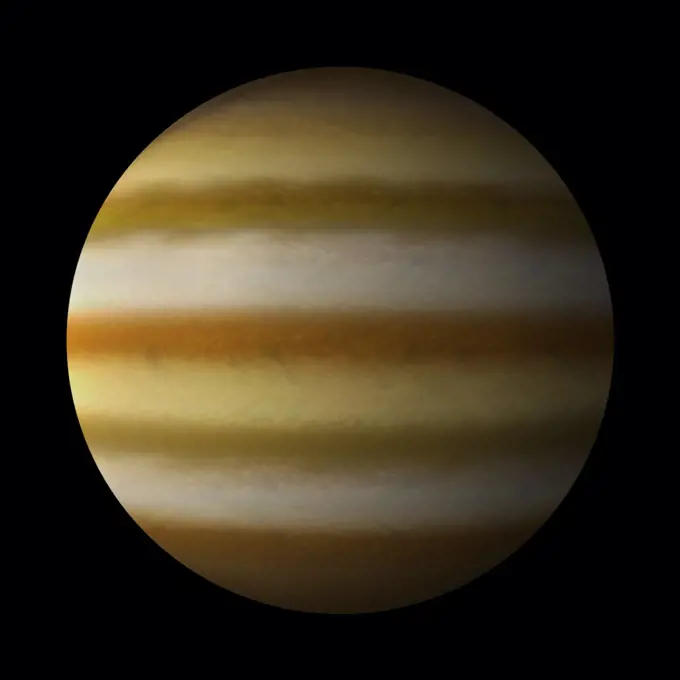
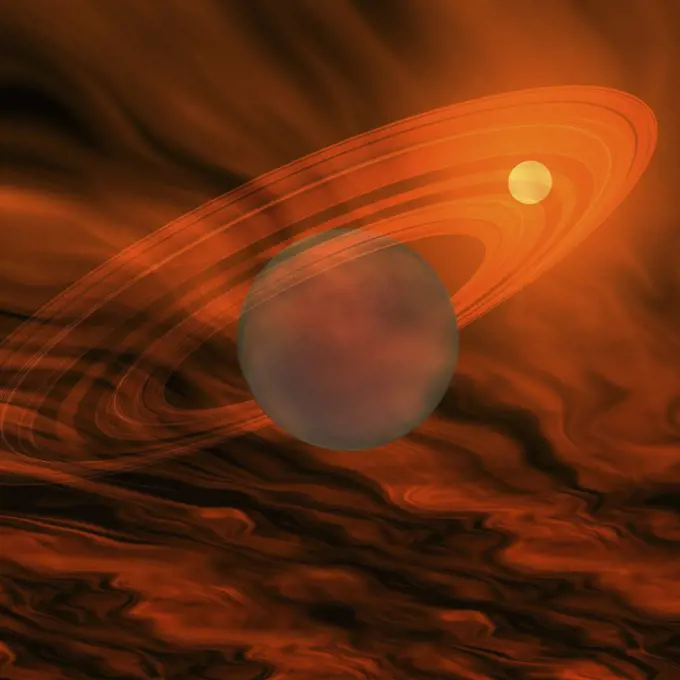
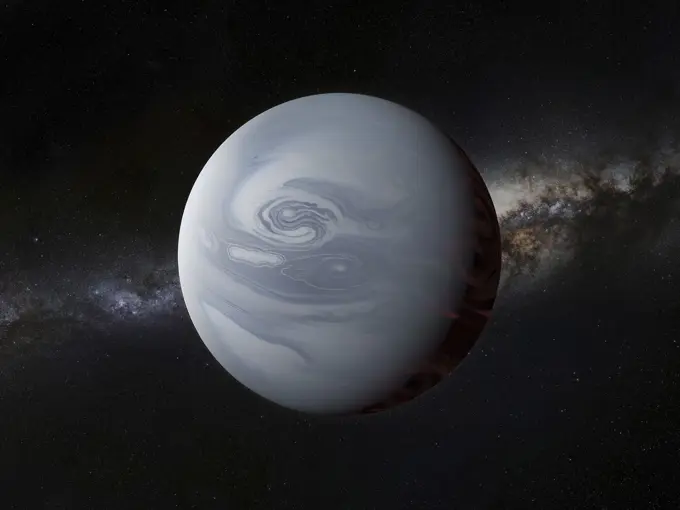
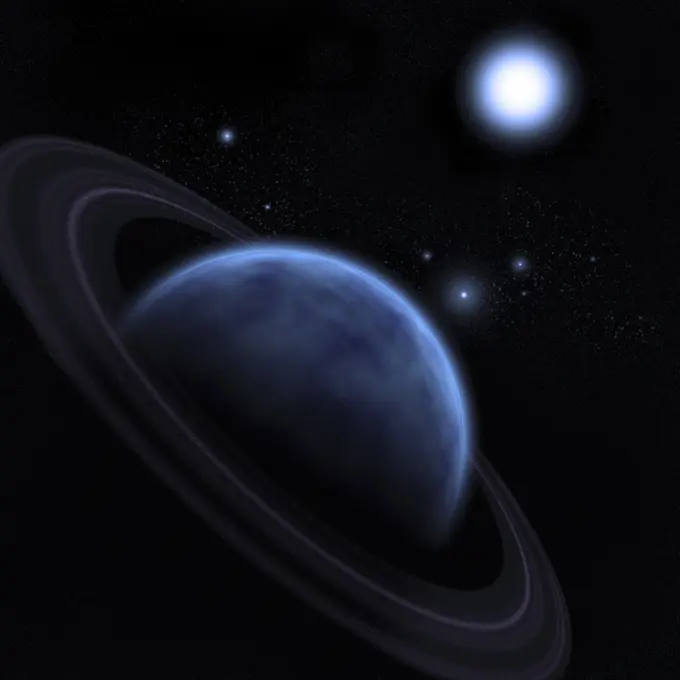
An artist's depiction of a gas giant planet alone in black space.
4389-1522
Jupiter's Great Red Spot
6145-45111640
Astronomers are using the NASA/ESA Hubble Space Telescope to study auroras  stunning light shows in a planet’s atmosphere  on the poles of the largest planet in the solar system, Jupiter. This observation program is supported by measurements made by NASA’s Juno spacecraft, currently on its way to Jupiter. Jupiter, the largest planet in the solar system, is best known for its colorful storms, the most famous being the Great Red Spot. Now astronomers have focused on another beautiful feature of the planet, using Hubble's ultraviolet capabilities. The extraordinary vivid glows shown in the new observations are known as auroras. They are created when high-energy particles enter a planet’s atmosphere near its magnetic poles and collide with atoms of gas. As well as producing beautiful images, this program aims to determine how various components of Jupiter’s auroras respond to different conditions in the solar wind, a stream of charged particles ejected from the sun. This observation prog
4389-1509
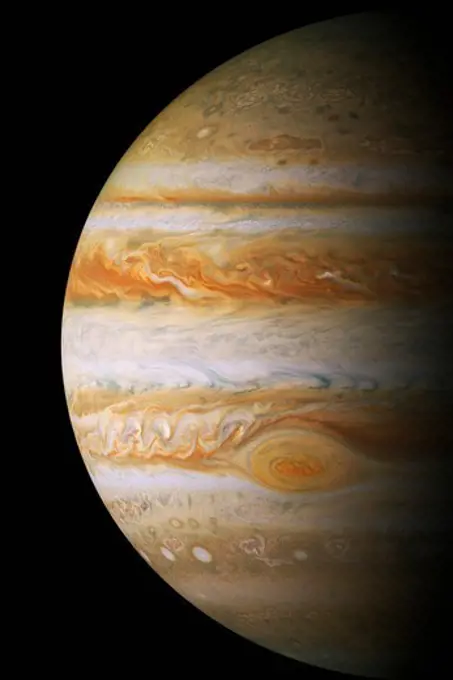
Portrait of Jupiter from Cassini Probe
4128R-15047009
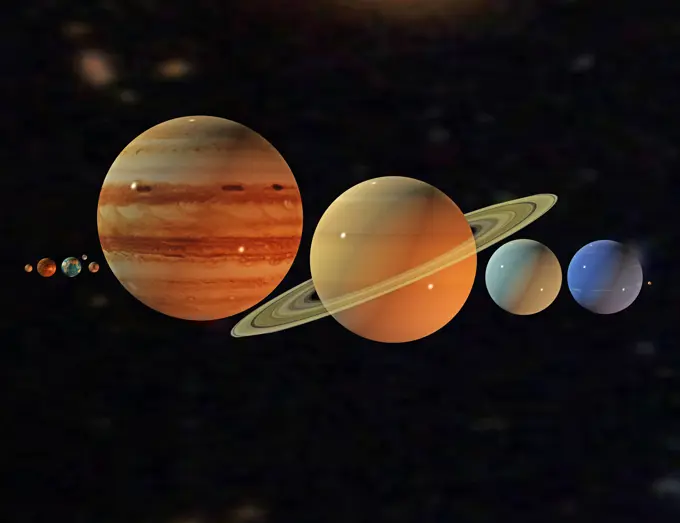
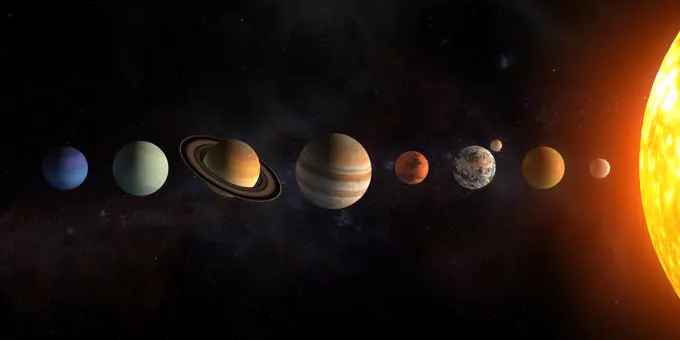
Solar system planets, illustratoin
6145-44546882
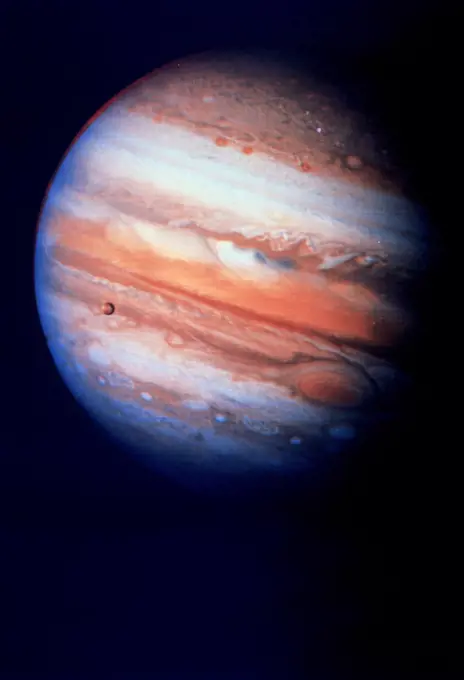
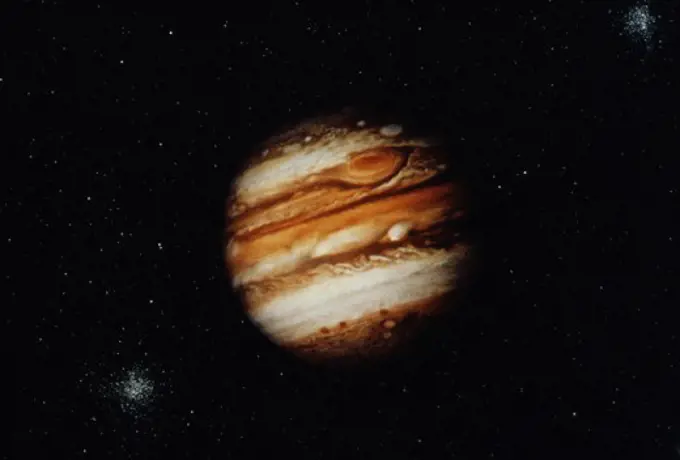
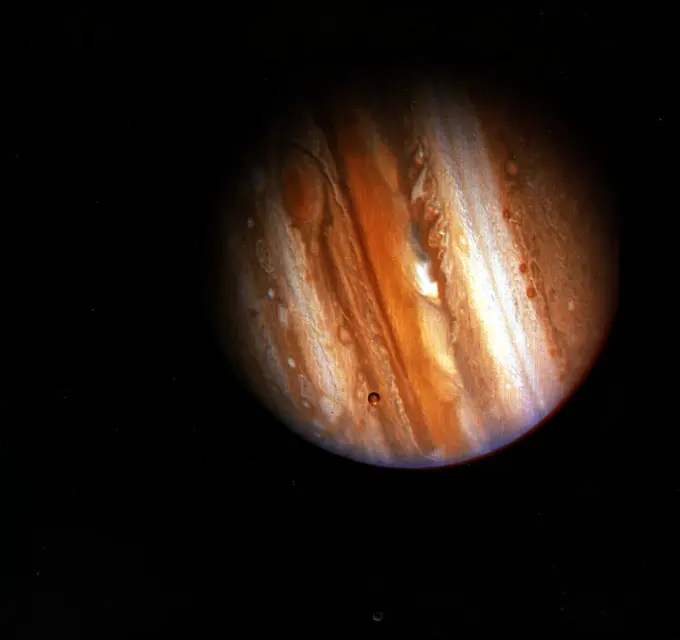
NASA's Voyager 1 took this photo of Jupiter and two of its satellites (Io, left, and Europa) on Feb. 13, 1979. Io is above Jupiter's Great Red Spot; Europa is above Jupiter's clouds. The poles are dark and reddish.
6145-44729824
Eyes on the Rings
4239R-20480474
December 16, 2007 - The ringed planet sits in repose, the center of its own macrocosm of many rings and moons and one artificial satellite named Cassini. Mimas (397 kilometers, or 247 miles across) is visible at upper left. Although unseen in this view, Enceladus (504 kilometers, or 313 miles across) casts its shadow upon the planet. The rings also block the sun's light from the low latitudes of the northern hemisphere.   During Cassini's extended mission, dubbed the Cassini Equinox Mission, whi
4389-1511
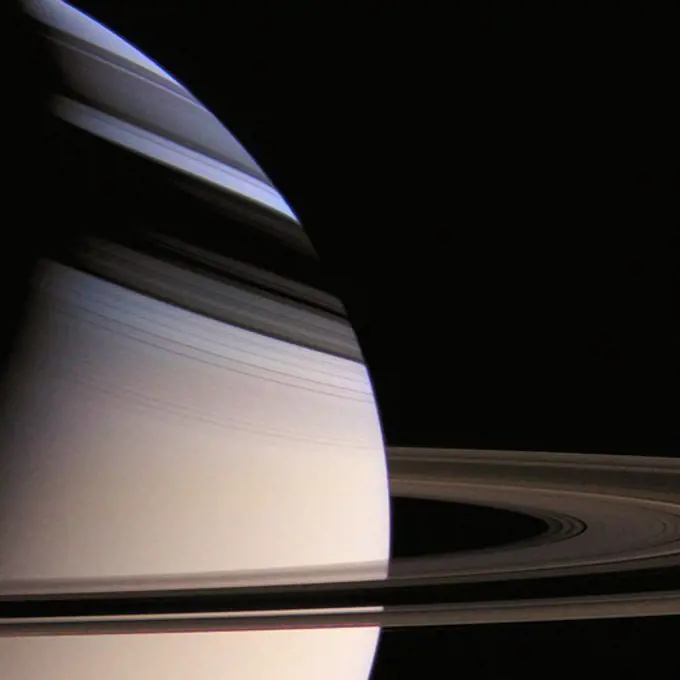
View of Saturn from Cassini
4128R-11283759
Saturn, computer artwork.
1525-22727055
gas giant planet and moon, 3d render
4128R-5218
Jupiter
6188-55647463
Planet in the solar system planet in the Copyright solar system: xzoonar.com/DR.XNORBERBERTXLANGEX 14335015
4128-V58567706
6145-44669188
The Cassini spacecraft views Saturn's southern latitudes in color, spying a great, eye-shaped vortex just northward of the south polar region
4128-28968448
Saturn, illustration
6145-44674842
At a Tilt
4239R-517
Artist's concept comparing the size of the gas giant Jupiter (left) with that of the Earth (right)
6145-44546621
This false-color image of Saturn's southern hemisphere taken by NASA's Voyager 1 on Nov. 6, 1980, shows the unique red oval cloud feature located at 55 degrees south latitude.
4239R-20480489
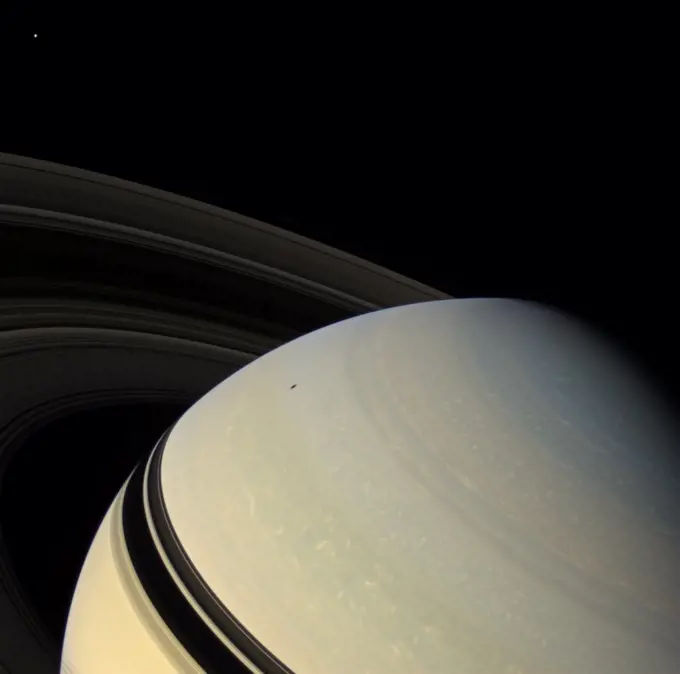
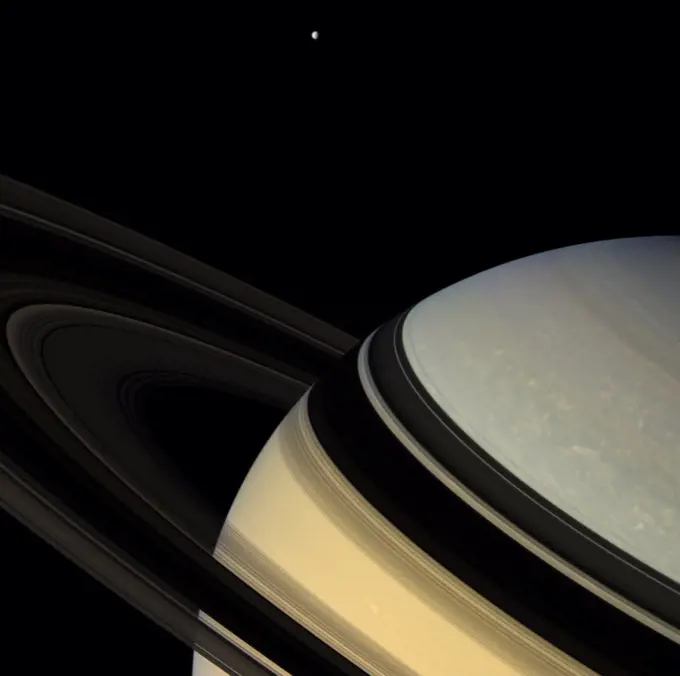
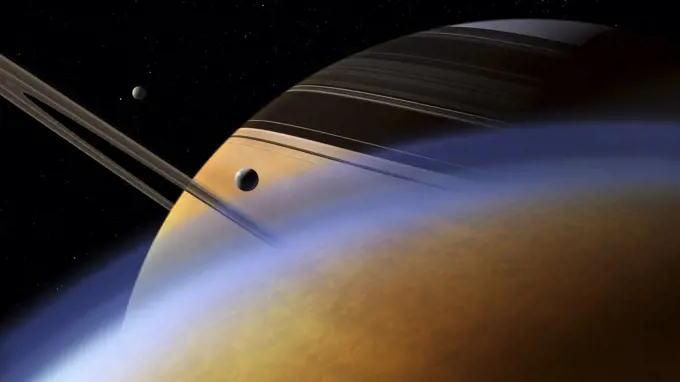
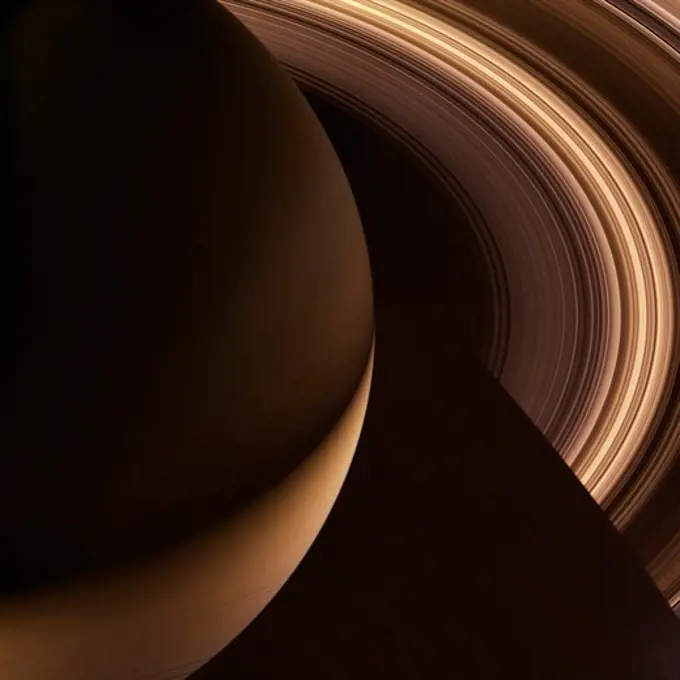
February 4, 2007 - Magnificent blue and gold Saturn floats obliquely as one of its gravity-bound companions, Dione, hangs in the distance. The darkened rings seem to nearly touch their shadowy reverse images on the planet below.  This view looks toward the unlit side of the rings from about 9 degrees above the ring plane. The rings glow feebly in the scattered light that filters through them.
4220-21916958
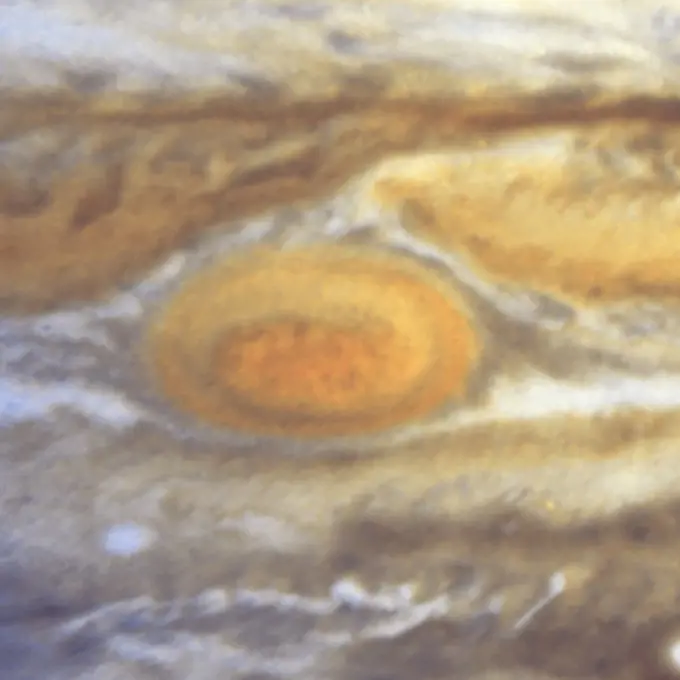
When 17th century astronomers  first turned their telescopes  on Jupiter, they noticed a  conspicuous reddish spot on  the planet's surface. It is a  vast storm, like a cyclone     Date: 5 August 1999
1746-19671004
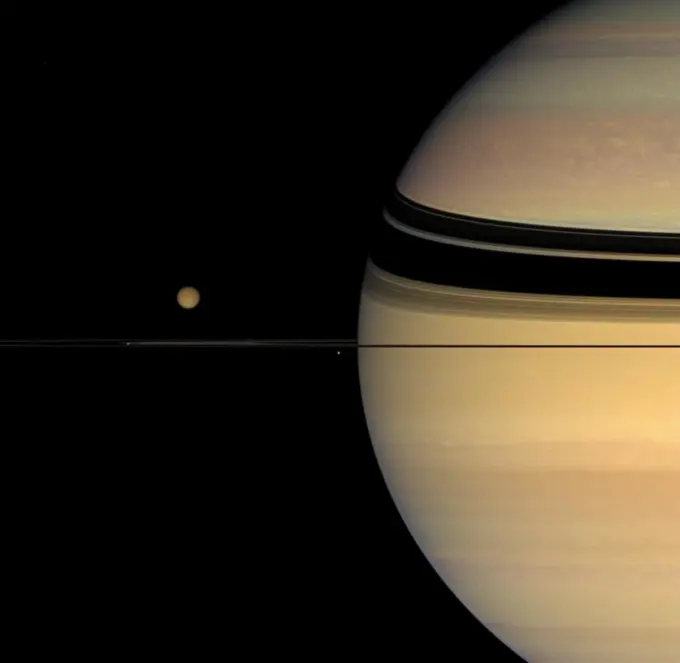
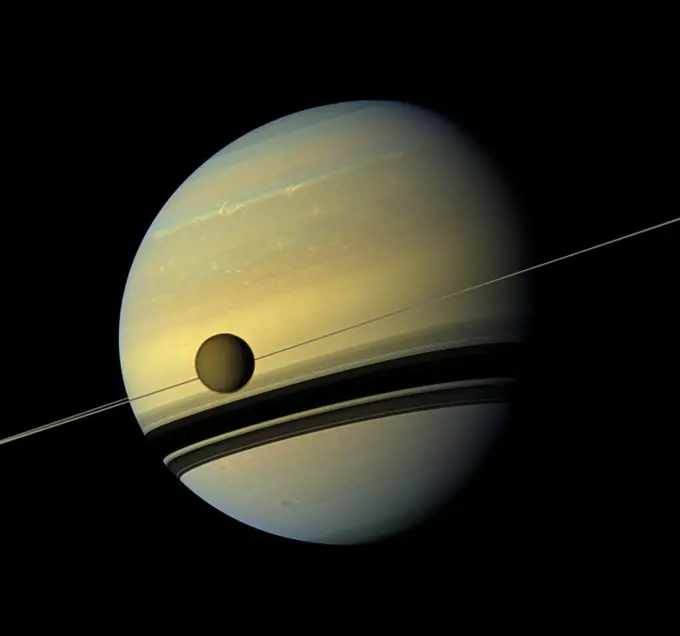
A giant of a moon appears before a giant of a planet undergoing seasonal changes in this natural color view of Titan and Saturn from NASA's Cassini spacecraft.
4239R-2500
Cosmic image of a giant gaseous ringed planet.
4389-1515
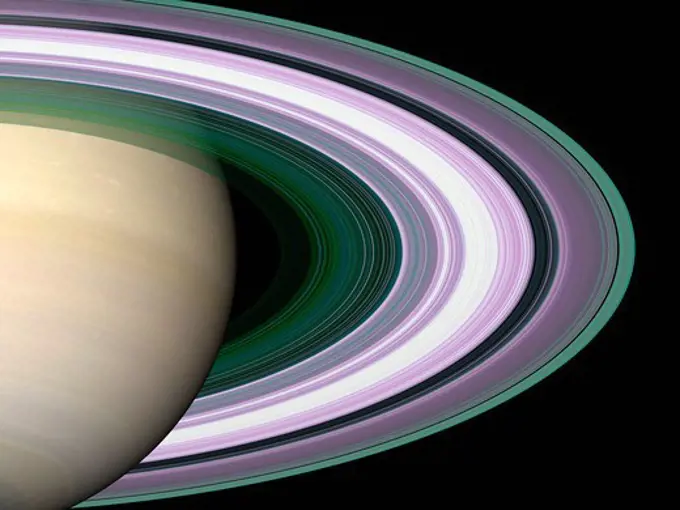
Radio Occultation, Unraveling Saturn's Ring As Seen By Cassini
1746-19671754
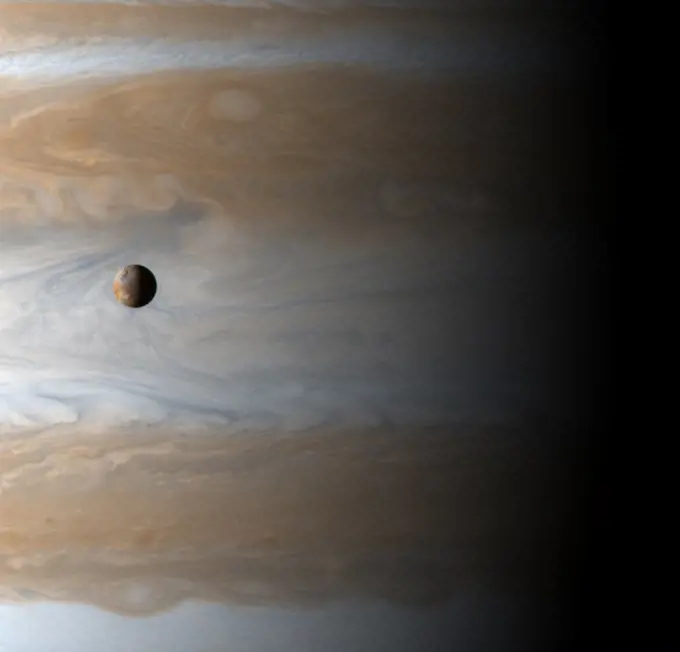
The Galilean satellite Io floats above the cloudtops of Jupiter in this image captured on January 1, 2001. Cassini Spacecraft.
227-161
Close-up of Jupiter in space
4239R-453
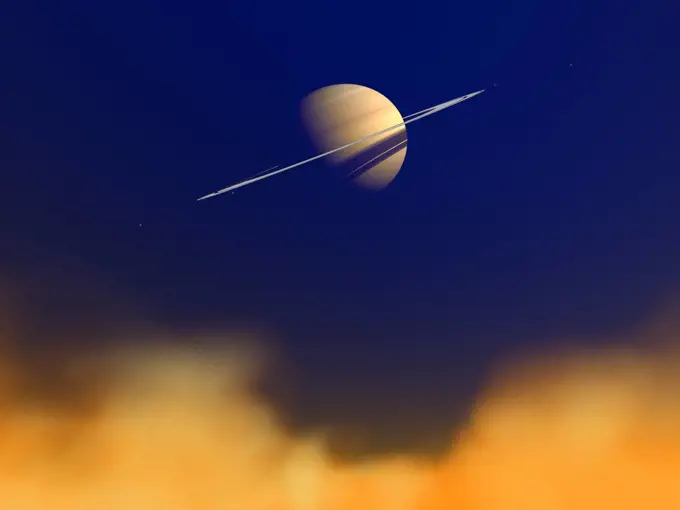
The ringed giant Saturn rises above the haze of Titan, the only moon in the solar system with a substantial atmosphere
6145-44566931
Saturn With Rhea and Dione (false color)
6145-44688307
On the Final Frontier
6188-55647423
Planet Saturn mit Ringen Planet Saturn mit Ringen Copyright: xZoonar.com/Dr.xNorbertxLangex 14330229
6145-45261456
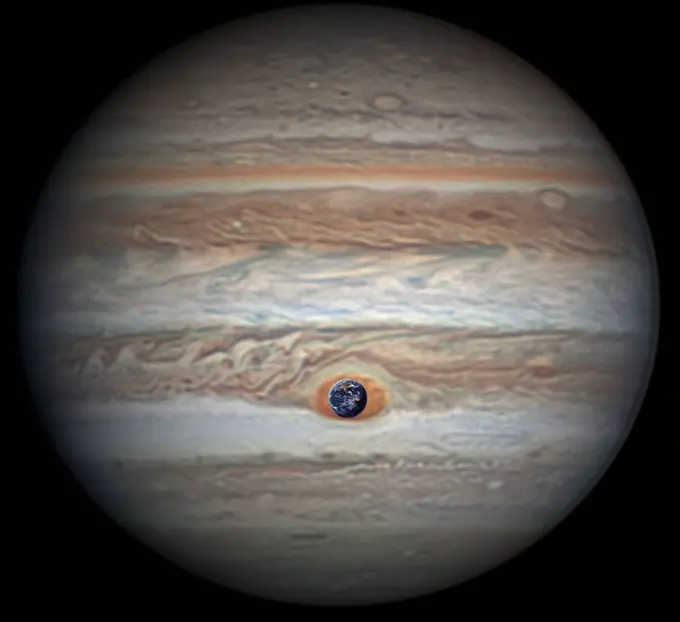
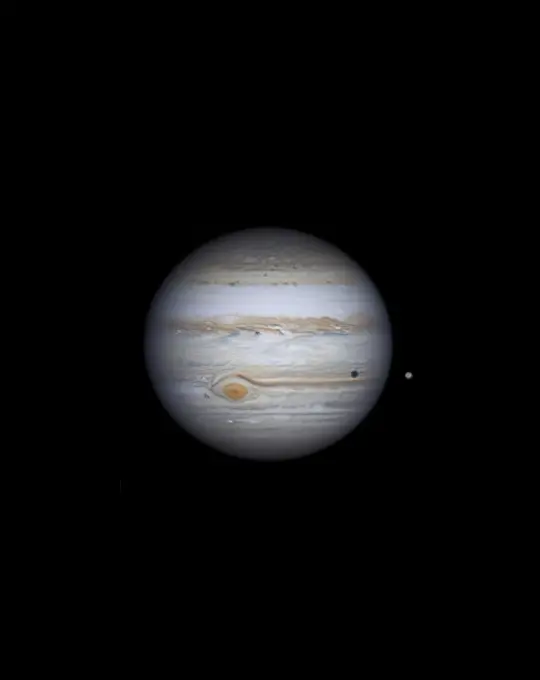
Measuring in at 10,159 miles (16,350 kilometers) in width (as of April 3, 2017) Jupiter's Great Red Spot is 1.3 times as wide as Earth. This composite image was generated by combining NASA imagery of Earth with an image of Jupiter taken by astronomer Christopher Go. This composite image was generated by combining NASA imagery of Earth with an image of Jupiter taken by astronomer Christopher Go.
6145-44869210
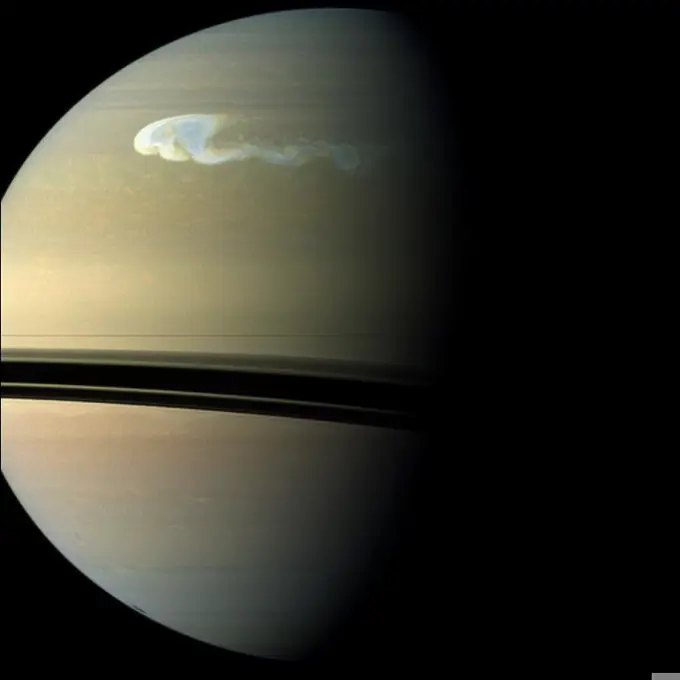
NASA's Cassini spacecraft captures a composite near-true-color view of the largest and most intense storm observed on Saturn. The storm is seen churning through the atmosphere in Saturn's northern hemisphere.
227-471
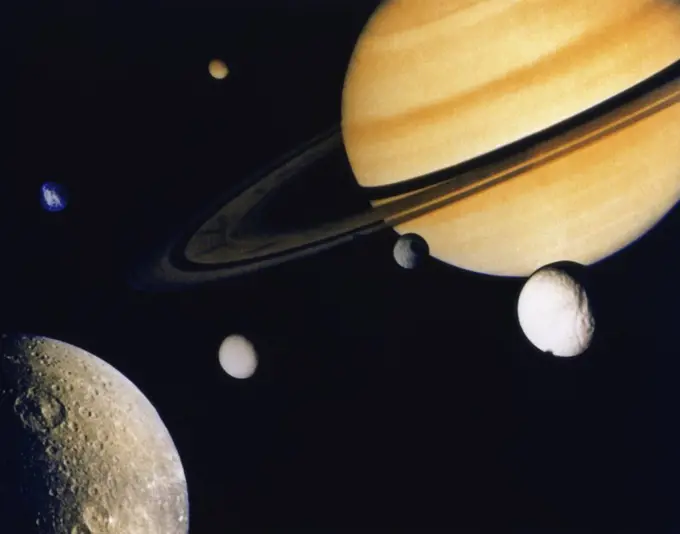
Saturn and 6 of its Satellites (Clockwise from right: Tethys, Mimas, Encleladus, Dione, Rhea & Titan)
6145-44722940
Keep It Rolling
4128R-14846316
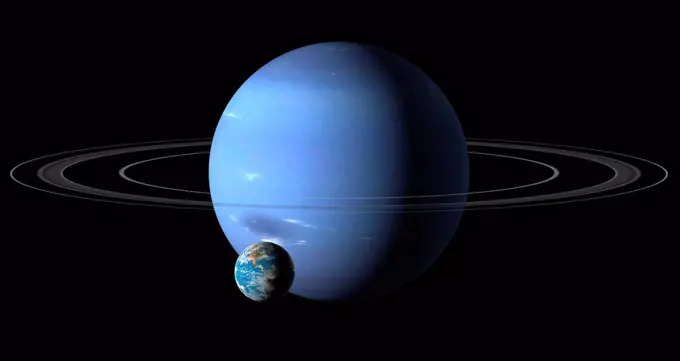
Earth compared to Neptune, illustration
6145-44602252
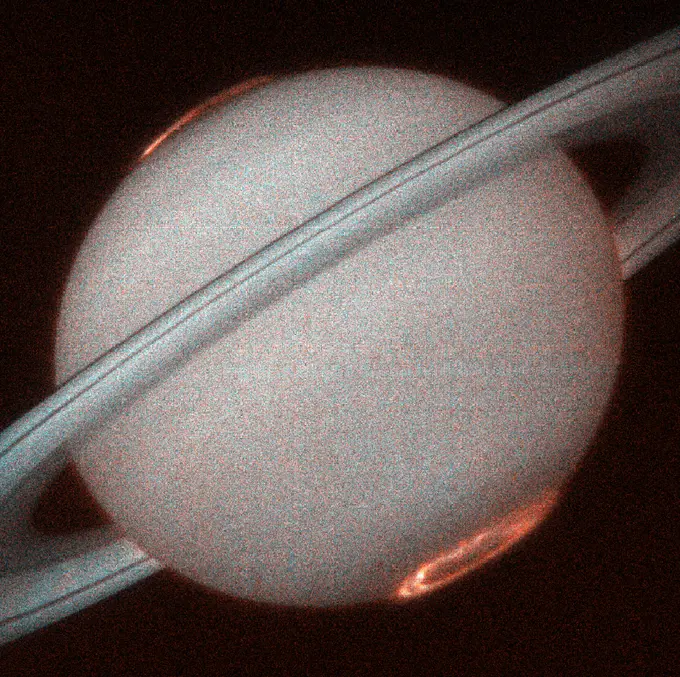
This is the first image of Saturn's ultraviolet aurora taken by the Space Telescope Imaging Spectrograph (STIS) on board the Hubble Space Telescope (HST) in October 1998, when Saturn was a distance of 810 million miles (1.3 billion kilometers) from Earth. The new instrument, used as a camera, provides more than 10 times the sensitivity of the previous HST instruments in the ultraviolet. STIS images reveal exquisite detail never before seen in the spectacular auroral curtains of light that encircle Saturn's north and south poles which rise more than a thousand miles above the cloud tops. Saturn's auroral displays are caused by an energetic wind from the Sun that sweeps over the planet, much like the Earth's aurora that is occasionally seen in the nighttime sky. Unlike the Earth, Saturn's aurora is only seen in ultraviolet light that is invisible from the Earth's surface, hence can only be observed from space.
6145-44515290
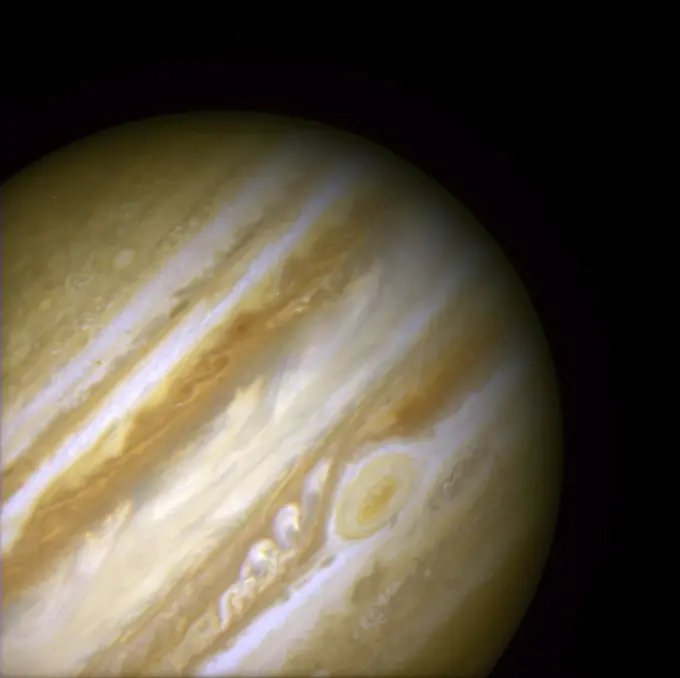
The familiar banded appearance of Jupiter at low and middle latitudes gradually gives way to a more mottled appearance at high latitudes in this striking true color image taken Dec. 13, 2000, by NASA's Cassini spacecraft.
6145-45106035
The turbulent atmosphere of a hot, gaseous planet known as HD 80606b is shown in this simulation based on data from NASA's Spitzer Space Telescope.
4239-57494225
The passage of Io in front of Jupiter.
6188-55607381
Planet Jupiter. 3d rendering digital background Planet Jupiter. 3d rendering digital background. Space backdrop Copyright: xZoonar.com/RomanxBudnikovx 11770369
4128R-14846251
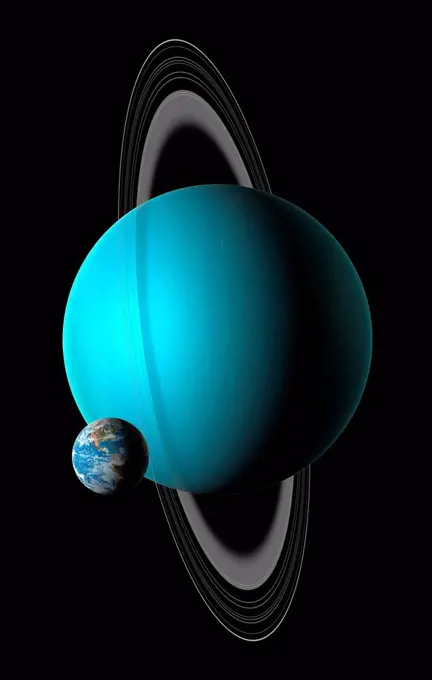
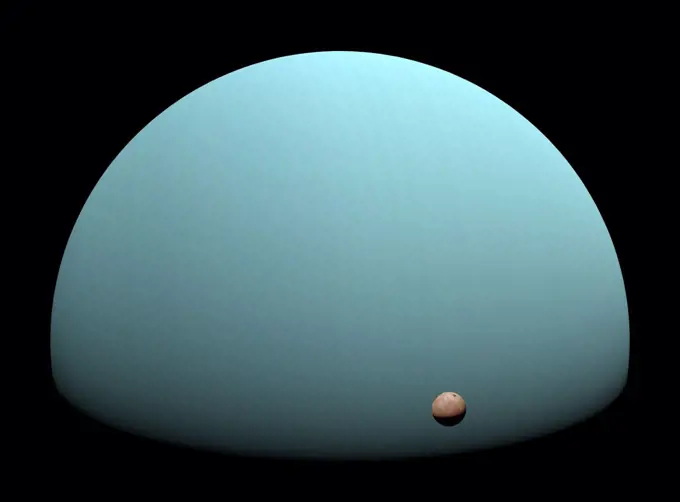
Earth compared to Uranus, illustration
6145-45126249
This false color view of Jupiter's polar haze was created by citizen scientist Gerald Eichstadt using data from the JunoCam instrument on NASA's Juno spacecraft.
1899-53509293
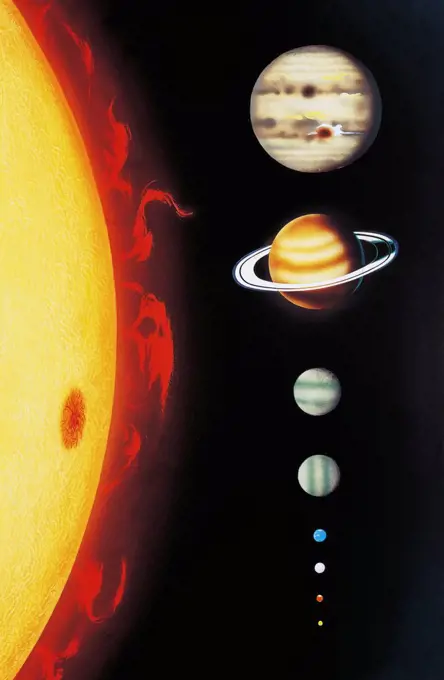
The ratio of the sun's scale to other celestial objects.
4389-514
Night Falling on Saturn's Rings
4239-69143499
Artist's concept of 61 Virginis b, an exoplanet that orbits a G-type star.
4128R-15536551
Illustration of Saturn
4128R-14846275
Earth compared to Neptune, illustration
6145-44626697
Cassini's Holiday Greetings
6145-58967113
This simulated view of the south pole of Jupiter illustrates the unique perspective of NASA's Juno mission. Juno's polar orbit will allow its camera, called JunoCam, to image Jupiter's clouds from a vantage point never accessed by other spacecraft.
4239-57495681
Artist's impression of a helium planet.
6145-58971967
In this annotated, graphic of Jupiter, small, bright pop-up clouds rise above the surrounding features in this cyclonic Jovian storm system, dubbed the Nautilus. The image at left, taken by the Hubble Space Telescope  which observed the storm  was taken on July 16, 2018. The Juno spacecraft's JunoCam captured the storm at higher resolution on July 16, 2018, during Juno's 13th science flyby of Jupiter. The image at right, a magnification of the JunoCam image, offers a closer view. Storms like these pop-up clouds are believed to be the tops of the extreme ammonia-water thunderclouds that produce shallow lightning and Jovian hailstones  or mushballs  high in Jupiter's atmosphere. The solar-powered Jupiter explorer launched on Aug. 5, 2011 and went into orbit around the gas giant on July 4, 2016.
6145-44620200
Frigid Ringworld
4239-69143491
Artist's concept of exoplanet Pi Mensae d.
1899-18493677
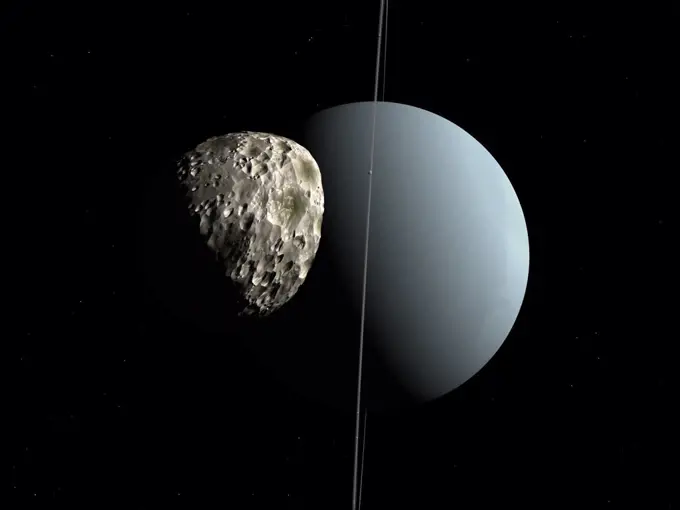
Ice giant Uranus in space with moons concept
6145-44569324
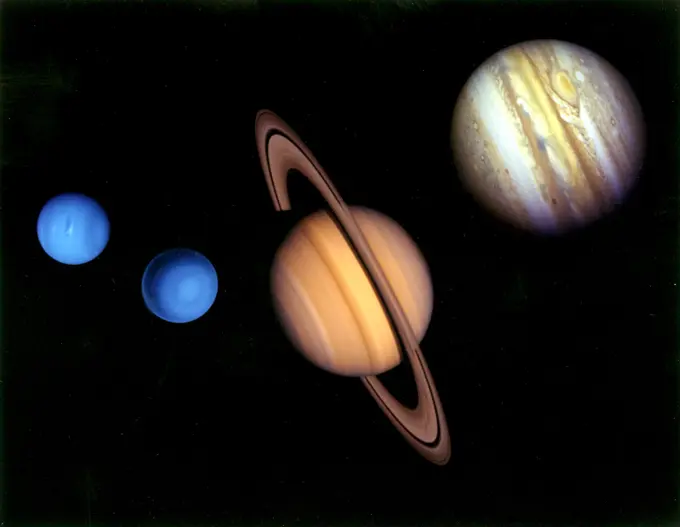
Voyager Tour Montage
6145-44876958
Data from the camera onboard NASA's Juno mission, called JunoCam, will be made available to the public for processing into their own images. Illustrated here with an image of Jupiter taken by NASA's Voyager mission.
1788-58378
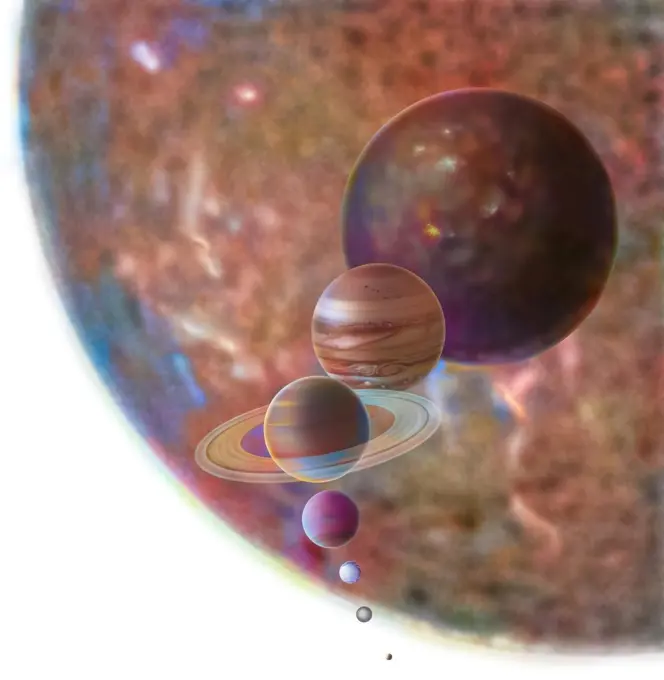
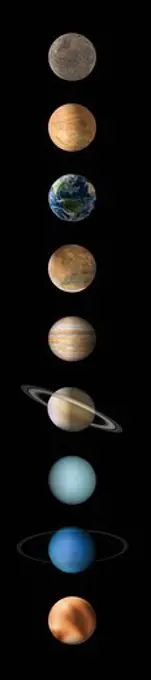
Planets of the Solar System, from the smallest: Mercury, Mars, Venus, Earth, Uranus, Saturn, Jupiter. Drawing.
1746-19663366
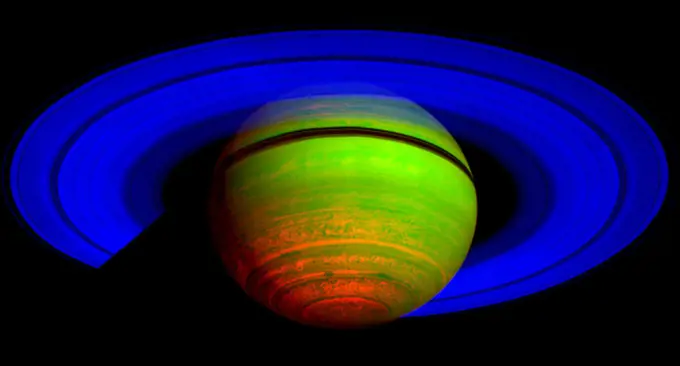
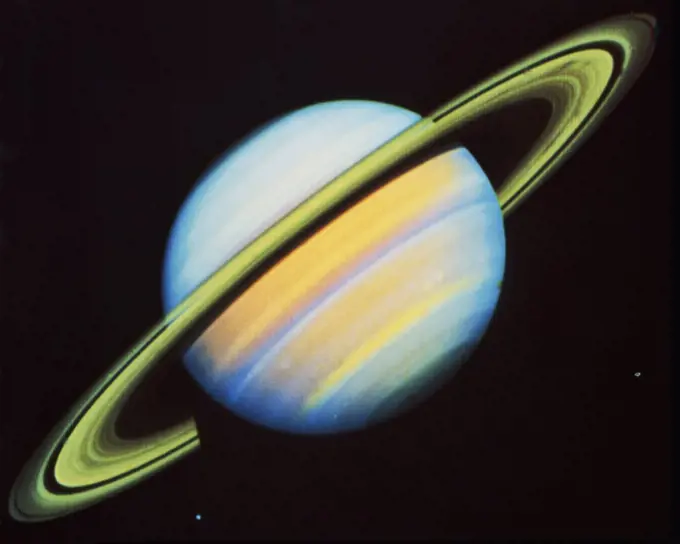
This false colour composite image of Saturn is constructed from data collected in the near-infrared wavelengths of light: blue is used to indicate sunlight reflected at a wavelength of 2 microns, green to indicate sunlight reflected at 3 microns and red to indicate thermal emission at 5 microns. The heat emission from the interior of Saturn is only seen at 5 microns wavelength in the spectrometer data, and thus appears red.
1889R-9768
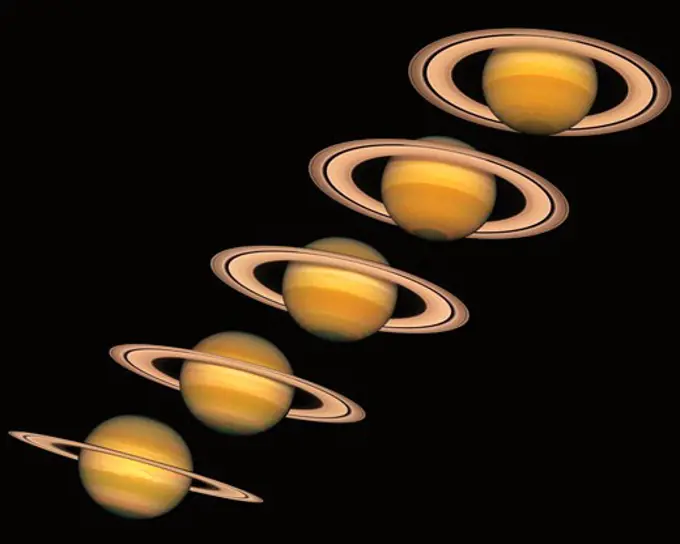
Views of Saturn Over the Years (1996-2000)
6188-63344703
Solar system planets set. The Sun and planets in a row on universe stars background.Elements of this image furnished by NASA. Solar system planets set. The Sun and planets in a row on universe stars background.Elements of this image furnished by NASA. 3d illustration Copyright: xZoonar.com/MaksymxYemelyanovx 19088155
4389-217
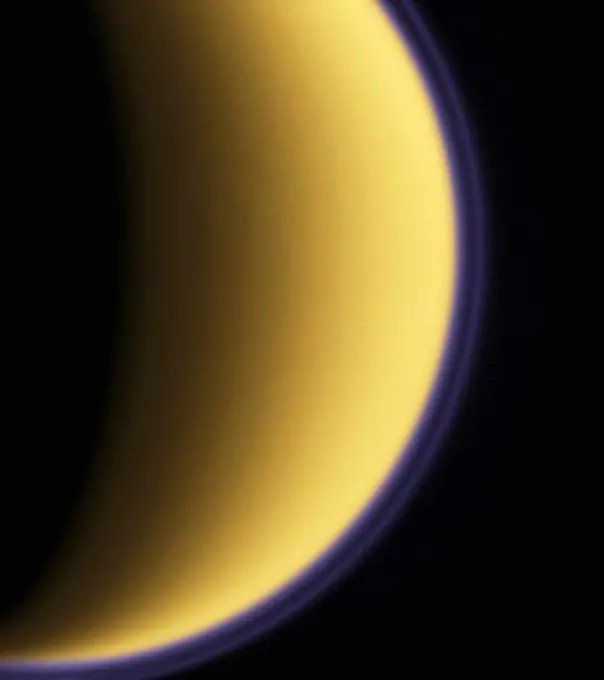
The Purple Haze of Titan Seen by Cassini
6145-44546653
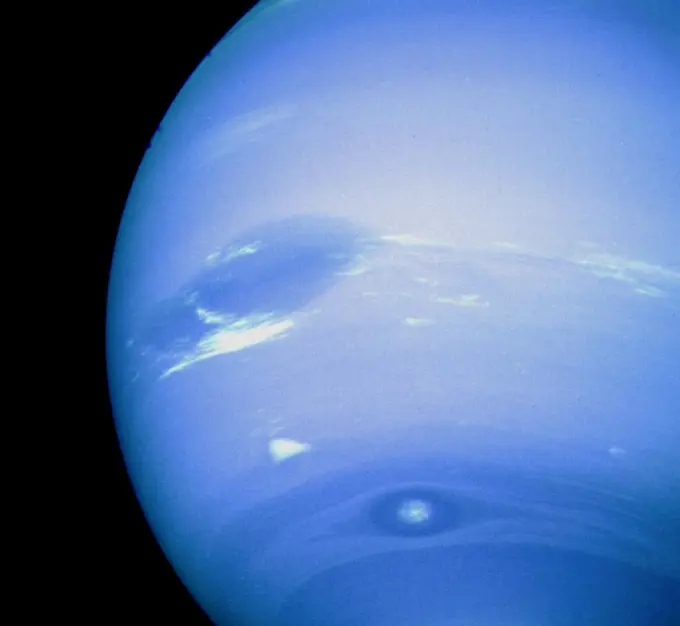
In this false color image of Neptune, objects that are deep in the atmosphere are blue, while those at higher altitudes are white. The image was taken by Voyager 2's wide-angle camera through an orange filter and two different methane filters.
6145-44559672
This photograph of Neptune was reconstructed from two images taken by NASA's Voyager 2. At the north (top) is the Great Dark Spot, accompanied by bright, white clouds that undergo rapid changes in appearance.
6145-44564629
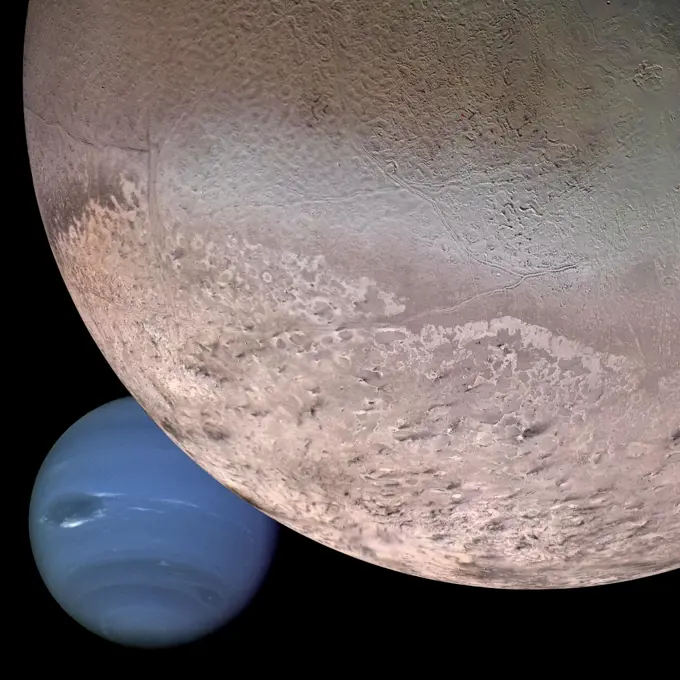
This computer generated montage created from images obtained by NASA's Voyager 2 shows Neptune as it would appear from a spacecraft approaching Triton, Neptune's largest moon at 2706 km (1683 mi) in diameter.
4239-57495716
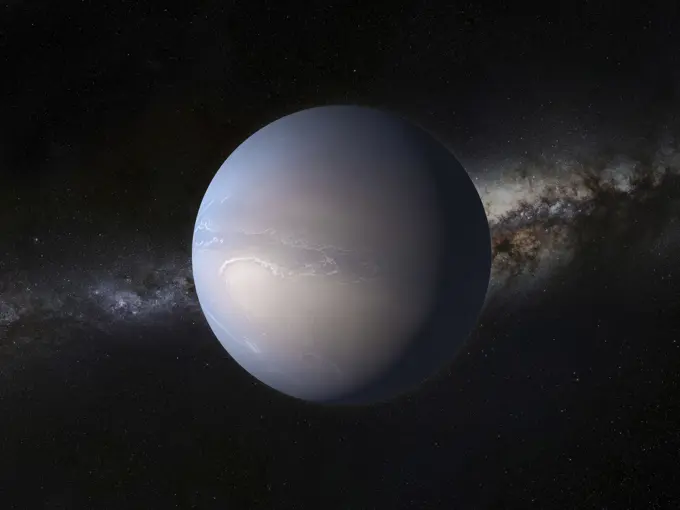
Artist's impression of a super-Neptune.
4239R-586
Artist's concept of Saturn amongst the hydrocarbon haze of its moon Titan
1848-64915093
Jupiter planet, Supernova Core pulsar neutron star. Elements of this image are furnished by NASA
6145-44693603
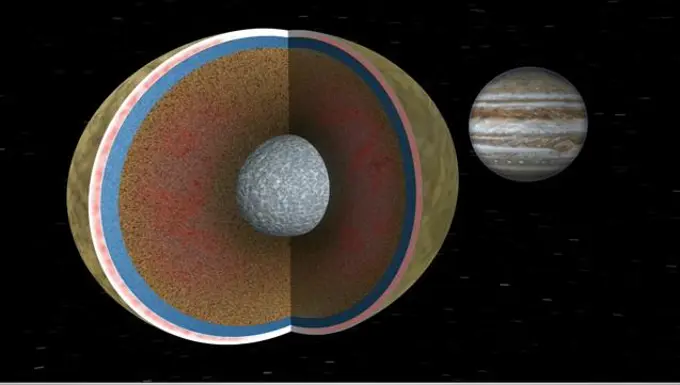
In this image, Europa is seen in a cutaway view through two cycles of its 3.5 day orbit about the giant planet Jupiter. Like Earth, Europa is thought to have an iron core, a rocky mantle and a surface ocean of salty water. Animation available at the Photo
6145-44903167
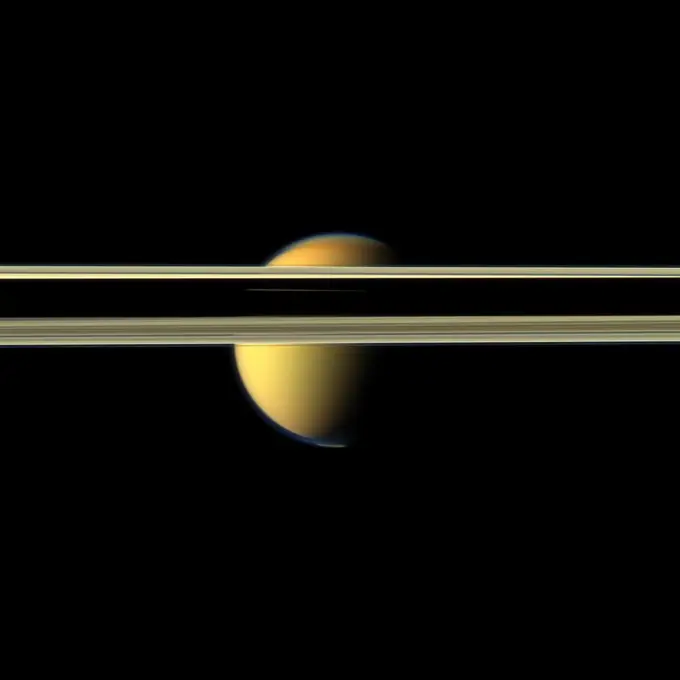
Saturn's rings obscure part of Titan's colorful visage in this image from NASA's Cassini spacecraft. The south polar vortex that first appeared in Titan's atmosphere in 2012 is visible at the bottom of this view.
227-243
Saturn
6145-45265120
A multitude of magnificent, swirling clouds in Jupiter's dynamic North North Temperate Belt is captured in this image from NASA's Juno spacecraft. Appearing in the scene are several bright-white pop-up clouds as well as an anticyclonic storm, known as a white oval. This color-enhanced image was taken at 1 58 p.m. PDT on Oct. 29, 2018 (4 58 p.m. EDT) as the spacecraft performed its 16th close flyby of Jupiter. At the time, Juno was about 4,400 miles (7,000 kilometers) from the planet's cloud tops, at a latitude of approximately 40 degrees north. Citizen scientists Gerald Eichstädt and Seán Doran created this image using data from the spacecraft's JunoCam imager.
6145-44549204
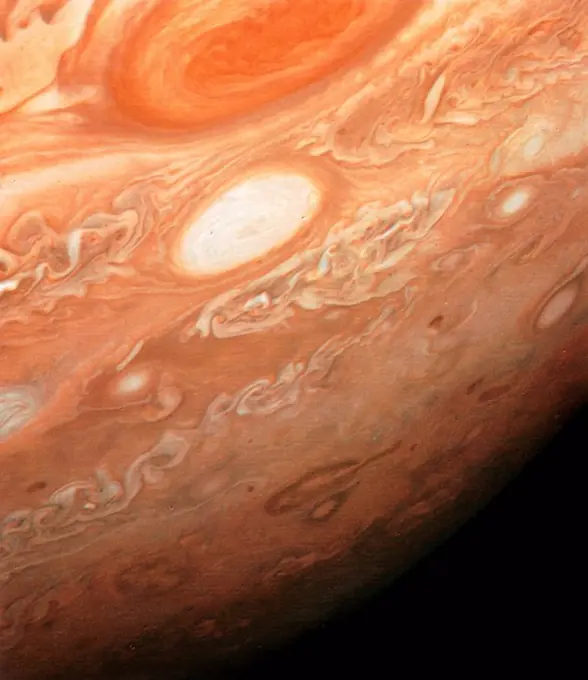
NASA's Voyager 2 shows the Great Red Spot and the south equatorial belt extending into the equatorial region. At right is an interchange of material between the south equatorial belt and the equatorial zone.
4128-24796281
Neptune with moons and atmosphere, illustration
1815-76040084
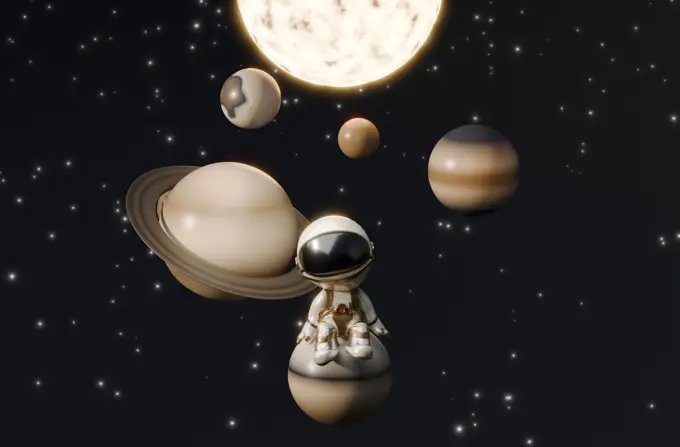
3d cartoon astronaut exploring planets and stars in space
6145-45121236
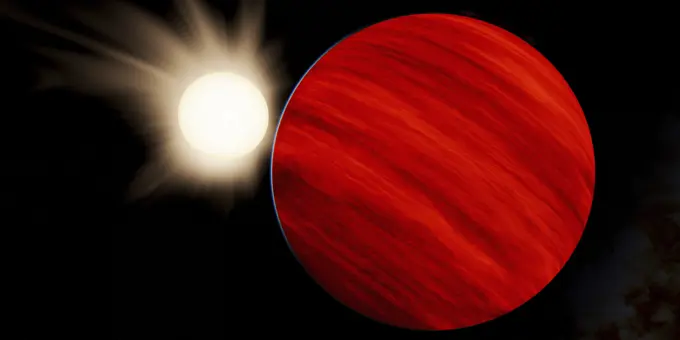
This illustration depicts a brown dwarf. NASA's Spitzer and Swift missions observed a microlenseing event as the star passed between Earth and a much more distant star in our galaxy.
273-473
Close-up of Jupiter
4239-57495655
Artist's impression of an alkali metal clouds gas giant.
1746-19671722
The Red Spot is the largest known storm in the Solar System. With a diameter of 15,400 miles, it is almost twice the size of the entire Earth and one-sixth the diameter of Jupiter itself.
6145-45262247
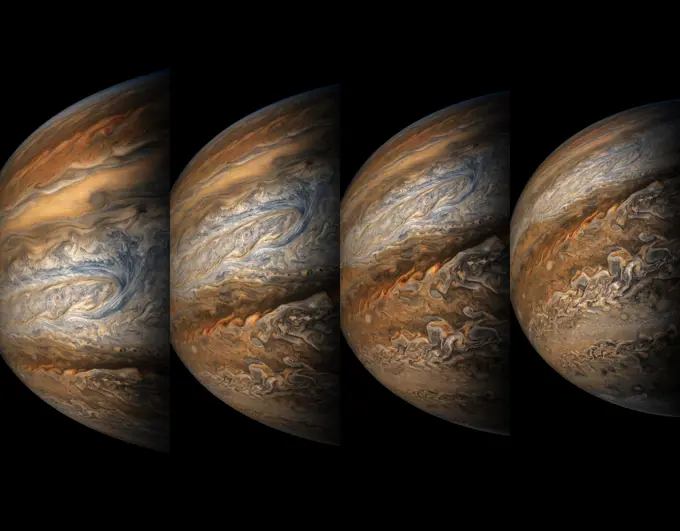
This series of enhanced-color images shows Jupiter up close and personal, as NASA's Juno spacecraft performed its eighth flyby of the gas giant planet. The images were obtained by JunoCam. From left to right, the sequence of images taken on Sept. 1, 2017 from 3 03 p.m. to 3 11 p.m. PDT (6 03 p.m. to 6 11 p.m. EDT). At the times the images were taken, the spacecraft ranged from 7,545 to 14,234 miles (12,143 to 22,908 kilometers) from the tops of the clouds of the planet at a latitude range of -28.5406 to -44.4912 degrees. Points of Interest include Dalmatian Zone/Eye of Odin, Dark Eye/STB Ghost East End, Coolest Place on Jupiter, and Renslow/Hurricane Rachel. The final image in the series on the right shows Jupiter's south pole coming into view. Citizen scientists Gerald Eichstädt and Seán Doran created this image using data from the spacecraft's JunoCam imager.
6145-45250771
Saturn and its rings are prominently shown in this color image, along with three of Saturn's smaller moons. From left to right, they are Prometheus, Pandora and Janus. Prometheus and Pandora are often called the F ring shepherds as they control and interact with Saturn's interesting F ring, seen between them. This image was taken on June 18, 2004, with the Cassini spacecraft narrow angle camera 8.2 million kilometers (5.1 million miles) from Saturn. It was created using the red, green, and blue filters. Contrast has been enhanced to aid visibility. http //photojournal.jpl.nasa.gov/catalog/PIA06422
5507-49069204
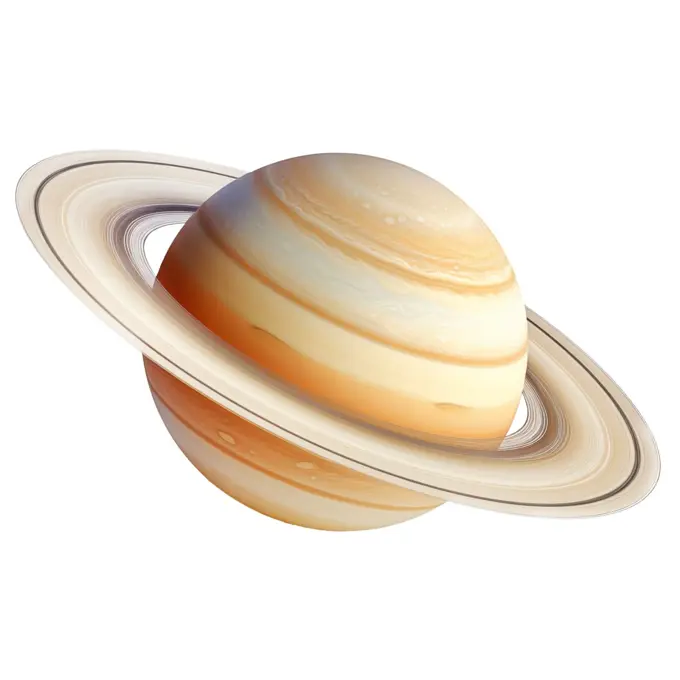
Realistic image of planet Saturn on a transparent background. Planet Saturn isolated on transparent background in PNG format, space elements, astronomy concept.
1746-19659465
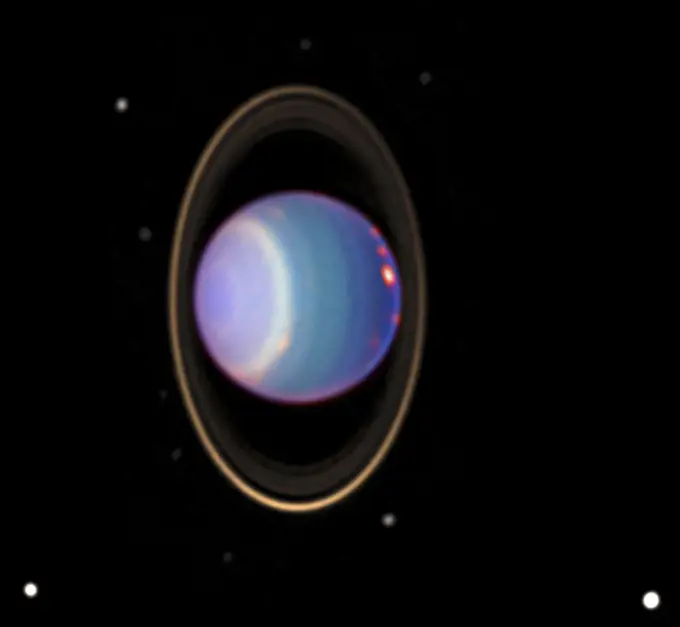
A recent Hubble Space Telescope (HST) view reveals Uranus surrounded by its 4 major rings and 10 of its 17 known satellites
6145-44546893
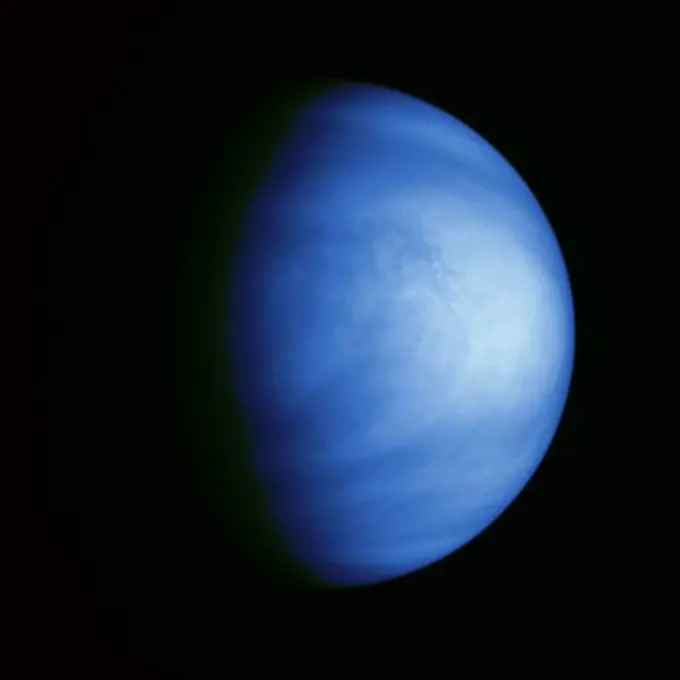
This colorized picture of Venus was taken Feb. 14, 1990, from a distance of almost 1.7 million miles, about 6 days after NASA's Galileo made it's closest approach to the planet.
1746-28998930
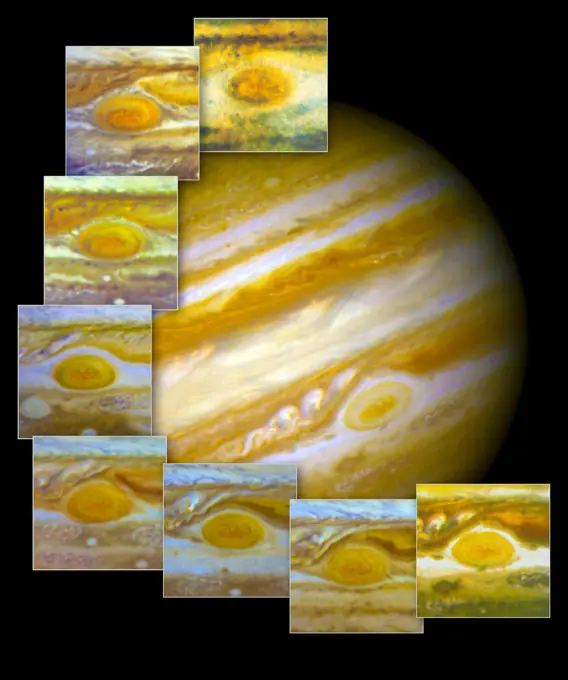
Composite of Hubble Telescope views of the ancient storm in the Red Spot in the atmosphere of Jupiter 1999
6145-44516629
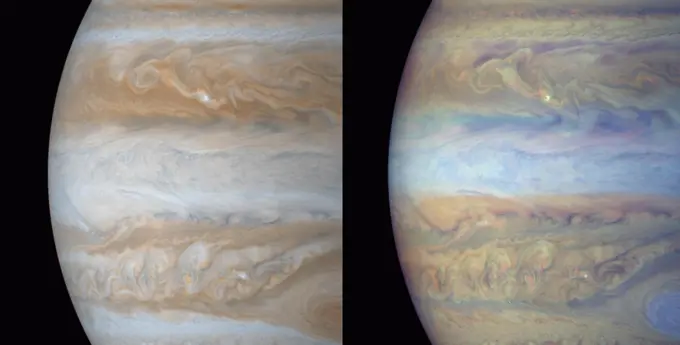
Jupiter in True and False Color
4353-291
Digital Illustration of the Nine Planets of Our Solar System
4128R-4937
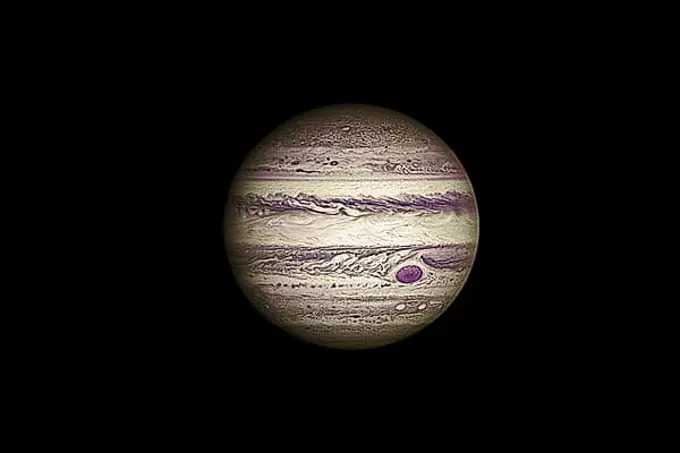
Jupiter´s southern hemisphere
4239-57495994
Exosolar planet with rings
1746-19670810
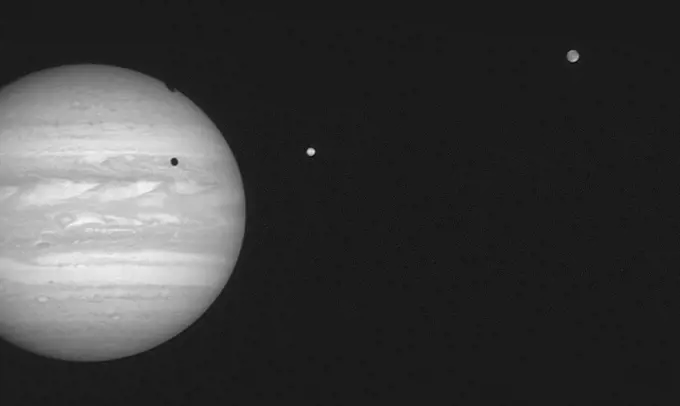
The New Horizons Long Range Reconnaissance Imager (LORRI) took this 4-millisecond exposure of Jupiter and two of its moons.
4239R-604
Artist's concept of how Uranus and its tiny satellite Puck might look from a position in orbit around Puck
6145-45237465
On February 5, 1979, Voyager 1 made its closest approach to Jupiter since early 1974 and 1975 when Pioneers 10 and 11 made their voyages to Jupiter and beyond. Voyager 1 completed its Jupiter encounter in early April, after taking almost 19,000 pictures and recording many other scientific measurements. Although astronomers had studied Jupiter from Earth for several centuries, scientists were surprised by many of Voyager 1 and 2's findings. They now understand that important physical, geological, and atmospheric processes go on that they had never observed from Earth. Discovery of active volcanism on the satellite Io was probably the greatest surprise. It was the first time active volcanoes had been seen on another body in the solar system. Voyager also discovered a ring around Jupiter. Thus Jupiter joins Saturn, Uranus, and Neptune as a ringed planet -- although each ring system is unique and distinct from the others.
6188-55589607
Planets of the Solar System Planets of the Solar System, part of the Milky Way galaxy - Top left to bottom right Mercury Venus Earth Mars Jupiter Uranus Saturn Neptune Elements in this images from NASA Copyright: xZoonar.com/ClaudioxDiviziax 9194790
4353-266
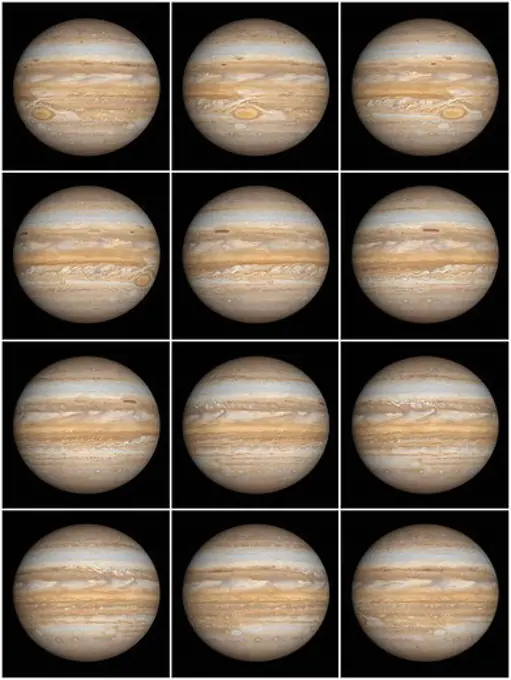
Digital Illustration of Jupiter's Rotation On Its Axis
6145-45100797
This image shows an artist's impression of the 10 hot Jupiter exoplanets studied using the Hubble and Spitzer space telescopes. (Top L, Bottom R -- WASP-12b, WASP-6b, WASP-31b, WASP-39b, HD 189733b, HAT-P-12b, WASP-17b, WASP-19b, HAT-P-1b, HD 209458b)
PREVIOUS
of 2
NEXT
2401 S. Ervay, Suite 206
Dallas, Texas 75215
United States
Browse
CategoriesGalleriesFree Research
For Creators
License Your ContentSuperStock For StudentsFrame of Mind BlogContributor PortalNew Image SpotlightLicense AI Imagery
Resources
About UsLicensingTerms & ConditionsAPI AccessPrivacyPricing
Contact
+1 866 236 0087help@superstock.com Contact form
©2026 SuperStock. All Rights Reserved. -A
This site is protected by reCAPTCHA and Google Privacy Policy and Terms of Service apply.