Fine ArtVintageFootageSubscriptionBoardsFree ResearchPricing
  • Fine Art
  • Vintage
  • Footage
  • Subscription
  • Boards
  • Free Research
  • Pricing

Rocket Launch Preparations

Images of rockets on launch pads at dusk and dawn, symbolizing space exploration and advancements in technology. Dynamic and powerful.

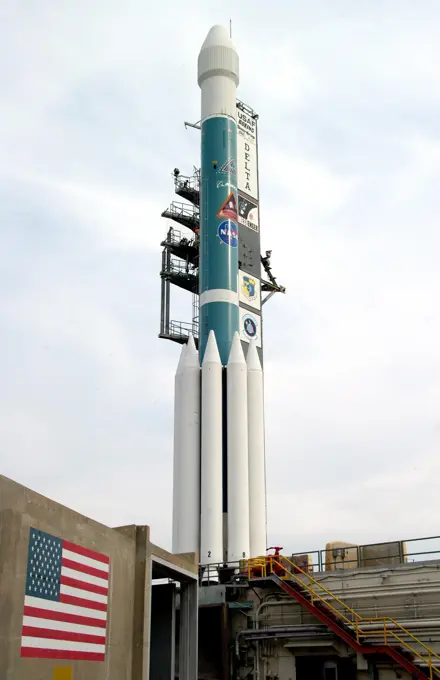
GOES-P LAUNCH L-0 DELTA IV TOWER ROLLBACK
231 assets in this story
6145-44487877
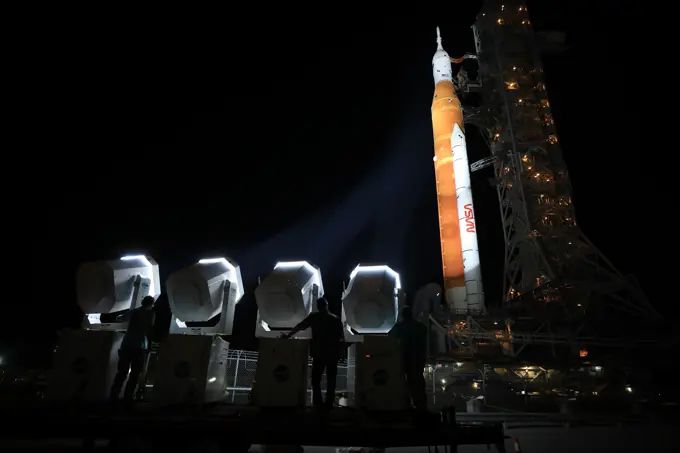
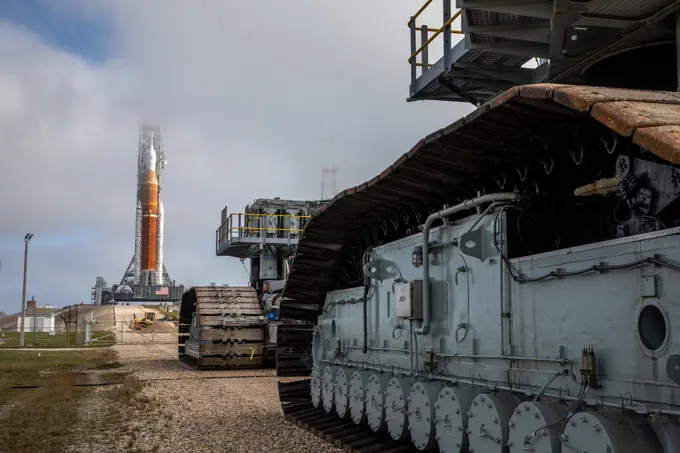
NASAs Space Launch System (SLS) rocket and Orion spacecraft, standing atop the mobile launcher, arrive at Launch Pad 39B at the agencys Kennedy Space Center in Florida on March 18, 2022, for a wet dress rehearsal ahead of the uncrewed Artemis I launch. In view is the crawler-transporter 2, which carried the Artemis I stack from the Vehicle Assembly Building to the pad - a 4.2-mile journey that took nearly 11 hours to complete. Artemis I will test SLS and Orion as an integrated system prior to crewed flights to the Moon. Through Artemis, NASA will land the first woman and the first person of color on the lunar surface, paving the way for a long-term lunar presence and serving as a steppingstone on the way to Mars.
6145-52142058
A commercial Delta II lifts off in a successful launch from complex 17B at 1854 hours eastern standard time. The Delta II was carrying the Galaxy I-R spacecraft for Hughes Communications. Base: Cape Canaveral Air Force Station State: Florida (FL) Country: United States Of America (USA)
6145-44948136
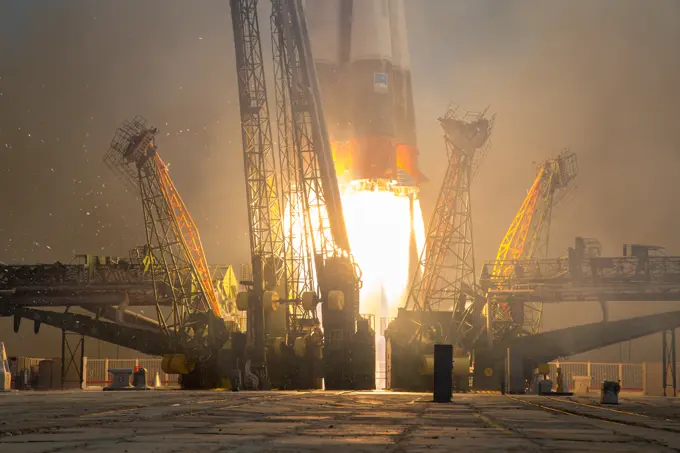
Large gantry mechanisms on either side of the Soyuz TMA-08M spacecraft are raised into position to secure the rocket at the launch pad on Tuesday, March 26, 2013 at the Baikonur Cosmodrome in Kazakhstan. Launch of the Soyuz rocket is scheduled for March 29 and will send Expedition 35 Soyuz Commander Pavel Vinogradov, and Flight Engineers Chris Cassidy of NASA and Alexander Misurkin of Russia on a five and a half-month mission aboard the International Space Station.
6145-44699648
Shown is an illustration of the Ares I crew launch vehicle on the launch pad at NASA's Kennedy Space Center, Florida.
6145-44479648
NASAs Space Launch System (SLS) rocket, with the Orion capsule atop, slowly makes its way along the crawlerway at the agencys Kennedy Space Center in Florida on Tuesday, Aug. 16, 2022/Wednesday, Aug. 17, 2022. Carried atop the crawler-transporter 2, NASAs Moon rocket is venturing the 4.2 miles from the Vehicle Assembly Building to Launch Complex 39B ahead of the first flight test of the fully stacked and integrated SLS rocket and Orion spacecraft, scheduled to liftoff on Monday, Aug. 29. The first in a series of increasingly complex missions, Artemis I will provide a foundation for human deep space exploration and demonstrate our commitment and capability to extend human presence to the Moon and beyond. The primary goal of Artemis I is to thoroughly test the integrated systems before crewed missions by launching Orion atop the SLS rocket, operating the spacecraft in a deep space environment, testing Orions heat shield, and recovering the crew module after reentry, descent, and spla
6145-44767615
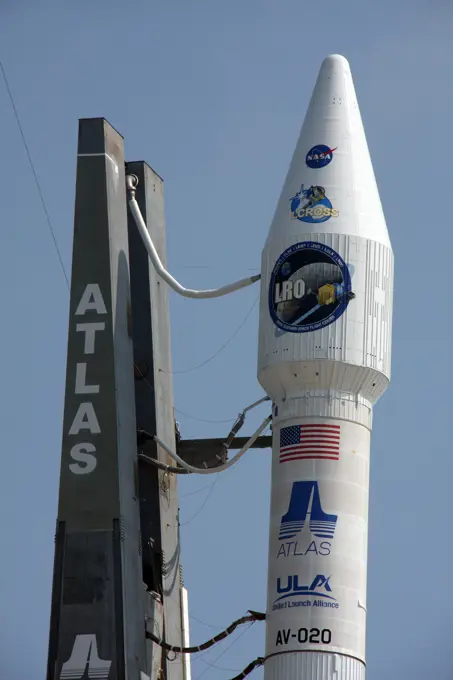
CAPE CANAVERAL, Fla. -  NASA's Lunar Reconnaissance Orbiter, or LRO, and NASA's Lunar Crater Observation and Sensing Satellite, known as LCROSS, stand ready for liftoff on an Atlas V/Centaur rocket from Launch Pad 41 at Cape Canaveral Air Force Station in Florida.   LRO and LCROSS are the first missions in NASA's plan to return humans to the moon and begin establishing a lunar outpost by 2020. The LRO also includes seven  instruments that will help NASA characterize the moon's surface:  DIVINER, LAMP, LEND, LOLA , CRATER, Mini-RF and LROC.   Launch is scheduled for 5:12 p.m. EDT June 18.
6145-45274101
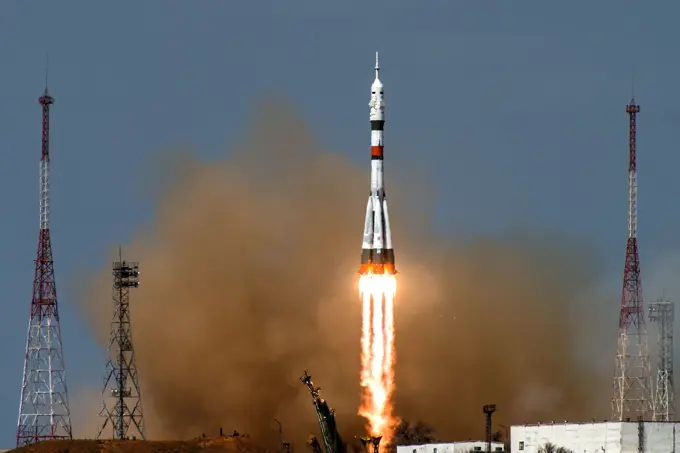
jsc2020e017057 - Expedition 63 Launch - The Soyuz MS-16 lifts off from Site 31 at the Baikonur Cosmodrome in Kazakhstan Thursday, April 9, 2020 sending Expedition 63 crewmembers Chris Cassidy of NASA and Anatoly Ivanishin and Ivan Vagner of Roscosmos into orbit for a six-hour flight to the International Space Station and the start of a six-and-a-half month mission.
6145-45132467
The Soyuz MS-04 spacecraft is raised into position on the launch pad Monday, April 17, 2017 at the Baikonur Cosmodrome in Kazakhstan. Launch of the Soyuz rocket is scheduled for April 20 Baikonur time and will carry Expedition 51 Soyuz Commander Fyodor Yurchikhin of Roscosmos and Flight Engineer Jack Fischer of NASA into orbit to begin their four and a half month mission on the International Space Station.
6145-45158120
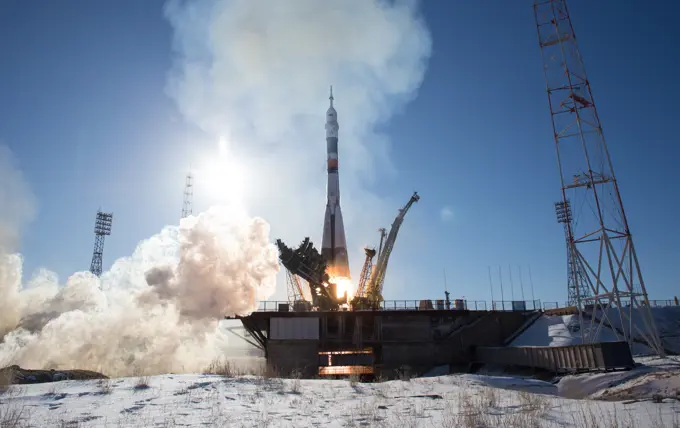
The Soyuz MS-08 rocket is launched with Expedition 55 Soyuz Commander Oleg Artemyev of Roscosmos and flight engineers Ricky Arnold and Drew Feustel of NASA, Wednesday, March 21, 2018 at the Baikonur Cosmodrome in Kazakhstan. Artemyev, Arnold, and Feustel will spend the next five months living and working aboard the International Space Station.
6145-44487853
NASAs Space Launch System (SLS) rocket and Orion spacecraft, standing atop the mobile launcher, arrive at Launch Pad 39B at the agencys Kennedy Space Center in Florida on March 18, 2022, for a wet dress rehearsal ahead of the uncrewed Artemis I launch. In view is the crawler-transporter 2, which carried the Artemis I stack from the Vehicle Assembly Building to the pad - a 4.2-mile journey that took nearly 11 hours to complete. Artemis I will test SLS and Orion as an integrated system prior to crewed flights to the Moon. Through Artemis, NASA will land the first woman and the first person of color on the lunar surface, paving the way for a long-term lunar presence and serving as a steppingstone on the way to Mars.
6145-45150625
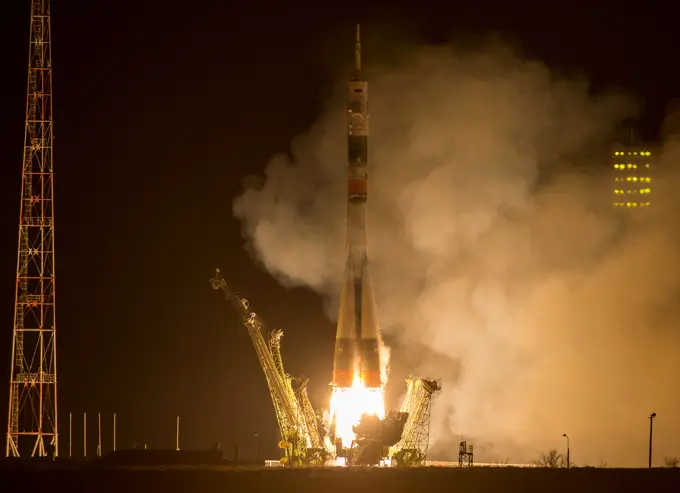
The Soyuz MS-07 rocket is launched with Expedition 54 Soyuz Commander Anton Shkaplerov of Roscosmos, flight engineer Scott Tingle of NASA, and flight engineer Norishige Kanai of Japan Aerospace Exploration Agency (JAXA), Sunday, Dec. 17, 2017 at the Baikonur Cosmodrome in Kazakhstan. Shkaplerov, Tingle, and Kanai will spend the next five months living and working aboard the International Space Station.
6145-45091797
The Soyuz TMA-16M spacecraft is seen as it launches to the International Space Station with Expedition 43 NASA Astronaut Scott Kelly, Russian Cosmonauts Mikhail Kornienko, and Gennady Padalka of the Russian Federal Space Agency (Roscosmos) onboard Saturday, March 28, 2015, Kazakh time (March 27 Eastern time) from the Baikonur Cosmodrome in Kazakhstan. As the one-year crew, Kelly and Kornienko will return to Earth on Soyuz TMA-18M in March 2016.
6145-45133840
The Soyuz MS-04 rocket launches from the Baikonur Cosmodrome in Kazakhstan on Thursday, April 20, 2017 Baikonur time carrying Expedition 51 Soyuz Commander Fyodor Yurchikhin of Roscosmos and Flight Engineer Jack Fischer of NASA into orbit to begin their four and a half month mission on the International Space Station. (
6145-58963715
KENNEDY SPACE CENTER, FLA. - A Boeing Delta II expendable launch vehicle stands ready to launch NASAs Swift spacecraft following tower rollback at Complex 17A, Cape Canaveral Air Force Station. Swift is a first-of-its-kind multi-wavelength observatory dedicated to the study of gamma-ray burst science. Its three instruments will work together to observe GRBs and afterglows in the gamma ray, X-ray, ultraviolet and optical wavebands. Swift is scheduled to launch Nov. 20 at 12 10 p.m. EST.
6145-45074097
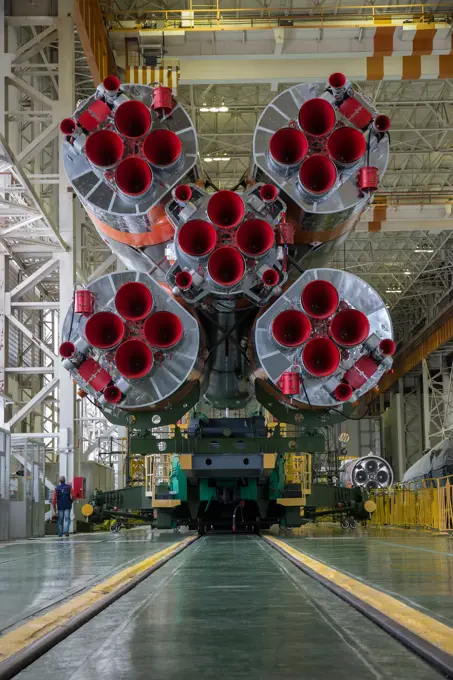
The Soyuz rocket and Soyuz TMA-14M spacecraft is assembled at Building 112 at the Baikonur Cosmodrome on Monday, Sept. 22, 2014, in Baikonur, Kazakhstan. Launch of the Soyuz is scheduled for Sept. 26 and will send Expedition 41 Soyuz Commander Alexander Samokutyaev of the Russian Federal Space Agency (Roscosmos), Flight Engineer Barry Wilmore of NASA, and Flight Engineer Elena Serova of Roscosmos to the International Space Station for a five and a half month stay.
6145-44887865
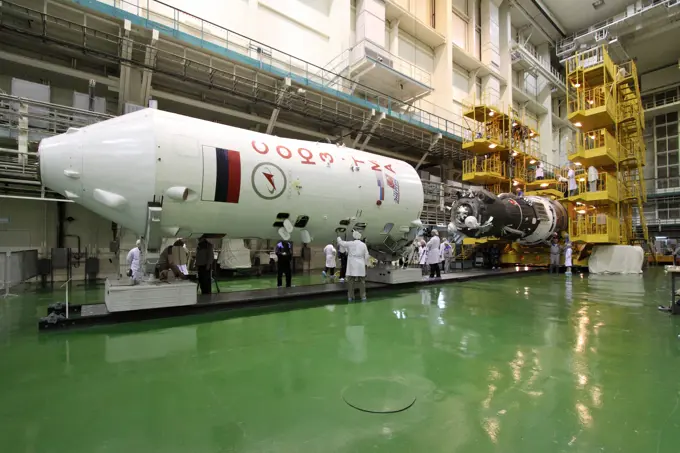
At the Baikonur Cosmodrome in Kazakhstan, the Soyuz TMA-04M spacecraft (background) and its Soyuz booster upper stage (foreground) stand poised in their integration facility May 8, 2012 to be joined together as preparations continue to launch it and three new crewmembers to the International Space Station. The Soyuz will carry Soyuz Commander Gennady Padalka, NASA Flight Engineer Joe Acaba and Flight Engineer Sergei Revin to the orbital complex on May 15 for a four-month mission. The Soyuz will rollout to its launch pad in Baikonur on May 13.NASA/Victor Zelentsov
6145-44710540
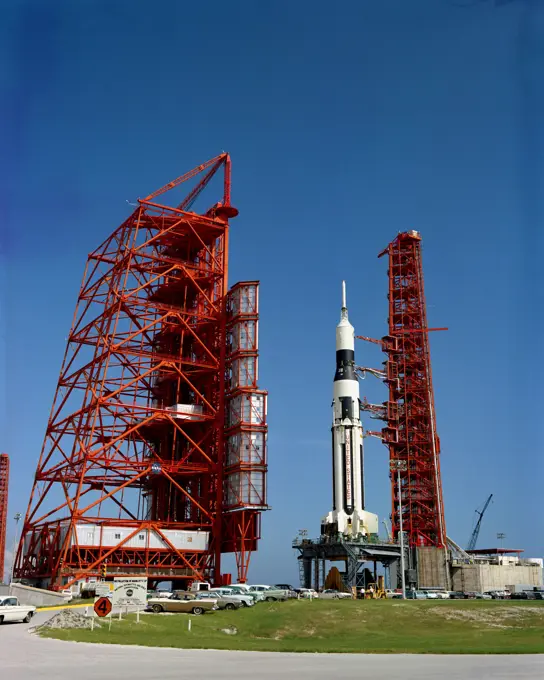
View of a Saturn I on the launch pad for a Radio Frequency Interference Test, to be conducted at LC-37A. Cape Kennedy Missile Test Center
6145-45080813
The Soyuz TMA-15M spacecraft is seen after being raised into a vertical position on the launch pad on Friday, Nov. 21, 2014 at the Baikonur Cosmodrome in Kazakhstan.  Launch of the Soyuz rocket is scheduled for Nov. 24 and will carry Expedition 42 Soyuz Commander Anton Shkaplerov of the Russian Federal Space Agency (Roscosmos), Flight Engineer Terry Virts of NASA , and Flight Engineer Samantha Cristoforetti of the European Space Agency into orbit to begin their five and a half month mission on the International Space Station.
6145-45194851
The Soyuz MS-12 spacecraft is launched with Expedition 59 crewmembers Nick Hague and Christina Koch of NASA, along with Alexey Ovchinin of Roscosmos, Friday March 15, 2019, Kazakh time (March 14 Eastern time) at the Baikonur Cosmodrome in Kazakhstan. Hague, Koch, and Ovchinin will spend six-and-a-half months living and working aboard the International Space Station.
6145-44619939
KENNEDY SPACE CENTER, FLA. - The Boeing Delta II rocket with the Mercury Surface, Space Environment, Geochemistry and Ranging (MESSENGER) spacecraft aboard is ready for launch on a seven-year journey to the planet Mercury.  This is the second launch attempt in two days after the first attempt Aug. 2 was postponed due to lightning potential from residual clouds that were associated with Tropical Storm Alex.   The launch of MESSENGER is rescheduled for this date at 2:15:56 a.m. EDT at the opening of a 12-second launch window.  MESSENGER will fly by Earth, Venus and Mercury several times to burn off energy before making its final approach to the inner planet on March 18, 2011.  MESSENGER was built for NASA by the Johns Hopkins University Applied Physics Laboratory in Laurel, Md.
6145-45150358
The Soyuz MS-07 rocket is launched with Expedition 54 Soyuz Commander Anton Shkaplerov of Roscosmos, flight engineer Scott Tingle of NASA, and flight engineer Norishige Kanai of Japan Aerospace Exploration Agency (JAXA), (iptcdow, Dec. 17, 2017 at the Baikonur Cosmodrome in Kazakhstan. Shkaplerov, Tingle, and Kanai will spend the next five months living and working aboard the International Space Station.
6145-45143464
jsc2017e115215 (Sept.. 8, 2017) --- At the Cosmonaut Hotel crew quarters in Baikonur, Kazakhstan, the Expedition 53-54 prime and backup crewmembers pose for photos around a Soyuz rocket mock up Sept. 8 as part of pre-launch activities. From left to right are the backup crewmembers, Shannon Walker of NASA, Anton Shkaplerov of Roscosmos and Scott Tingle of NASA and the prime crewmembers, Joe Acaba of NASA, Alexander Misurkin of Roscosmos and Mark Vande Hei of NASA. Acaba, Misurkin and Vande Hei will launch Sept. 13 from the Baikonur Cosmodrome in Kazakhstan on the Soyuz MS-06 spacecraft for a five and a half month mission on the International Space Station.
6145-45033368
The Soyuz TMA-03M spacecraft is seen at the launch pad after being raised into vertical position on Monday, Dec. 19, 2011 at the Baikonur Cosmodrome in Kazakhstan. The launch of the Soyuz spacecraft with Expedition 30 Soyuz Commander Oleg Kononenko of Russia, NASA Flight Engineer Don Pettit and ESA (European Space Agency) astronaut and Flight Engineer Andre Kuipers is scheduled for Wednesday, Dec. 21, 2011.
6145-44841055
(9 Dec. 2010) --- At the Baikonur Cosmodrome in Kazakhstan, the Soyuz TMA-20 spacecraft (right) is shown before the its encapsulation into its payload fairing (left) on Dec. 9, 2010. The vehicle is set to launch Dec. 16 (Kazakhstan time) to deliver NASA astronaut Catherine (Cady) Coleman, Expedition 26 flight engineer; Soyuz commander Dmitry Kondratyev of Russia's Federal Space Agency (Roscosmos) and European Space Agency astronaut Paolo Nespoli, flight engineer, to the International Space Station.
6145-45178517
The gantry rolls back at Space Launch Complex 2 at Vandenberg Air Force Base in California, on Sept. 14, 2018, for the final United Launch Alliance Delta II rocket which will carry NASA's Ice, Cloud and land Elevation Satellite-2 (ICESat-2). Liftoff is scheduled for Sept. 15, 2018, at 8:46 a.m. EDT (5:46 a.m. PDT). The satellite will measure the height of our changing Earth, one laser pulse at a time, 10,000 laser pulses per second. ICESat-2 will provide scientists with height measurements that create a global portrait of Earth's third dimension, gathering date that can precisely track changes of terrain, including glaciers, sea ice and forests.
6145-45158127
The Soyuz MS-08 rocket is launched with Expedition 55 Soyuz Commander Oleg Artemyev of Roscosmos and flight engineers Ricky Arnold and Drew Feustel of NASA, Wednesday, March 21, 2018 at the Baikonur Cosmodrome in Kazakhstan. Artemyev, Arnold, and Feustel will spend the next five months living and working aboard the International Space Station.
6188-55646875
Rakete mit Flügeln an Startrampe Rakete mit Flügeln an Startrampe Copyright: xZoonar.com/Dr.xNorbertxLangex 14253150
6145-45131223
jsc2017e040347 (April 7, 2017) --- In Baikonur, Kazakhstan, Expedition 51 backup crewmembers Randy Bresnik of NASA (left) and Sergey Ryazanskiy of the Russian Federal Space Agency (Roscosmos, right) are shown a model of a Soyuz rocket at a local museum April 7 during pre-launch activities. They are serving as backups to Fyodor Yurchikhin of Roscosmos and Jack Fischer of NASA, who will launch April 20 on the Soyuz MS-04 spacecraft from the Baikonur Cosmodrome for a four and a half month mission on the International Space Station. NASA/Victor Zelentsov
6145-55186664
TROPICS Wet Dress Rehearsal. A wet dress rehearsal is underway for Rocket Labs Electron rocket at Launch Complex 1 in Mahia, New Zealand on April 28, 2023. NASAs Time-Resolved Observations of Precipitation structure and storm Intensity with a Constellation of Smallsats (TROPICS) CubeSats are secured in the payload fairing atop the rocket. TROPICS is scheduled to launch from Launch Complex 1, Pad B. TROPICS will provide data on temperature, precipitation, water vapor, and clouds by measuring microwave frequencies, providing insight into storm formation and intensification.
1525-23435077
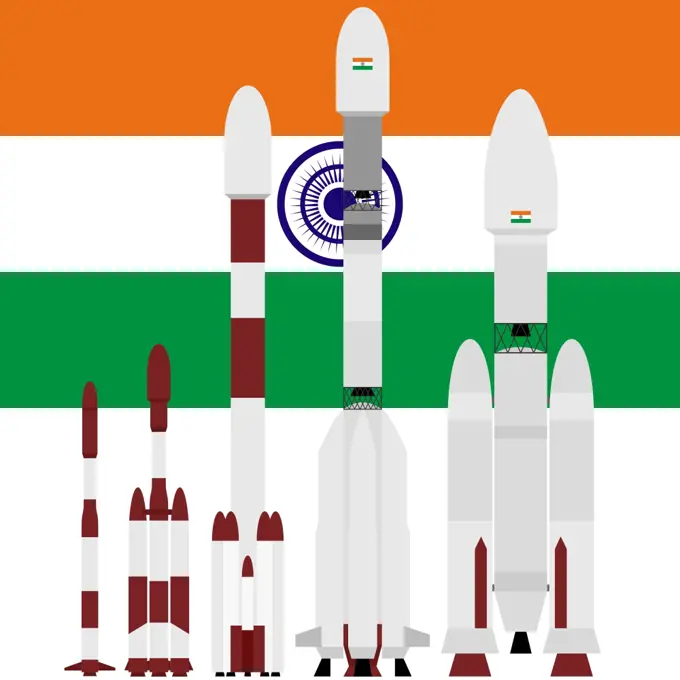
Indian spacecraft
6145-44527616
JOHNSON SPACE CENTER, HOUSTON, TEXAS. --  STS-110 INSIGNIA:  The STS-110 mission begins the third and final phase of construction for the International Space Station (ISS) by delivering and installing the S0 truss segment that will be carried into orbit in the payload bay of Space Shuttle Atlantis. The Station's robotic arm will remove the S0 segment from the Shuttle's payload bay and place it on top of the United States Laboratory.  During several spacewalks, S0 will be mechanically attached to ISS, and then multiple cables will be connected allowing electrical power and communications to flow between S0 and ISS.  The STS-110 crew patch is patterned after the cross-section of the S0 truss, and encases the launch of the Shuttle Atlantis and a silhouette of the ISS as it will look following mission completion.  The successfully installed S0 segment is highlighted in gold.  The S0 truss will serve as the cornerstone for the remaining ISS truss segments, which together will span a distanc
PREVIOUS
of 3
NEXT
2401 S. Ervay, Suite 206
Dallas, Texas 75215
United States
Browse
CategoriesGalleriesFree Research
For Creators
License Your ContentSuperStock For StudentsFrame of Mind BlogContributor PortalNew Image SpotlightLicense AI Imagery
Resources
About UsLicensingTerms & ConditionsAPI AccessPrivacyPricing
Contact
+1 866 236 0087help@superstock.com Contact form
©2026 SuperStock. All Rights Reserved. -B
This site is protected by reCAPTCHA and Google Privacy Policy and Terms of Service apply.