Fine ArtVintageFootageSubscriptionBoardsFree ResearchPricing
  • Fine Art
  • Vintage
  • Footage
  • Subscription
  • Boards
  • Free Research
  • Pricing

Space Exploration Workspaces

Images depicting technicians and specialized equipment in space facilities, showcasing maintenance and preparations for aerospace projects.

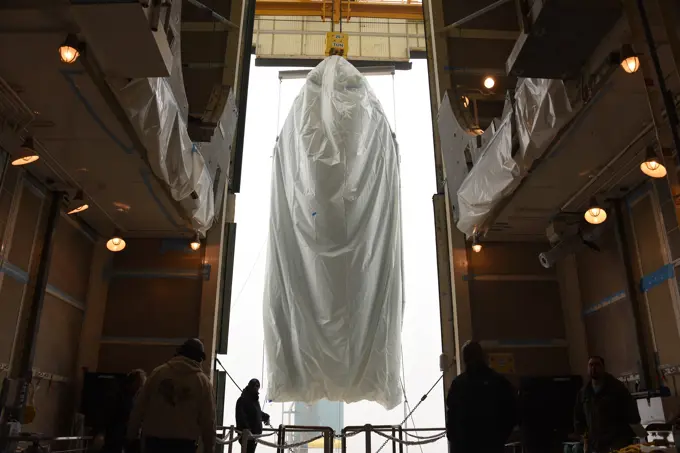
General overview and detail, Close-Out, photos of the  SLS Orion Stage Adapter EM-1...exterior overall views (5)
General overview and detail, Close-Out, photos of the SLS Orion Stage Adapter EM-1...exterior overall views (5)
172 assets in this story
6145-44745214
Technicians fasten down the flanges of the aerodynamic tail cone after installation on NASA's Space Shuttle Endeavour prior to its ferry flight from NASA's Dryden Flight Research Center to NASA's Kennedy Space Center in Florida.
6145-44525790
1/10 Scale-Model (metal) inside the Anechoic Chamber, Bldg. 14.         1.  SHUTTLE - MODELS  MSC, HOUSTON, TX
6145-44530772
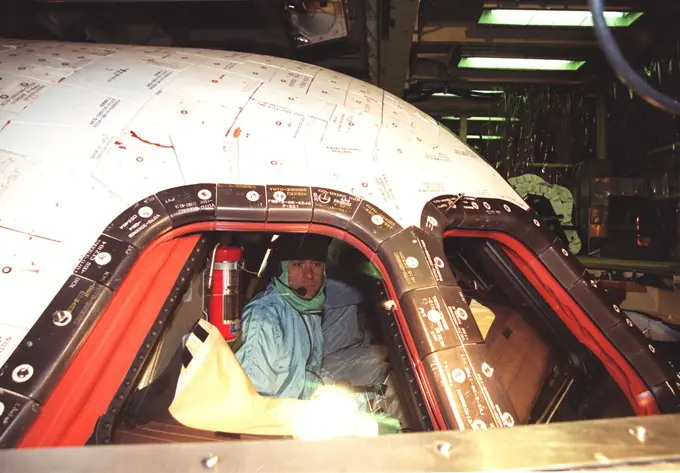
KENNEDY SPACE CENTER, Fla. - STS-109 Pilot Duane Carey checks the windshield and windows from inside Columbia.  This is Carey's first Shuttle flight.  He and the crew are at KSC to take part in Crew Equipment Interface Test activities that include familiarization with the orbiter and equipment. STS-109 is the Hubble Space Telescope (HST) Servicing mission.  The crew also comprises Commander Scott Altman, Payload Commander John Grunsfeld and Mission Specialists Nancy Currie, James Newman, Richard Linnehan and Michael Massimino.  The goal of the mission is to service the HST, replacing Solar Array 2 with Solar Array 3, replacing the Power Control Unit, removing the Faint Object Camera and installing the Advanced Camera for Surveys, installing the Near Infrared Camera and Multi-Object Spectrometer (NICMOS) Cooling System, and installing New Outer Blanket Layer insulation on bays 5 through 8.  Mission STS-109 is scheduled for launch Feb. 14, 2002
1525-20527908
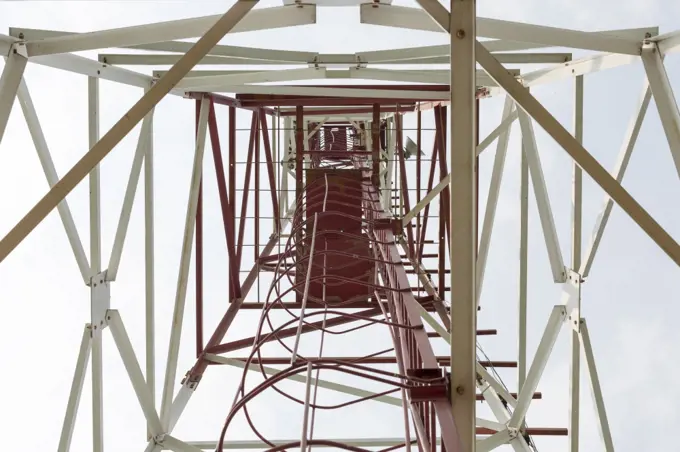
Telecom cell tower GSM and LTE. Seen from below
6145-55971090
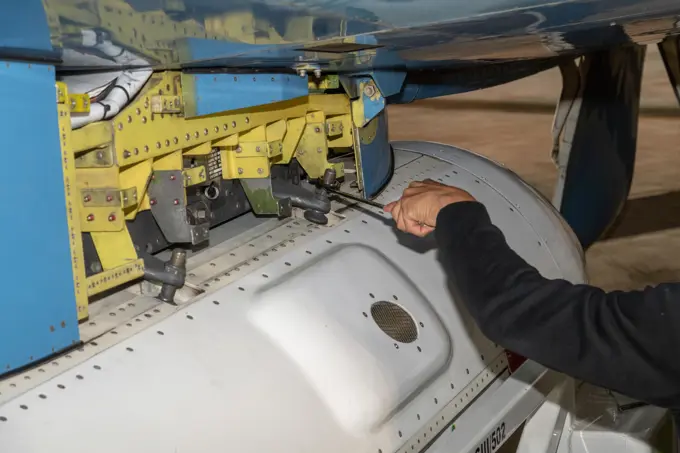
. The Uninhabited Aerial Vehicle Synthetic Aperture Radar, UAVSAR, is prepared for installation onto NASAs C-20A aircraft.THE UAVSAR uses a technique called interferometry to detect and measure very subtle deformations in the Earths surface, and the pod is specially designed to be interoperable with unmanned aircraft in the future.It will gather data from Gabon, Africa in September of 2023.
6145-58964452
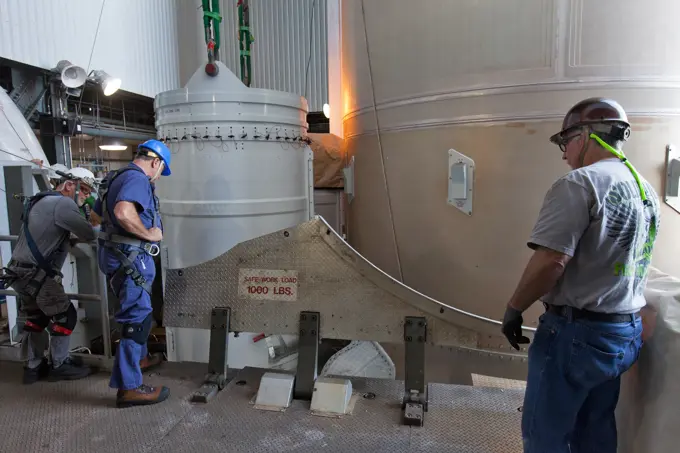
CAPE CANAVERAL, Fla. -- Workers at Cape Canaveral Air Force Station's Pad 17B secure the first stage of a United Launch Alliance Delta II launch vehicle to the gantry. The Delta II will carry NASA's Gravity Recovery and Interior Laboratory, or GRAIL, spacecraft into lunar orbit.The GRAIL mission is a part of NASA's Discovery Program. GRAIL will fly twin spacecraft in tandem orbits around the moon for several months to measure its gravity field. The mission also will answer longstanding questions about Earth's moon and provide scientists a better understanding of how Earth and other rocky planets in the solar system formed. GRAIL is scheduled to launch September 8, 2011.
6145-45153369
At the Vertical Integration Facility at Space Launch Complex 41 at Cape Canaveral Air Force Station in Florida, technicians support operations to mate a solid rocket booster (SRB) to a United Launch Alliance Atlas V first stage. The SRB will help boost NOAA's Geostationary Operational Environmental Satellite, or GOES-S, to orbit. GOES-S is the second in a series of four advanced geostationary weather satellites that will significantly improve the detection and observation of environmental phenomena that directly affect public safety, protection of property and the nation's economic health and prosperity. GOES-S is slated to launch March 1, 2018.
6145-44532266
KENNEDY SPACE CENTER, FLA. -- After leaving the Orbiter Processing Facility, orbiter Columbia rolls toward the Vehicle Assembly Building where it will be mated with the external tank-solid rocket booster stack.   Columbia is scheduled to be launched Feb. 28 on mission STS-109, a Hubble Servicing Mission. The goal of the mission is to service the HST, replacing Solar Array 2 with Solar Array 3, replacing the Power Control Unit, removing the Faint Object Camera and installing the ACS, installing the Near Infrared Camera and Multi-Object Spectrometer (NICMOS) Cooling System, and installing New Outer Blanket Layer insulation
1746-29962151
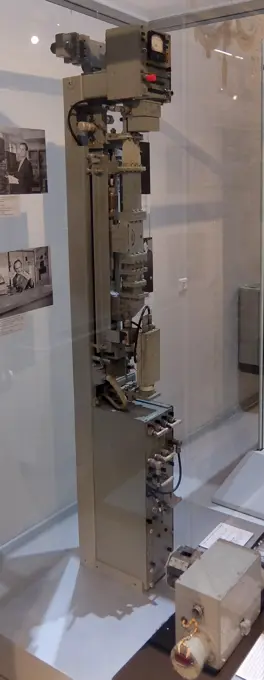
Gradient antenna waveguide switch designed to pass electromagnetic energy from transmitter to antenna and backwards.
6145-45013944
Osprey (UAV) Unmanned Aerial Vehicle ; flight vehicle test at 14x22 tunnel. Test number 605 from Eglin AFB.Take at 14x22 Subsonic Tunnel
1806R-10632
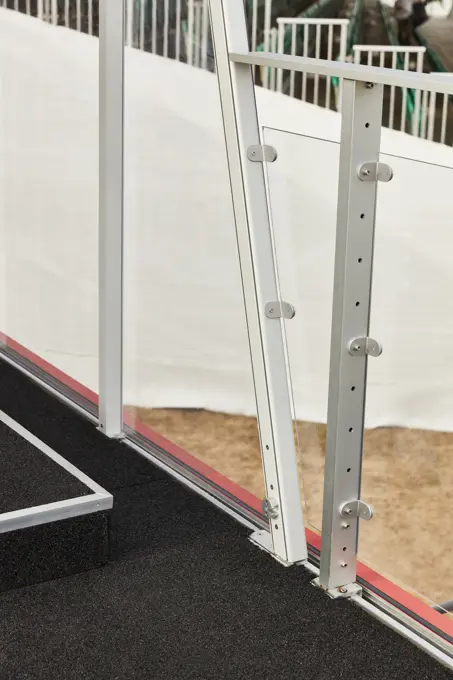
Detail of modern glass conference table. 09/09/2005
6145-45274585
Inside the Payload Hazardous Servicing Facility at NASAs Kennedy Space Center in Florida, the Backshell-Powered Descent Vehicle and Entry Vehicle assemblies are attached to the Mars Perseverance rover on May 6, 2020. The cone-shaped backshell contains the parachute, and along with the missions heat shield, provides protection for the rover and descent stage during Martian atmospheric entry. The Mars Perseverance rover is scheduled to launch in mid-July atop a United Launch Alliance Atlas V 541 rocket from Pad 41 at nearby Cape Canaveral Air Force Station. The rover is part of NASAs Mars Exploration Program, a long-term effort of robotic exploration of the Red Planet. The rover will search for habitable conditions in the ancient past and signs of past microbial life on Mars. The Launch Services Program at Kennedy is responsible for launch management.
1525-25019963
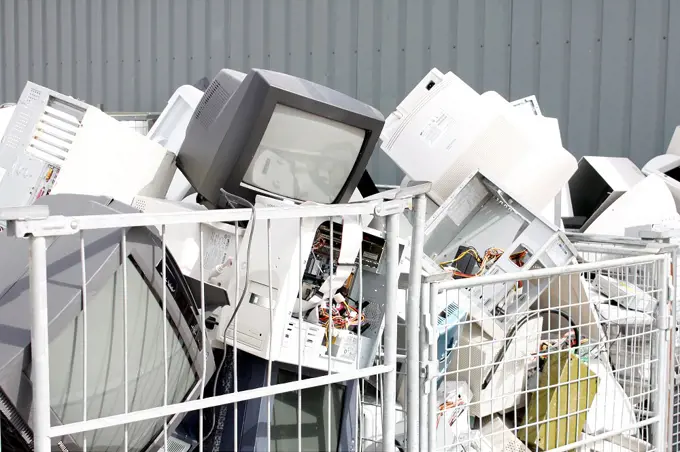
Used elektronics such as tvs, laptops, keyboards etc.
4404-1738
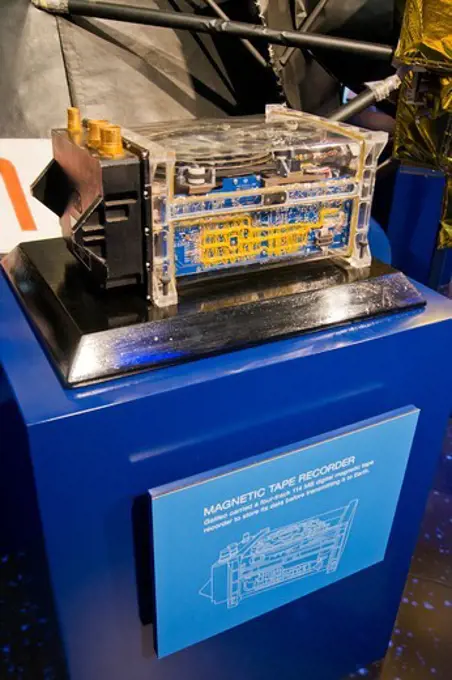
USA, California, Los Angeles, Pasadena, Jet Propulsion Laboratory museum, Galileo spacecraft magnetic tape recorder
6145-58966830
CAPE CANAVERAL, Fla. - Equipment is staged for removal from the 50-year-old Mission Control Center on the Cape Canaveral Air Force Station in Florida. Out of use for many years, and with no valid operational or other use for the facility, NASA plans to demolish the site.  The facility once controlled all manned Mercury space flights and the first two unmanned Gemini flights from May 1961-1963.  It provided launch, orbital, re-entry and landing control for the flights.  That function was later transferred to NASA's Johnson Space Center in Houston.
6145-44537991
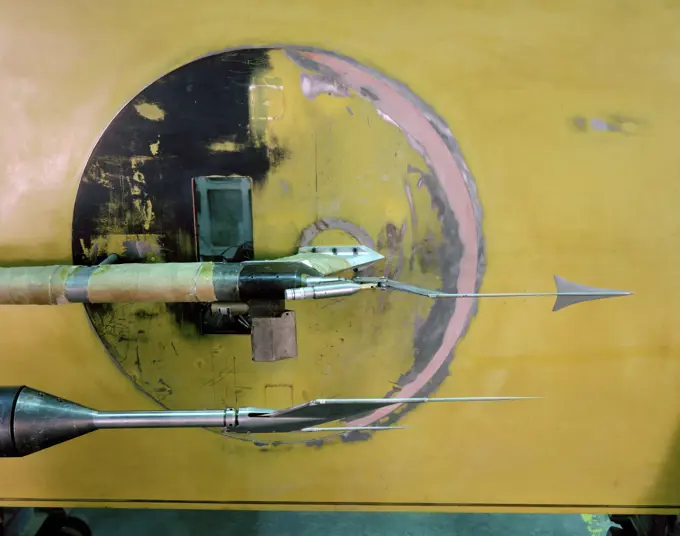
Sonic boom test models
4389-994
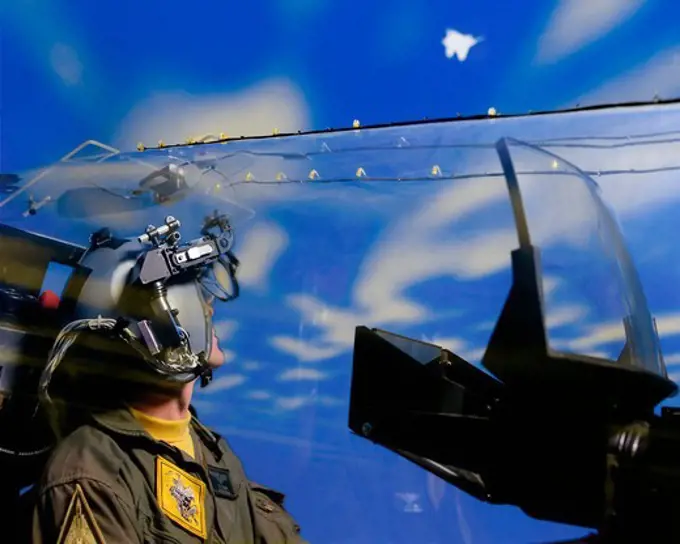
High Performance Aircraft Helmet
6145-44554729
The main engine thruster nozzles of the Cassini  spacecraft have their covers removed prior to the securing of the craft to its launch  vehicle adapter in KSCs Payload Hazardous Servicing Facility. The main engines of  Cassini will be used for Deep Space Maneuver burns, which will be performed  periodically throughout its cruise to Saturn to keep the spacecraft on the correct  trajectory. Large maneuvers (such as a change in spacecraft speed of about one meter per  second or higher) will be done with the main engine, whereas smaller maneuvers will be  performed by the thrusters and/or reaction wheels. Scheduled for launch in October, the  Cassini mission seeks insight into the origins and evolution of the early solar system. It  will take seven years for the spacecraft to reach Saturn
824-63216144
Connected and soundproofed workplace, installed at Paris.
6145-45113458
A bi-sector half of the payload fairing for a United Launch Alliance Delta II rocket glides into the clean room on level 4 of the mobile service tower on Space Launch Complex 2 at Vandenberg Air Force Base in California. Preparations are underway for launch of the Joint Polar Satellite System (JPSS-1) spacecraft in 2017. JPSS-1 is part of the next-generation environmental satellite system, a collaborative program between the National Oceanic and Atmospheric Administration (NOAA) and NASA.
6145-44997744
Advanced Noise Control Fan, ANCF, in the Aero-Acoustic Propulsion Laboratory, AAPL
6145-58963663
KENNEDY SPACE CENTER, FLA. - At Vandenberg Air Force Base in California, the Orbital Sciences Pegasus XL launch vehicle and Demonstration of Autonomous Rendezvous Technology (DART) spacecraft, which are mated, are being attached to the underbelly of the Orbital Sciences L-1011 aircraft for launch Nov. 9. DART was designed and built for NASA by Orbital Sciences as an advanced flight demonstrator to locate and maneuver near an orbiting satellite. The DART spacecraft weighs about 800 pounds and is nearly 6 feet long and 3 feet in diameter. The Pegasus XL vehicle will launch DART into a circular polar orbit of approximately 475 miles. Once in orbit, DART will make contact with a target satellite, the Multiple Paths, Beyond-Line-of-Sight Communications (MUBLCOM), also built by Orbital Sciences and launched in 1999. DART will then perform several close-proximity operations, such as moving toward and away from the satellite using navigation data provided by on-board sensors. The entire missio
6145-44917902
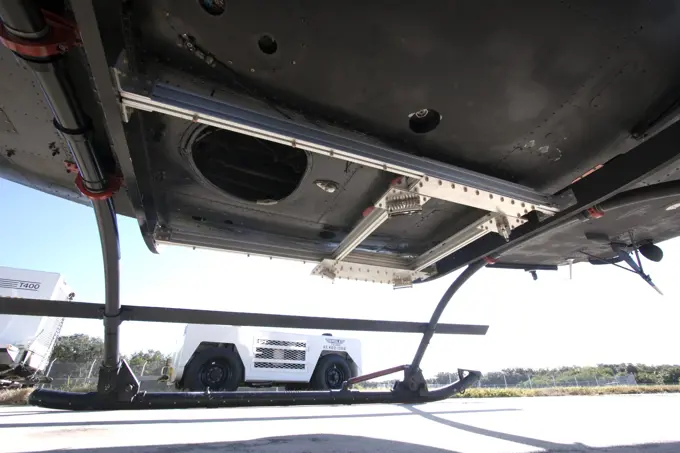
CAPE CANAVERAL, Fla. - Near the Shuttle Landing Facility at NASA's Kennedy Space Center in Florida, a space agency team installed and tested hazard avoidance instrumentation on a Huey helicopter.Led by the Johnson Space Center and supported by Jet Propulsion Laboratory and Langley Research Center, the Autonomous Landing Hazard Avoidance Technology, or ALHAT, laser system provides a planetary lander the ability to precisely land safely on a surface while detecting any dangerous obstacles such as rocks, holes and slopes. Just north of Kennedy's Shuttle Landing Facility runway, a rock- and crater-filled planetary scape has been built so engineers can test the ability to negotiate away from risks.
6145-44870195
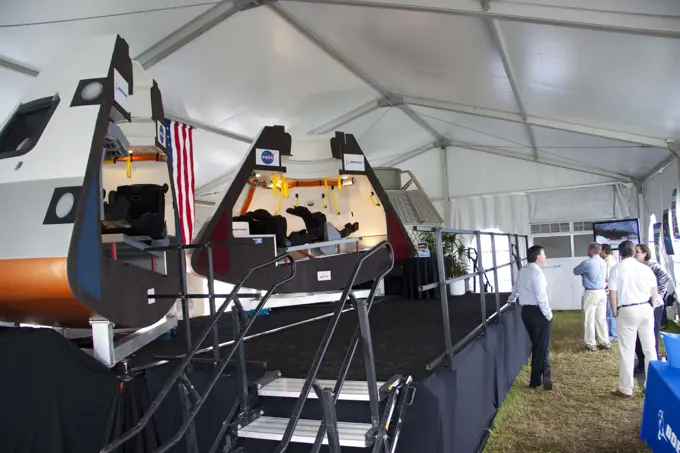
CAPE CANAVERAL, Fla. -- A media event was held for the Multi-Purpose Crew Vehicle (MPCV) that was on display in a tent on the grounds of the Press Site at NASA's Kennedy Space Center in Florida during launch activities for space shuttle Atlantis' STS-135 mission to the International Space Station. The MPCV is based on the Orion design requirements for traveling beyond low Earth orbit and will serve as the exploration vehicle that will carry the crew to space, provide emergency abort capability, sustain the crew during the space travel, and provide safe re-entry from deep space return velocities. Atlantis began its final flight, with Commander Chris Ferguson, Pilot Doug Hurley and Mission Specialists Sandy Magnus and Rex Walheim on board, at 11:29 a.m. EDT July 8 to deliver the Raffaello multi-purpose logistics module packed with supplies and spare parts to the station. Also in Atlantis' payload bay is the Robotic Refueling Mission experiment that will investigate the potential for
1801-62868068
Details of the Sky ports display. Inflate at Goodwood Festival of Speed, Chichester, United Kingdom. Architect: Inflate Works , 2018.
6145-44972843
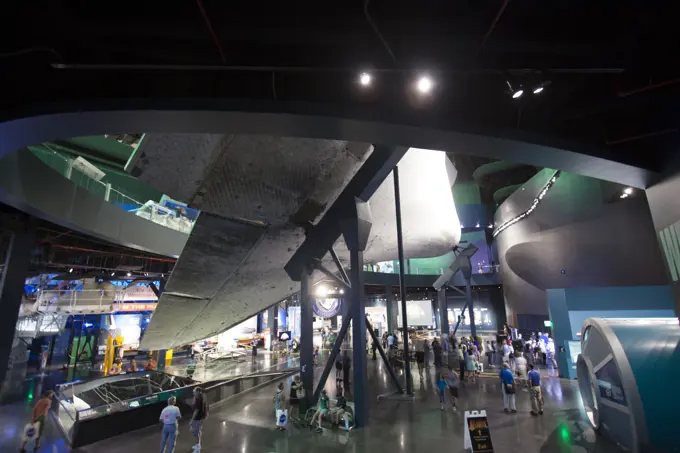
CAPE CANAVERAL, Fla. -- At the Kennedy Space Center Visitor Complex in Florida, the Space Shuttle Atlantis and other exhibits are now on display inside the 90,000-square-foot facility.The time capsule, containing artifacts and other memorabilia associated with the history of the program is designated to be opened on the 50th anniversary of the shuttle's final landing, STS-135. The new $100 million "Space Shuttle Atlantis" facility includes interactive exhibits that tell the story of the 30-year Space Shuttle Program and highlight the future of space exploration.
4389-885
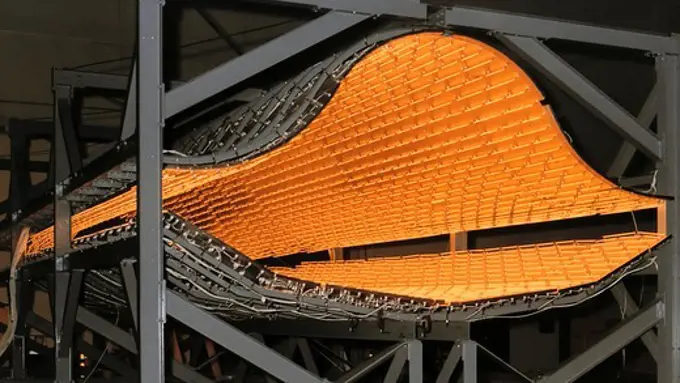
Radiant Heater for YF-12
6145-45102698
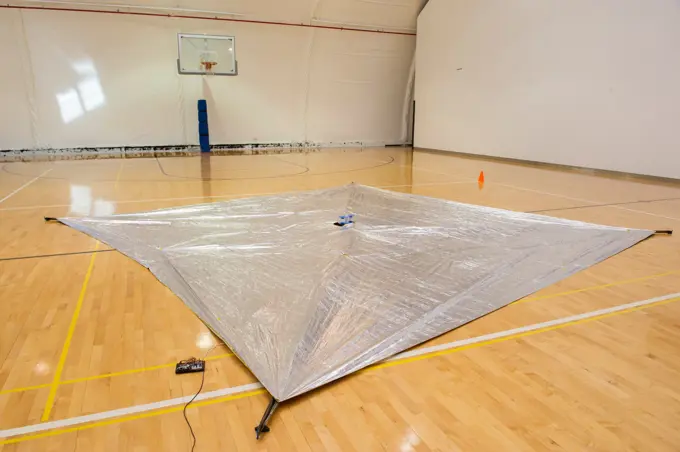
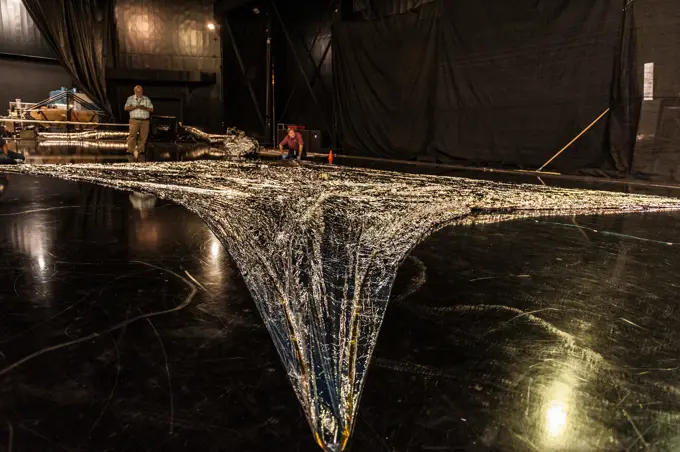
TIFFANY LOCKETT OVERSEES THE HALF SCALE (36 SQUARE METERS) ENGINEERING DEVELOPMENT UNIT (EDU) SOLAR SAIL DEPLOYMENT DEMONSTRATION IN PREPARATION FOR FULL SCALE EDU (86 SQUARE METERS) DEPLOYMENT IN APRIL, 2016
6145-44656343
KENNEDY SPACE CENTER, FLA. -    Equipment in areas of the Launch Control Center at NASA's Kennedy Space Center are wrapped in protective covers for the arrival of Tropical Storm Ernesto in Central Florida.  The storm is forecast to be bringing 58-mph to 70-mph winds in the next 24 hours.
6145-45140662
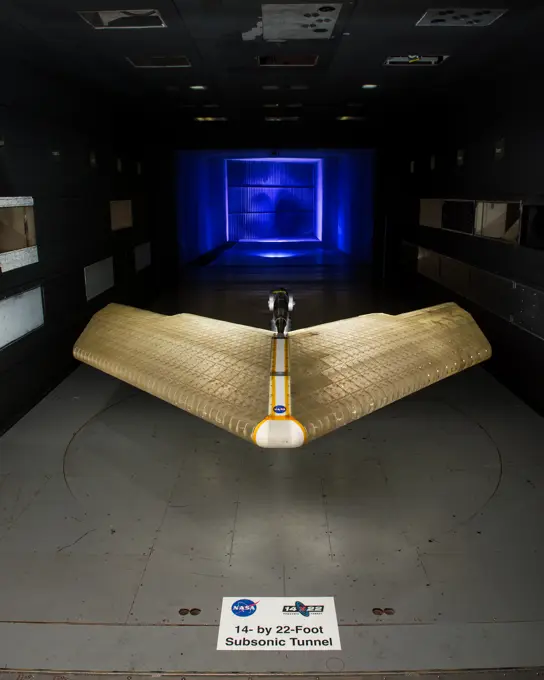
Mission Adaptive Digital Composite Aerostructure Technologies (MADCAT) model in the 14x22 test section, building 1212C
6145-58959958
CAPE CANAVERAL, Fla. - In Orbiter Processing Facility-1 at NASA's Kennedy Space Center in Florida, the tool stowage assembly is lifted by jib crane above the floor of the clean room. The tool box is being installed into space shuttle Atlantis' payload bay. The assembly contains tools and hardware that will be needed on the extravehicular activities, or spacewalks, conducted during the STS-132 mission. On STS-132, the six-member crew will deliver an Integrated Cargo Carrier and a Russian-built Mini-Research Module to the International Space Station. STS-132 is the 34th mission to the station and the 132nd space shuttle mission. Launch is targeted for May 14.
6145-44681544
KENNEDY SPACE CENTER, FLA.  --   Inside Orbiter Processing Facility 3 at Kennedy Space Center, technicians guide engine No. 3 toward the aft fuselage of Discovery for installation during processing for mission STS-120. Mission STS-120 will be the 23rd flight to the International Space Station. Space Shuttle Discovery will carry the U.S. Node 2. Launch is targeted for Oct. 20. NASA/Dimitri Gerondidakis
6145-44684618
KENNEDY SPACE CENTER, FLA. --  This is a closer view of the underside of Endeavour taken after its landing on runway 15 at NASA's Kennedy Space Center.  The damage to the tiles occurred from a piece of foam on the external tank during launch of Space Shuttle Endeavour on mission STS-118 on Aug. 8.  After extensive engineering analysis of such images and testing on the ground, the Mission Management Team decided the tile did not pose a risk to the crew during re-entry.  Endeavour landed safely at 12:32 p.m. EDT at NASA's Kennedy Space Center after a 13-day mission to the International Space Station.  The STS-118 mission installed a new gyroscope, an external spare parts platform and another truss segment to the expanding station.
6145-45252300
Pictured is a component of the Rocket Based Combined Cycle (RBCC) engine. This engine was designed to ultimately serve as the near term basis for Two Stage to Orbit (TSTO) air breathing propulsion systems and ultimately a Single Stage to Orbit (SSTO) air breathing propulsion system.
6145-44692551
In Hangar N at NASA's Kennedy Space Center, a heat shield for the Constellation crew exploration vehicle, or CEV, is being prepared for a demonstration. A developmental heat shield for the Orion spacecraft is being tested and evaluated at Kennedy. The shield was designed and assembled by the Boeing Company in Huntington Beach, Calif., for NASA's Constellation Program. The thermal protection system manufacturing demonstration unit is designed to protect astronauts from extreme heat during re-entry to Earth's atmosphere from low Earth orbit and lunar missions. The CEV will be used to dock and gain access to the International Space Station, travel to the moon in the 2018 timeframe and play a crucial role in exploring Mars.
6145-44677005
KENNEDY SPACE CENTER, FLA. --  The "pencil sharpener" tool designed to trim the hand-sprayed foam repairs on the STS-117 external tank is on display for the media at the NASA News Center. This portable tool was designed in just 10 days specifically for this task by Lockheed Martin engineer Glenn Lapeyronnie at the Michoud external tank manufacturing facility in New Orleans. The pencil sharpener tool fits over the external tank nose cone spike at the top of the tank and extends down to where the hand-sprayed foam was used to repair the hail-damaged areas. The hail damage was incurred Feb. 28 while Space Shuttle Atlantis was on the launch pad for a March 15 launch.  The shuttle returned to the Vehicle Assembly Building so that repairs could be made.  Mission STS-117 is scheduled to launch at 7:38 p.m. EDT on June 8.
6145-45195317
NASAs Orbiting Carbon Observatory 3, or OCO-3, sits in a transportation container at the Space Station Processing Facility high bay at the agencys Kennedy Space Center in Florida prior to its move to the SpaceX facility on March 18, 2019. The OCO-3 payload will be stowed in the trunk of SpaceXs Dragon spacecraft, which will launch aboard a Falcon 9 rocket on the companys 17th Commercial Resupply Services mission to the International Space Station. Launch is scheduled for April 25, 2019, from Launch Complex 40 at Cape Canaveral Air Force Station. Once the payload reaches the station, it will be removed from Dragon and robotically installed on the exterior of the orbiting laboratorys Japanese Experiment Module Exposed Facility Unit, where it will measure and map carbon dioxide from space to provide further understanding of the relationship between carbon and climate.
6145-44848910
Crew Module Water Landing Model Assent Test site photos at Aberdeen Test Center (Aberdeen, MD)
6145-58959313
CAPE CANAVERAL, Fla. -- At the Kennedy Space Center Visitor Complex in Florida, construction crews prepare to remove 16,000 square feet of plastic shrink-wrap from the space shuttle Atlantis. The spacecraft was enclosed in the plastic shrink-wrap since November of last year to protect the artifact from dust and debris during construction of the 90,000-square-foot facility. Last November, the space shuttle Atlantis made its historic final journey to its new home, traveling 10 miles from the Kennedy Space Center's Vehicle Assembly Building to the spaceport's visitor complex. The new $100 million 'Space Shuttle Atlantis' facility will include interactive exhibits that tell the story of the 30-year Space Shuttle Program and highlights the future of space exploration. The 'Space Shuttle Atlantis' exhibit scheduled to open June 29, 2013.
6145-44699616
KENNEDY SPACE CENTER, FLA. --  In the Astrotech payload processing facility near the Kennedy Space Center, the shipping container covering NASA's Gamma-Ray Large Area Space Telescope, or GLAST, is lifted to reveal the protected equipment inside.  Workers will prepare for a complete checkout of the telescope's scientific instruments. The GLAST will launch aboard a Delta II rocket May 16 from Launch Pad 17-B on Cape Canaveral Air Force Station.  A powerful space observatory, the GLAST will explore the most extreme environments in the universe, and answer questions about supermassive black hole systems, pulsars and the origin of cosmic rays. It also will study the mystery of powerful explosions known as gamma-ray bursts.
6145-44861993
CAPE CANAVERAL, Fla. -- NASA's Gravity Recovery and Interior Laboratory, or GRAIL, spacecraft is offloaded from an Air Force C-17 cargo plane on the Shuttle Landing Facility at Kennedy Space Center in Florida. The spacecraft traveled from the Lockheed Martin plant in Denver, Colo., and will undergo further processing in the Astrotech payload processing facility in Titusville, Fla. The United Launch Alliance Delta II rocket that will carry GRAIL into lunar orbit already is fully stacked at NASA's Space Launch Complex 17B and launch is scheduled for Sept. 8.The GRAIL mission is a part of NASA's Discovery Program. GRAIL will fly twin spacecraft in tandem orbits around the moon for several months to measure its gravity field. The mission also will answer longstanding questions about Earth's moon and provide scientists a better understanding of how Earth and other rocky planets in the solar system formed.
6145-44810802
STS-132 Atlantis Rear Landing Gear Drop
6145-45084604
CAPE CANAVERAL, Fla. -- The U.S. Flag is in view on NASA's Orion spacecraft inside the Launch Abort System Facility at NASA's Kennedy Space Center in Florida during a media event. Orion made the 8-day, 2,700 mile overland trip back to Kennedy from Naval Base San Diego in California.  Analysis of date obtained during its two-orbit, four-and-a-half hour mission Dec. 5 will provide engineers with detailed information on how the spacecraft fared. The Ground Systems Development and Operations Program led the recovery, offload and transportation efforts.
6145-45081532
CAPE CANAVERAL, Fla. - At NASA's Kennedy Space Center in Florida, work continues to install 24 light emitting diode LED panels in the new countdown clock at the spaceport's Press Site. The modern, multimedia display is similar to the screens seen at sporting venues. The new screen will be nearly 26 feet wide by 7 feet high, a foot taller than the original clock.The historic countdown clock was designed by Kennedy engineers and built by space center technicians before Apollo 12 in 1969. NASA has requested to acquire the countdown clock from the agencys Artifact Working Group at the agency's Headquarters for display at the Kennedy Space Center Visitor Complex.
6145-45050224
CAPE CANAVERAL, Fla. - The Ground Systems Development and Operations Program is overseeing efforts to create a new multi-user firing room in Firing Room 4 in the Launch Control Center at NASA's Kennedy Space Center in Florida. The main floor consoles, cabling and wires below the floor and ceiling tiles above have been removed. Sub-flooring has been installed and the room is marked off to create four separate rooms on the main floor. In view along the soffit are space shuttle launch plaques for 21 missions launched from Firing Room 4.The design of Firing Room 4 will incorporate five control room areas that are flexible to meet current and future NASA and commercial user requirements. The equipment and most of the consoles from Firing Room 4 were moved to Firing Room 2 for possible future reuse.
6145-58963436
KENNEDY SPACE CENTER, FLA. - On Pad 17-B, Cape Canaveral Air Force Station, Fla., the second stage of the Boeing Delta II rocket is lowered to the pad and Boeing workers remove the panels from the bell. Removal of the second stage will allow workers to then remove the rockets inter-stage adapter, which was found to be faulty during a review of launch vehicle hardware. It will be replaced and the second stage re-installed within a few days. Launch of Deep Impact is now scheduled no earlier than Jan. 12.
6145-44728186
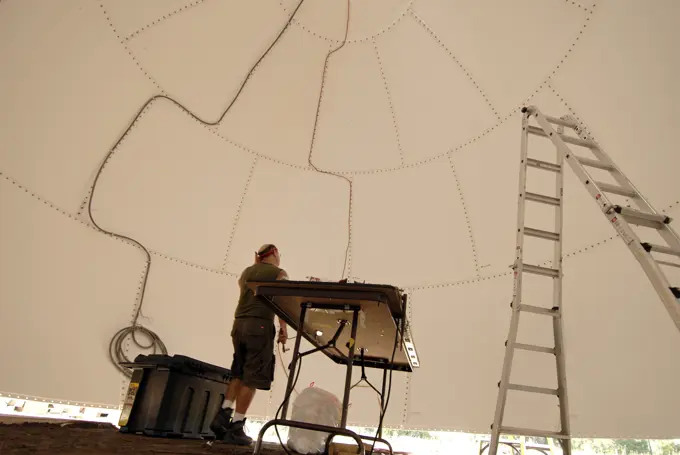
CAPE CANAVERAL, Fla. - A worker inside the radar dome, or radome, monitors equipment before it is lifted onto its base.  The dome is part of a new Doppler weather radar facility for the 45th Weather Squadron in an area near S.R. 520 in Orange County, Florida, replacing one at Patrick Air Force Base.  It will be used by NASA's Kennedy Space Center, the 45th Space Wing and their customers. The site will be able to monitor weather conditions directly above the launch pads at Kennedy.  The weather radar is essential in issuing lightning and other severe weather warnings and vital in evaluating lightning launch commit criteria.  The new radar, replacing what was installed 25 years ago at Patrick Air Force Base, includes Doppler capability to detect winds and identify the type, size and number of precipitation particles.  The site is ideally distant from the launch pads and has unobstructed views of Cape Canaveral Air Force Station and Kennedy. The radar will be used by forecasters at the US
6145-44592898
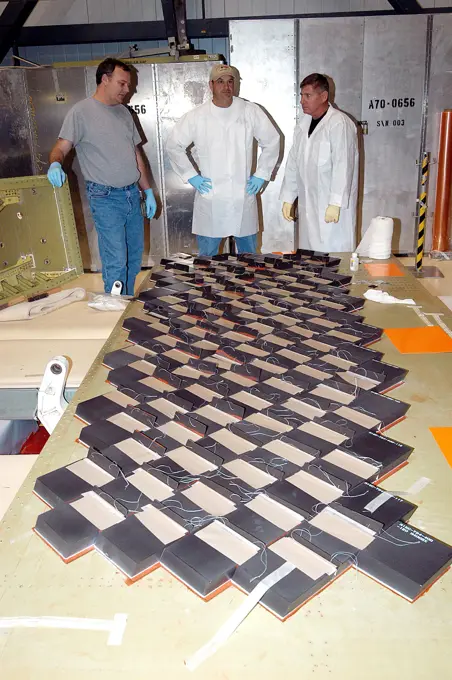
KENNEDY SPACE CENTER, FLA. -- In the Orbiter Processing Facility, United Space Alliance employees (from left) John Kuhn, Mike Cote, and Tom Baggitt discuss the installation of Thermal Protection System tiles on a main landing gear door of Space Shuttle orbiter Enterprise (OV-101).  Sections of Enterprise were borrowed from the Smithsonian Institution's Air and Space Museum where the orbiter is being stored at the Washington Dulles International Airport.  Enterprise was the first orbiter built in the Shuttle fleet and was used to conduct the Approach and Landing Test Program before the first powered Shuttle flight.  After the tile installation is complete, the sections will be transferred to the Southwest Research Institute for testing requested by the Columbia Accident Investigation Board.
6145-45112668
NEAR EARTH ASTEROID (NEA) SAIL TEAM PERFORMING A DEPLOYMENT OF THE FLIGHT-LIKE ENGINEERING DEVELOPMENT UNIT SOLAR SAIL. THE SAIL WAS MANUFACTURED AT NEXOLVE (HSV, AL) AND DEPLOYED FOR THE FIRST TIME AT MSFC ON AUGUST 4TH, 2016
6145-44593398
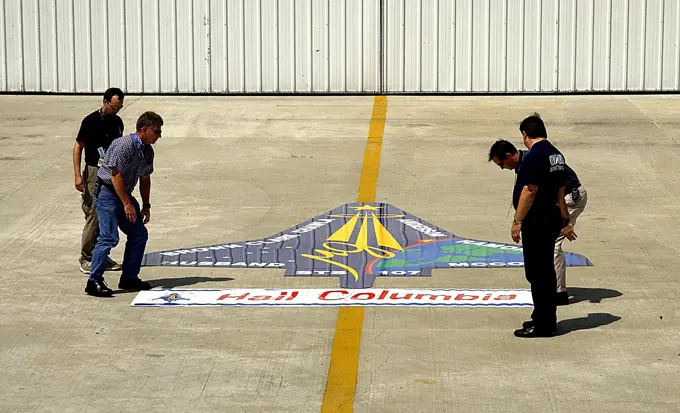
KENNEDY SPACE CENTER, FLA. -- Workers position a "Hail Columbia" banner beneath an enlarged replica of the STS-107 crew emblem at the RLV Hangar.  The emblem will be installed on an outside wall.  Inside the hangar, members of the Columbia Reconstruction Project team are identifying pieces of Columbia debris as they arrive at Kennedy Space Center and placing them on a grid approximating the shape of the orbiter.
6145-58960514
CAPE CANAVERAL, Fla. -- At NASA's Kennedy Space Center in Florida, preparations are under way to offload External Tank-138 from the Pegasus barge docked in the turn basin near the Vehicle Assembly Building. The external fuel tank arrived in Florida on July 13, from NASA's Michoud Assembly Facility near New Orleans. ET-138, the last newly manufactured tank, was originally designated to fly on Endeavour's STS-134 mission to the International Space Station, but later reassigned to fly on space shuttle Atlantis' final mission, STS-135.
6145-44743837
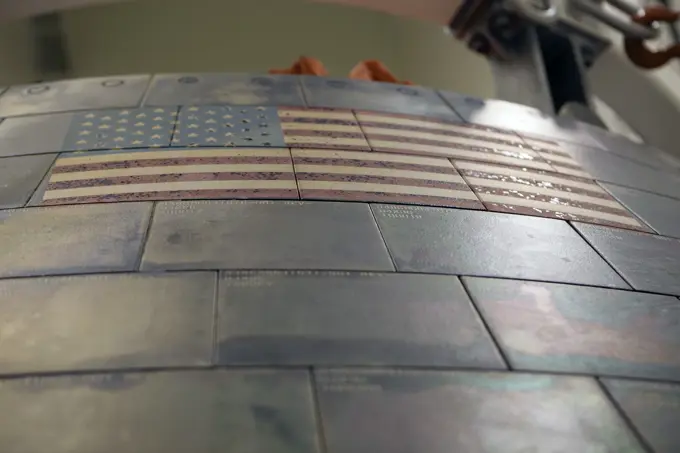
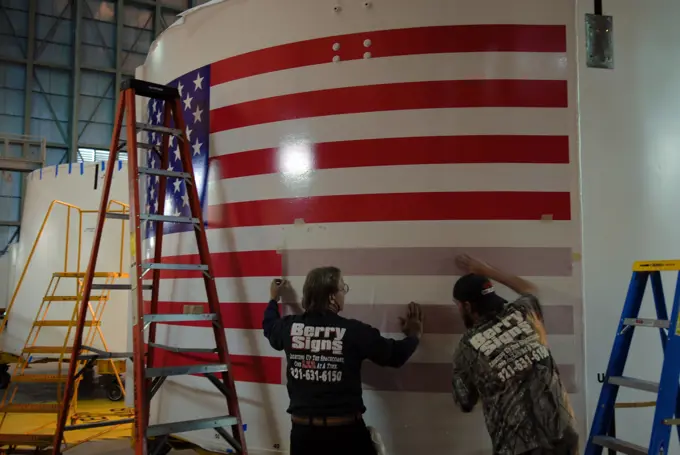
CAPE CANAVERAL, Fla. -   In the Vehicle Assembly Building high bay 4 at NASA's Kennedy Space Center in Florida, workers remove the final cover from the U.S. flag decal affixed to one of the Ares I-X upper stage simulator segments. The upper stage simulator will be used in the test flight identified as Ares I-X in 2009.  Ares I-X is the test vehicle for the Ares I, which is part of the Constellation Program to return men to the moon and beyond.  Ares I is the essential core of a safe, reliable, cost-effective space transportation system that eventually will carry crewed missions back to the moon, on to Mars and out into the solar system. Ares I may also use its 25-ton payload capacity to deliver resources and supplies to the International Space Station, or to "park" payloads in orbit for retrieval by other spacecraft bound for the moon or other destinations.
6145-44976461
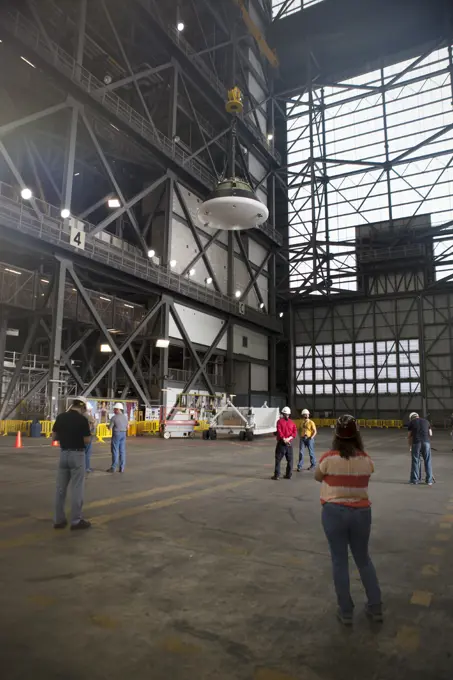
CAPE CANAVERAL, Fla. - At NASAs Kennedy Space Center in Florida, technicians monitor the progress as the Orion ground test vehicle, or GTA, is lifted by crane in the transfer aisle of the Vehicle Assembly Building. The ground test vehicle is being used for path finding operations, including simulated manufacturing, assembly and stacking procedures.Orion is the exploration spacecraft designed to carry astronauts to destinations not yet explored by humans, including an asteroid and Mars. It will have emergency abort capability, sustain the crew during space travel and provide safe re-entry from deep space return velocities. The first unpiloted test flight of Orion is scheduled to launch in 2014 atop a Delta IV rocket and in 2017 on NASAs Space Launch System rocket.
6145-44968448
Crew Commercial Office's PAO activities for Boeing's rollout of their CST-100 capsule - "First Look" Media Event.  Photo Date: July 22, 2013.  Location: Boeing - Houston Product Support Center.
7046-70043979
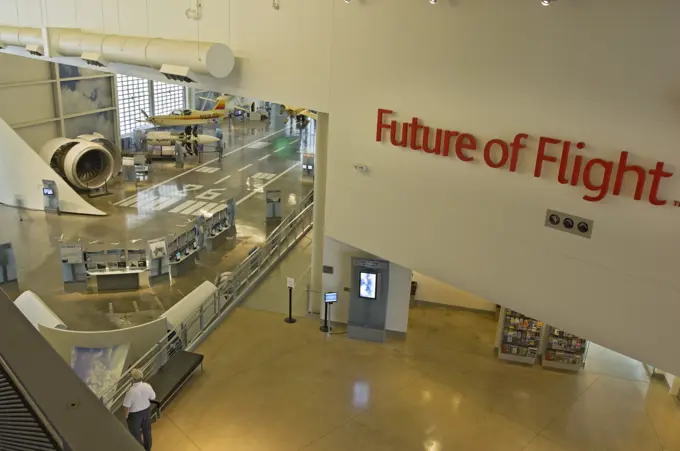
Boeing Future of Flight Museum in Everett, Washington; U.S.A.
6145-44927903
NASA Deputy Administrator Lori Garver and President and founder of Bigelow Aerospace Robert T. Bigelow talk while standing next to the Bigelow Expandable Activity Module (BEAM) during a media briefing where it is was announced that the BEAM expandable space habitat technology will be tested on the International Space Station, Wednesday, Jan. 16, 2013 in Las Vegas. BEAM is scheduled to arrive at the space station in 2015 for a two-year technology demonstration.
6145-45050227
CAPE CANAVERAL, Fla. - Progress on modifications to Firing Room 4 in the Launch Control Center at NASA's Kennedy Space Center in Florida can be viewed through one of two glass-enclosed observation rooms. The Ground Systems Development and Operations Program is overseeing efforts to create a new firing room based on a multi-user concept that will support NASA and commercial launch needs. The main floor consoles, cabling and wires below the floor and ceiling tiles above have been removed. Sub flooring has been installed and the room is marked off to create four separate rooms on the main floor. In view along the soffit are space shuttle launch plaques for 21 missions launched from Firing Room 4. The design of Firing Room 4 will incorporate five control room areas that are flexible to meet current and future NASA and commercial user requirements. The equipment and most of the consoles from Firing Room 4 were moved to Firing Room 2 for possible future reuse.
1801-62835833
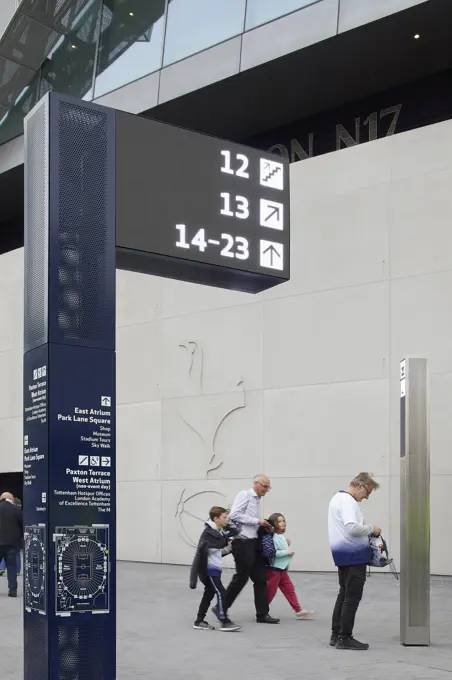
Wayfinding system with digital signage next to stadium. The New Tottenham Hotspur Stadium, London, United Kingdom. Architect: Populous, 2019.
1746-29962125
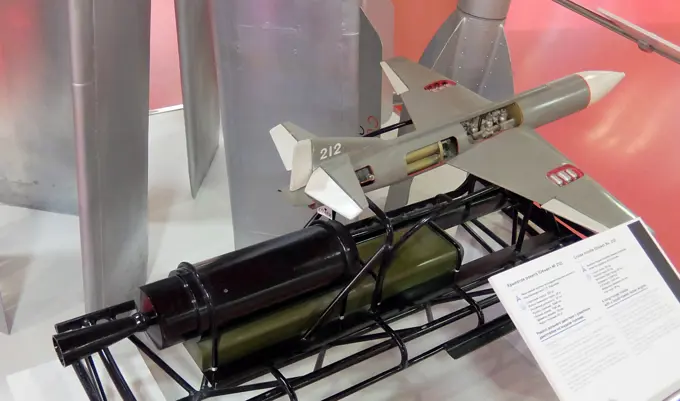
Cruise Missile Rocket-212, a long-range missile with a liquid-fuelled rocket engine designed to be used against remote targets.
6145-45000769
CAPE CANAVERAL, Fla. -- At NASA's Kennedy Space Center in Florida, social media participants were given an opportunity to go inside the spaceport's Vehicle Assembly Building. After serving through the Apollo and Space Shuttle Programs, the structure now is undergoing renovations to accommodate future launch vehicles and to continue as a major part of America's efforts to explore space. The social media participants gathered at the Florida spaceport for the launch of the Tracking and Data Relay Satellite, or TDRS-L spacecraft. Their visit included tours of key facilities and participating in presentations by key NASA leaders who updated the space agency's current efforts.
1848-49174899
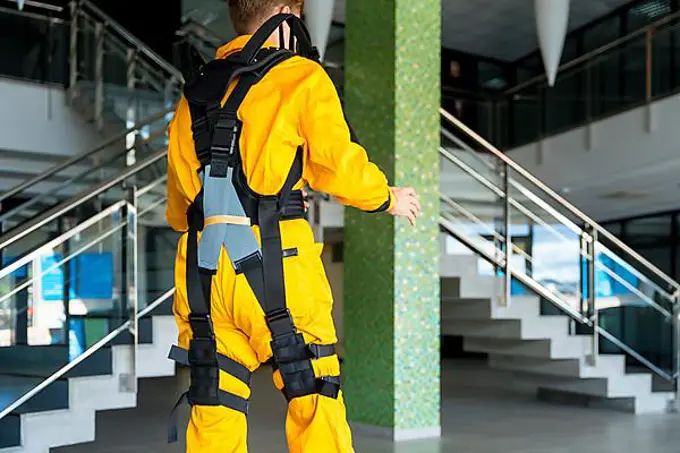
Employee with an exoskeleton from a futuristic high-tech warehouse, stretching to test the suit on his back, help to improve injuries, futuristic physiotherapy, logistics companies
6145-44888384
T&R/Endeavour Final Power Down
6145-44899271
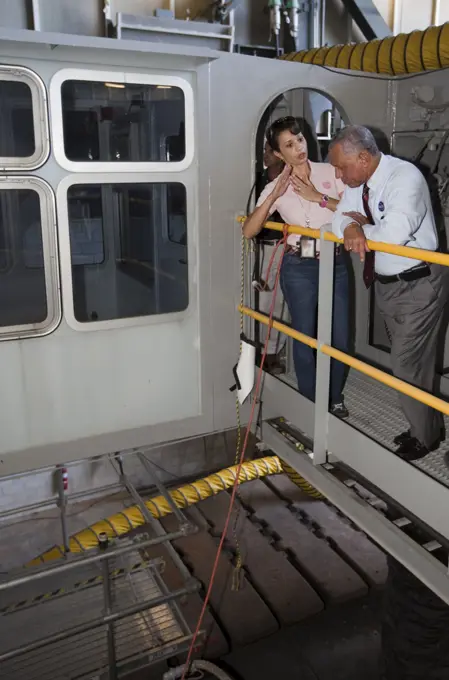
CAPE CANAVERAL, Fla. - NASA Administrator Charlie Bolden sees firsthand how Kennedy Space Center is transitioning to a spaceport of the future as Kennedy's Mary Hanna explains the upcoming use of the crawler-transporter, which has carried space vehicles to the launch pad since the Apollo Program. NASA is working with U.S. industry partners to develop commercial spaceflight capabilities to low Earth orbit as the agency also is developing the Orion Multi-Purpose Crew Vehicle MPCV and the Space Launch System SLS, a crew capsule and heavy-lift rocket to provide an entirely new capability for human exploration. Designed to be flexible for launching spacecraft for crew and cargo missions, SLS and Orion MPCV will expand human presence beyond low Earth orbit and enable new missions of exploration across the solar system.
6145-44498520
KENNEDY SPACE CENTER, FLA. -- James Silviano (bottom), NASA, examines the range safety cable between the external tank and solid rocket boosters (SRB) on Space Shuttle Discovery, while Terry Kent (above), United Space Alliance, looks on. The cable, which relays a redundant emergency destruction signal between the SRBs in the unlikely event of a contingency, was damaged during close-out operations and is being replaced. Discovery's processing schedule leads to a target launch date of Dec. 6
6145-45118722
A test version of the Orion crew module is on display for viewing by service members, base employees and their families at Naval Base San Diego in California, before Underway Recovery Test 5 (URT-5). NASA, Orion manufacturer Lockheed Martin and the U.S. Navy will head out to sea with the Orion test vehicle aboard the USS San Diego to demonstrate and evaluate the recovery processes, procedures, hardware and personnel necessary for recovery of Orion on its return from a deep space mission. Orion is the exploration spacecraft designed to carry astronauts to destinations not yet explored by humans, including an asteroid and NASA Journey to Mars. It will have emergency abort capability, sustain the crew during space travel and provide safe re-entry from deep space return velocities. Orion is scheduled to launch atop NASAs Space Launch System rocket in 2018.
6145-45081294
At NASA's Kennedy Space Center in Florida, the historic countdown clock at the spaceport's Press Site is disassembled for removal. Kennedy has requested to acquire the countdown clock from the agencys Artifact Working Group at NASA Headquarters for likely display at the Kennedy Space Center Visitor Complex. A new modern multimedia display soon will be installed, similar to the screens seen at sporting venues, is in the works. The new screen will be nearly 26 feet wide by 7 feet high. The old timepiece was designed by Kennedy engineers and built by Kennedy technicians in 1969. Not including the triangular concrete and aluminum base, the famous landmark is nearly six feet high, 26 feet wide and 3 feet deep. The new display will be similar in size, with the screen being nearly 26 feet wide by seven feet high.
6188-65134873
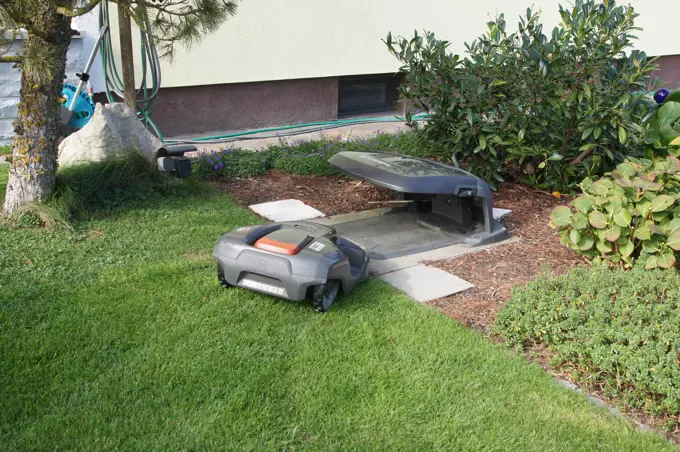
Rasenroboter, lawnmower Rasenroboter, lawnmower Copyright: xZoonar.com/PeterxHimmelhuberx 22338702
6145-58967625
CAPE CANAVERAL, Fla. - Media relations specialist Stephanie Smith from NASA's Jet Propulsion Laboratory welcomes Tweetup participants at NASA Kennedy Space Center's Press Site in Florida during prelaunch activities for the agencys Mars Science Laboratory (MSL) launch.Following a series of briefings, participants will tour the center and get a close-up view of Space Launch Complex-41 on Cape Canaveral Air Force Station. The tweeters will share their experiences with followers through the social networking site Twitter. MSL's components include a car-sized rover, Curiosity, which has 10 science instruments designed to search for signs of life, including methane, and help determine if the gas is from a biological or geological source. Liftoff of MSL aboard a United Launch Alliance Atlas V rocket from pad 41 is planned during a launch window which extends from 10:02 a.m. to 11:45 a.m. EST on Nov. 26.
6145-44639581
KENNEDY SPACE CENTER, FLA. - Technicians install strips of the New Horizons mission decal on the spacecraft fairing in the Payload Hazardous Servicing Facility. The last strip will be installed on the fairing after the spacecraft is delivered to Pad 41 on Dec. 17. New Horizons carries seven scientific instruments that will characterize the global geology and geomorphology of Pluto and its moon Charon, map their surface compositions and temperatures, and examine Pluto's complex atmosphere. After that, flybys of Kuiper Belt objects from even farther in the solar system may be undertaken in an extended mission. New Horizons is the first mission in NASA's New Frontiers program of medium-class planetary missions. The spacecraft, designed for NASA by the Johns Hopkins University Applied Physics Laboratory in Laurel, Md., will launch aboard a Lockheed Martin Atlas V rocket and fly by Pluto and Charon as early as summer 2015.
6145-45295723
This image shows technicians and engineers moving and connecting the forward skirt to the liquid oxygen tank (LOX) as they continue the process of the forward join on the core stage of NASAs Space Launch System rocket for Artemis II, the first crewed mission of NASAs Artemis program at NASAs Michoud Assembly Facility. The forward join connects the forward skirt, the liquid oxygen tank (LOX) and the intertank structures to form the top part of the SLS rockets core stage. Now, NASA and Boeing, the SLS prime contractor, will continue to integrate various systems inside the forward part of the core stage and prepare for structural joining of the liquid hydrogen tank and engine section to form the bottom of the stage. Together with its four RS-25 engines, the rockets massive 212-foot-tall core stage — the largest stage NASA has ever built — and its twin solid rocket boosters will produce 8.8 million pounds of thrust to send NASAs Orion spacecraft, astronauts and supplies beyond Earth
6145-45173109
The team that tested the umbilical lines and accessories that will connect from the mobile launcher to NASA's Space Launch System rocket and Orion spacecraft for Exploration Mission-1 hold a banner signing event July 24, 2018, to mark completion of testing at the Launch Equipment Test Facility (LETF) at NASA's Kennedy Space Center in Florida. A total of 21 umbilicals and launch accessories were tested on various simulators at the LETF before they were transferred to the mobile launcher for installation.
6145-45284189
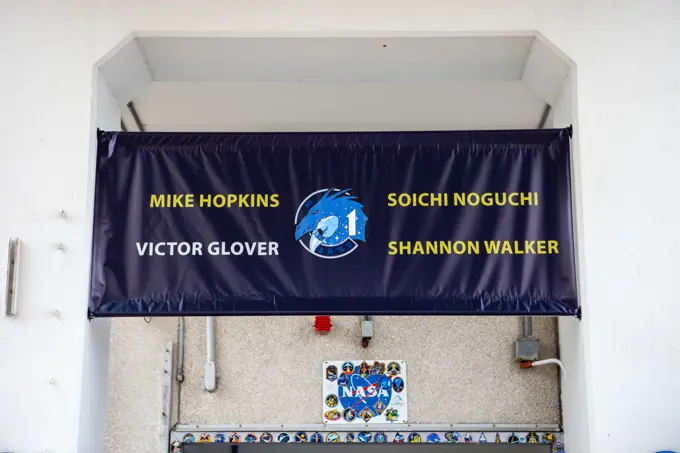
A banner hangs above the door where NASA SpaceXs Crew-1 astronauts will exit from at the Neil Armstrong Operations and Checkout Building at NASAs Kennedy Space Center in Florida on Nov. 15, 2020. NASA astronauts Michael Hopkins, Victor Glover and Shannon Walker, and JAXA astronaut Soichi Noguchi, will board two Tesla vehicles for the trip to Launch Complex 39A. Crew-1 is the first regular crew mission of a U.S. commercial spacecraft with astronauts to the International Space Station as part of NASAs Commercial Crew Program. The SpaceX Crew Dragon Resilience capsule will launch atop the companys Falcon 9 rocket from Pad 39A to the space station for a six-month science mission.
PREVIOUS
of 2
NEXT
2401 S. Ervay, Suite 206
Dallas, Texas 75215
United States
Browse
CategoriesGalleriesFree Research
For Creators
License Your ContentSuperStock For StudentsFrame of Mind BlogContributor PortalNew Image SpotlightLicense AI Imagery
Resources
About UsLicensingTerms & ConditionsAPI AccessPrivacyPricing
Contact
+1 866 236 0087help@superstock.com Contact form
©2026 SuperStock. All Rights Reserved. -A
This site is protected by reCAPTCHA and Google Privacy Policy and Terms of Service apply.