Fine ArtVintageFootageSubscriptionBoardsFree ResearchPricing
  • Fine Art
  • Vintage
  • Footage
  • Subscription
  • Boards
  • Free Research
  • Pricing

Space Launch and Engineering

Images depicting space launch preparations, including spacecraft components and astronauts working on the International Space Station.

. DCIM100GOPROGOPR1352.
129 assets in this story
6145-45245372
Biotechnology Specimen Temperature Controller (BSTC) will cultivate cells until their turn in the bioreactor; it can also be used in culturing experiments that do not require the bioreactor. The BSTC comprises four incubation/refrigeration chambers individually set at 4 to 50 degreesC (near-freezing to above body temperature). Each chamber holds three rugged tissue chamber modules (12 total), clear Teflon bags holding 30 ml of growth media, all positioned by a metal frame. Every 7 to 21 days (depending on growth rates), an astronaut uses a shrouded syringe and the bags' needleless injection ports to transfer a few cells to a fresh media bag, and to introduce a fixative so that the cells may be studied after flight. The design also lets the crew sample the media to measure glucose, gas, and pH levels, and to inspect cells with a microscope. The controller is monitored by the flight crew through a 23-cm (9-inch) color computer display on the face of the BSTC. This view shows the BTSC wit
6145-44585731
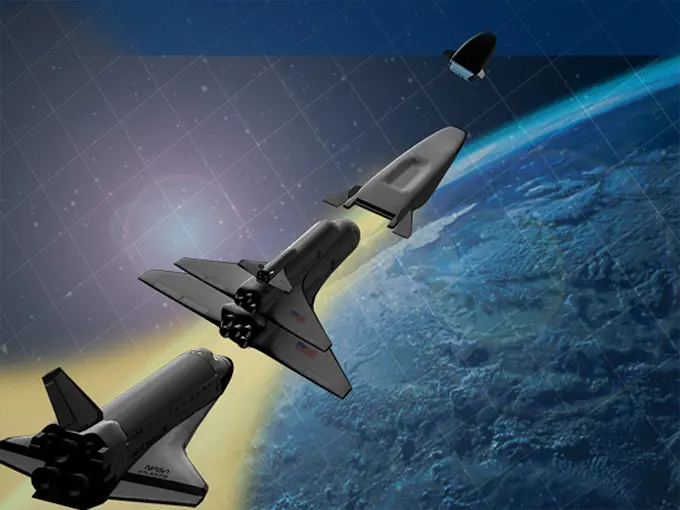
NASA's Marshall Space Flight Center in Huntsville, Alabama, manages the Space Launch Initiative (SLI), NASA's priority developmental program focused on empowering America's leadership in space. SLI includes commercial, higher education, and defense partnerships and contracts to offer widespread participation in both the risk and success of developing our nation's next-generation reusable launch vehicle. This photo depicts an artist's concept of a future second-generation launch vehicle. For the SLI, architecture definition includes all components of the next-generation reusable launch system Earth-to-orbit vehicles (the Space Shuttle is the first generation earth-to-orbit vehicle), crew transfer vehicles, transfer stages, ground processing systems, flight operations systems, and development of business case strategies. Three contractor teams have each been funded to develop potential second- generation reusable launch system architectures The Boeing Company of Seal Beach, California; L
4128R-12577504
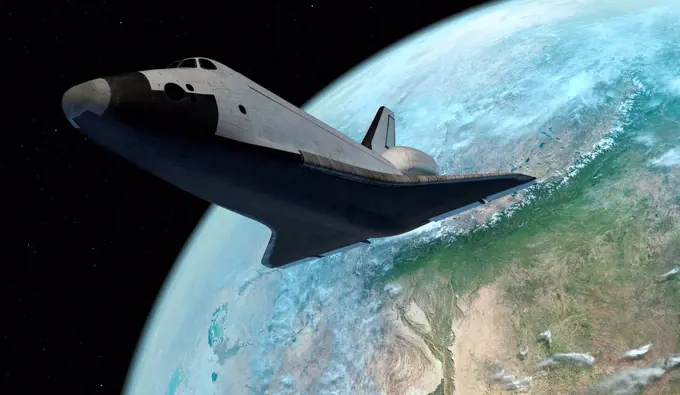
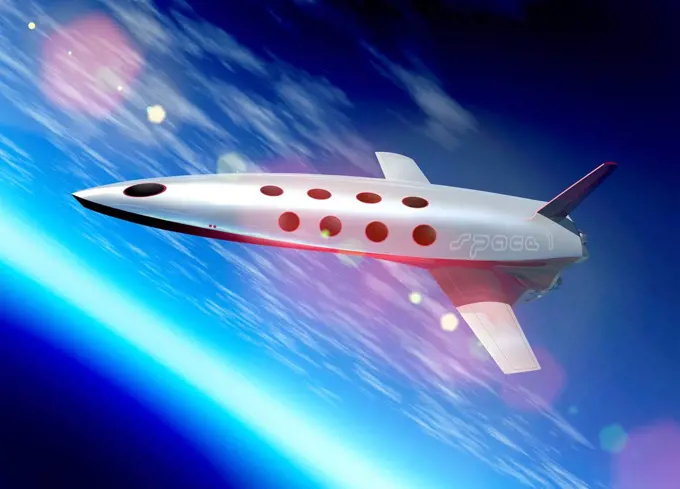
Space shuttle above the Earth, computer illustration.
6145-44781360
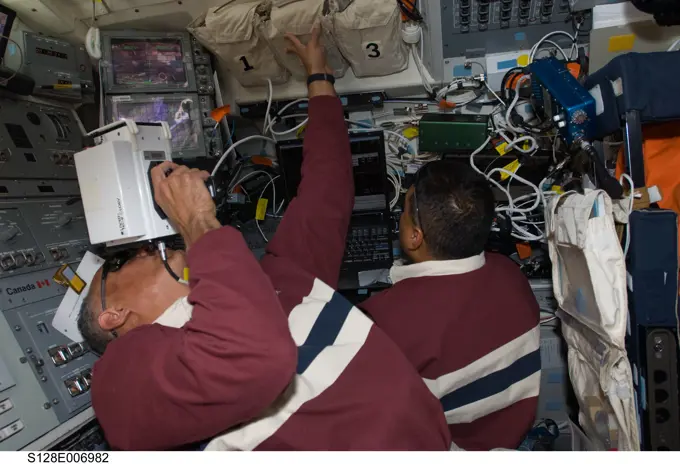
S128-E-006982 (30 Aug. 2009) --- Astronaut John Danny” Olivas (left), STS-128 mission specialist, uses a handheld laser ranging device at an overhead window on the aft flight deck of the Space Shuttle Discovery to track the range of the International Space Station during rendezvous operations. Astronaut Jose Hernandez, mission specialist, uses a computer at right.
6145-44471722
Artemis I will be the first integrated flight test of NASAs deep space exploration system: the Orion spacecraft, Space Launch System (SLS) rocket and the ground systems at Kennedy Space Center in Cape Canaveral, Florida. The first in a series of increasingly complex missions, Artemis I will be an uncrewed flight that will provide a foundation for human deep space exploration, and demonstrate our commitment and capability to extend human existence to the Moon and beyond. During this flight, the uncrewed Orion spacecraft will launch on the most powerful rocket in the world and travel thousands of miles beyond the Moon, farther than any spacecraft built for humans has ever flown, over the course of about a three-week mission.
1525-21767231
Telecom / Satellite working
6145-45254391
JSC2007-E-44665 (August 2007) --- Computer-generated artist's rendering of the International Space Station as of Aug. 30, 2007. This angle shows the starboard side of the orbiting complex. The Pressurized Mating Adapter-3 (PMA-3) relocates from the Unity node port docking mechanism to its nadir docking mechanism. During the STS-118 mission, the Starboard 5 (S5) truss segment and External Stowage Platform (ESP-3) were added; and the Port 6 (P6) forward radiator was retracted. Progress 26 resupply vehicle remains docked to the Pirs Docking Compartment and Progress 25 resupply vehicle is docked to the Zvezda Service Module aft port. Soyuz 14 (TMA-10) remains linked to the Zarya nadir port.
1828R-8917
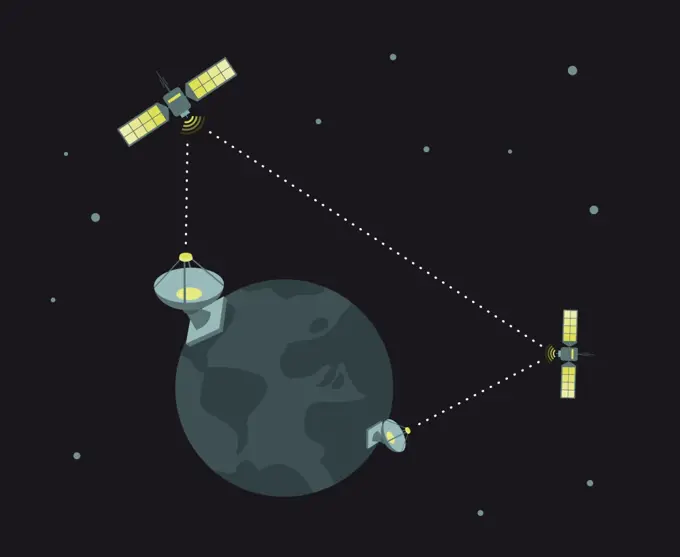
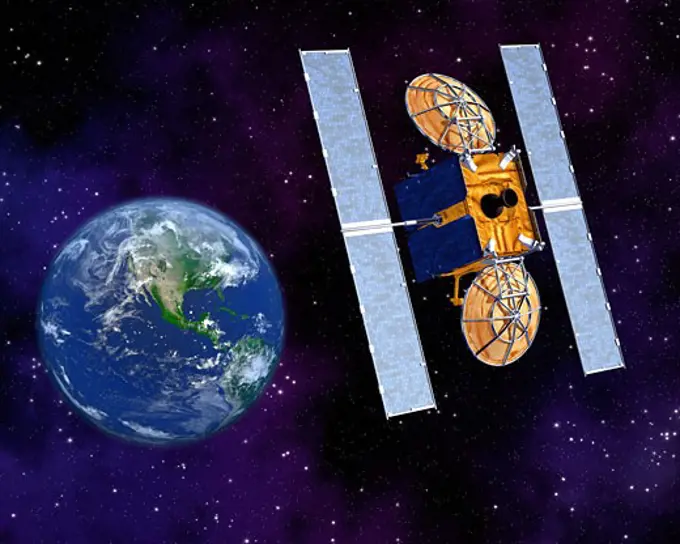
Comunication Satellite Above Earth
6145-44869945
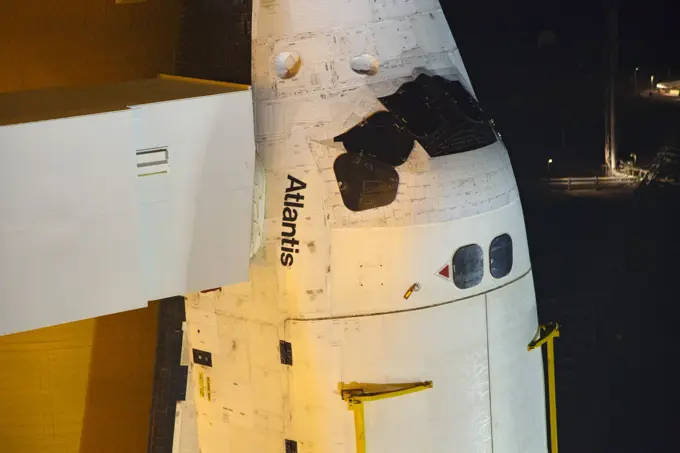
The space shuttle Atlantis is revealed as the rotating service structure (RSS) is rolled back at launch pad 39a on Thursday, July 7, 2011 at the NASA Kennedy Space Center in Cape Canaveral, Fla.  Atlantis is set to liftoff Friday, July 8, on the final flight of the shuttle program, STS-135, a 12-day mission to the International Space Station.
6145-52961168
. DCIM100GOPROGOPR1458.
1558-15872358
Portable solar cells
6145-45251300
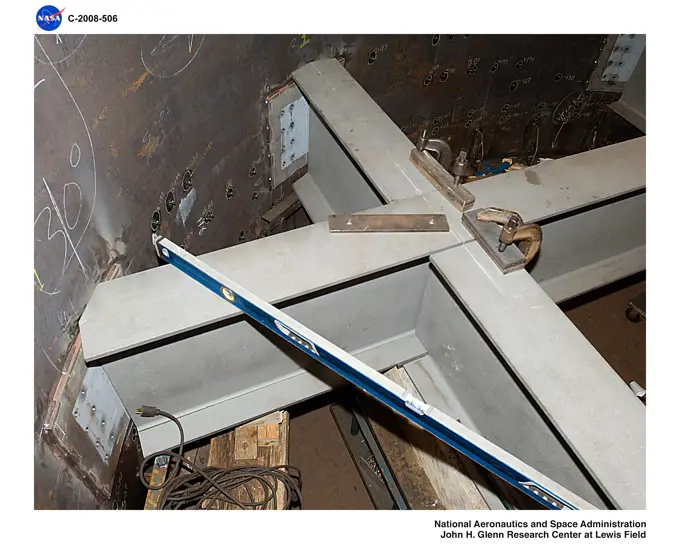
Ares 1-X segment US-7 showing fabrication of internal support for the ballast can
6145-44495383
KENNEDY SPACE CENTER, FLA. -- In the cockpit of the orbiter Atlantis, which is in the Orbiter Processing Facility, Laural Patrick (left), a systems engineer with MEDS, points out a feature of the newly installed Multifunction Electronic Display Subsystem (MEDS), known as the "glass cockpit," to U.S. Rep. Dave Weldon. The congressman is on the House Science Committee and vice chairman of the Space and Aeronautics Subcommittee. He was in Palmdale, Calif., when Atlantis underwent the modification and he wanted to see the final product. The full-color, flat-panel MEDS upgrade improves crew/orbiter interaction with easy-to-read, graphic portrayals of key flight indicators like attitude display and mach speed. The installation makes Atlantis the most modern orbiter in the fleet and equals the systems on current commercial jet airliners and military aircraft. Atlantis is scheduled to fly on mission STS-101 in early December
6145-58966665
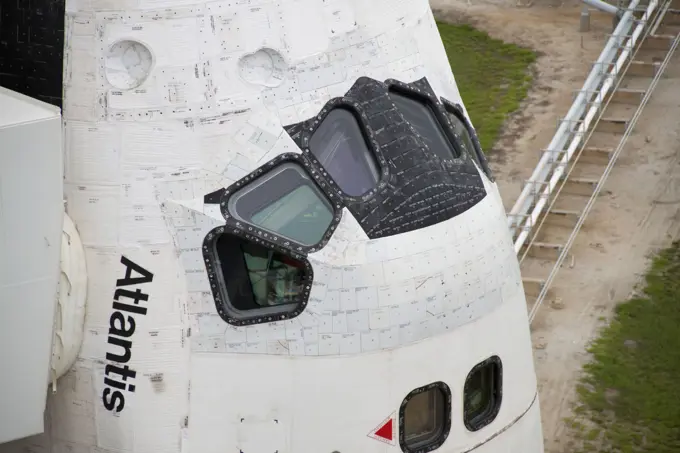
CAPE CANAVERAL, Fla. -- The crew compartment of space shuttle Atlantis is revealed on Launch Pad 39A at NASA's Kennedy Space Center in Florida following the move of the rotating service structure (RSS). The structure provides weather protection and access to the shuttle while it awaits liftoff on the pad. RSS "rollback" marks a major milestone in Atlantis' STS-135 mission countdown. Atlantis and its crew of four; Commander Chris Ferguson, Pilot Doug Hurley and Mission Specialists Sandy Magnus and Rex Walheim, are scheduled to lift off at 11:26 a.m. EDT on July 8 to deliver the Raffaello multi-purpose logistics module packed with supplies and spare parts to the International Space Station. Atlantis also will fly the Robotic Refueling Mission experiment that will investigate the potential for robotically refueling existing satellites in orbit. In addition, Atlantis will return with a failed ammonia pump module to help NASA better understand the failure mechanism and improve pump designs
6145-45083060
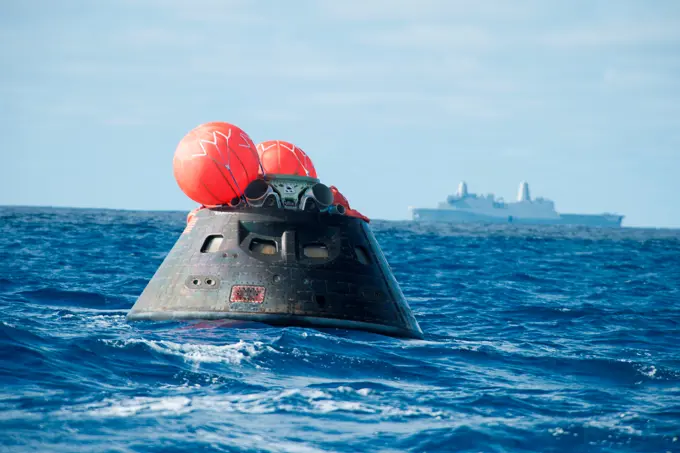
NASA's Orion spacecraft floats in the Pacific Ocean after splashdown from its first flight test in Earth orbit. An H60-S Seahawk helicopter hovers above to communicate the spacecraft's location back to the USS Anchorage. NASA, the U.S. Navy and Lockheed Martin are coordinating efforts to recover Orion and secure the spacecraft in the well deck of the USS Anchorage. Orion completed a two-orbit, four-and-a-half hour mission, to test systems critical to crew safety, including the launch abort system, the heat shield and the parachute system. The Ground Systems Development and Operations Program is leading the recovery efforts.
6145-44472458
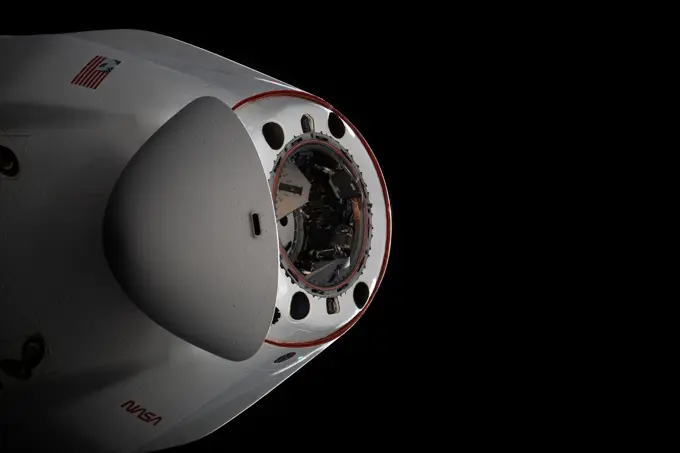
The pressurized capsule of the SpaceX Cargo Dragon resupply ship with its nose cone open is pictured as the vehicle departs the International Space Station.
6145-44566926
KENNEDY SPACE CENTER, FLA. -- The NASA logo, also known as the "meatball," is painted on the side of the Vehicle Assembly Building (VAB). When finished, the logo will measure 110 feet by 132 feet, or about 12,300 square feet. Workers, suspended on platforms from the top of the 525-foot-high VAB, are using rollers and brushes to do the painting. In addition to the logo, the American flag is also being repainted on the other side of the VAB. The flag spans an area 209 feet by 110 feet, or about 23, 437 square feet. Each stripe is 9 feet wide and each star is 6 feet in diameter. The entire fleet of orbiters is also receiving the addition of the NASA logo on their wings and sidewalls. The painting honors NASAs 40th anniversary on Oct. 1 and is expected to be complete in mid-September
1525-26418151
Cartoon version design of vehicle operates on the moon surface,vector illustration
6188-55648770
Radarstation am Flughafen Radarstation am Flughafen Copyright: xZoonar.com/Dr.xNorbertxLangex 14681474
4128R-31399
Space tourism, computer artwork.
4128R-15219
Space tourism, computer artwork.
6145-44866757
CAPE CANAVERAL, Fla. -- On Launch Pad 39A at NASA's Kennedy Space Center in Florida, the access arm supporting the pad's White Room is in place against space shuttle Atlantis. The room provides workers and astronauts an entry point to the shuttle's crew compartment. The Raffaello multi-purpose logistics module (MPLM) payload for space shuttle Atlantis' STS-135 mission to the International Space Station has arrived at the pad. The payload canister will be lifted to the payload changeout room and the payload ground-handling mechanism then will be used to transfer Raffaello out of the canister into Atlantis' payload bay. Next, the rotating service structure that protects the shuttle from the elements and provides access will be rotated back into place.Commander Chris Ferguson, Pilot Doug Hurley and Mission Specialists Sandra Magnus and Rex Walheim are targeted to lift off on Atlantis July 8, taking with them the MPLM packed with supplies, logistics and spare parts to the station. Th
6145-44720389
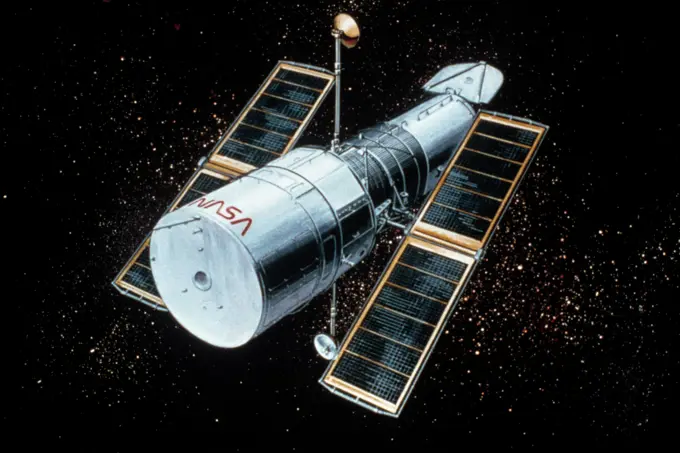
Shuttle related interaction with the space telescope.
6145-58968970
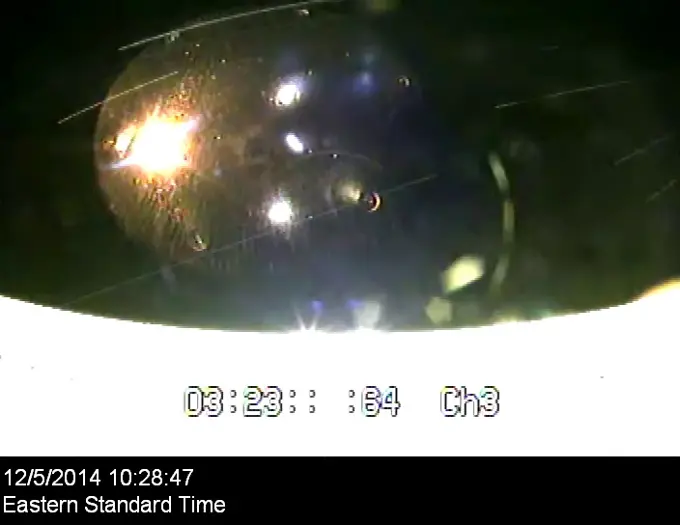
The crew module separates from service module on Orion's first flight test, Exploration Flight Test-1 (EFT-1), on December 5, 2014.
6145-45230019
The Boeing CST-100 Starliner spacecraft is seen after it landed in White Sands, New Mexico, Sunday, Dec. 22, 2019. The landing completes an abbreviated Orbital Flight Test for the company that still meets several mission objectives for NASAs Commercial Crew program. The Starliner spacecraft launched on a United Launch Alliance Atlas V rocket at 6:36 a.m. Friday, Dec. 20 from Space Launch Complex 41 at Cape Canaveral Air Force Station in Florida.
6188-55647340
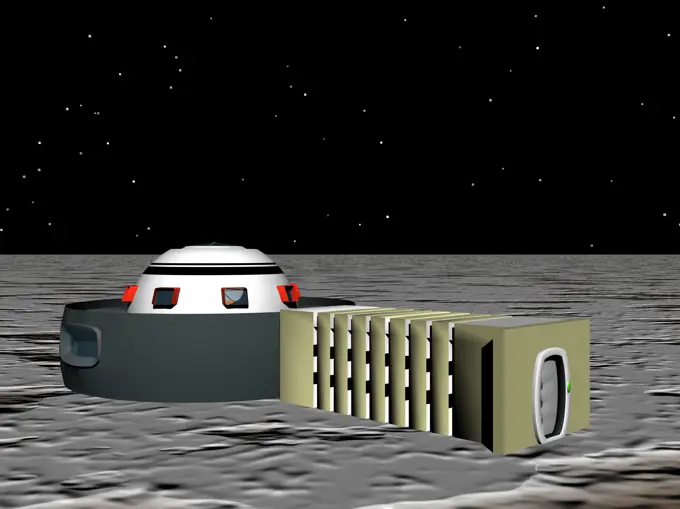
Mondbasis mit Schleuse Mondbasis mit Schleuse Copyright: xZoonar.com/Dr.xNorbertxLangex 14325603
6145-45003365
N/A
6145-58968975
The service module panels separate during Orion's first flight test, Exploration Flight Test-1 (EFT-1), on December 5, 2014.
6145-44645127
VANDENBERG AIR FORCE BASE, Calif.  -   This is the mission patch for the CALIPSO/CloudSat mission showing the dual spacecraft.  It hangs on the wall inside the Astrotech Payload Processing Facility at Vandenberg Air Force Base in California, where the CALIPSO/CloudSat spacecraft is being readied for launch.  CALIPSO stands for Cloud-Aerosol Lidar and Infrared Pathfinder Satellite Observation. It will fly in combination with the CloudSat satellite to provide never-before-seen 3-D perspectives of how clouds and aerosols form, evolve, and affect weather and climate. CALIPSO and CloudSat will join three other satellites in orbit to enhance understanding of climate systems.  Launch of CALIPSO/CloudSat is scheduled for April 21.
PREVIOUS
of 2
NEXT
2401 S. Ervay, Suite 206
Dallas, Texas 75215
United States
Browse
CategoriesGalleriesFree Research
For Creators
License Your ContentSuperStock For StudentsFrame of Mind BlogContributor PortalNew Image SpotlightLicense AI Imagery
Resources
About UsLicensingTerms & ConditionsAPI AccessPrivacyPricing
Contact
+1 866 236 0087help@superstock.com Contact form
©2026 SuperStock. All Rights Reserved. -B
This site is protected by reCAPTCHA and Google Privacy Policy and Terms of Service apply.