Fine ArtVintageFootageSubscriptionBoardsFree ResearchPricing
  • Fine Art
  • Vintage
  • Footage
  • Subscription
  • Boards
  • Free Research
  • Pricing

Textile Patterns

Richly designed textiles featuring intricate patterns of flowers and animals, combining traditional craftsmanship with decorative elements.
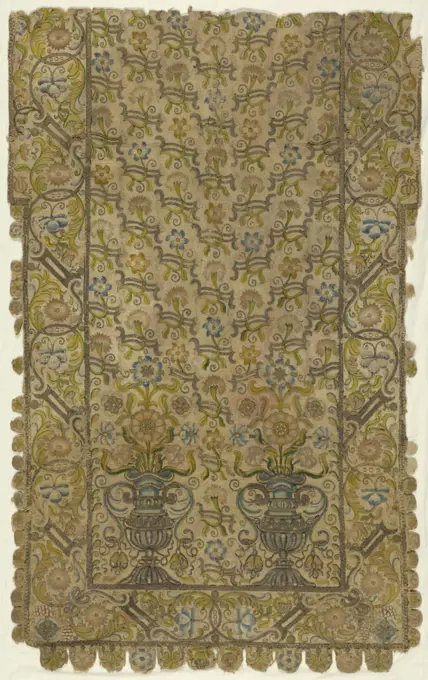
Panel, Medium: silk and metallic thread on linen (confirmed by microscope) Technique: embroidered, Embroidered wall hanging with silk and metallic-wrapped threads. Overall meandering floral motif with center motif of two metallic vases with flowers sprouting out. Edge is scalloped with each scallop holding a single flower., Italy, 18th century, embroidery & stitching, Panel
270 assets in this story
4409-17553344
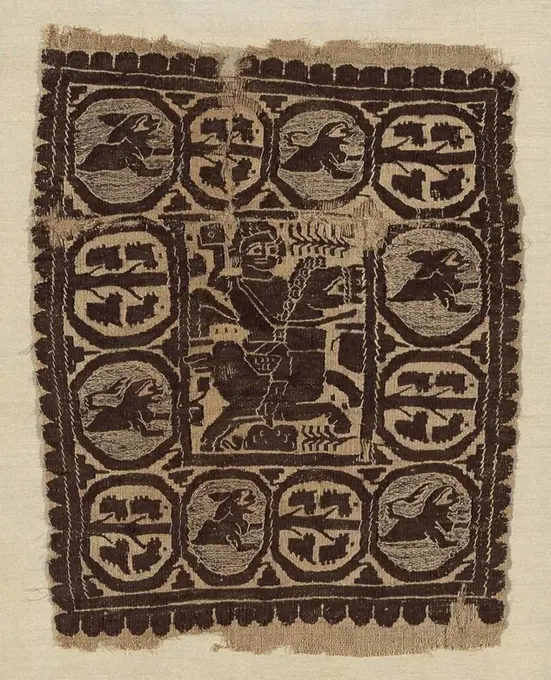
Fragment. Coptic; Egypt. Date: 301 AD-500 AD. Dimensions: 30.5 × 24.1 cm (12 × 9 1/2 in.). Linen and wool, slit tapestry weave. Origin: Egypt. Museum: The Chicago Art Institute, Chicago, USA. Author: Ancient Egyptian.
6145-51824189
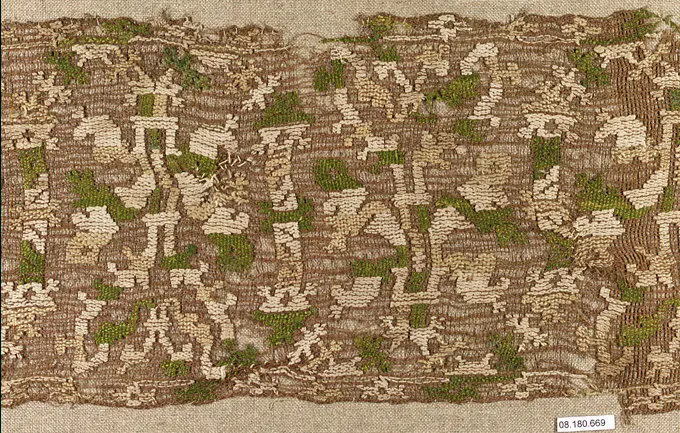
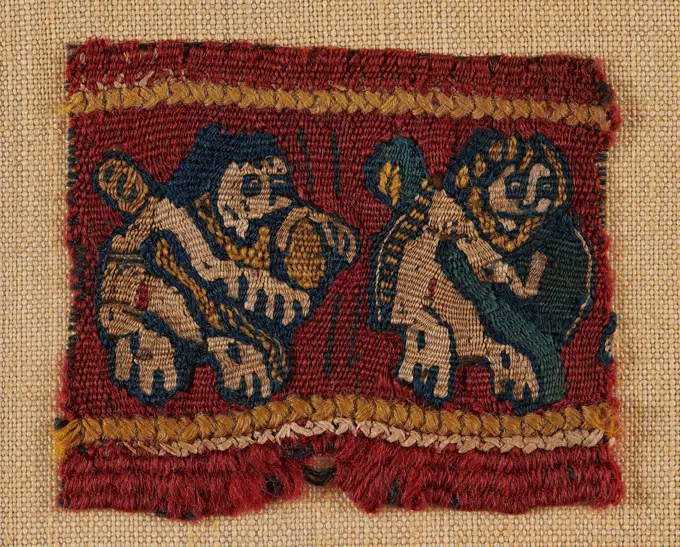
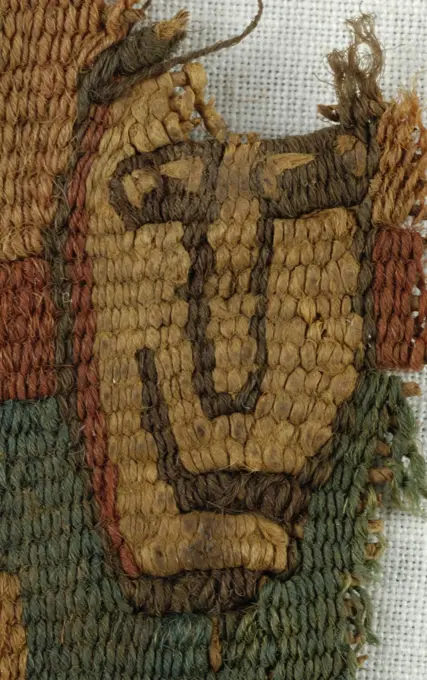
Fragment with Figural Decoration Coptic. Fragment with Figural Decoration, 5th-7th century C.E. Flax, wool, 1 15/16 x 1 15/16 in. (5 x 5 cm).   Egyptian, Classical, Ancient Near Eastern Art 5th-7th century C.E.
6145-29233605
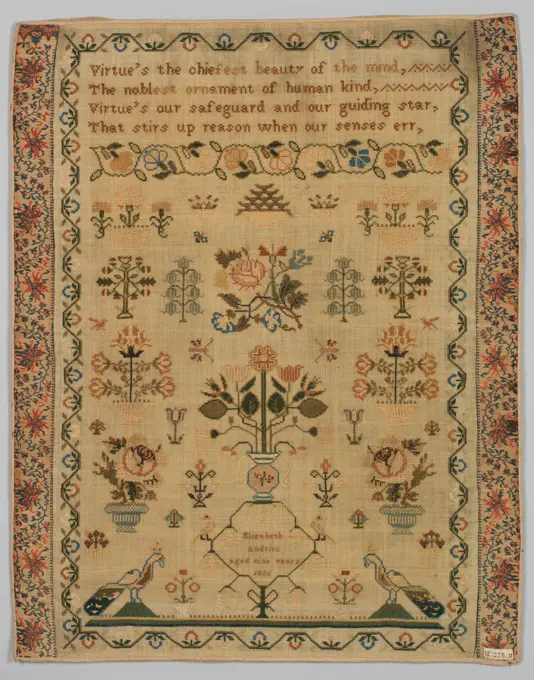
Sampler 1826 British. Sampler. British. 1826. Silk on canvas. Textiles-Embroidered
6145-46857868
Panel from aTunic.  Artist: Unknown
6145-29753567
Textile with Lions and Peacocks 15th century Italian. Textile with Lions and Peacocks 463228
4409-17431457
Linen mark, Wah. Dynasty: Dynasty 12. Reign: early reign of Amenemhat I. Date: ca. 1981-1975 B.C.. Museum: Metropolitan Museum of Art, New York, USA.
4443-28736309
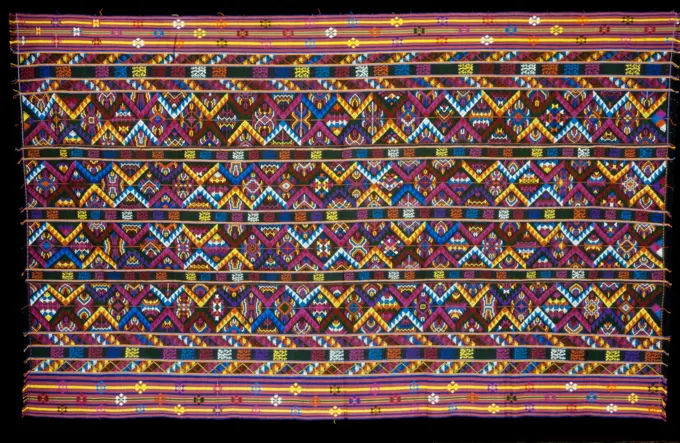
Kira, 20th century, 95 x 58 in. (241.3 x 147.32 cm), Silk, cotton, Bhutan, 20th century
6145-29184651
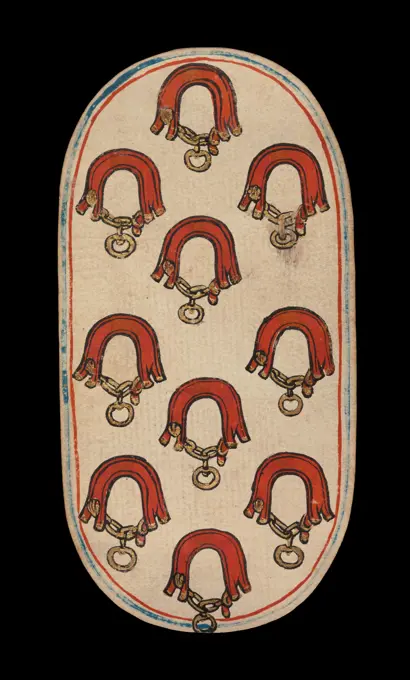
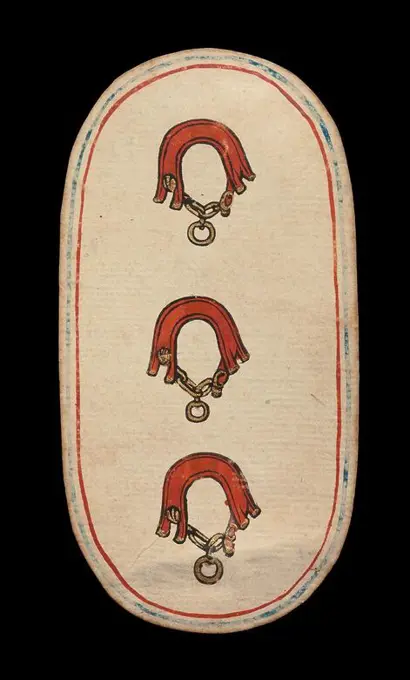
10 of Collars, from The Cloisters Playing Cards ca. 1475-80 South Netherlandish The Cloisters set of fifty-two cards constitutes the only known complete deck of illuminated ordinary playing cards (as opposed to tarot cards) from the fifteenth century. There are four suits, each consisting of a king, queen, knave, and ten pip cards. The suit symbols, based on equipment associated with the hunt, are hunting horns, dog collars, hound tethers, and game nooses. The value of the pip cards is indicated by appropriate repetitions of the suit symbol. The figures, which appear to be based on Franco-Flemish models, were drawn in a bold, free, and engaging, if somewhat unrefined, hand. Their exaggerated and sometimes anachronistic costumes suggest a lampoon of extravagant Burgundian court fashions. Although some period card games are named, it is not known how they were played. Almost all card games did, however, involve some form of gambling. The condition of the set indicates that the cards were
6145-51834968
Mantle ("The Paracas Textile") Nasca. Mantle ("The Paracas Textile"), 100-300 C.E. Cotton, camelid fiber, 24 5/8 × 58 11/16 in. (62.5 × 149 cm).  This extraordinarily complex mantle, or cloak, is one of the most renowned Andean textiles in the world. It was most likely used as a ceremonial object. The ninety figures decorating the border, created by needle knitting, have been interpreted as a microcosm of life on Perus South Coast two thousand years ago, with a particular focus on agriculture. Many of the images illustrate native flora and fauna as well as cultivated plants. Costumed figures may represent humans impersonating gods and acting as intermediaries between the real and supernatural worlds. Severed human trophy heads are shown as germinating seeds, suggesting the practice of ritual sacrifice and the interconnected cycles of birth and death. Este extraordinariamente complejo manto, o capa, es uno de los textiles andinos más conocidos en el mundo. Fue usado probablemente como
4443-19545201
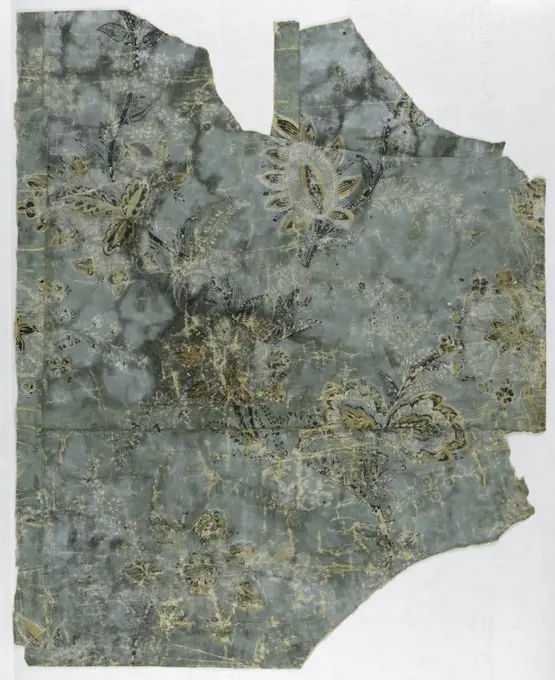
Sidewall - fragment, Block-printed on handmade paper, Irregular vertical rectangle, with ascending serpentine vine and floral clusters in Indian style., England, ca. 1765, Wallcoverings, Sidewall - fragment
4409-17557265
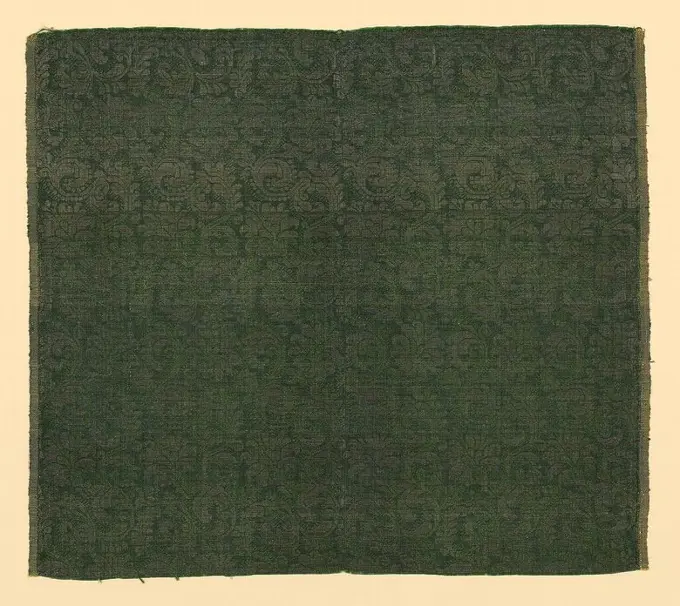
Panel. Italy. Date: 1601-1700. Dimensions: 47.7 x 53.2 cm (18 3/4 x 21 in.). Silk and gold gilt strip, warp-faced (weft rib) plain weave with supplementary patterning wefts. Origin: Italy. Museum: The Chicago Art Institute, Chicago, USA.
4409-17461442
Bedspread (Detail of Center). Dated: c. 1937. Dimensions: overall: 34.3 x 33.7 cm (13 1/2 x 13 1/4 in.) Original IAD Object: 101"square. Blocks c. 13"square. Div. lines and border: c. 1"wide.. Medium: watercolor, colored pencil, and graphite on paperboard. Museum: National Gallery of Art, Washington DC. Author: Charlotte Winter.
4443-19526204
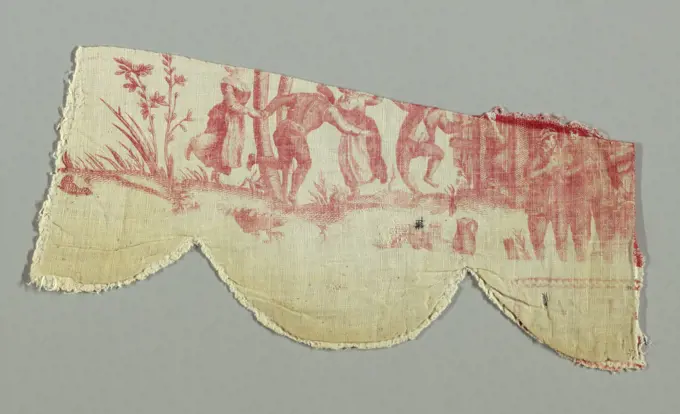
Fragment with partial chef, Medium: cotton Technique: plate printed on plain weave, Fragment with part of one detail that is a reverse of a scene on the Jouy textile 'La Fete Flamand'. There is a partial chef, 'MANUFA... de DU....', Nantes, France, ca. 1795, printed, dyed & painted textiles, Fragment with partial chef
6145-29780562
Roundel 6th-7th century. Roundel 448255
1848-61487670
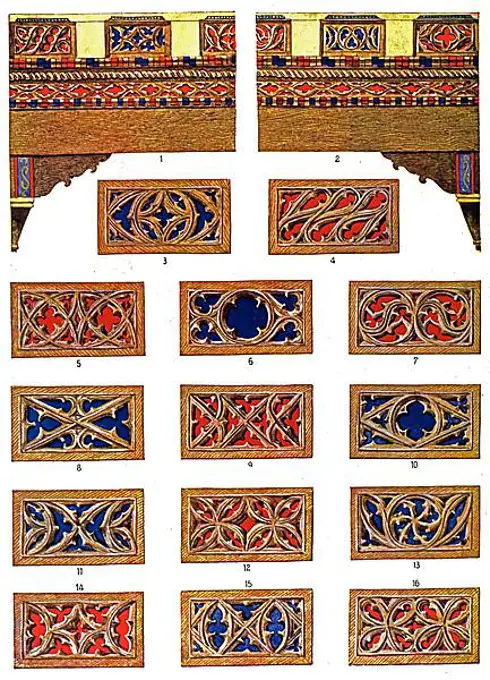
Wood painting from the 14th century, Middle Ages, Gothic ornament in Italy, Gruner, Specimens of Ornamental Art
6145-51821716
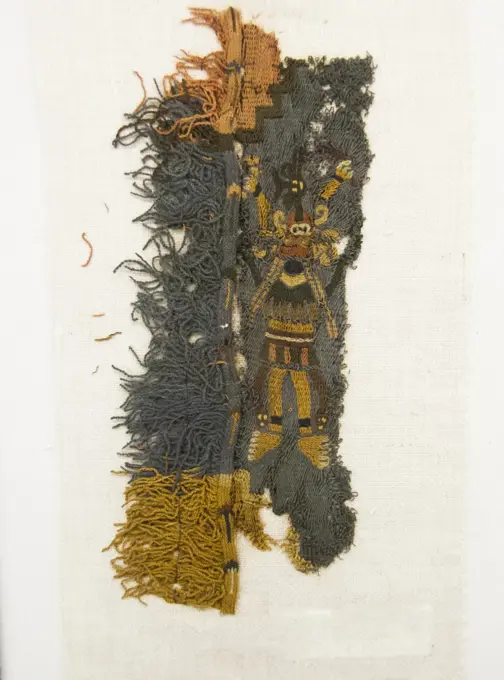
Textile Fragment, Border Nasca. , 200-600 C.E. Cotton, camelid fiber, 8 1/4 x 3 15/16 in. (21.0 x 10.0 cm) (including weft fringe).   Arts of the Americas 200-600 C.E.
6145-51824103
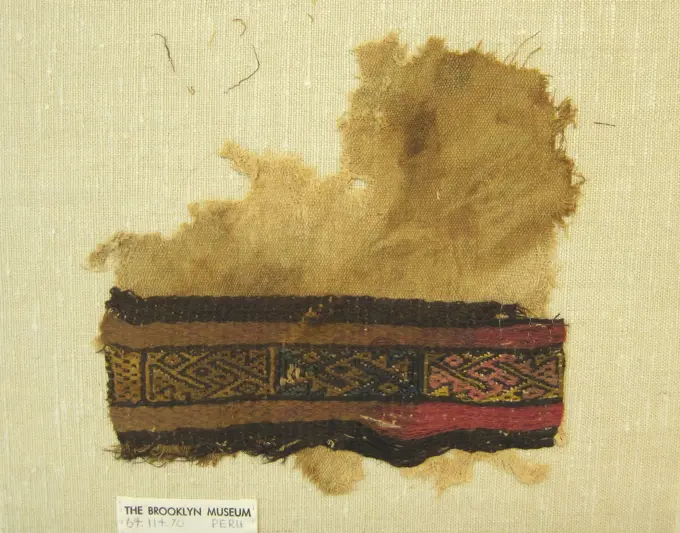
Textile Fragment, undetermined Chimú. , 1000-1532. Cotton, camelid fiber, 7 1/4 × 7 in. (18.4 × 17.8 cm).   Arts of the Americas 1000-1532
6145-29743298
Textile with Processions of Rams 5th-8th century Iran, Afghanistan or China (Xinjiang Autonomous Region) second rotation: November 9, 2012-February 10, 2013This remarkably well-preserved textile showing rams could have been produced in a Sasanian center in Iran or even Iraq. Sasanian imperial works of this quality were valued along the Silk Road and made their way as far as eastern Central Asia and China. Like the gold objects in this exhibition, such textiles were luxury goods that denoted status in the nomadic cultures of Central Asia.. Textile with Processions of Rams 72707
6145-46819136
Pair of doors from the ChihilSutun
4409-17485425
Curtain. Date/Period: 400/599. Linen, wool; tapestry weave. Width: 27.5 in. Height: 54.5 in (irregular). Author: UNKNOWN.
4409-135370
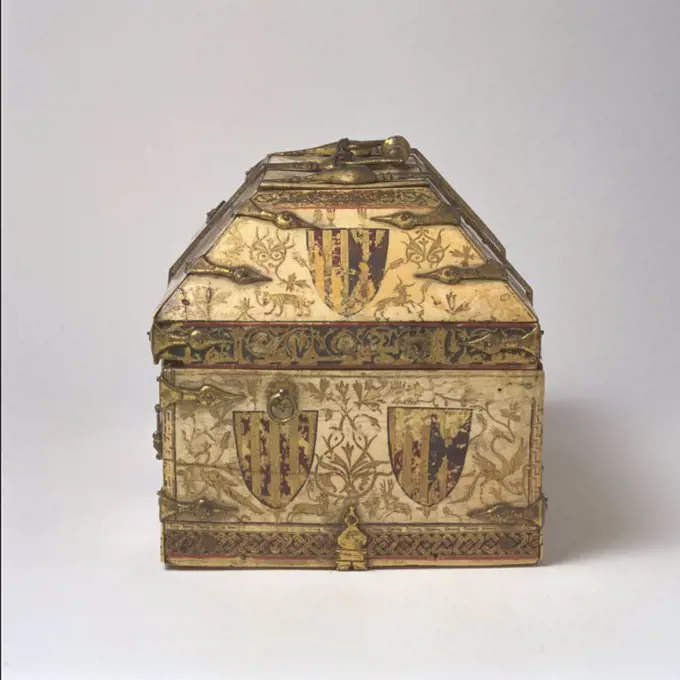
ARQUETA: DE SAN MARTIN I EL HUMANO. (DEPOSITO: MUSEO ARQUEOLOGICO NACIONAL).
6145-29715495
Embroidered Border Fragment 3rd-2nd century B.C. Nasca. Embroidered Border Fragment 308045
4409-17547267
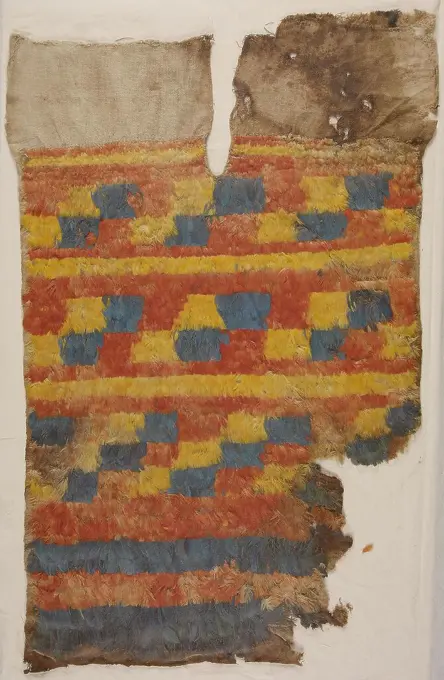
Fragment (Possibly From a Tunic). Peru. Date: 600 AD-1532. Dimensions: 109.2 x 67.3 cm (43 x 26 1/2 in.). Origin: Peru. Museum: The Chicago Art Institute, USA.
6145-55187001
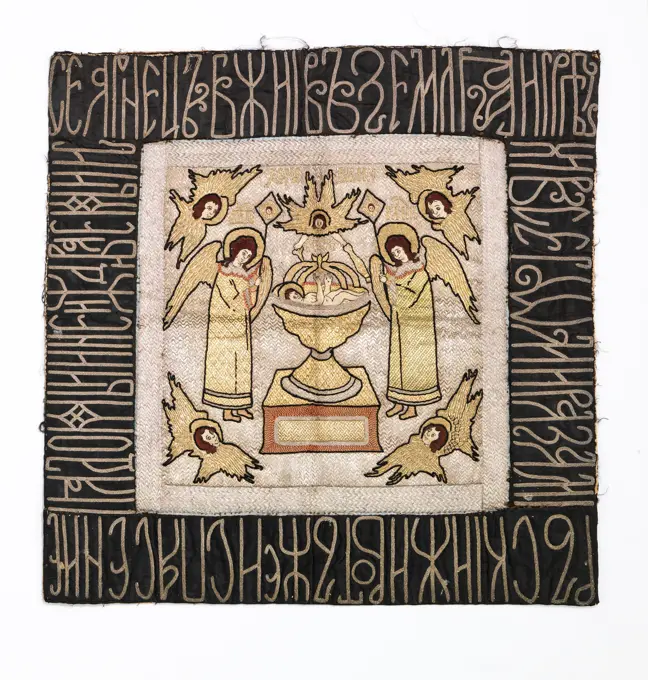
Chalice veil Russian 16th century This object is from the collection of Natalia de Shabelsky (1841-1905), a Russian noblewoman compelled to preserve what she perceived as the vanishing folk art traditions of her native country. Traveling extensively throughout Great Russia, she collected many fine examples of textile art of the wealthy peasant class. From the 1870s until moving to France in 1902, Shabelsky amassed a large collection of intricately embroidered hand-woven household textiles and opulent festival garments with rich decoration and elaborate motifs. The Brooklyn Museum holdings include many fine examples including the majority of the garments. Portions of Shabelsky's collection are also housed at the Museum of Fine Arts, Boston, the Cleveland Art Museum, and the Russian Museum of Ethnography in St. Petersburg.
6145-46444931
Spread from oriental textile with embroidery. Spread from oriental textile with multicolored embroidery from silk on silk. In the middle, the embroidery has a medallion with birds, flowers and leaves. Midfield is filled with fine flower vines, birds and butterflies with water plants and birds in the four corners in the four corners. The edge has wavy tendrils with flowers and leaves.
4409-17439325
Sampler. Dated: c. 1938. Dimensions: overall: 50.8 x 38.5 cm (20 x 15 3/16 in.) Original IAD Object: 15 1/2" wide; 16 1/2" long. Medium: watercolor and graphite on paperboard. Museum: National Gallery of Art, Washington DC. Author: Eva Wilson.
4443-19526143
Josephine, Block printed on handmade paper, Drapery design. Elegant drapery folds with band of applied white ornament every 40 cm., central gather. Printed in brown, shades of tan, white and gray on tan ground., France, 1800-1810, Wallcoverings, Sidewall, Sidewall
6145-29707614
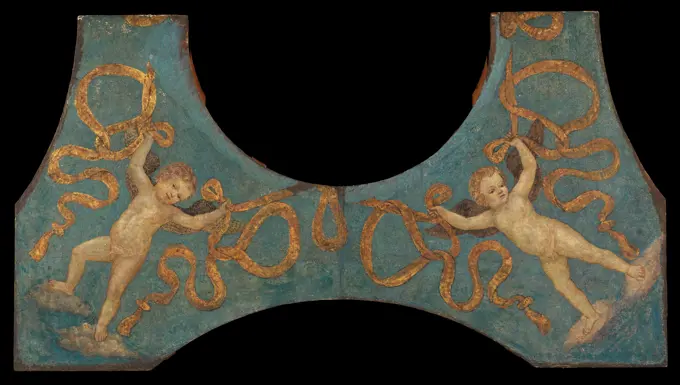
Putto with garlands ca. 1509 Pinturicchio Italian One of twenty-two panels (14.114.1-.22) forming the ceiling from the Palace of Pandolfo Petrucci, called Il Magnifico, Siena. The general distribution and partition of the ceiling appears to derive from that of a vaulted and painted ceiling in Nero's Golden House in Rome. Many of the individual figures also seem to derive from antique works of art- especially sarcophagi.. Putto with garlands. Pinturicchio (Italian, Perugia 1454-1513 Siena). Italian, Umbria. ca. 1509. Fresco, transferred to canvas and attached to wood panels. Paintings-Decorative
6145-59274948
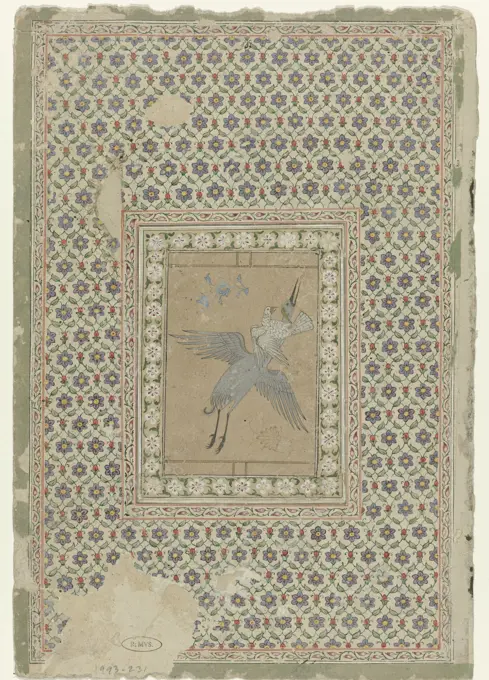
Havik with crane, Anonymous, 1719 - 1723 Indian miniature. drawing The performance consists of an unadorned rectangle with a crane in stretched shape that is picked by a hawk; In the top right corner a blossom branch in blue and left under an opened flower in gray contours; around the show frameworks in a decorative motif and various decorative edges with floral motifs in bright colors; The wide edge of the leaf has a flower pattern in honeycomb shape and is pissed off with a narrow edge with tendrils and flower buds; The outer plain edge is light green, largely damaged and crumbled; Verso calligraphy in decorated leaves. Around the performance a number of narrow decorative edges with floral motifs in a leaf with a flower pattern in honeycomb, pissed off with the same edge as the inner edge; The show is glued; severe damage on the leaf; Verso A calligraphy with a glued ornamental edge all around. Deccan sierrand: paper brush shore-birds and wading-birds: crane
6145-46858714
Fragment from aTunic.  Artist: Unknown
6145-46650242
. This small panel is unusual because of the inscription at the top, which records either the name of its owner or its maker. Such inscriptions are exceptionally rare in South Asian art.
6145-29723745
Textile Sample from Sample Book 19th century Japan. Textile Sample from Sample Book 68197
4443-19543255
Sampler, Medium: silk, linen, and cotton embroidery on linen foundation Technique: embroidered in cross and stem stitches on a plain weave foundation; later addition in cross and surface satin stitches, Alphabet introduced by Maltese cross. Scattered motifs in the field dominated by religious motifs. Horse-drawn chariot at upper left and animals at right., Italy, 1822, embroidery & stitching, Sampler
6145-51830489
Hanging, 1 of 7 Pieces Hanging, 1 of 7 Pieces, ca. 1610-1620. Painted resist and mordants, dyed cotton, 108 1/4 x 37 3/4 in. (275 x 95.9 cm).   Asian Art ca. 1610-1620
4443-19521561
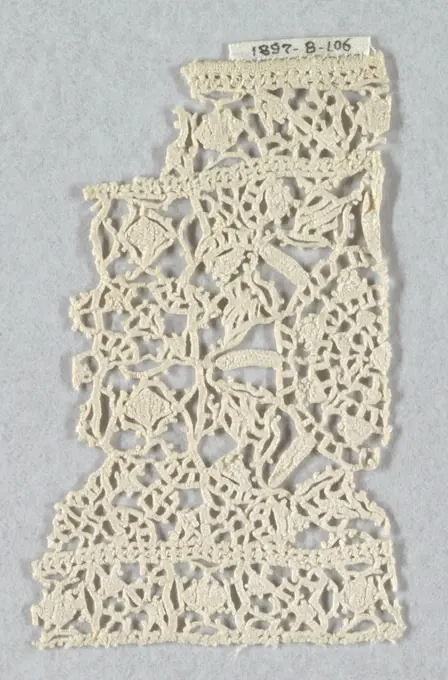
Fragment, Medium: linen Technique: grid of withdrawn element work with needle lace (reticella style), Insertion of reticella with a wide central band bordered by two narrow bands in an elaborate and closely worked geometric design., Italy, 16th century, lace, Fragment
6145-29753563
Shield ca. 1600 Italian, probably Venice This is one of a large group of shields decorated in a Middle Eastern style and thought to have been made for the bodyguard of Wolf Dietrich von Raitenau, prince-archbishop of Salzburg (reigned 1587-1612).. Shield. Italian, probably Venice. ca. 1600. Wood, leather, gesso, polychromy, gold, silver foil. probably Venice. Shields
4409-30433284
Dálmatica de San Valero, siglo XII. Museu del Disseny de Barcelona.
4443-19535559
Fragment, Medium: linen, silk Technique: bobbin lace, Eastern European, peasant style, Double headed eagle worked in red, black, blue, yellow and white with white ground. Scalloped border in red, yellow and black., Russia, 19th century, lace, Fragment
6145-29749590
Tiles (2) 16th-17th century Spanish, Seville. Tiles (2) 187938 Spanish, Seville, Tiles (2), 16th17th century, No dimensions recorded.. The Metropolitan Museum of Art, New York. Gift of Henry G. Marquand, 1894 (94.4.450a, b)
4409-153233
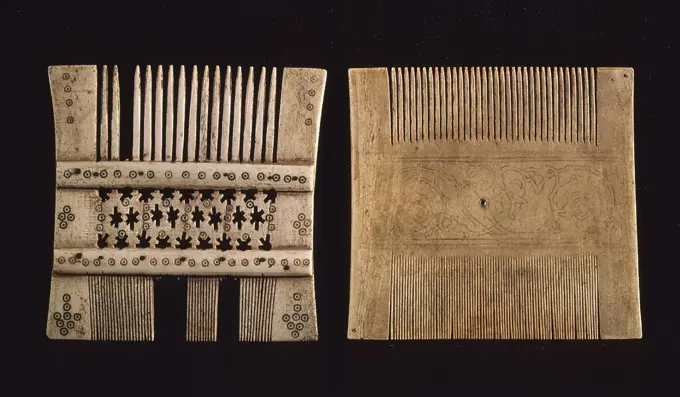
PEINES DE SAN ROSENDO - SIGLO XII - ARTES SUNTUARIAS ROMANICAS. Location: CATEDRAL MUSEO DIOCESANO. Orense. SPAIN.
6145-29813882
Fragment 16th century Italian. Fragment 215019
6145-29706698
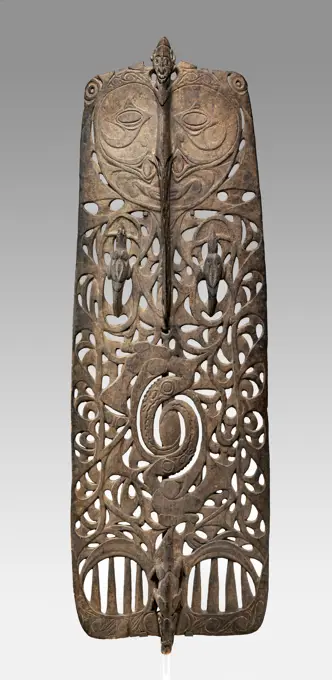
Ceremonial Board (Malu) 19th century Sawos people The openwork malu boards of the Sawos people of New Guinea are perhaps the ultimate expression of the curvilinear style that characterizes the carving of the Middle Sepik River. Although created by the Sawos, malu are traded to the neighboring Iatmul people who use them in the context of the initiation ceremonies that mark the transition of boys to manhood. If a boy dies during the initiation process, the malu are displayed to the village women to indicate that a death has occurred. The complex imagery of these objects incorporates bird, mammal, and insect forms, many of which represent totemic species. The central face of this object depicts the heart of the sago beetle, a large insect. Four hornbills, important totemic birds, are incorporated into the openwork carving. The pig, an animal of great social and ritual significance throughout New Guinea, appears at the base.. Ceremonial Board (Malu). Sawos people. 19th century. Wood. Papua
4409-17391617
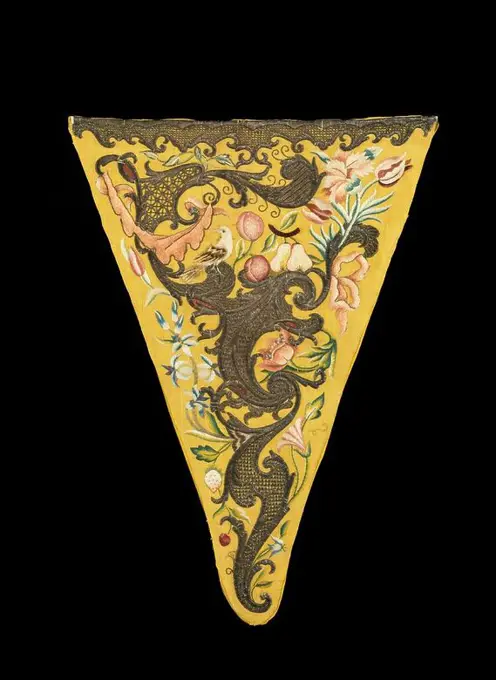
Stomacher. Culture: British. Date: 1750-59.This quintessential example of rococo finery features the central C-curve pattern characteristic of this style. The word rococo comes from rocaille, meaning shell. The delicate and realistic embroidery is extremely finely worked and is quintessential of the period. The arresting visual experience emanates from the stark contrast of the heavy ornate metallic scrollwork to the realistic floral motifs in polychrome floss. The integration of the fanciful scroll work and the naturalism of the flowers are realized through the bird perching on the scroll work rather than on the branch. Museum: Metropolitan Museum of Art, New York, USA.
4409-17420457
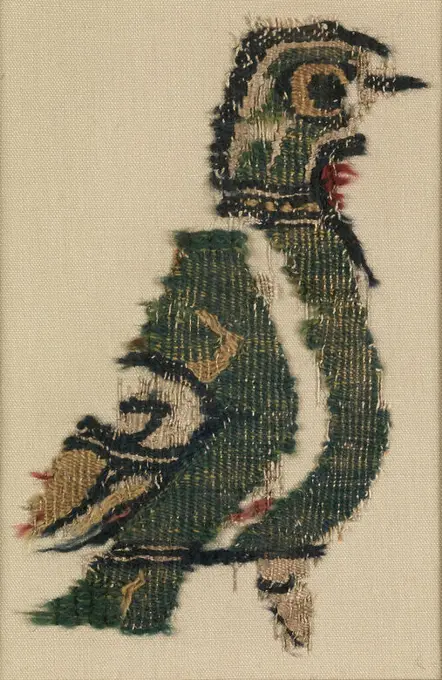
Bird Fragment. Dimensions: L: 8.5 in (21.6 cm) x W: 5 in (12.7 cm), mounted and framed. Date: 9th-11th century. Museum: Metropolitan Museum of Art, New York, USA.
6145-58876872
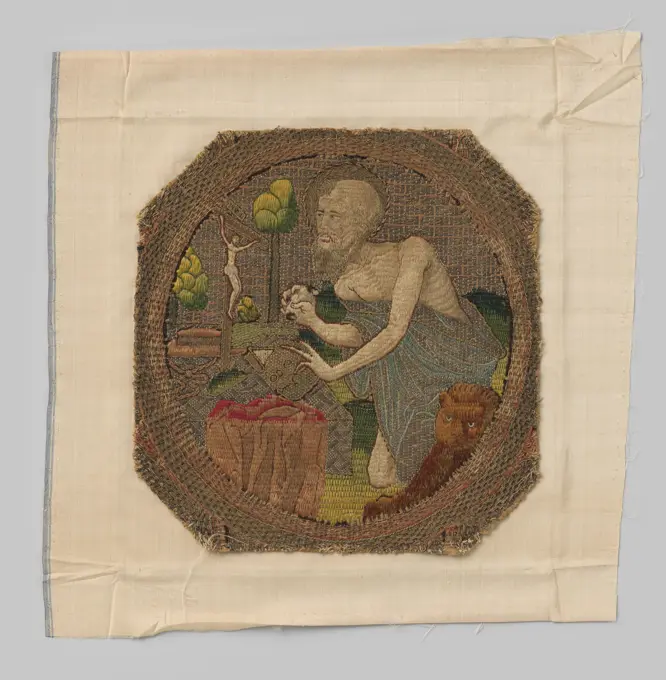
Fragment of a priest's rug (), With embroidery, c. 1500 - c. 1999 Fragment of a priest's rug or parament (), With embroidery. The embroidery has an image of the saint Hieronimus as a penitent, with the lion.  textile materials embroidering Fragment of a priest's rug or parament (), With embroidery. The embroidery has an image of the saint Hieronimus as a penitent, with the lion.  textile materials embroidering
6188-64619145
Painting by Vasudeo S Gaitonde Copyright: xArunxMishra/DinodiaxPhotox
4409-17480638
Pa. German Box. Dated: c. 1937. Dimensions: overall: 29 x 22.5 cm (11 7/16 x 8 7/8 in.) Original IAD Object: 5 1/4" high; 13" long; 7 3/8" wide. Medium: watercolor, gouache, and pen and ink on paperboard. Museum: National Gallery of Art, Washington DC. Author: Joseph Rothenberg.
6145-58926644
Chair back panel -
4443-28739291
Panel, 20th century, 19 3/4 x 17 in. (50.17 x 43.18 cm) (irregular), Wool; embroidery, Morocco, 20th century
6145-29706139
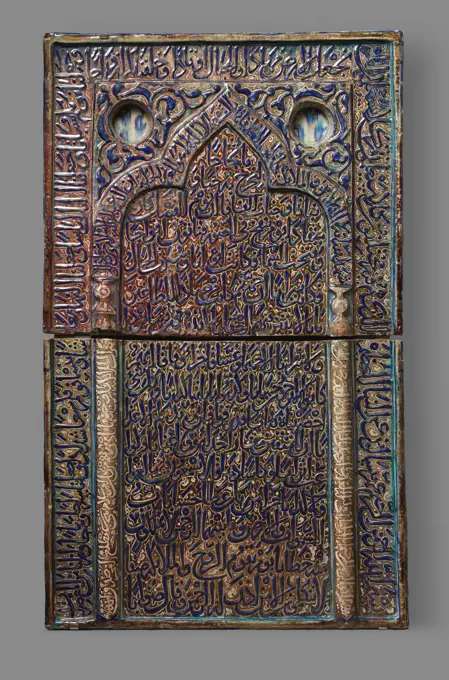
Tile with Niche Design early 14th century This large rectangular panel consists of two ceramic tiles from Kashan in Iran in the shape of a niche framed on three sides by an inscribed band. Tiles like this example commonly adorned mosques, tombs, or other Iranian buildings, especially during the Ilkhanid period when glazed tiles were used extensively for architectural decoration. The tile is painted in luster and heavily inscribed with Quranic verses from Surat al-Naba (78:1-14, 14-28), Surat al-Imran (3:18-19), and Surat al-Qadr (97: 1-5) referencing the Day of Judgement, the Oneness of Allah and the Twenty-seventh night of Ramadan.. Tile with Niche Design. early 14th century. Stonepaste; luster-painted. Made in Iran, Kashan. Ceramics-Tiles
4443-28727289
Appliqué panel, 23 1/4 x 32 in. (59.06 x 81.28 cm)28 3/4 x 38 7/16 in. (73.03 x 97.63 cm) (mount), Plant fibers, pigment, Democratic Republic of Congo
4409-65763302
Pie de relicario, siglo XIV. Catedral de Tortosa, Tarragona.
4409-20924196
LATERAL DE LA ARQUETA DE MARFIL DE FITERO - HISPANOMUSULMAN - CALIFAL - REALIZADA EN EL AÑO 966. Author: CULTURA DE HALAF. Location: MUSEO DE NAVARRA. Pamplona. NAVARRA. SPAIN.
6145-43625052
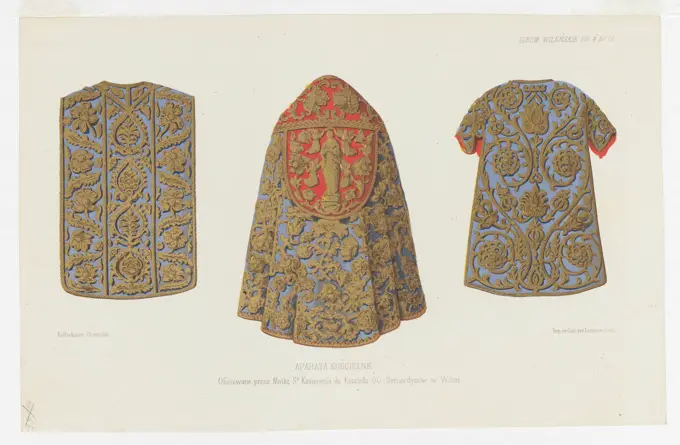
Chasuble, cope and dalmatic from the Bernardine church in Vilnius. Lemercier, Rose Joseph (Paryż ; zakład litograficzny ; 1827-post 1899), lithography atelier, Kellerhoven, Franz (ca 1814-1872), graphic artist, Wilczyński, Jan Kazimierz (1806-1885), publisher
6145-46858711
Band from aGarment.  Artist: Unknown
4409-17351028
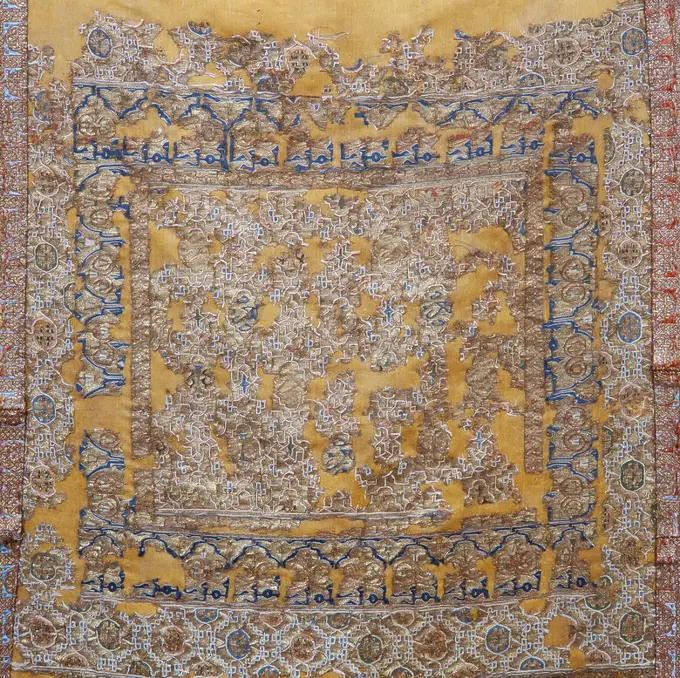
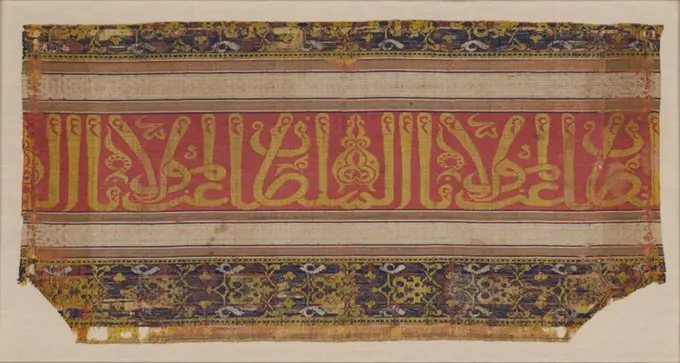
Textile Fragment. Dimensions: Textile: L. 10 5/8 in. (27 cm) W. 21 1/4 in. (54 cm)Mount: L. 15 1/2 in. (39.4 cm) W. 26 in. (66 cm)D. 1 3/4 in. (4.4 cm). Date: late 14th-early 15th century.This textile fragment, woven in vibrantly colored silk, is ornamented with an Arabic inscription in cursive thuluth script, which reads "Glory to our lord the Sultan." This phrase was often employed in the embellishment of the arts and architecture of the Nasrid period, and many similar textiles survive today as fragments. Silk textiles made in al-Andalus for sumptuous attire and costly furnishings were among the luxury commodities sought after by the Muslim and Christian elites on the Iberian Peninsula and far beyond its borders. Such textiles took on new lives as they were often later cut and reused for purposes such as ecclesiastic vestments. Museum: Metropolitan Museum of Art, New York, USA.
1848-61733317
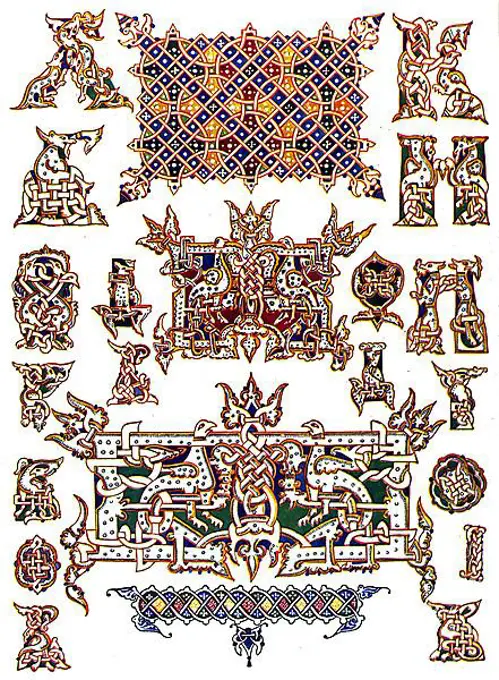
Russian miniature painting, Irish-Scandinavian, Middle Ages, Russian ornament, Butovsky, Histoire de I'ornement russe
6145-29233494
Sampler 19th century British. Sampler. British. 19th century. Silk on wool canvas. Textiles-Embroidered
6145-29290252
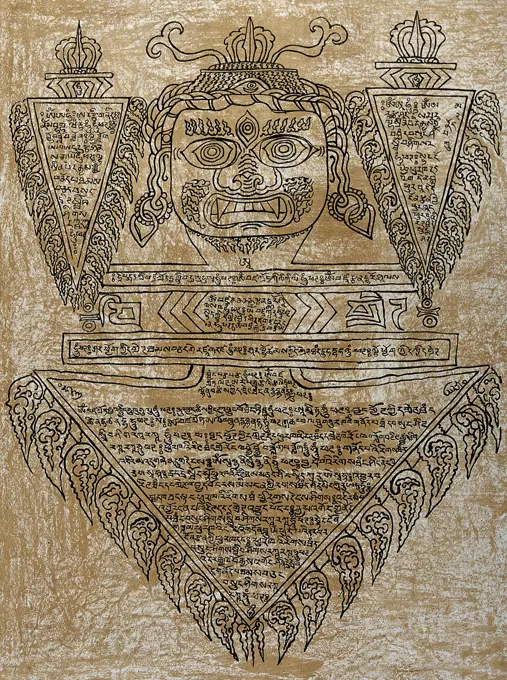
The magical figure Phurbu. Chromolithograph.
6145-30192923
Box Fragment 300 CE-750 CE Valley of Mexico. This fragment was part of a rectangular wood box painted with several depictions of an ornately dressed male figure standing in profile. It shows the individualís face with large oval eye, the lower portion of his feathered headdress, fabric-and-feather streamers that flow down his back, and a bundle of long feathers and plants that is held in his outstretched hand.. Wood, stucco, and pigment . Teotihuacan
4409-17408604
3 of Collars, from The Cloisters Playing Cards. Culture: South Netherlandish. Dimensions: 5 3/16 × 2 3/4 in. (13.2 × 7 cm). Date: ca. 1475-80.The Cloisters set of fifty-two cards constitutes the only known complete deck of illuminated ordinary playing cards (as opposed to tarot cards) from the fifteenth century. There are four suits, each consisting of a king, queen, knave, and ten pip cards. The suit symbols, based on equipment associated with the hunt, are hunting horns, dog collars, hound tethers, and game nooses. The value of the pip cards is indicated by appropriate repetitions of the suit symbol. The figures, which appear to be based on Franco-Flemish models, were drawn in a bold, free, and engaging, if somewhat unrefined, hand. Their exaggerated and sometimes anachronistic costumes suggest a lampoon of extravagant Burgundian court fashions. Although some period card games are named, it is not known how they were played. Almost all card games did, however, involve some form of g
6145-51385928
Tkanina koptyjska. warsztat egipski, workshop
6145-51823578
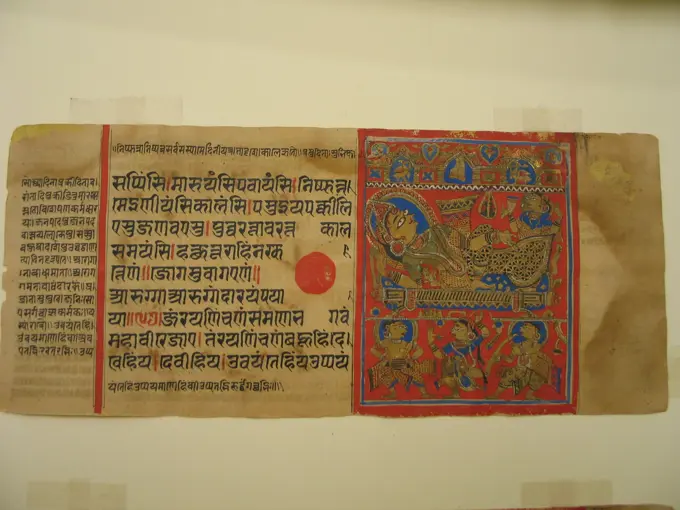
Page 39 from a manuscript of the Kalpasutra: recto image of Trishala reclining, verso text Page 39 from a manuscript of the Kalpasutra: recto image of Trishala reclining, verso text, 1472. Opaque watercolor and ink on gold leaf on paper, sheet: height: 4 3/8 in.   Asian Art 1472
6145-29724767
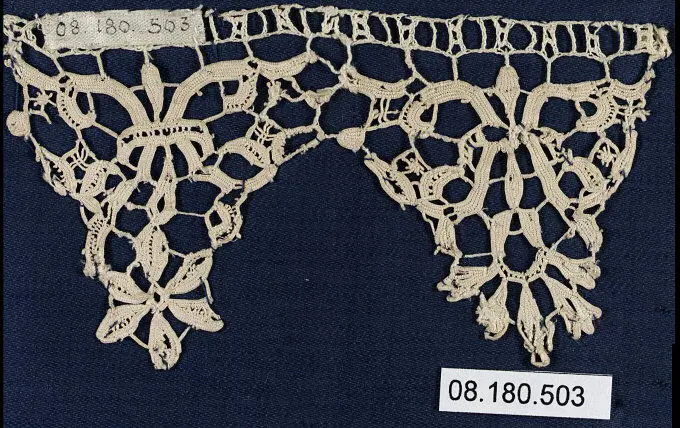
Fragment 17th century Italian Punto in arialiterally, "stitches in the air"is one of the earliest styles of needle lace, which is itself developed from cutwork of primarily geometric design. When lacemakers transitioned to using a foundation of threads laid out according to a pattern drawn on parchment, they were able to incorporate more fluid lines and curves into their designs.. Fragment 214853
4443-28730156
Retarpe robe with detailed embroidery, 18th-19th century, Unknown Sakhalin Ainu, 47 3/4 × 48 1/4 in. (121.29 × 122.56 cm) (overall), Cloth: nettle fiber; cotton appliqué and embroidery, Russia, 18th-19th century
4443-19544502
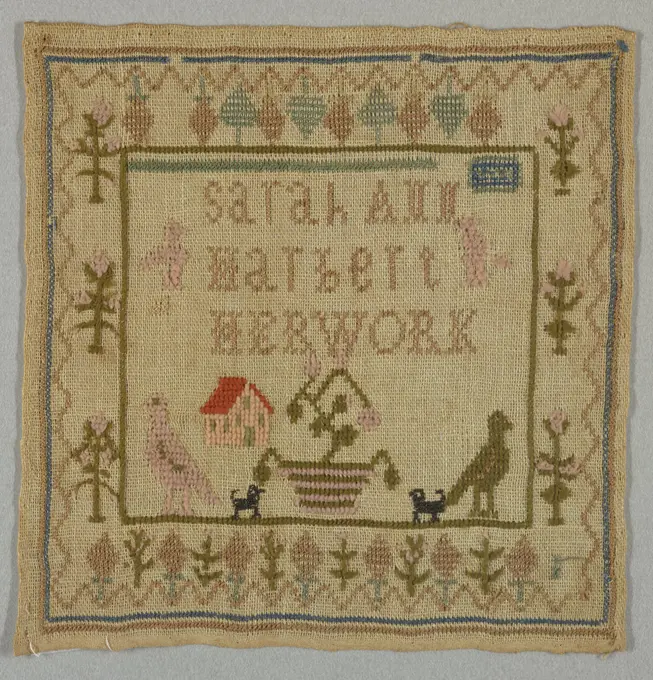
Sampler, Sarah Ann Marbert, American, Medium: wool embroidery on linen foundation Technique: embroidered in counted cross and long-armed cross stitches on plain weave foundation, The center field contains a large inscription with scattered motifs of birds, a house, and an urn of flowers; with a deep border combining a strawberry vine with other floral elements., USA, ca. 1860, embroidery & stitching, Sampler
6145-29151519
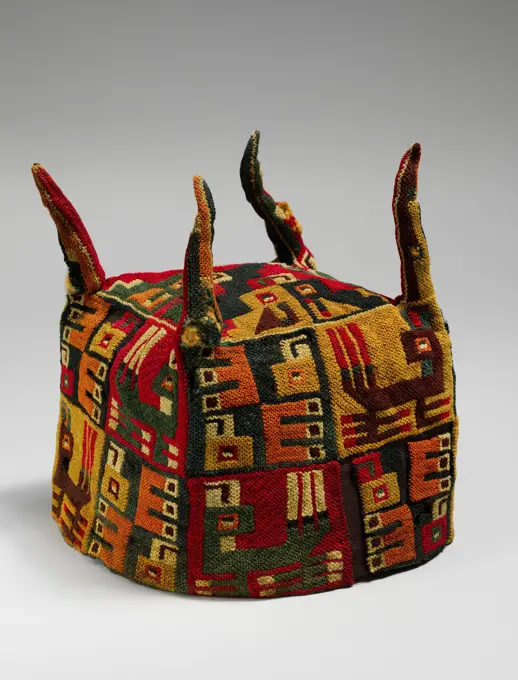
Four-Cornered Hat A.D. 500-900 Tiwanaku or Wari Finely woven, brightly colored hatswhich customarily feature a square crown, four sides, and four pointed tipsare most frequently associated with two ancient cultures: the Wari, who dominated the south-central highlands and the west coastal regions of Peru from 500-1000 A.D., and the Tiwanaku, who occupied the altiplano (high plain) directly south of Wari-populated areas around the same time. The cultures not only developed and flourished as contemporaries, but also occupied neighboring territories for nearly four centuries. A Wari ceremonial center called Cerro Baúl was located a mere five miles from Tiwanaku-settled fields in the Moquegua Valley of Peru. The two cultures likely encountered each other at Cerro Baúl and elsewhere, but the nature of these interactions remains largely unknown. Four-cornered hats from both the Wari and the Tiwanaku were made from camelid fibers carefully prepared into yarns and expertly dyed. Artists from
4409-17449795
Basque. Dated: 1935/1942. Dimensions: overall: 22.9 x 29.1 cm (9 x 11 7/16 in.). Medium: watercolor and graphite on paper. Museum: National Gallery of Art, Washington DC. Author: Mrs. Inez Montgomery.
4409-17486206
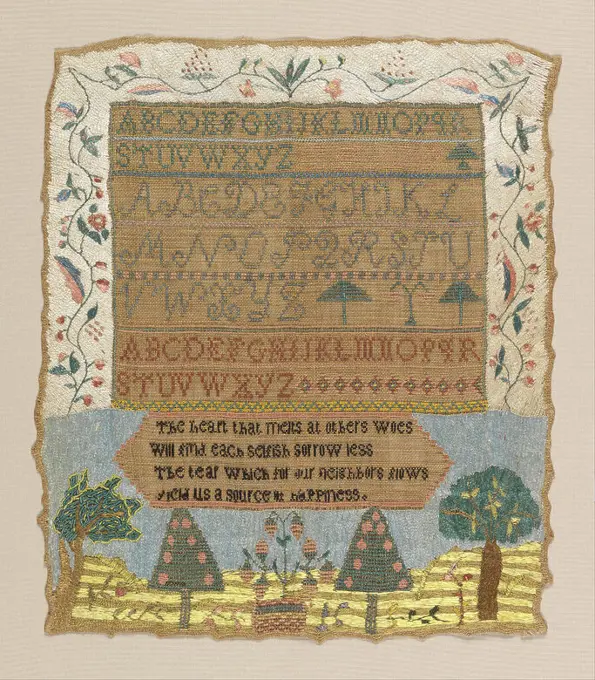
Sampler. Date/Period: Ca. 1775. Sampler. Medium: silk embroidery on linen foundation. Technique: embroidered in counted satin, stem, cross, eyelet, and overcasting stitches on plain weave foundation. Height: 395 mm (15.55 in); Width: 340 mm (13.38 in). Author: UNKNOWN.
6145-29761902
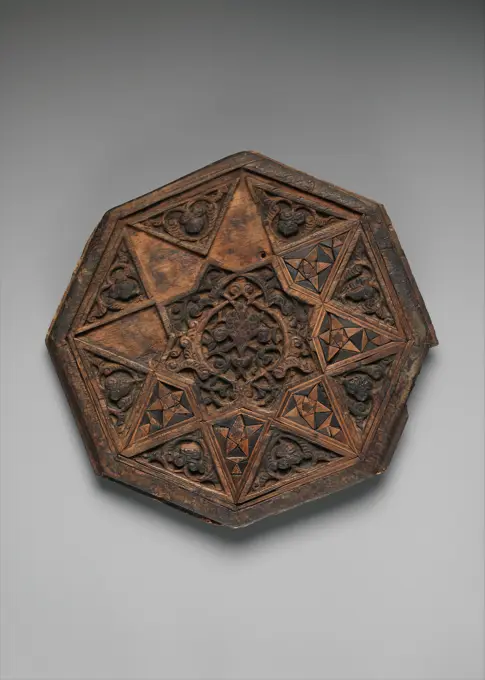
Panel 1296 Before becoming sultan, Husam alDin Lajin spent a year in hiding at the dilapidated Ibn Tulun Mosque. He vowed to renovate the mosque someday, and an enormous minbar was the result, dismantled in the late nineteenth century and dispersed in several museum collections, including The Metropolitan Museum of Art. A copy based on a traveler’s drawing now stands in the mosque in Cairo.. Panel. 1296. Wood; carved and inlaid. Made in Egypt, Cairo. Wood
PREVIOUS
of 3
NEXT
2401 S. Ervay, Suite 206
Dallas, Texas 75215
United States
Browse
CategoriesGalleriesFree Research
For Creators
License Your ContentSuperStock For StudentsFrame of Mind BlogContributor PortalNew Image SpotlightLicense AI Imagery
Resources
About UsLicensingTerms & ConditionsAPI AccessPrivacyPricing
Contact
+1 866 236 0087help@superstock.com Contact form
©2026 SuperStock. All Rights Reserved. -B
This site is protected by reCAPTCHA and Google Privacy Policy and Terms of Service apply.